By Jean Baptiste Ndabananiye
Imagine if a single moment of intense focus could transform the course of your entire life. What if the key to overcoming obstacles, breaking old patterns, and achieving extraordinary things were already within you—waiting to be unlocked?
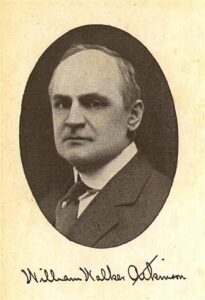
In his book “The Power of Concentration”, Theron Q. Dumont maintains that the difference between failure and success lies in one supreme effort of will. But how does this unseen force work, and can it truly shape your destiny?
More details on the author and his movement: New Thought Movement
Theron Q. Dumont is not the true name of the author of the book. His true name is William Walker Atkinson. He arrived on the Earth on December 5, 1862 and passed away on November 22, 1932. He worked as an attorney, merchant, publisher, and writer. He has authored various pseudonymous works attributed to Theron Q. Dumont and Yogi Ramacharaka.
He wrote an estimated 100 books, all in the last 30 years of his life. The Atkinson titles published under the Dumont name chiefly addressed self-improvement and the development of mental will power and self-confidence.
This late American pioneered the New Thought movement. The New Thought Movement constitutes a spiritual and philosophical movement that emerged in the late 19th and early 20th centuries. It is based on the idea that thoughts possess the power to shape reality, emphasizing positive thinking, the law of attraction, and mind-body healing. Key ideas of this movement include mind over matter, law of attraction, power of affirmations, healing through thought, and divine connection.
The idea over matter holds the belief that the mind—thoughts, emotions and feelings— carries the ability to influence physical reality and personal circumstances. The law of attraction posits that like attracts like, meaning positive or negative thoughts bring corresponding experiences. About the power of affirmations, the idea is that repeating positive statements can reprogram the subconscious mind and lead to success and well-being.
Healing through thought suggests that illness and suffering can be alleviated through mental and spiritual practices. The idea of divine connection promotes the point that every individual is connected to the higher spiritual force.
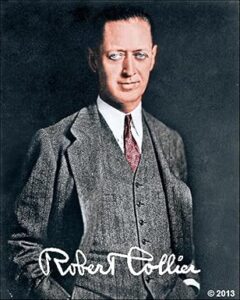
“Our subconscious minds have no sense of humor, play no jokes and cannot tell the difference between reality and an imagined thought or image. What we continually think about eventually will manifest in our lives,” once said the late Robert Collier who was one of America’s original success authors. He lived in 1885-1950 and produced different self-help and New Thought metaphysical books.
The subconscious mind is the part of the mind— just below the conscious level, storing memories, habits, and emotions— which influences behavior and is full of experiences or information always available to the conscious mind but through some effort. Unlike the conscious mind which is immediately aware of current experiences through your eyes, ears, or mental faculties; the subconscious mind comprises recent or past information or experiences that can be retrieved with some effort, such as through recall.
Collier further stated “All riches have their origin in mind. Wealth is in ideas – not money. Your chances of success in any undertaking can always be measured by your belief in yourself. Any thought that is passed on to the subconscious often enough and convincingly enough is finally accepted. One comes to believe whatever one repeats to oneself sufficiently often, whether the statement be true of false. It comes to be dominating thought in one’s mind. Plant the seed of desire in your mind and it forms a nucleus with power to attract to itself everything needed for its fulfillment.”
His point is corroborated by Sue France— featured in this article: The power of thought: how mastering your mind can turn obstacles into triumphs—who says “When you have a thought, a neuron in your brain releases neurotransmitters and hormones to connect to another neuron via a synapse which connects to another neuron via a synapse and so on creating a neural pathway.
When you repeatedly have the same thought, the same neurotransmitters will fire through the same neural pathway and eventually the brain will rewire itself so that certain thoughts get triggered more easily (it becomes a habit). You soon find yourself believing those thoughts are reality instead of perception. The Mind and body affect each other. Practice thinking positively so that positive neurotransmitters fire easily and automatically and become a habit instead of the negative thoughts.”
The unconscious mind—the third component of human mind—holds deeply buried memories, instincts, and experiences that you cannot remember consciously, yet this part of mind profoundly influences thoughts, emotions, and behaviors. It operates beyond awareness, shaping automatic responses, deep-seated fears, and ingrained patterns. So, the unconscious mind stores information, experiences, and instincts inaccessible to conscious recall but deeply shape your thoughts, emotions, and behaviors; often influencing decisions and reactions without your awareness.
Back to Atkinson, he was a key figure in the New Thought Movement. He wrote extensively on topics like mental influence, self-discipline, and spiritual success. His works, including The Secret of Mental Magic and Thought Vibration, were foundational in popularizing New Thought principles.
He has also influenced modern self-help and success literature, paving the way for books like The Secret by Rhonda Byrne—a book whose description on Amazon says “In 2006, a groundbreaking feature-length film revealed the great mystery of the universe—The Secret—and, later that year, Rhonda Byrne followed with a book that became a worldwide bestseller.” “The worldwide bestselling phenomenon that has helped millions tap the power of the law that governs all our lives to create—intentionally and effortlessly—a joyful life.”
One of prominent physicians, the American Dr. Jeffrey Rediger, has passed more than 15 years researching ‘miracle’ cures and now affirms “Western medicine has it all wrong.” This work of these 17 years has generated the book “Cured: The Life-Changing Science of Spontaneous Healing” published in 2020. What he shares in this book aligns with some principles of the New Thought Movement. He also emphasizes the power of the mind, positive thinking, and spiritual practices as key factors in achieving good health.
He explains “Everything we put into our bodies — from foods and toxins to thoughts and feelings — can shift immune function at a base level. Illness begins in the soul, and when a healing occurs there, the physical body then ‘catches up’ to this new reality. Chronic inflammation is a superhighway that runs straight to the most deadly diseases out there. Chronic inflammation comes from how we think, how we feel, how we live.
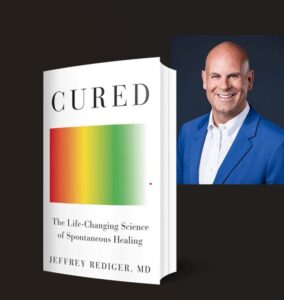
Recent research is showing that we actually have three ‘brains’ — the head brain, heart brain, and gut brain — and our health and development depend on keeping them in balance and alignment. Some signals begin in the gut, or the heart, and flow upstream to the head brain, while others cascade from above. In this way, our thoughts and emotions have both instant and long-lasting effects on all our biological systems: nervous, endocrine, immune.” For more about him, open Once a skeptic of spiritual healing, a prominent physician is now its fervent promoter.
Mastering the field of Supreme Will— battle between two natures and the power to shape your destiny
By the concept “Supreme Will”, Life In Humanity intends to mean the highest possible will—the one which will maximally energize you to eliminate whatever obstacle on your path toward your dream. It can be understood as the ultimate, most powerful determination or intention that a person can access within themselves. It constitutes the kind of willpower or drive that transcends ordinary motivation, pushing an individual to overcome any obstacle or challenge, no matter how daunting. It is this type of will which enables individuals to pierce through boundaries, accomplishing miracles.
This sort of will encompasses maximum energy and focus, and unstoppable determination. The supreme will taps into a deep, unyielding source of energy, channeling all your mental, emotional, and physical resources toward achieving a specific goal. It represents a level of resolve so strong that nothing—be it external obstacles or internal doubts—can deter you from your path. It’s the point at which your desire and commitment become so intense that they feel invincible.
It forms the kind of willpower that allows you to push through pain, fear, or resistance—how insuperable they may appear. It instead transforms challenges into opportunities for growth, acting as an internal fuel that burns through all doubts and limitations.
The supreme will goes beyond mere motivation. It involves empowering you to evolve into a more capable version of yourself—transforming your mindset, body, and actions in pursuit of something greater than ordinary human effort could achieve.

With supreme or sheer will, no matter how overwhelming a hardship may stand, you emerge victorious. Instead of feeling demoralized, you summon all your remaining strength and transform it into an invincible, unstoppable force to overcome the obstacle on your path.
How it works in practice
In moments of struggle or adversity, when everything seems insurmountable, accessing the supreme will signifies tapping into the highest level of determination that goes beyond simply trying harder. It will encompass
- Complete mental focus on the goal, ignoring distractions and fears.
- Harnessing deep emotional energy, such as passion, love, or even anger, to fuel action.
- Turning obstacles into fuel for your drive, seeing every challenge as an enabler that strengthens your resolve rather than weakens it.
In this sense, the supreme will is the ultimate form of personal empowerment, creating the internal energy required to take action, persist, and ultimately succeed; no matter the challenges ahead.
For a person to develop the capacity of sheer will, resilience, or determination, they must first be self-convinced—meaning they must deeply believe in their own ability to push through obstacles and fully accept why their supreme will is necessary, as well as the importance and benefits of cultivating it. Thus, your hardships should act as a sheer motivation for this self-conviction, since it is this type of will to take action that will ultimately liberate you from the hardship itself.
Without this internal conviction, your effort would lack the necessary force to reach the level of sheer willpower. Self-conviction comes first, so as to (1) build the mental foundation for action, (2) serve as fuel for persistence, (3) intensify emotional and psychological strength, and eventually overcome external resistance.
Before a person can exert sheer will, they must believe in their goal and their ability to achieve it. Without self-conviction, doubt creeps in, weakening their ability to fully commit themselves to a course of action. Sheer willpower requires sustained effort, often against pain, fatigue, and adversity. If anyone is not fully convinced internally, external challenges will quickly break their determination. Self-conviction builds confidence and emotional stability—encompassing positive emotions such as faith/hope and unquenchable passion, reducing hesitation.

A person unsure of their path will waver, while someone convinced of their purpose will persist. The world is filled with barriers, naysayers, and obstacles. Self-conviction acts as an internal buffer, allowing a person to reject doubts imposed by others. That’s what has energized all incredibly high achievers like the Wright brothers who invented an airplane, as you can read it in this article: Imagination is more important than knowledge – a deeper understanding of Albert Einstein’s insight.
Cultivating supreme will demands a strategic approach. Since every human bears two opposing and incompatible natures, you need to develop only one of them for you to be able to exploit this realm of supreme will. Atkinson in the book has also confirmed that everyone possesses the two natures which cannot coexist.
He has said “One wants us to advance and the other wants to pull us back. The one that we cultivate and concentrate on decides what we are at the end. Both natures are trying to gain control. The will alone decides the issue. A man by one supreme effort of the will may change his whole career and almost accomplish miracles.
You may be that man. You can be if you Will to be, for Will can find a way or make one. No man has to do anything he does not want to do. He is therefore the director of his life if he wills to be. What we are to do, is the result of our training. We are like putty, and can be completely controlled by our will power.”
As every person possesses two natures—one that compels advancement and another that holds us back or impels to develop the impetus to hesitate or retreat—, we need the supreme will to fully empower the one that urges us toward progress.
Atkinson has argued that habit is a matter of acquirement, saying that you will hear people say “He comes by this or that naturally, a chip off the old block” meaning that s/he is only doing what his parents performed. “This is quite often the case, but there is no reason for it, for a person can break a habit just the moment he masters the ‘I will.’ A man may have been a ‘good- for-nothing’ all his life up to this very minute, but from this time on he begins to amount to something. Even old men have suddenly changed and accomplished wonders.”
“‘I lost my opportunity,’ says one. That may be true, but by sheer force of will, we can find a way to bring us another opportunity. There is no truth in the saying that opportunity knocks at our door but once in a lifetime. The fact is, opportunity never seeks us; we must seek it. What usually turns out to be one man’s opportunity, was another man’s loss.
In this day one man’s brain is matched against another’s. It is often the quickness of brain action that determines the result. One man thinks ‘I will do it,’ but while he procrastinates the other goes ahead and does the work. They both have the same opportunity. The one will complain of his lost chance. But it should teach him a lesson, and it will, if he is seeking the path that leads to success.”

Cultivating supreme willpower will also become a habit through consistent practice and reinforcement. Just like any habit, the supreme will requires repetition, self-discipline, and a deep emotional connection to one’s goals as force justifying why to be dedicated to the supreme will.
The author has pointed out that many persons read good books, but that they say that they do not get much good out of them. “They do not realize that all any book or any lesson course can do is to awaken them to their possibilities; to stimulate them to use their will power. You may teach a person from now until doom’s day, but that person will only know what he learns himself. ‘You can lead him to the fountain, but you can’t make him drink.’”
As the conclusion for this first series of this article, we have uncovered how sheer will and mental focus hold the capacity to shape reality. The works of Atkinson and Dr. Jeffrey Rediger as well as Robert Collier and France’s words all reinforce the notion that supreme will, determination, and mastery of thought are key— to overcoming obstacles and achieving extraordinary success.
As we delve deeper into this journey of self-mastery, the next article series will investigate the price of success, which demands grit, perseverance, and an unshakable will to overcome challenges. Finally, we will address the crucial role of resilience in weathering life’s inevitable storms. Don’t miss out, as we are continuing to unravel the secrets of the mind’s potential and how you can exploit your supreme will to transform your destiny.