By Editorial Staff
Every invention that has incredibly transformed human civilization—from the wheel and the printing press to artificial intelligence and life-saving medical technologies—has ultimately emanated from the convergence of three fundamental forces: curiosity, creativity, and the innate human drive to remedy problems. Curiosity compels people to challenge known things and venture into unknown realms. Creativity enables them to imagine possibilities that do not yet exist. The determination to solve problems channels those ideas into practical innovations that improve human life. Together, these three forces constitute the intellectual foundation upon which invention and technological progress have always rested.
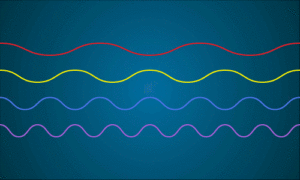
For example, lasers which are employed in so numerous applications today have been built upon theoretical insights originating from Einstein’s passionate curiosity-driven exploration of light. A laser has been used in lunar laser ranging, to measure the Earth–Moon distance with remarkable accuracy.
This article starts by examining the first of these foundations—curiosity. Drawing on insights from leading scholars, research institutions, and contemporary studies, this first part demonstrates that curiosity forms far more than a desire to know; it is the indispensable catalyst that initiates discovery, stimulates creativity, and sets invention in motion. The subsequent parts of this article will then explore the remaining two pillars—creativity and the fundamental drive to solve problems—to indicate how, working alongside curiosity, they complete the process through which groundbreaking inventions exist.
Curiosity: the foundational catalyst of invention, scientific discovery, and technological innovation
Forbes released a 28 October 2024 story headlined “How Curiosity Fuels Innovation And The Path To Discovery” written by Usman Javaid serving as the Chief Products and Marketing Officer at Orange Business. Javaid who was then Forbes Councils member says “When someone asked Albert Einstein what special talent he had, he said, ‘I have no special talents. I am only passionately curious.’ His endless curiosity led to some astonishing discoveries that have forever changed our understanding of space and time. While I am no Einstein, passionate curiosity has also taken me down some interesting paths in my life.
Curiosity plays a fundamental role in inspiring technological innovation by driving individuals and teams to ask questions, explore the unknown and seek new solutions. These innovations can make life easier, alleviate society’s problems and hopefully make the world a better place. Our curiosity drives technological experimentation and exploration, which are central to generating new ideas and advancing processes and solutions.”

Javaid explains that curiosity in multifarious fields, when married with collaboration, results in remarkable inventions. “Cross-discipline curiosity and collaboration are leading to some exciting innovations. AI, for example, involves expertise from several disciplines, including mathematics, neuroscience and computer science.”
APAN—Aesthetics Practitioners Advisory Network— released a 4 September 2024 story titled “Curiosity is the New Mother of Invention”. It states “We may be familiar with the common expression ‘necessity is the mother of invention’”.
Nevertheless, it contends that necessity is not the mother of invention; instead, curiosity is because of “the power of curiosity in opening new opportunities and unlocking the inexhaustible possibilities of invention and innovation. Throughout history, curiosity has been heralded as the driving force behind human progress. From the dawn of civilization to the modern age of technology, it has been the spark that ignites the flames of discovery, creativity, and innovation. Indeed, curiosity can give birth to new inventions as it encapsulates the idea that the desire to explore the unknown and solve problems can often lead to groundbreaking inventions and unique concepts, especially in the business world.”
According to a June 2025 study “Curiosity and research-investigating the role of curiosity in scientific discovery and innovation” available on Research Gate and published in the Journal of Xi’an University of Architecture & Technology, curiosity has played a central role in scientific discovery and innovation. This university stands as one of China’s eight historic institutions specializing in architecture, civil and environmental engineering. It is situated in Shaanxi Province.
Echoing APAN, the study’s abstract reads “Curiosity is more than a trait-it’s a lens through which we view the world, a call to action that challenges stagnation and celebrates the unknown. By embracing curiosity, we unlock innovation, foster adaptability, and enrich our human experience. This research invites readers to see curiosity not as a question mark, but as an exclamation of infinite possibilities.

KATRIN BOLOVTSOVA. They are doing so, out of curiosity.
“Curiosity doesn’t belong only to scientists or inventors; it’s woven into the fabric of everyday life. It’s why a child wonders about the stars, why an artist experiments with new forms, or why we persist through challenges, eager to see what lies on the other side. Curiosity bridges the gap between ‘what is’ and ‘what could be,’ turning failures into stepping stones and transforming routine into revelation.”
Citing studies, APAN characterizes curiosity as follows: “Psychology studies identify curiosity as an intrinsic part of the human psyche. It is the desire to learn, understand, and explore new ideas. This innate trait pushes individuals to ask questions, seek answers, and challenge the status quo. Curiosity is not just about finding solutions to existing problems; it can also help us discover potential underlying problems that previously we were not aware of. Curiosity can lead us to experience the element of surprise by discovering a new way of exploring our world with a fresh new approach.”
The research found on Research Gate explains “Curiosity is humanity’s superpower-the silent engine driving every breakthrough, every leap forward, and every moment of wonder that reshapes our understanding of life and the universe. This research uncovers the extraordinary role curiosity plays in scientific discovery and innovation, not as a passive trait but as an unstoppable force that transforms uncertainty into opportunity. At its core, curiosity is the fearless question: What’s next?
It’s the same spark that inspired da Vinci to sketch flying machines centuries before airplanes existed, that led Einstein to unravel the mysteries of spacetime, and that continues to push boundaries in AI, medicine, and sustainability. In today’s world, it’s curiosity that drives researchers to repurpose waste into value-like transforming discarded ink, expired medicines, and syrups into vibrant, eco-friendly dyes for textiles. This is a testament to how curiosity connects creativity and scientific rigor to address environmental and societal challenges.”
Having established that curiosity represents the foundational catalyst of invention and innovation, the next question naturally follows: how does curiosity translate into creativity, innovation, and ultimately groundbreaking inventions?
How curiosity becomes innovation and invention

“How curiosity drives innovation. It is true that you cannot experience an invention without the element of curiosity in operation. This is because the driving force that leads to new discoveries always incorporates the element of curiosity. Problem-Solving Through Exploration. When we engage our curiosity, this invariably leads to exploration, which is the first step toward problem-solving.
When we are curious, we dig deeper into issues, uncovering layers that others might overlook. This exploration often reveals the underlying causes of problems and allows us to discover innovative solutions,” says APAN before adding “Challenging Conventional Thinking. Curiosity encourages us to question established norms and think outside the box.
This is particularly valuable in the business world, it is at the heart of innovation, which is key to staying competitive in a crowded market of similar businesses as our own. By challenging conventional wisdom and exploring alternative solutions, curious individuals and organisations can introduce products and services that stand out in the market.”
The Smithsonian Institution is the “world’s largest” museum, education, and research complex. “First, inventors are insatiable and unstoppable in their curiosity and their quest for ongoing improvements. They are never done tweaking and seeking to improve their inventions,” according to Smithsonian Institution with its 17 December 2015 piece of writing entitled “Curiosity and Invention”.
“Second, inventors and innovators are similarly frustrated with the way things work at present. They see flaws all around them and are curious to try out changes, whether for products or for less visible technological systems. Even though we live in an era of rapid technology change, a striking number of our transportation, communication, and other technologies do not work well for most people, creating a huge opening for more inventive activity and purposeful improvements to the quality of life.Curiosity is key to the invention of products and systems, but in a sustained, disciplined, and programmatic way.”
For more on insatiable curiosity, open Human intelligence: one of the world’s most remarkable phenomena—especially when fueled by insatiable curiosity.

APAN provides a striking example of how Albert Einstein’s unquenchable curiosity has led to an amazing breakthrough. “It was Albert Einstein who first presented his theory on how light is delivered in quanta as well, which he claimed was represented by photons-discrete quantum particles.
Eleven years later, Einstein offered his concept of stimulated emission in 1916. These were named photons, which worked with excited molecules or atoms. When he discovered this theory, he did not consider how this technology could benefit skin rejuvenation.”
Theodore Maiman and Leon Goldman, according to APAN, attained amazing discoveries in aesthetics, owing to this invention by Einstein. “It wasn’t until the 1960s that a laser with a ruby rod that emitted light energy became available. It was developed by American physicist Theodore Maiman. In 1963 American surgeon Leon Goldman began using lasers for treating skin conditions. He used Maiman’s laser to destroy targeted pigmented parts of the skin as well as unwanted black hair. After these reports, several developments and publications focused on lasers for rejuvenation.
Laser innovation. In a short time, the ruby lasers and Q-switched lasers were used to treat hyper-pigmentation (and tattoo removal). At the same time, argon lasers were being researched for treating vascular lesions while carbon dioxide lasers were being studied for skin lesions. All these inventions resulted from curiosity, questioning and seeking innovative ways that the theory of light could be applied for the benefit of skin therapies.”
A skin lesion is any abnormal area of skin that differs from the surrounding skin in appearance, texture, or structure. It may happen at birth or develop later. A skin lesion, therefore, constitutes an abnormal change in the skin’s structure, color, texture, or appearance caused by a disease, injury, infection, inflammation, or other pathological processes. Thus, skin lesion is a broad medical term referring to any abnormal or diseased area of the skin, not just cancerous conditions.

A laser is a device that generates a highly concentrated beam of light by amplifying light through the process of stimulated emission of radiation. The word is actually an acronym. The U.S.A.’s National Aeronautics and Space Administration [NASA] explains “A laser produces a very narrow beam of light that is useful in many technologies and instruments. The letters in the word laser stand for Light Amplification by Stimulated Emission of Radiation. A laser is an unusual light source. It is quite different from a light bulb or a flash light. Lasers produce a very narrow beam of light. This type of light is useful for lots of technologies and instruments—even some that you might use at home!”
NASA further says “Because laser light stays focused and does not spread out much (like a flashlight would), laser beams can travel very long distances. They can also concentrate a lot of energy on a very small area.”
As a result, according to NASA, “They are used in precision tools and can cut through diamonds or thick metal. They can also be designed to help in delicate surgeries. Lasers are used for recording and retrieving information. They are used in communications and in carrying TV and internet signals. We also find them in laser printers, bar code scanners, and DVD players. They also help to make parts for computers and other electronics. Lasers are also used in instruments called spectrometers. Spectrometers can help scientists figure out what things are made of.

NASA.”
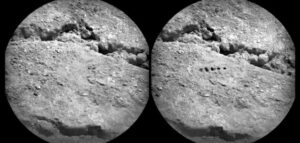
For example, the Curiosity rover uses a laser spectrometer to see what kinds of chemicals are in certain rocks on Mars. NASA missions have used lasers to study the gases in Earth’s atmosphere. Lasers have also been used in instruments that map the surfaces of planets, moons, and asteroids. Scientists have even measured the distance between the moon and Earth using lasers! By measuring the amount of time it takes for a laser beam to travel to the moon and back, astronomers can tell exactly how far away it is!”
APAN highlights “Curiosity-driven business owners are not content with resting on their laurels; they are always seeking ways to improve their products, services, and processes. This relentless pursuit of excellence often leads to significant advancements and unique offerings that distinguish them from their competitors.
Businesses that nurture curiosity among their employees create a fertile ground for innovation. When employees feel encouraged to ask questions, experiment with new ideas, and take risks, they are more likely to come up with creative solutions to often common problems.”
Cultivating curiosity as the foundation of continuous innovation
Javaid suggests developing this paramount intellectual health resource. “By fostering curiosity, we enable the collaborative creation of technological solutions to address problems, however big, small, or unconventional. Curiosity-driven problem-solving is a powerful approach to navigating life’s challenges, and the results can be surprising.
Encouraging the Next Generation Of Innovators. I live by Einstein’s life lesson that the ‘important thing is never to stop questioning.’ We have an opportunity to inspire future generations to be curious and focus on developing technological solutions to address global problems—we must not waste it.”
Smithsonian Institution supports the suggestion. It says “Curiosity and inventiveness is not a proprietary domain; it should be supported in people regardless of gender, race, or ethnicity. That seems obvious, but less apparent is that there are many great inventors who have been ignored in a quest to identify the most important and most transformative breakthroughs.
To advance curiosity as a step toward promoting innovation, we need a diverse pool of role models identified across the historical record. Beyond the findings about what drives and motivates inventors and who they are, it is important to add that they learn and experiment in tactile ways.”
The Smithsonian Institution adds that it has already begun the process to promote curiosity. “At the Lemelson Center we created Draper Spark! Lab so that children (and their parents) would have the opportunity to invent solutions to challenges that we pose.
At present, for example, we have them build items that make sounds and test them out in an environment rich with historical examples of musical instruments and devices. Our fundamental goal is to convey that everyone can be inventive and invention is a process. Both invention and innovation derive from a healthy curiosity and an environment that supports asking questions and tinkering.”
APAN says “In the business world, curiosity fosters a culture of continuous improvement. Business owners who encourage and foster curiosity among their employees are more likely to innovate continuously, adapting to changing market conditions and consumer needs.
By fostering curiosity within themselves and their organisations, business leaders can unlock new opportunities, challenge the status quo, and differentiate their offerings in a crowded marketplace. Ultimately, curiosity-driven innovation is what propels businesses forward, enabling them to stand out and thrive in a constantly changing world.”
Javaid indicates that initial failures should not be the reason to instantaneously reject ideas inspired by curiosity. “Of course, ideas don’t always result in a fanfare of success. They can speedily hit an abrupt dead end. This is where the ‘fail fast’ methodology comes into its own. We need to accept failure, quickly cut losses if something isn’t working and move on.
By rapidly identifying and addressing flaws, we can pivot and change direction, learn from mistakes and create a viable solution sooner. This approach promotes agility and nimbleness to market changes by continuously testing and adapting new ideas that can push us to new heights.” To better understand his point, read this article: Ten years of patience- how Stephanie Louise Kwolek turned persistence into Kevlar and saved the world.