By Life In Humanity Analysis Desk
When machines decide faster in military operations than humans can imagine, who really remains responsible for war? We are frightened by autonomous weapons—but the true threat is the gradual disappearance of human responsibility behind them. Artificial intelligence [AI] guarantees control on the battlefield—while quietly robbing humans of control over consequences. In the era of AI, the next nuclear decision may be made too fast for humanity to fathom—let alone stop. Therefore, the genuine risk of AI in war is not the smart weapons—it is the progressive disappearance of human judgment. The race to integrate AI into military decision-making is not merely quickening—it is quietly redesigning how war is conceived, decided, and carried out. The core contradiction stands stark: states incorporate AI into military decision-taking, to reduce uncertainty. However, in doing so, they bring new sorts of unpredictability which they neither fully comprehend nor control.

This is creating a moral reversal. Decision-making in war is moving from deliberate human responsibility to expedited and automated inference by machines. What was initially designed to reinforce deliberate human judgment in war is instead eliminating it, as accountability is shifting from conscious moral reasoning to accelerated machine-driven conclusion. The deeper danger is not that AI renders war more efficient. The danger is instead that AI dissolves the very idea of a human being responsible when the most critical decisions are taken, precisely consequences certainly standing least reversible.
Why do we actually have to create systems we surely know can exceed our own intelligence?
AI on the battlefield and the erosion of human accountability
“Artificial intelligence (AI) is rapidly reshaping military decision-making, accelerating operations and expanding the role of machine-driven analysis on the battlefield. As AI systems influence choices once reserved for humans, the risks of miscalculation, unintended escalation and legal or ethical violations grow.
Understanding these dynamics is essential to strengthen governance and prevent destabilising outcomes,” according to Denise Garcia who has authored Risk 4 “AI in military decision-making: The global governance challenge” — the fourth component of Global Catastrophic Risks 2026 Report.
Denise Garcia is a Professor of Political Science and International Affairs at Northeastern University and a founding faculty member of its Experiential Robotics Institute. This higher learning institution forms a global research university with its flagship and founding campus located in Boston, Massachusetts, in the United States of America. Garcia also serves as a Commissioner at the Global Commission on Responsible AI in the Military.
She continues, alerting “The race to integrate AI into military command systems is accelerating — and changing how warfare is conducted. International law and norms governing the use of force and war are being ignored. The global community remains unprepared to address serious threats to international security. Although efforts to develop global governance continue, they are too slow and fragmented to keep up with the rapid technological advancements.”
She highlights that currently across the world’s major military powers, AI is rapidly moving from experimental laboratories into operational command-and-control systems. She specifies that since 2017, advancements in machine learning and other computational techniques — along with several countries’ decisions to incorporate AI into their military operations — have accelerated the militarization of AI. “This has led to the gradual integration of Decision Support Systems (DSS) into the battle-field, with many already active in military missions. This is guided by the goal of improving situational awareness to gain a strategic military advantage.

The promise is tempting: AI systems can quickly analyse large amounts of battle-field data, identify patterns invisible to human analysts and allow commanders to act faster than enemies. Supporters say this could lower casualties and improve targeting accuracy. Critics argue that the speed and automation pose serious new risks to peace, diplomacy and international stability by undermining long-standing ethical principles and conduct norms, resulting in blatant violations of international law.”
She points out that the deployment of AI in the military arena where it is authorized to take decisions, independently of humans, certainly carries intensely serious challenges. “As AI increasingly shapes decision-making in conflict, its rapid integration into military systems raises profound challenges for safety, accountability and ethics. AI-driven tools, especially DSS, often operate with limited predictability and transparency, making it difficult for users to understand and trust their analyses and outputs.
The competitive drive among states and actors to adopt these technologies risks premature deployment before they are sufficiently tested, potentially leading to grave operational and humanitarian consequences. Moreover, as machine learning systems take on roles traditionally held by humans, they risk eroding human judgment — the foundation of ethical and legal accountability in warfare.”
Ultimately, argues Garcia, determining responsibility for battlefield decisions must remain a human function, grounded in contextual understanding rather than technical indicators alone, “to ensure compliance with international humanitarian law (IHL) and the preservation of moral agency in war”.
Nuclear AI danger and accountability gaps
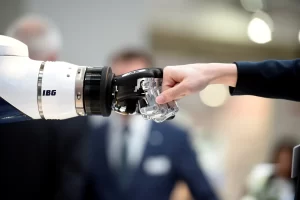
Garcia explains that the integration of AI into military decision-making creates a dangerous paradox. “While militarily advanced countries adopt these systems to reduce uncertainty on the battlefield, they simultaneously introduce new sources of unpredictability stemming from data vulnerabilities and the brittleness of algorithmic systems.
This may lead to manipulation by adversaries and accidents. The gravest risk arises from the integration of AI into the command and control of nuclear arsenals and poses a governance challenge. The integration of AI in early warning systems, intelligence analysis and missile defense could threaten nuclear assets, creating multiple pathways for miscalculation and crisis instability as well as lowering their thresholds for nuclear use during a conflict.”
She adds that the speed at which AI systems function compresses decision timelines. “In a crisis scenario involving nuclear-armed states, AI-enabled systems might accelerate the tempo of operations to a pace where human leaders feel compelled to preemptively authorise responses before fully understanding the situation.”
About accountability gaps and human oversight, Garcia says that IHL requires that human actors foresee, govern and constrain the use of weaponry. However, she indicates that with AI, the human control is significantly weakened. “Yet, as AI systems evolve in sophistication and operate at unprecedented speeds, the scope for genuine human oversight diminishes significantly. Traditional legal frameworks presume human moral agency and deliberate decision-making; however, when an AI system is involved, assigning accountability becomes far more complex, compounding the risks of automation bias and over-reliance on AI-generated outputs.
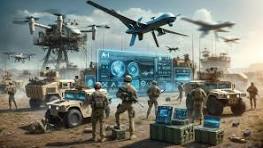
The complexity of this issue is exacerbated by the inherent black box nature of many advanced machine learning systems. Despite their strong performance in testing environments, their underlying reasoning remains largely opaque. This lack of transparency in AI decision-making processes compromises the crucial human oversight required to uphold legal and ethical standards in military operations.”
She points out that military AI systems inherently rely on vast amounts of data for training, real-time operation and continuous learning. “This dependence creates multiple vulnerabilities that adversaries can exploit. Consequently, an AI system that performs robustly in controlled testing environments may behave unpredictably in operational settings when confronted with manipulated or adversarial inputs.
Data bias represents another critical concern. If AI systems are trained predominantly on data from specific operational environments or on particular adversary signatures, they may fail catastrophically when confronted with novel situations. In sum, what is at risk is the erosion of moral and legal boundaries that limit the use of force, widening the gap between human accountability and emerging AI-driven military systems and creating destabilising effects.”
The private sector, global governance and steps to take
Professor Garcia reminds that military AI is essentially produced by the private tech sector and that leading companies have created significant breakthroughs with both civilian and military applications. “Private companies are creating sophisticated systems that the military then adapts for its needs. The dual-use and distributed nature of AI technology creates new challenges for establishing global governance. The global nature of the AI industry further complicates governance and is leading to the militarisation of civilian AI research, potentially limiting academic freedom and international cooperation.

These private companies control the development and deployment of AI, which could significantly alter global power dynamics. Power disparities between the advanced North and the developing South are likely to widen, as the vast majority of developing countries lack resources to compete for AI leadership or power to play a role in setting inclusive, just and fair rules for all.”
As for global governance, she underlines significant gaps and concrete pathways forward. “There are no universal rules or norms regarding the use of AI in military applications. However, efforts to regulate AI in the military began in 2017, following significant breakthroughs in machine learning and deep learning. There are three ongoing diplomatic processes.
The first is state-led and focused on creating a new treaty on autonomous weapons at the UN in Geneva that involves all the major military powers. However, talks remain mired in definitional disputes and geopolitical tensions. The process is by consensus, so breakthroughs are hard to achieve.”
She further explains that two key questions that remain unresolved include what constitutes meaningful human control over AI-enabled weapons and (2) how IHL should apply to AI decision-support systems. “These talks could continue at the UN General Assembly which allows for a more inclusive process and require a two-thirds majority, but this approach may fail to get the major military powers’ buy-in.”

She adds “The second is led by middle power, small-state coalitions calling for the responsible use of AI in the military in two summits in 2023 and 2024. This process presents an innovative opportunity to forge new global governance that counts on the voices of more actors. The third is the first resolution on autonomous weapons, a breakthrough event at the UN in New York in December 2023.
The resolution received 164 votes in favour. Subsequently, on November 6, 2024, the second resolution, Resolution 79/239 Artificial intelligence in the military domain and its implications for international peace and security, received overwhelming support from UN Member States: 165 in favour and only two against. Middle powers and small states are likely to continue leading international efforts to develop norms.”
However, she stresses, several governance gaps remain unaddressed. “First, there is no universally accepted risk framework for AI in military contexts. Second, confidence-building measures remain underdeveloped. Third, transparency around military AI development is severely limited.
Nations keep their AI capabilities as closely guarded secrets, making it impossible for others to assess intentions or adjust their own responses. This opacity fuels worst-case assumptions and promotes destabilising military race dynamics.”
She acknowledges that the integration of AI into military decision-making provides significant benefits, such as faster responses and fewer casualties. Nevertheless, she emphasizes that it also poses serious risks to stability and legal principles. “The global community’s current governance systems are inadequate to manage these rapid technological advances, creating a troubling gap between AI development and regulatory frameworks.
Closing this gap requires sustained political will, creative institutional innovation and coordinated cooperation among nations with divergent interests and values. The stakes could not be higher. Left ungoverned, military AI could lower thresholds for conflict, compress decision timelines beyond human comprehension, blur the boundaries between peace and war, and ultimately undermine the institutions that have helped prevent great power war for eight decades.”
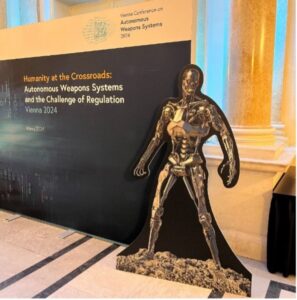
Garcia argues that the effective governance of AI in military decision-making necessitates a comprehensive approach across multiple spheres and actors. “Creating permanent institutional mechanisms to support global cooperation and permanent multi-stakeholder dialogue would foster trust through confidence-building measures and allow for lessons learned from high-stakes military AI applications and risk mitigation strategies.
All of this could be guided by a responsibility by design framework that integrates ethical and legal compliance from the earliest development stages through the entire system lifecycle and into the socio-technical institutions where AI is used, while protecting human dignity.”
She underscores that the concrete governance framework for military AI should encompass international confidence-building measures, transparency, legal accountability, technical safety safeguards and multi-stakeholder oversight. “These steps aim to manage AI risks, prevent escalation, assign accountability and promote responsible development and deployment.”
So why does AI now heighten our recklessness?
Scientific American, in its 23 May 2023 account entitled “Here’s Why AI May Be Extremely Dangerous—Whether It’s Conscious or Not” alerts “Artificial intelligence algorithms will soon reach a point of rapid self-improvement that threatens our ability to control them and poses great potential risk to humanity.”

Instead of forcing AI to submit to humans, Hinton presented an intriguing solution: building ‘maternal instincts’ into AI models, so ‘they really care about people’ even once the technology becomes more powerful and smarter than humans.” AI systems “will very quickly develop two subgoals, if they’re smart: One is to stay alive… (and) the other subgoal is to get more control,” Hinton said. “These super-intelligent caring AI mothers, most of them won’t want to get rid of the maternal instinct because they don’t want us to die.” Credit: WIkipedia.
Geoffrey Hinton was one of Google’s top artificial intelligence scientists, also known as the godfather of AI. After resigning from his job at Google officially in May 2023 so that he could stand free to warn about the dangers of this technology, he said “The idea that this stuff could actually get smarter than people…. I thought it was way off…. Obviously, I no longer think that.”
The Scientific American reports “He’s not the only one worried. A 2023 survey of AI experts found that 36 percent fear that AI development may result in a ‘nuclear-level catastrophe’.”
“This rapid acceleration promises to soon result in ‘artificial general intelligence’ (AGI), and when that happens, AI will be able to improve itself with no human intervention. It will do this in the same way that, for example, Google’s AlphaZero AI learned how to play chess better than even the very best human or other AI chess players in just nine hours from when it was first turned on. It achieved this feat by playing itself millions of times over.”
Yahoo Finance, with its 9 April 2026 story headlined “Elon Musk Says AI Will Exceed Human Intelligence to a Degree That Is Impossible to Fully Understand”, says “AI won’t just surpass human intelligence. It will do so by a margin so vast that humans become, in his words, a ‘microscopic minority’ of intelligence not just on Earth but across the entire solar system.”
“Host Peter Diamandis asked Musk to confirm that ‘we’re likely in the very short time to become a minority, then a vast minority, then a microscopic minority of intelligence on this planet.’ Musk agreed and expanded the scope beyond Earth entirely. He added that such intelligence would ‘solve everything you can possibly think of’ including longevity.”
It is when faced with this reality that we pause, to ask: why does AI now heighten our recklessness?
It is unconceivable why people are immeasurably determined to produce systems which, they perfectly know, will transcend them by far unimaginably in intelligence. What would be the problem, if we created AI just to assist— not to surpass— us? Why do we actually have to create systems we surely know can exceed our own intelligence?

The ambition to develop AI which exceeds human intelligence beyond human comprehension certainly acts as a proof of human recklessness. AI includes sorts of unpredictability which its creators neither fully comprehend nor control; thus, AI heightening their recklessness. In other words, recklessness is proven by the interaction between systems that accelerate beyond human control—and a humanity unwilling to accept restraint in engineering them.
To be frank, we cannot assure you that we are providing the definitive answer to the question of why AI now heightens our recklessness, because the issue reaches deeper than technology itself and into the motives driving those who build it.
Yet one truth seems difficult to escape: AI heightens our recklessness because its creators are not satisfied with constructing systems which merely assist human intelligence, but are increasingly determined to build ones that surpass it, despite admitting that such systems can exceed human understanding and control. In that sense, the recklessness lies not only in the machine, but in the human ambition to pursue superior intelligence without first proving an equal capacity for restraint, wisdom and responsibility.
Another truth can be corroborated by the increasingly explicit discourse emerging from Silicon Valley itself, where the race to build artificial superintelligence is often framed not as the creation of a tool, but as the making of an “AI god” capable of transcending human intelligence and even displacing human centrality.
If some of the very people driving AI development speak in terms of god-like intelligence, secular rapture, or the replacement of biological life by superior digital life, as highlighted by this article; then the recklessness lies not merely in building powerful systems. But it lies in knowingly pursuing forms of intelligence that their creators acknowledge can outrun human understanding, restraint and control.
AI therefore heightens our recklessness because it has become the vehicle of an ambition no longer satisfied with assistance or innovation, but drawn instead toward supremacy, transcendence and the dangerous temptation to engineer something greater than humanity itself.