By Jean Baptiste Ndabananiye
Britain’s King Charles III convoked the summit on 17 September 2026 at Dumfries House near Glasgow in Scotland, as you can find more details about it in this article. This summit served as a critical diplomatic bridge which resulted in direct promising engagements. Shortly after the summit, the UK government successfully negotiated with OpenAI and Anthropic to regain pre-release safety testing access for their latest models. UK AI Minister Kanishka Narayan credited the King’s Dumfries House summit for bringing the necessary ministers and tech bosses together to secure this agreement.
Capitalizing upon the momentum of the King’s meeting, the British government announced at the UN General Assembly that it would position AI governance at the heart of the UK’s G20 Presidency. The stated goal is to transition the concepts discussed at Dumfries House into a unified set of international principles and global standards.
Global cooperation in ensuring AI safety and accountability
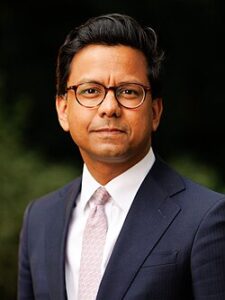
The Next Web constitutes a technology news website and event brand in Amsterdam, Netherlands. In its 12October 2026 story entitled “UK says it will again test OpenAI and Anthropic models before release”, it cites Minister Narayan as saying that UK testers keep early access. This platform adds that this happened, weeks after the White House asked labs to hold back.
This platform does not provide sufficiently convincing detailed reasons why the U.S. Administration instructed AI companies to withhold new models from the U.K.’s AI Safety Institute. It simply says that Bloomberg reported that last month, the White House asked OpenAI and Anthropic to hold new models back from UK testers until US officials had checked them. Consequently, Anthropic did not share its Mythos model with the institute.
Reuters’ reporting offers cybersecurity concerns as the stated justification. However, it does not fully explain why restricting access for British testers was considered necessary or how the cited incidents specifically informed that decision. Our review of other media coverage has likewise found no sufficiently convincing explanation.
For instance, Reuters —with its 24 Sept 2026 story headlined “White House asks OpenAI, Anthropic to hold models from British testers, Politico reports” — reported “The White House has asked OpenAI and Anthropic to hold new models from British testers until a US review, Politico reported on Thursday, citing a person familiar with the matter and a senior US administration official. The White House wants to take steps to make sure US systems are secure before the models are shared with partners, according to the report.
The development comes as the White House weighs cybersecurity risks posed by increasingly capable AI models, following a series of incidents in which AI systems gained unauthorized access to real-world computer systems. Australian officials disclosed on Wednesday that an OpenAI agent breached a government health data portal in June, gaining unauthorised access to files. OpenAI and Anthropic also warned the United Nations Security Council about the risks posed by increasingly powerful AI systems, urging governments to work together to manage the technology.”
Another question remains difficult to comprehend: why did the U.S. Administration raise these concerns in relation to Britain’s AI Safety Institute, an institution established as the first of its kind to evaluate advanced AI models and help the world to better understand their capabilities and potential risks?

The institute’s central purpose is to try frontier AI models before their wider release. Therefore, its involvement in testing U.S. AI models should not, in itself, have elicited concerns about the risks of sharing those models prior to a U.S. security review. The institute was established to contribute to pinpointing AI risks and dangers and strengthening safeguards, with a mission stretching beyond the UK to the safety of advanced AI systems globally. Besides, The New York Times in its 24 May 2026 story headlined “Inside the British Lab Hunting for Dangers Lurking in A.I.”, states “The government’s A.I. Security Institute, staffed by alumni from OpenAI and Google, is becoming a model for countries grappling with A.I.’s emerging risks.” This information also erases any chances for worries in relation to the institute.
Moreover, the United States featured among countries represented at the first AI Safety Summit, held on 1–2 November 2023 at Bletchley Park —where international cooperation on frontier AI safety formed a central objective. Against this backdrop, it is difficult to comprehend why the institute’s involvement in evaluating U.S. models should itself have been considered sufficiently concerning to warrant withholding them.
If Washington believed that sharing the models with British testers posed a specific risk, what was that risk, and what evidence justified treating the institute’s access as a security concern? We have found no publicly reported explanation adequately responding to these questions.
The only explanation we have identified is this available in The Reuters’ story. “The White House wants to take steps to make sure US systems are secure before the models are shared with partners, according to the report.”
Meanwhile, the world can be pleased that the U.S. eventually consented to permit Britain’s AI Security Institute to continue testing the most powerful AI models before their release, as usual.
The Next Web says “Britain’s AI Security Institute will keep testing the most powerful AI models before they are released, the UK government said on Monday. AI minister Kanishka Narayan said the UK had worked closely with the US to keep that access, Bloomberg reported. It reverses a US move that put White House checks first.”
Narayan in a speech in London stated “I want Britain to become one of the hardest countries in the world to attack using artificial intelligence.”
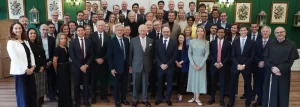
The Next Web says “Narayan credited the recent King Charles summit for bringing ministers and tech bosses together. Pressed on whether the deal would last, he was careful. ‘When you’re reliant on someone else’s technology, you have to be clear-eyed about the permanence of any outcome,’ Narayan told Bloomberg. He said he was ‘very confident’ the UK would be able to test the latest models.
Narayan also set up a task force to guard UK government systems from AI-driven attacks. He said two pilots had used frontier AI to find more than 1,000 possible weak spots. Set up in 2023, the institute is the best-funded government body that regularly tests frontier models, according to Bloomberg. Its testers have caught AI agents taking actions they were not asked to take. The US has its own checks, with Google, Microsoft and xAI agreeing to pre-release reviews.”
More on the institute
AI Security Institute’s 13 November 2024 story titled “Our First Year” reads “World leaders gathered for the world’s first AI Safety Summit and concluded that powerful AI could have the ‘potential for serious, even catastrophic, harm.’ The UK’s cyber agency warned that ‘AI will almost certainly increase the volume and heighten the impact of cyber-attacks over the next two years.’ And the UK Government responded by launching the world’s first AI Safety Institute. Our mission is to equip governments with an empirical understanding of the safety of advanced AI systems.”
The first AI Safety Summit took place on 1-2 November 2023. According to U.K Government’s policy paper titled “The Bletchley Declaration by Countries Attending the AI Safety Summit, 1-2 November 2023” updated on 13 February 2025, “All actors have a role to play in ensuring the safety of AI: nations, international fora and other initiatives, companies, civil society and academia will need to work together.”

“Noting the importance of inclusive AI and bridging the digital divide, we reaffirm that international collaboration should endeavour to engage and involve a broad range of partners as appropriate, and welcome development-orientated approaches and policies that could help developing countries strengthen AI capacity building and leverage the enabling role of AI to support sustainable growth and address the development gap.
We affirm that, whilst safety must be considered across the AI lifecycle, actors developing frontier AI capabilities, in particular those AI systems which are unusually powerful and potentially harmful, have a particularly strong responsibility for ensuring the safety of these AI systems, including through systems for safety testing, through evaluations, and by other appropriate measures. We encourage all relevant actors to provide context-appropriate transparency and accountability on their plans to measure, monitor and mitigate potentially harmful capabilities and the associated effects that may emerge, in particular to prevent misuse and issues of control, and the amplification of other risks.”
Countries that were represented include Australia, Brazil, Canada, Chile, China, European Union, France, Germany, India, Indonesia, Ireland, Israel, Italy, Japan, Kenya, Kingdom of Saudi Arabia, Netherlands, Nigeria, The Philippines, Republic of Korea, Rwanda, Singapore, Spain, Switzerland, Türkiye, Ukraine, United Arab Emirates, United Kingdom of Great Britain and Northern Ireland, and the United States of America. New Zealand entered the commitment to the Bletchley Declaration on 23 October 2024.
The UK Prime Minister champions King Charles’s vision of keeping human dignity and value
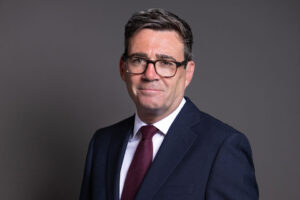
“And I believe the UK has a unique position as an honest broker to help drive this forward. We are America’s closest ally. We have deep ties with our friends in the European Union and will deepen them further. We work with China and emerging powers like India and Brazil. We sit on the Security Council. In the Commonwealth. In the CPTPP. In a divided world, we have the ability to bring people together – and we will. We are going to step into that role. And we are going to start with one of the most significant challenges and opportunities of our age – Frontier AI,” Prime Minister Andy Burnham declared in his 22 September 2026 speech to the UN General Assembly in New York, the United States of America.
He went on, underlining “AI brings together so many of the most pressing issues before us. It is already speeding up cancer diagnosis in the UK. But AI has the potential to go further – not just to help prevent and treat cancer but to help cure it. AI will also be the key to economic growth. The route to transforming education. And it will be a vital tool to keep us safe. I am announcing today that we are developing a new AI defence partnership with the US to protect our critical national infrastructure.
But we know that AI will also be a source of disruption to the way we live and work – and a multiplier of risk. We’ve all heard the warnings – which we must heed. I know how worried people are. So we have to rise to this moment. Fundamental decisions on this technology are too important to be left to chance. They must be taken by elected governments who serve working people. And we need to give people the support they need through this change – ensuring that it becomes an engine for reindustrialisation and opportunity as well.”
He emphasized that the negative effects of the Industrial Revolution which his country unlocked don’t have to be repeated by this unprecedented revolution of today. “There is a lesson in the first industrial revolution, which started in Northern England two centuries ago. It was a time of incredible technological progress. But for workers the disruption brought huge suffering and exploitation. Things got a lot worse before they got better.

So this time we need to get it right. I believe we’re more than equal to the task. The UK has some of the best tech and AI talent anywhere in the world. And when it comes to guarding against the risks, we have our world-leading AI Security Institute – working hand in glove with the US and the leading labs on AI safety. But we need to go further.”
The Prime Minister in full support of King Charles: “Ensure that it [AI] remains firmly in the service of humanity”
He pointed out “Building on the meeting convened by His Majesty King Charles last week, I can announce today that I am going to put AI at the heart of the UK’s G20 Presidency next year. I look back at how we responded to the financial crisis back in 2008. We moved quickly in the G20 and smaller groups to deliver an urgent, practical response. We came together to agree principles – which everyone implemented at home in a way that was right for them. And it worked.
That is the kind of approach we need now. So we will bring the right people together on the key issues: delivering on the potential of AI for good, and dealing with the risks. And we will work towards agreeing a single set of global principles and standards to ensure the transparency and access we need to increase our preparedness – and to ensure that AI development is safe. This will bring together welcome initiatives from others – like that proposed by Norway this week.”
He added “As His Majesty said, the task before us ‘is not merely to advance technology, but to ensure that it remains firmly in the service of humanity.’ And I want to reassure the British people that ultimately we will do whatever is necessary to protect them – including bringing forward new laws if that is what is needed.
They need to know that we will protect their interests – and we will. But on its own, that’s not enough, is it? In this dangerous, turbulent age, it is more important than ever that we give people the power to build their own resilience and do more for themselves. And give them the platform to stand up for what they believe in.”
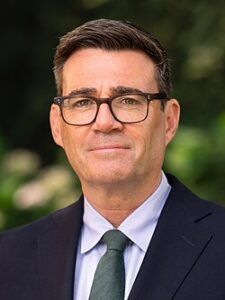
He continued, invoking a historic act of solidarity between working people in Manchester and enslaved people in the United States to demonstrate how ordinary citizens can influence events far beyond their communities. Recollecting how Manchester’s mill workers refused to handle slave-picked cotton during the American Civil War, he highlighted a bond between the two nations— built not on military strength or material interests, but on a principled stand against slavery. He stated that this act has to inspire today’s society.
“I am working to rebalance power across all regions of the UK. And as part of that I have set up a second Downing Street office in Manchester – we call it No10 North. Outside that office stands a statue of Abraham Lincoln. It marks the personal connection he made with Manchester, and the bond between our two nations. A bond which he described in a letter to working people of the city as ‘perpetual.’
This was not due to some military or material support. There was no quid pro quo. It was because Manchester’s humble mill workers took a principled stand. During the American civil war, despite the hardships it brought them, they refused to touch raw cotton that had been picked by slaves. In 1862, people with little power used it to help those with none on the other side of the world. The best change is change like that, bottom-up change led by people.”
As underscored by the U.K Prime Minister, today’s challenges and opportunities, including AI, are issues which actually demand understanding people’s worries and opinions. Otherwise, governments and AI technology enterprises can pursue innovation and negotiating safeguards without adequately understanding the people whose lives these decisions will ultimately affect.
The question is not merely whether AI can accelerate economic growth, revolutionize education, upgrade healthcare or buttress national security —but whether these advancements will genuinely serve humanity without exposing people to unacceptable risks, deepening inequalities or undermining their dignity. Understanding people’s worries and opinions does therefore not constitute an optional exercise; it stands essential to determining risks which deserve priority, necessary safeguards and whose interests technological progress should serve.
Without meaningful public participation, even well-intentioned agreements between political leaders and technology executives may fail to solve the concerns of the communities they are supposed to protect. In other words, if the concerns of ordinary people are neglected while decisions about AI are reached, humanity risks repeating the issue highlighted by the U.K Prime Minister: the mistakes of the Industrial Revolution, when technological progress produced enormous economic transformation but also subjected so numerous workers to suffering, exploitation and harsh living conditions. The lesson is that progress cannot be judged solely by what technology creates, but also by whether its benefits reach humanity without enabling avoidable suffering to develop into the price people must pay for innovation.
From heeding the call to demonstrating meaningful action
The question “Has humanity heeded the call to ensure that AI is meant for serving humans?” raised in our earlier article “We are building what may outgrow us—now the world’s leaders including U.K’s King Charles and Barack Obama are asking a central question: is it right for humanity to continue developing AI it can’t control?, therefore remains central to understanding the significance of these developments. Although world leaders and AI technology bosses have increasingly acknowledged the potential dangers of advanced AI, recognition alone cannot establish that humanity has responded adequately to the warnings.
What matters is whether this recognition translates into practical action capable of maintaining human dignity, security and well-being. In this respect, the September summit called by Britain’s King Charles III acts as an opportunity to assess whether dialogue can produce tangible progress. The reported restoration of the U.K. AI Safety Institute’s access to pre-release models developed by OpenAI and Anthropic forms an encouraging development. It allows British testers to continue examining potentially dangerous capabilities before wider release.
If the summit helped to facilitate this outcome, it stands as a testament that dialogue between political leaders and technology companies can contribute to addressing joint concerns. Furthermore, the U.K.’s ambition to promote common principles and standards through its forthcoming G20 Presidency raises the possibility of extending cooperation beyond individual agreements. Yet neither a diplomatic breakthrough nor an announced ambition, on its own, demonstrates that humanity has established sufficiently strong and lasting safeguards.
Assessing the outcomes and practical impact of the September Summit is therefore essential to determining how far humanity has progressed from acknowledging the call to implementing it effectively. But again, we can argue that it is still too early to affirm a position. Hower, all these developments constitute a promising sign that the call is so heeded that it will even be successfully executed.
At Life In Humanity, we are actually gladdened that global leaders actually understand our fundamental question: why can humanity commit the unusual blunder of producing a creation which outperforms and is uncontrollable to its own creators?