The Government of Rwanda on 17 October 2024 presented a bold and transformative Climate and Nature Finance Strategy, marking a significant step in the global fight against climate change and environmental degradation. As nations grapple with the twin crises of climate change and biodiversity loss, Rwanda’s new framework constitutes an approach to mobilize investments for sustainable development. By strategically aligning climate action and nature conservation with economic growth, Rwanda seeks to not only achieve its ambitious climate goals but also emerge as a global leader in advancing climate resilience and sustainable prosperity.
The strategy arrives at a crucial moment when the world stands at a crossroads: the path forward demands innovative solutions that transcend borders and sectors, driving collective action to safeguard our planet’s future. Through this comprehensive plan, Rwanda aims to marshal public, private, and international resources, possibly setting a precedent for other countries seeking to turn climate challenges into opportunities for growth and social well-being.
However, two pressing questions emerge: will the strategy be executed as intended, and what will be the global implications if other nations do not follow suit? Should the strategy materialize as planned, and if other countries join this struggle, it will undoubtedly generate a significant contribution to the field of environmental health and the broader fight against climate change. This article is organized around these key parts:
- Further information on Rwanda’s strategy,
- Will the strategy be executed as intended?
- Nature-affecting problems
- Urgent action on two fronts —UNEP
- Story helping us to understand the situation
- What will be the global implications, if other nations do not follow suit?
Further information on Rwanda’s strategy
According to the Ministry of Finance and Economic Planning (MINECOFIN), the strategy represents a comprehensive framework meant for expediting investment in climate action and nature conservation. The MINECOFIN states that the strategy aims to establish Rwanda as a leader in sustainable development, advancing both climate resilience and environmental preservation while supporting economic growth and social well-being.
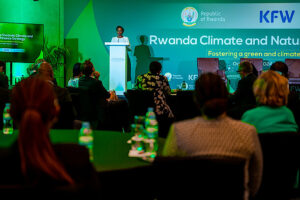
The strategy launch event in Kigali assembled different stakeholders involving senior government officials, development partners, private sector representatives, academia, and civil society organizations. The event’s objective was for the stakeholders to reaffirm their commitment to financing climate action in Rwanda, according to this ministry. “The strategy seeks to align financial flows with the country’s ambitious climate goals under its Nationally Determined Contributions (NDCs) and Green Growth and Climate Resilience Strategy (GGCRS).”
The Minister of State for Resource Mobilization and Public Investments, Mutesi Rusagara, stressed the urgency of mustering both domestic and international resources to tackle the dual crises of climate change and biodiversity loss. She stated “Rwanda recognizes that climate resilience and nature conservation are two sides of the same coin.
Our National Climate and Nature Finance Strategy will help us harness innovative financing solutions to achieve our sustainable development goals. By bringing together public, private, and international resources, we will unlock investments that safeguard both our environment and the livelihoods of our people.”
The MINECOFIN says that major pillars of the strategy include resource mobilization, private sector engagement, nature-based solutions, institutional strengthening and international collaboration.
With regard to resource mobilization, the strategy aims to significantly increase financial flows for climate and nature projects by leveraging a mix of public, private, and international funding sources. This encompasses innovative instruments such as green bonds, carbon markets, biodiversity credits, and blended finance.
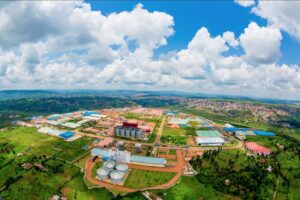
Private Sector Engagement signifies that Rwanda’s private sector is expected to accomplish a key role in attaining the strategy’s goals through various approaches. The latter ones entail public-private partnerships (PPPs), incentives for sustainable investments, and the creation of green jobs across main sectors like agriculture, energy, and infrastructure.
A core focus of the strategy in the field of Nature-Based Solutions is to promote nature-based solutions such as ecosystem restoration, sustainable land use, and conservation initiatives. The strategy reads “These efforts will not only reduce greenhouse gas emissions but also enhance biodiversity, water security, and disaster resilience.”
“The strategy reinforces Rwanda’s commitment to strengthening the capacity of the Ministry of Finance, by creating a Climate Finance and Green Economy Department, which will play a pivotal role in coordinating climate and nature finance efforts.
Recognizing the importance of global partnerships, Rwanda will continue to engage with multilateral organizations, development partners, and climate finance mechanisms to support the implementation of the strategy.”
The MINECOFIN further says that while Rwanda has formulated ambitious goals to achieve carbon neutrality by 2050 while fostering biodiversity protection and sustainable economic development, the strategy “will serve as a blueprint for mobilizing the necessary financial resources to realize these objectives”.
The MINECOFIN thus exhorts the private sector, civil society, and international partners to collaborate with the government to unlock the “full potential of climate and nature finance in Rwanda”. For more information about the strategy click on this link which takes you to an article containing another link providing you with the strategy.
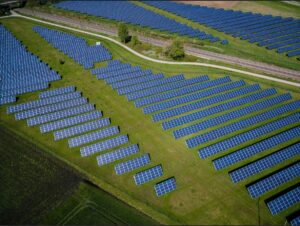
Renewable energy is vital for combating climate change. By reducing emissions, promoting sustainable practices, and enhancing energy security, it offers a path toward a more resilient and sustainable future. Transitioning to renewable energy sources is essential for achieving global climate goals and ensuring the well-being of future generations.
Will the strategy be executed as intended?
To be frank, nobody can provide a sure answer to this question. Thus, Life In Humanity cannot dare to say that it is going to furnish a sure one, because we are not God who knows everything to occur in the future. What we are to give is just opinions about this point.
The first opinion is that each side (strategy execution and failure) bears the weight of 50% of probability right now. There are organizations which develop strong strategies but which never deliver on promised results. There also exist ones which even exceed their strategy implementation.
Life In Humanity concurs with those who argue that what matters most, then, is not solely the strategy itself, but also the flexibility and adaptability of the organization during its execution. Strategies should be viewed as living documents that evolve based on real-time feedback and changing conditions, rather than rigid blueprints that guarantee success.
Hence, while Life In Humanity cannot guarantee that the strategy will be executed exactly as intended or not, it underlines staying agile. The latter one entails responding to new information, and conducting adjustments along the way to boost the chances of the strategy’s success.
In this regard, the most vital mechanism includes regularly watching the strategy rather than filing it and the work finishes. Research has proven that the reason why most organizations (90%) in the world for decades have been failing to carry their strategies out is because leadership teams don’t allocate enough time to the strategies. Intelli Bridge’s August 24th 2022 article reads “For organizations that create strategic plans, a great deal of effort is spent to create a document that is rarely referenced, much less actively used to manage the business. Managers easily become too overwhelmed with the day-to-day fires to keep their eyes on the broader vision. The plan becomes a monument to visit every couple of years rather than a tool used to intentionally and actively manage and measure success by.”
Intelli Bridge adds “The bottom line is strategic management is not given the same level of commitment and focus as other functions within the organization. Most organizations are dedicated to ensuring project success, but the same level of focus is not put into strategic success. One study suggests that 85% of leadership teams spend less than one hour per month on strategy, and 50 percent spend no time at all on strategy.” So this signifies that the MINECOFIN’s Climate Finance and Green Economy Department, which is expected to fulfill a pivotal role in coordinating climate and nature finance efforts, needs to heed this point raised.
In the meantime, in its 19 October 2024 story entitled “Ten things to know about Rwanda’s climate and nature finance strategy”, The New Times reported“ What are the challenges to mobilizing finance for both climate and nature projects in Rwanda? Key challenges include the limited availability of domestic financial resources, difficulties in accessing international finance, the need for greater capacity to design bankable projects, and the complexity of integrating climate and biodiversity goals into financial planning.” If those challenges are true realities, the mentioned department bears the responsibility of mobilizing efforts to successfully handle them.
Nature-affecting problems
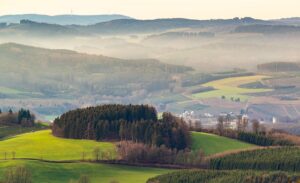
Nature Finance points out “From the food we eat, the water we drink, to the mobile phones and streaming services we use, and the homes we live in, our 100 trillion dollar global economy is 100% dependent on nature. Nature is being degraded at unprecedented rates, with financing patterns continuing to drive nature destruction and global temperature rises.
Since finance is the lifeblood of the economy, our future will depend on redirecting financial flows away from investments that harm nature, towards investments that do good. The global financial system must quickly and radically innovate to successfully integrate nature-related risks and opportunities.”
Nevertheless, UN Environment Programme (UNEP) has pointed out “Finance gap persists.” UNEP stated it in its 9 December 2023 article “Global annual finance flows of $7 trillion fueling climate, biodiversity, and land degradation crises.”
“Close to $7 trillion is invested globally each year in activities that have a direct negative impact on nature from both public and private sector sources.” This roughly matches 7 per cent of global Gross Domestic Product (GDP), according to the latest State of Finance for Nature report released at COP28 by the UNEP and its partners. COP28, or the 28th Conference of the Parties, was a significant international climate conference organized under the United Nations Framework Convention on Climate Change at the end of last year.
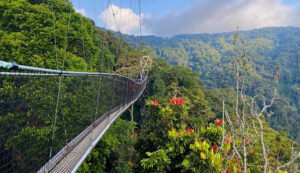
“Nature-based solutions are dramatically underfunded. Annual nature-negative investments are over 30 times larger than financing for nature-based solutions that promote a stable climate, and healthy land and nature. To have any chance of meeting the sustainable development goals, these numbers must be flipped – with true custodians of the land, such as Indigenous Peoples, among the chief beneficiaries,” said Inger Andersen, Executive Director of UNEP.
Niki Mardas, Executive Director of Global Canopy said, “This year (2023) ’s report is a stark reminder that continuing with ‘business as usual’ poses a severe threat to our planet, reinforcing the urgent need for a transition to sustainable business practices and to stop the financing of nature destruction. The net is tightening, with increased regulatory pressure in key areas like tackling deforestation, it means that those companies and financial institutions still driving the problem now need to make best use of the excellent data, guidance and frameworks already available to urgently commit to a nature-positive future.”
Finance gap, according to UNEP
The UNEP underlines that the report pinpoints a significant financing gap for nature-based solutions, with only “US$200 billion allocated in 2022, led by governments, who contributed 82 per cent (US$165 billion), while private finance remains modest at US$35 billion (18 per cent of total nature-based solutions finance flows).”
UNEP says “To meet the Rio Convention targets on limiting climate change to 1.5C, as well as the Global Biodiversity Framework target to set aside 30 per cent of land and sea by 2030 and achieve land degradation neutrality, finance flows to nature-based solutions must almost triple from current levels (US$200 billion) to reach US$542 billion per year by 2030 and quadruple to US$737 billion by 2050.”
It emphasizes that both public funding and private investment has to rise dramatically, in conjunction with the re-alignment of finance flows that beget a detrimental impact on nature. “While public funding will continue to play a critical role, private finance can potentially increase its share of nature-based finance from 18 per cent currently to 33 per cent by 2050”, UNEP says.
Urgent action on two fronts —UNEP
The UNEP states that repurposing nature negative finance and scaling investment in nature are the two fronts that necessitate urgent action.
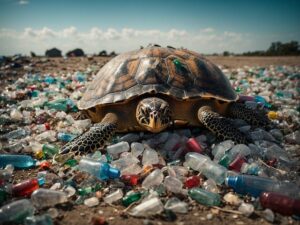
Meanwhile, Jochen Flasbarth, State Secretary in the German Federal Ministry for Economic Cooperation and Development which backed the report, said “The widespread degradation of nature is not only exacerbating the climate crisis but also pushing us towards exceeding planetary boundaries.
Investing in nature-based solutions provides a strategic and cost-effective avenue to address the interconnected challenges of climate change, biodiversity loss, and land degradation while at the same time making tangible headway towards the sustainable development goals.”
The UNEP contends that nature-based solutions provide critical investment opportunities, as they are“cost-effective and provide multiple benefits. Investment opportunities in sustainable land management can increase fourfold by 2050 based on the long-term profitability of sustainable food and commodity production – critical to catalyze private investment.
Protection of diverse ecosystems is highly cost-effective, representing 80 per cent of the additional land needed for nature-based solutions while absorbing just 20 per cent of additional nature-based solutions financing by 2030. Given the scale of degradation globally, restoration provides massive opportunities to strengthen ecosystem function and resilience to deliver the ecosystem services that people rely so heavily upon.”
The report, according to UNEP, suggests that simply doubling or tripling investment in nature-based solutions will not suffice to attain the three Rio targets unless the almost $7 trillion “finance flows to nature-negative practices are dramatically reduced and ideally repurposed in favor of nature.
A major turnaround for nature is needed. The financial sector and businesses must not only increase investments in nature-based solutions but also implement incentives to redirect finance from harmful activities, fostering positive outcomes for nature.”
The UNEP underscores the importance of government policies in fostering conditions that support investment opportunities. It nevertheless highlights that investment in nature-based solutions (such as sustainable land management, reforestation, or ecosystem restoration) is growing. It indicates that this growing investment in the solutions is being driven by significant changes in major global sectors like food, mining, real estate, and infrastructure, which have historically contributed to environmental degradation. The UNEP says that these investment opportunities are as significant as those related to addressing the climate crisis, offering a crucial chance to make meaningful and transformative changes for the environment.
The UNEP says “Government policies play a crucial role in creating an enabling environment for nurturing investment opportunities.
Notably, investment prospects in nature-based solutions are flourishing, driven by the overhaul of global sectors such as food, extractives, real estate, and infrastructure—major contributors to nature’s decline. These opportunities rival those arising from the climate crisis, presenting a pivotal moment for impactful change.”
A story helping us to understand the seriousness of nature protection
The story features on Right to Play USA’s website. It begins, saying that in September 2022, over 33 million people were battered by floods in Pakistan and that more than 1,700 people lost their lives, including more than 400 children. “Mehboob, a 22-year-old Right To Play-trained coach, lives in a village in Kashmore, Sindh province, one of the areas most affected by the floods. He supported the emergency psychosocial response Right To Play mounted to support children and families in the area.”
Mehboob’s following narrative describes consequences that the floods created on his community and the children and families who live there.
When rain first hit in September 2022, we did not know that it would cause havoc in our village. Every house, including mine, started flooding with water, so everyone went out to take temporary shelter in the only government school in our village.
There were space issues since everyone had to fit in one large building. Food shortages, unhygienic practices and the realization of lost livelihoods started to emerge. Water-borne diseases even led to the death of a couple of children, while others were in severe trauma.
I could hear people calling for help while everything they owned was flooded with water, and I could see children’s faces filled with distress and fear of losing even the smallest toy they had. Being affected by this disaster, I knew their pain and I could not stop the urge to help.
I was already volunteering with Right To Play as a coach, and the most important thing I had learned from that experience was to work together in hard times. I started talking with people about what their children needed the most right then. While most of them said it was safe shelter and food, some said they needed to get their stress out, but they did not know how. So, I joined in the relief efforts and started conducting play-based activities in smaller groups.
Seeing those little smiles, other children and parents started joining in these activities. With the expertise I gained from Right To Play, I chose games such as ‘Hope Is in the Air’ and ‘I Like My Neighbour’. These are games that provide psychosocial support to children.
Over a short period, I noticed how these sessions were helping them to see a light amid despair. The healing power of play not only allowed them to release the negative emotions caused by the floods, but also sparked the spirit of togetherness, a spirit to fight against all odds. Parents started conversations on how they could act to create a new life out of uncertain times and connect better with their children. Through this, the children helped create a sense of normalcy for everyone as their voices echoed across the village each day.
Play-based psychosocial support activities reduced fear among the children, while making them feel more resilient. They understood that uncertain times require everyone to act together. Community members, especially parents, realized the importance of play for a child’s well-being. Even after the situation got back to normal, they requested the other Right To Play coaches and I continue conducting play sessions.
What will be the global implications, if other nations do not follow suit?

The environment encompasses the natural world around us, including air, water, soil, plants, and animals, as well as the built surroundings we live in like cities and infrastructure. Environmental health focuses on how these elements affect human well-being, aiming to prevent harm caused by environmental factors while promoting a healthy relationship with nature.
When the environment is harmed, environmental health is harmed too. Any damage or degradation to the natural environment—like pollution, deforestation, or climate change—directly disrupts environmental health which refers to the quality and safety of air, water, soil, and ecosystems that support life. There exists profound interconnection between the condition of the environment and the well-being of both ecosystems and human populations.
If not all nations in the world do not follow suit, Rwanda’s contribution will appear to be a drop in an ocean. We will come back to this point, thoroughly covering it in one of our future articles alongside details on specific actions to execute.
Fantastic website. Lots of useful information here. I’m sending it to several buddies ans additionally sharing in delicious. And naturally, thanks to your sweat!
Hiya, I am really glad I have found this info. Nowadays bloggers publish just about gossips and internet and this is actually annoying. A good web site with exciting content, that is what I need. Thank you for keeping this web-site, I’ll be visiting it. Do you do newsletters? Can not find it.
Hi there! Would you mind if I share your blog with my zynga group? There’s a lot of folks that I think would really appreciate your content. Please let me know. Thank you
Thank you a lot for your feedback and we will address the issues.
Thank you a lot for your feedback and we will address the issues.
naturally like your website but you need to check the spelling on quite a few of your posts. Several of them are rife with spelling issues and I find it very troublesome to tell the truth nevertheless I’ll definitely come back again.
Thank you for sharing excellent informations. Your web site is so cool. I’m impressed by the details that you?¦ve on this blog. It reveals how nicely you understand this subject. Bookmarked this web page, will come back for more articles. You, my friend, ROCK! I found just the information I already searched everywhere and simply couldn’t come across. What a perfect web-site.
magnificent submit, very informative. I ponder why the other specialists of this sector do not realize this. You must proceed your writing. I’m sure, you have a great readers’ base already!
I think other website proprietors should take this site as an model, very clean and wonderful user friendly style and design, as well as the content. You are an expert in this topic!
I was suggested this web site by way of my cousin. I am not positive whether or not this submit is written by way of him as no one else recognize such specific approximately my trouble. You are incredible! Thanks!
The very heart of your writing whilst sounding reasonable in the beginning, did not settle very well with me after some time. Somewhere within the sentences you actually managed to make me a believer unfortunately just for a very short while. I still have a problem with your jumps in assumptions and one would do nicely to fill in those gaps. When you actually can accomplish that, I could certainly end up being amazed.
Have you ever considered about adding a little bit more than just your articles? I mean, what you say is important and everything. However think of if you added some great pictures or video clips to give your posts more, “pop”! Your content is excellent but with images and clips, this blog could undeniably be one of the best in its niche. Superb blog!
Thank you so much for the insightful suggestion and the kind words about the content! I really appreciate your feedback. You’re absolutely right—adding images and video clips can definitely enhance the posts and bring even more value to the readers. I’m definitely considering this idea and will look into incorporating greater visual elements to make the content even more engaging. Thanks again for your support and thoughtful input!
Hello! This is my 1st comment here so I just wanted to give a quick shout out and say I really enjoy reading your posts. Can you recommend any other blogs/websites/forums that go over the same subjects? Thank you so much!
Hello! Thank you so much for taking the time to leave your first comment—I really admire it! I’m thrilled to have you here, and I’m so gladdened that you’re enjoying the content. Please feel free to share your thoughts anytime, and I look forward to hearing more from you in the future!
Great remarkable issues here. I?¦m very glad to look your article. Thank you so much and i’m taking a look ahead to touch you. Will you please drop me a mail?
Thank you so much for your thoughtful comment! I’m really glad you enjoyed the article—it means a lot. I’d be happy to connect further. Feel free to reach out via the contact form on the site, or share your email and I’ll be sure to get in touch. Looking forward to hearing from you!
Have you ever considered about adding a little bit more than just your articles? I mean, what you say is fundamental and everything. However just imagine if you added some great visuals or video clips to give your posts more, “pop”! Your content is excellent but with pics and videos, this site could definitely be one of the greatest in its field. Awesome blog!
Thank you so much for the amazing feedback! I really appreciate your suggestion. I agree that visuals and videos can bring an extra layer to the content and make it more engaging. It’s something we’re definitely considering as we continue to grow and improve the site. Your support means a lot, and I’m excited to keep making it better! Thanks again for the great idea!
I have been absent for a while, but now I remember why I used to love this web site. Thanks , I will try and check back more frequently. How frequently you update your site?
Thank you so much for your continued support! I’m glad to hear you remembered why you enjoyed the site. We’ve actually decided to update the website daily, but since we’re still in the early stages, we sometimes skip a day or two. We’re working hard to get into a consistent rhythm—every day. I appreciate you checking back, and I’ll definitely keep the content flowing!
Thank you, I’ve just been searching for information about this topic for ages and yours is the greatest I’ve discovered till now. However, what about the conclusion? Are you sure in regards to the source?
Thank you so much for your feedback! I’m glad to hear that you found the article helpful. As for the conclusion, I’m confident about the sources, but I’m always open to revisiting and double-checking details. If you bear any specific concerns or would like further clarification, feel free to let me know – I’m happy to dive deeper into it!
Very interesting information!Perfect just what I was searching for!
I’m delighted to know that the information was exactly what you were looking for! Thank you for your encouraging words. If you ever need more insights or experience any questions, feel free to reach out!
Hi there, I found your website via Google while looking for a related topic, your site came up, it looks good. I’ve bookmarked it in my google bookmarks.
Thank you so much for stopping to read the website’s content and for your kind words. I’m really delighted that you’ve found the website through Google — it’s great to know it’s showing up for related topics! If there’s anything specific you were looking for or if you hold any feedback or questions, feel free to let us know. We’re always happy to help or improve!
I have been exploring for a little for any high-quality articles or blog posts on this sort of area . Exploring in Yahoo I ultimately stumbled upon this site. Studying this information So i am glad to show that I have a very good uncanny feeling I found out just what I needed. I such a lot no doubt will make certain to do not omit this web site and give it a glance on a relentless basis.
We’re honored you have landed on our work during your search! Thank you for your kind words — we’re committed to continuing to provide high-quality content that adds real value.
Glad to be one of many visitants on this awing site : D.
Thank you so much indeed! We’re truly happy to have you here — while your support means a lot, your words are extremely exciting!
I believe this internet site has very excellent written subject material content.
Wow — thank you so much indeed! Your words contribute a lot to making my day exciting! 🌟 It is maximally inspirational to hear that you find the content not only valuable but excellently written. I pour a lot of heart and thought into every piece, so knowing it resonates with readers like you is the best reward. Thank you again for your highly uplifting feedback — it truly energizes and inspires me to keep creating and sharing more! 🙏✨