By Jean Baptiste Ndabananiye
Armed only with their cameras and words and once considered neutral observers under the Geneva Conventions, journalists are now war’s prey, hunted like enemies and silenced before their stories reach the world. In its 31 October 2024 story “End the Killings: Al Jazeera demands protection for journalists in Gaza”, Al Jazeera sounded the alarm in these words “Al Jazeera Media Network stands witness to the unprecedented, deliberate, and systematic targeting of journalists in Gaza and the region. As the Israeli Occupation Forces carry out their crimes, journalists continue to document a genocide that the world must witness. As a result, they have and continue to face grievous threats and paid the ultimate price in the line of duty.
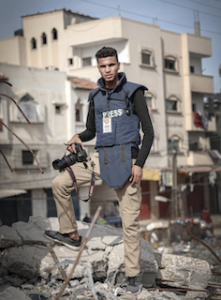
Over the past year, the war on Gaza has resulted in a devastating toll on journalism. Since the outbreak of the war, the Israeli Occupation Forces have methodically targeted and killed over 170 journalists, among whom are three Al Jazeera journalists: Samer Abu Daqqa, Hamza Al Dahdouh, Ismail Al Ghoul, along with many of their family members. These systematic attacks extend beyond individual tragedies; they constitute a calculated campaign to silence those who dare to document the realities of war and devastation and a direct assault on the fundamental right to information.”
Life In Humanity now takes little time to ask itself “When did the role of the journalist shift from a truth-teller to a target, and how much longer will the world condone it, as those who document war’s horrors become its victims?” This article comprises these major components:
- Journalism peril historical background
- When did the role of the journalist shift, and how much longer will the world condone the crisis?
- Why has the situation deteriorated today?
- Conclusion
Journalism peril historical background
From 1990 to 2020, more than 2,600 journalists paid the ultimate price for bringing the truth to light. In just the recent conflicts between Ukraine and Russia, as well as Israel and Hamas, hundreds of journalists have lost their lives.
CPJ—Committee to Protect Journalists— in its 30 January 2025 article points out that its preliminary investigations disclosed an alarming situation. It explains that —as of 30 January 2025— at least 167 journalists and media workers figured among the more than tens of thousands killed in Gaza, the West Bank, Israel, and Lebanon since the war began. According to CPJ, this period has turned into the deadliest one for journalists since CPJ began gathering data in 1992.
“Since the war in Gaza started, journalists have been paying the highest price – their lives – for their reporting. Without protection, equipment, international presence, communications, or food and water, they are still doing their crucial jobs to tell the world the truth,” says CPJ Program Director Carlos Martinez de la Serna in New York. “Every time a journalist is killed, injured, arrested, or forced to go to exile, we lose fragments of the truth. Those responsible for these casualties face dual trials: one under international law and another before history’s unforgiving gaze.”
CPJ explains “To date, CPJ has determined that at least 11 journalists and two media workers were directly targeted by Israeli forces in killings which CPJ classifies as murders. CPJ is still researching the details for confirmation in at least 20 other cases that indicate possible targeting.
167 journalists and media workers were confirmed killed: 159 Palestinian, two Israeli, and six Lebanese. 49 journalists were reported injured. 2 journalists were reported missing.75 journalists were reported arrested. Multiple assaults, threats, cyberattacks, censorship, and killings of family members. CPJ is also investigating numerous unconfirmed reports of other journalists being killed, missing, detained, hurt, or threatened, and of damage to media offices and journalists’ homes.”
What did Al Jazeera demand?
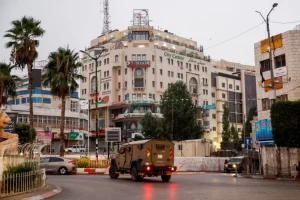
“Al Jazeera Media Network condemns in the strongest terms and demands an immediate end to the targeted killings and continuous harassment of journalists by the Israeli Occupation Forces. The Network urges world leaders, legal bodies, and the international community to take immediate, decisive actions to hold the Israeli authorities and occupation forces accountable. There must be no impunity for those who systematically target journalists.
Al Jazeera demands immediate legal reforms and protections to safeguard journalists and ensure they can continue to perform their critical roles. Israel must permit free operation of all media networks, including Al Jazeera, and ensure that all journalists can safely report from Gaza and occupied territories. Continued silence and inaction today will contribute to normalising the deliberate targeting of journalists and undermining the very foundations of press freedom and international law.”
While truth is under siege, Al Jazeera refuses to succumb, with a vowed resolute determination to bravely face the injustice and have perpetrators held accountable. “Al Jazeera remains unwavering in its commitment to pursue all available legal avenues to prosecute the perpetrators of these crimes. It remains committed to its mission and stands in solidarity with journalists in Gaza and worldwide. The determination to continue reporting and uncovering the truths despite these challenges is stronger than ever.
The time for action is now. Journalists’ role in pursuing truth and justice and maintaining global peace is being threatened. The international community must act decisively to protect journalists and ensure that such crimes do not remain unpunished.”
Has Al Jazeera already started legal action?
Life In Humanity has not found any evidence that this global media powerhouse has filed a lawsuit taking a case to court. We have instead observed various condemnations which it has been issuing since then.
In its 15 Dec 2024 piece “Al Jazeera condemns the targeted killing of journalist Ahmad Al-Louh by the Israeli occupation forces in Gaza”, this mega media house stated “Al Jazeera Media Network condemns in the strongest terms the killing of its cameraman, Ahmad Baker Al-Louh, 39, by the Israeli occupation forces. He was brutally killed in an airstrike that targeted a Civil Defence post in the market area of Al-Nuseirat Camp, central Gaza Strip. He was covering the civil defence forces’ rescue operations of a family that was severely injured in an earlier bombing. Al Jazeera unequivocally condemns the ongoing crimes committed by Israeli occupation forces against journalists and media professionals in Gaza.
The Network calls on all human rights and media organisations to condemn the Israeli Occupation’s systematic killing of journalists in cold blood, the evasion of responsibilities under international humanitarian law, and to bring the perpetrators of this heinous crime to justice. The killing of Ahmad Al-Louh took place just days after the targeting of his house by Israeli Occupation Forces in the Da’wa neighbourhood of Nuseirat camp, in which it was utterly destroyed.”
This media powerhouse in the December 2024 article reiterated the words that it had expressed in the November 2024 article. “This alarming trend demands immediate attention and action from the international community. We urge relevant international legal institutions to take practical and urgent measures to hold the Israeli authorities and all those who are responsible accountable for their heinous crimes and to adopt mechanisms to put an end to the targeting and killing of journalists.
Al Jazeera affirms its commitment to pursue all legal measures to prosecute the perpetrators of these crimes against journalists. We stand in unwavering solidarity with all journalists in Gaza and reaffirm our commitment to achieving justice for the journalists and prosecuting the killers of more than 196 journalists in Gaza since October 2023, including four of Al Jazeera Media Network’s journalists.”
On 4 January 2025 Al Jazeera ran an opinion, by Daoud Kuttab—an award-winning Palestinian journalist, headlined “Silence on Israel’s massacres of journalists is dangerous to all.” It just castigates international media organizations over their silence on journalist killings in Gaza. It underlines that international media’s reluctance to show solidarity with Palestinian journalists could backfire.
Kuttab says “A December 26 press statement by the Israeli army attempted to justify a war crime. It unabashedly admitted that the military incinerated five Palestinian journalists in a clearly marked press vehicle outside al-Awda Hospital in the Nuseirat refugee camp, central Gaza Strip.
The five victims were Ibrahim Sheikh Ali, Faisal Abu al-Qumsan, Mohammed al-Ladaa, Fadi Hassouna, and Ayman al-Gedi. Ayman had arrived at the hospital with his wife who was about to give birth to their first baby; he was visiting his colleagues in the vehicle when it was struck. His baby boy was born several hours later and now carries the name of his father who was not allowed to live long enough to celebrate his birth.”
According to Kuttab, the Israeli army statement claimed that the five Palestinians were “operatives posing as journalists” and that they disseminated “combat propaganda”, working for Al-Quds Al-Youm TV. The television is affiliated with the Palestinian Islamic Jihad movement. “The Israeli army made no claims that they were actually carrying weapons or involved in any armed action.
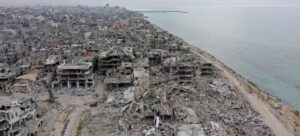
Many Western publications quoted the Israeli army statement as if it was an objective position and not propaganda whitewashing a war crime. They failed to clarify to their audiences that attacking journalists, including journalists who may be accused of promoting ‘propaganda’, is a war crime; all journalists are protected under international humanitarian law, regardless of whether armies like their reporting or not.”
Geneva Conventions Article 79 of the Additional Protocol stipulates that all journalists engaged in dangerous professional missions in armed conflict areas shall be considered civilians, protected, and “without prejudice to the right of war correspondents accredited to the armed forces”.
Kuttab emphasizes “Completely disregarding these provisions of international law, the Israeli army has gone on a killing spree of Palestinian journalists over the past 15 months. According to the Gaza Government Media Office, 201 have been killed in Gaza since October 7, 2023. Other counts put the number at 217.
Israel not only refuses to recognise any Palestinian media worker as being protected, but it also bars foreign journalists from entering Gaza.It has been truly disturbing that the international media has done little to protest this ban. Except for one petition signed by 60 media outlets over the summer, the international media has not followed up consistently on such demands over 15 months.”
When did the role of the journalist shift, and how much longer will the world condone the crisis?
To reasonably answer the question in the introduction “When did the role of the journalist shift from truth-teller to target, and how much longer will the world condone it, as those who document war’s horrors become its victims?”, we can approach it from several angles.
Historical context– the role of journalists has always been challenging, particularly in conflict zones. However, the deliberate targeting of journalists has escalated significantly in recent years. Historically and to this day, journalists have officially been seen as neutral actors, vital for documenting and disseminating truth, especially under the protection of international laws like the Geneva Conventions. These conventions have been designed to safeguard journalists, ensuring that they could operate without fear of direct attack.
However, the 2003 Iraq War constitutes a key moment when dangers faced by journalists worsened significantly, illustrating how conflict zones began to see journalists not just as neutral observers but as potential targets.
The International Committee on the Red Cross (ICRC)’s website contains a long piece of writing entitled “Protection of Journalists.” The website specifies that this piece has been sourced from “Protection des journalists et des medias en période de conflit armé— Protection of journalists and media in armed conflict,” Alexandre Balguygallois, IRRC, March 2004, Vol.86 No.853, pp.37-68.
The piece reads “The number of journalists killed in the world in 2003 – 42 – is the highest since 1995. This figure can be largely explained by the recent military campaign in Iraq, which inflicted a proportionally higher number of casualties on journalists than on members of the coalition’s armed forces: 14 journalists and media personnel lost their lives, two went missing and a dozen or so were wounded while covering the conflict and its aftermath.
In recent years, one might also mention the deliberate targeting of journalists in the occupied Palestinian territories, the bombing of the Serbian State radio and television (Radio Televisija Srbije – RTS) building in Belgrade by NATO forces in 1999 and the bombing, by US forces, of the Kabul and Baghdad offices of the Qatar-based Al-Jazeera television network. The general trend is towards the deterioration of the working conditions of journalists in periods of armed conflict.”
The piece highlights that war was then starting to become a nightmare for media professionals dedicated to war reporting. “Covering a war is becoming more and more dangerous for journalists. Added to the traditional dangers of war are the unpredictable hazards of bomb attacks, the use of more sophisticated weapons against which even the training and protection of journalists is ineffective – and belligerents who care more about winning the war of images than respecting the safety of media staff. So many factors that increase the risks of war reporting.”
Shift in perception— the shift from being truth-tellers to targets has been gradual but noticeable over the past few decades, as already indicated. With the rise of propaganda, media manipulation, and the weaponization of information, journalists have increasingly become casualties of the very wars they seek to cover.
Their role has been distorted from independent observers to pawns in political and military struggles. Attacks on journalists have become more systematic and targeted, especially in areas like Gaza, Syria, and Ukraine, where they are not only caught in crossfire but actively targeted for their reporting.
“Two Decades of Combating Terrorism: Tactical and Strategic Lessons” is a 55 page report published by the Inter-university Center for Terrorism Studies in October 2018. The report stands a work of various contributors including Professor Yonah Alexander, the Director of the center and Senior Fellow, Potomac Institute for Policy Studies.
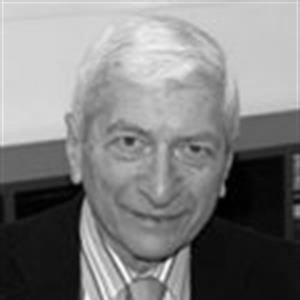
Professor Marvin Kalb Edward R. Murrow— Professor Emeritus at Harvard University’s Kennedy School of Government, senior advisor to the Pulitzer Center on Crisis Reporting, and nonresident senior fellow at the Brookings Institution, also a contributor to this report— says “ I want to go back to the Russian Revolution When Lenin took over, one of the first things he did was to say that the means of communication were to be in the direct control of the communist party. There is to be no democratizing of the idea of information. Information was to be a weapon. It was to be used by the party in order to advance a particular point of view. And that has been the case, certainly from 1917 to 1991, and since that time it has been back and forth.
Lenin idea was there was to be no romance when it comes to information. It was a weapon of political warfare. And that has been the way it has been seen not only by Lenin but by people who have lived in closed societies. People, generally terrorists, who have a particular point of view which they wish to impose on a society do that by terrorizing people. Lenin said at the very beginning the definition of terror is to terrorize – that is the point of the operation. And you use what to terrorize? You use information, if that is helpful in your cause.”
Professor Murrow continues, revealing a point which serves as a key reason—exposing war truth, while warring parties don’t want it—why journalists are targeted during wars. “And I remember clearly the first time I arrived in Russia in January of 1956, I rather quickly and oddly made friends with a reporter who worked for Pravda who had a wonderful sense of humor.
He told me very quickly, which I knew, that the Russian word for truth was Pravda, and there was no truth in Pravda. Then he pointed out that the other major newspaper was Izvestia, which means news, but there is no news in Izvestia. And the whole point of it was up until this very day that terrorist use information to advance a political cause. And there are civilizational definitions here.”
The following words by Professor Murrow emphasize upon a huge difference between the time he worked as a war reporter and today. The words highlight that the then war reporters were actually privileged. “But, if you begin to think of the news as a weapon then it has to be used in a certain way. And I can remember easily in the coverage of wars, for example, I never assumed that a bullet if it was shot at me would ever hit me. I assumed that the bullet was smart enough to understand that I am a reporter and I am only there to cover the news.
So if it comes this way, it then goes around and out the other way. And what is interesting to me is that I think up until recent decades, even the people who use journalism to advance their own political ends did understand the value and the importance of a free press, not for them but also for the opposition. And they would treat reporters, most of the time, with respect and would understand what it is that the reporter is there to do.”
Why has the situation deteriorated today?
Professor Murrow responds “Today, reporters are seen by people who live by a terrorist understanding of the world as a warrior. Somebody who is involved either in helping your cause or in hurting your cause. And if the judgement be that the reporter is hurting your cause then it is in our interest to kill the reporter. In the war in Syria, for example, reporters have not only been kidnapped, they have been beheaded.
What was the point of that? The point of that was to be able to show the beheading of a free press, of a reporter from the West, of the West itself with the reporter being a symbol of that and put it out as part of your propaganda. So, the reporter then could not expect the bullet to go around him. The reporter now expects to be part of a war.”
International inaction—the world’s response to these attacks has often been tepid, with legal actions taking a backseat to political and strategic interests. The international community has condemned the targeting of journalists in rhetoric but has failed to hold perpetrators accountable in a meaningful way. Institutions like the International Criminal Court and human rights organizations often lack the ability or will to act decisively. This also contributes to the aggravation of the situation.
The role of media—as even underlined by the opinion released by Al Jazeera, global media outlets aren’t engaging actively against the crisis. Therefor the question still remains as to how long the world will tolerate this systematic silence. Despite widespread condemnation, including calls for legal intervention and the protection of journalists, the lack of substantial action in holding aggressors accountable raises serious concerns about the future of press freedom and the safety of journalists worldwide.
Conclusion
The answer to the question depends on how long the international community continues to allow impunity for the perpetrators of violence against journalists. While laws exist to protect journalists, their implementation remains inconsistent, and the deliberate targeting of journalists continues unchecked in various conflict zones. Until stronger, more decisive action is taken, the tragic trend of journalists being targeted will likely persist, threatening the very foundation of truth-telling and press freedom.
In essence, the role of the journalist shifted from the truth-teller to the target as political and military powers increasingly see journalists as obstacles to controlling the narrative of war. How much longer this will continue depends on the collective resolve of the global community to enforce international law and assure that journalists can operate without fear of retaliation.
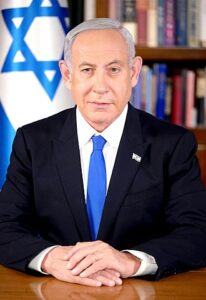
CPJ reminds that journalists are civilians and are protected by International Law and that deliberately targeting civilians forms a war crime. In last May, CPJ adds, the International Criminal Court announced it was seeking arrest warrant applications for Hamas and Israeli leaders for war crimes and crimes against humanity. Meanwhile, in its 21 November 2024 article “ICC issues arrest warrants for Netanyahu, Gallant and Hamas commander”, the UN reported “The UN-backed International Criminal Court (ICC) on Thursday issued arrest warrants for Israeli Prime Minister Benjamin Netanyahu and former defence minister Yoav Gallant, together with a former Hamas commander, citing allegations of war crimes and crimes against humanity.”
“With regard to the crimes, the [Court’s Pre-Trial Chamber I] found reasonable grounds to believe that Mr. Netanyahu…and Mr. Gallant…bear criminal responsibility for the following crimes as co-perpetrators for committing the acts jointly with others: the war crime of starvation as a method of warfare; and the crimes against humanity of murder, persecution, and other inhumane acts,” said the ICC.
The arrest warrants send a strong message that war crimes, regardless of the perpetrator, will not go unpunished. Nevertheless, their effectiveness depends on international enforcement which is often hindered by political interests. If global powers selectively ignore these warrants, it risks undermining the credibility of international justice.