By Ephrem Murindabigwi
Humanity—for thousands of years—built some of its most enduring cities, monuments, and civilizations by employing remarkably simple materials: clay, brick, copper, timber, and stone. Several of those ancient structures have survived wars, empires, and the passage of time, while some modern buildings struggle to endure for a single century. As climate change, resource depletion, and rapid urbanization are forcing societies to reconsider how they build, the world’s oldest construction materials are offering an unexpected lesson: true progress depends not only on new technologies, but also on rediscovering the wisdom embedded in humanity’s oldest ones.
These materials, which formed the foundations of the first cities, are far from relics of a distant past. Mud bricks from Mesopotamia, copper from the dawn of metallurgy, timber from ancient forests, and stone from the pyramids are continuing to shape modern debates about sustainability, durability, and human ingenuity. At a time when the construction sector faces mounting environmental pressures, the oldest building materials are reminding humanity that enduring solutions are often found not in relinquishing the past, but in comprehending it.
Bricks, related materials, and copper
Bricks and related materials
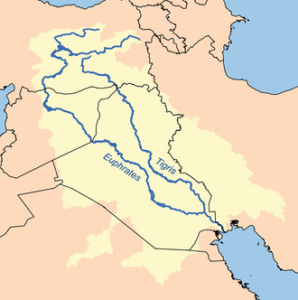
“It was the cultures of the great river valleys—including the Nile, the Tigris and Euphrates, the Indus, and the Huang Ho—with their intensive agriculture based on irrigation—that developed the first communities large enough to be called cities. These cities were built with a new building technology, based on the clay available on the riverbanks. The packed clay walls of earlier times were replaced by those constructed of prefabricated units: mud bricks.
This represented a major conceptual change from the free forms of packed clay to the geometric modulation imposed by the rectangular brick, and the building plans too became strictly rectangular,” reports Britannica in its 8 April 2026 article headlined “Bronze Age and early urban cultures”.
The major rivers are distributed across different regions of the world. They have always molded the landscapes and civilizations around them.
The Nile forms the longest river, in the world, which is named the father of African rivers. It carries the length of approximately 6,650 kilometers (4,132 miles). This river flows through northeastern Africa, mainly passing through countries such as South Sudan, Egypt, and Ethiopia where it serves as a vital source of water and agriculture. In Western Asia, the Tigris–Euphrates river system runs through Turkey, Syria, and Iraq, forming one of the world’s earliest centers of civilization.
In South Asia, the Indus River originates in the Himalayas and flows through India before continuing into Pakistan, where it stands essential for irrigation and livelihoods. Meanwhile, the Huang He (Yellow River also spelt Huang Ho) lies entirely within China, occupying a major role in the state’s historical development and agriculture.
TurkmenistanInfo.ru constitutes a magazine devoted to the politics, economy, culture, history, and society of the country of Turkmenistan. In its July–August 2020 issue where the magazine published an article entitled “GREATNESS OF CLAY WALLS”, it provides further insight into adobe structures and earthen construction methods in the distant past. It says “Turkmenistan is one of the countries with many adobe structures of different centuries. They represent a variety of methods of building such structures. The oldest and simplest method is to stack wet clay clods on top of each other and press them lightly with hands.
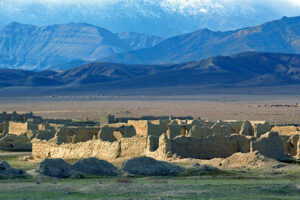
Archaeologists discovered a settlement not far from Ashgabat, on the very edge of the Karakum desert, which is more than eight thousand years old. They unearthed about thirty one-roomed windowless houses with massive hearths and traces of wooden beams that supported the roofs. Their walls were made of hand-molded oval blocks that scientists called clay ‘rolls’.”
The Australian Government’s platform, Your Home, echoes “Mud and other earth-based materials are among the oldest building materials on earth. The oldest surviving examples in ancient Mesopotamia and Turkey, are many thousands of years old. Mud brick construction is often referred to as ‘adobe’ which is an Arabic and Berber word brought by Spaniards to the Americas, where it was adopted into English.”
This construction material, mud brick, is still being used today. The way in which mud bricks would be produced in the ancient civilizations remains largely the same in various parts of the world today. “Bricks were made from mud and straw formed in a four-sided wooden frame, which was removed after evaporation had sufficiently hardened the contents. The bricks were then thoroughly dried in the sun. The straw acted as reinforcing to hold the brick together when the inevitable shrinkage cracks appeared during the drying process.
The bricks were laid in walls with wet mud mortar or sometimes bitumen to join them together; openings were apparently supported by wooden lintels. In the warm, dry climates of the river valleys, weathering action was not a major problem, and the mud bricks were left exposed or covered with a layer of mud plaster. The roofs of these early urban buildings have disappeared, but it seems likely that they were supported by timber beams and were mostly flat. Such mud brick or adobe construction is still widely used in the Middle East, Africa, Asia, and Latin America,” says Britannica.
Bitumen, according the Collins Dictionary, means a black sticky substance which is obtained from tar or petrol and is used in building roads. In ancient times, bitumen was usually secured from natural petroleum seeps—places where crude oil or asphalt naturally rose to the Earth’s surface and thickened after lighter components evaporated.
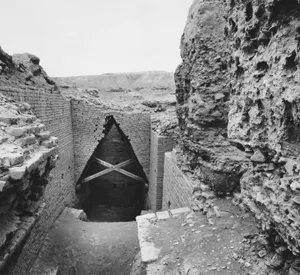
For the civilizations of Mesopotamia, one of the most important sources of bitumen was the region around the ancient city of Hit in Central Iraq. There, large natural bitumen deposits and seeps existed along the Euphrates River. Ancient peoples collected the sticky material and used it for mortar between bricks, waterproofing buildings and boats, road surfaces and sealing baskets and containers.
The Greeks and Romans later called these deposits natural asphalt springs. Bitumen was also available from other natural sources around the ancient Near East, including areas near the Dead Sea, whose floating lumps of asphalt were famous in antiquity. In fact, the ancient name “Lake Asphaltites” was sometimes used for the Dead Sea because of these bitumen deposits.
“Natural asphalt (or bitumen) deposits, oil seepage and liquid oil shows are widespread in the Middle East, especially in the Zagros mountains of Iran. Ancient people from northern Iraq, south-west Iran and the Dead Sea area extensively used this ubiquitous natural resource until the Neolithic period (7000 to 6000 BC). Bitumen was used by Neanderthal populations as hafting material to fix handles to their flint tools. Numerous testimonies, proving the importance of this petroleum-based material in Ancient civilizations, were brought to light by the excavations conducted in the Near East.
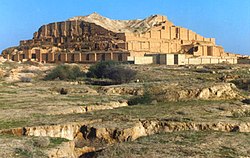
First of all, bitumen was largely used in Mesopotamia and Elam as mortar in the construction of palaces (e.g. the Darius Palace in Susa), temples, ziggurats (e.g. the so-called ‘Tower of Babel’ in Babylon), terraces (e.g. the famous ‘Hanging Gardens of Babylon’) and exceptionally for roadway coating (e.g. the processional way of Babylon). Since the Neolithic, bitumen served to waterproof containers (baskets, earthenware jars, storage pits), wooden posts, palace grounds, reserves of lustral waters, bathrooms, palm roofs, etc.,” explains PubMed Central (PMC), in a 1999 study titled “Use and trade of bitumen in antiquity and prehistory: molecular archaeology reveals secrets of past civilizations”.
PMC is a free digital archive of biomedical and life-science journal literature maintained by the National Center for Biotechnology Information (NCBI) under the U.S. National Library of Medicine (NLM). The NLM operates within the National Institutes of Health (NIH), the primary agency of the United States government responsible for biomedical and public health research. The U.S. National Library of Medicine also forms the world’s largest medical library.
Mesopotamia, a word of ancient Greek which directly signifies the land between rivers, roughly corresponds to modern-day Iraq, while also encompassing significant parts of northeastern Syria, southeastern Turkey, Kuwait, and southwestern Iran. The country largely surrounded and defined by the Tigris and Euphrates rivers is Iraq. These two historic rivers run roughly parallel through the heart of the country, creating the fertile region historically known as Mesopotamia (land between the rivers).
Elam was an ancient country in southwestern Iran roughly equivalent to the modern region of Khūzestān. The latter one is of the 31 provinces of Iran.
Fired bricks don’t form a modern technology. Even though they figure among humanity’s oldest construction materials, fired bricks still constitute a building material associated with civilized or developed status. Fired bricks stand as a thousands-of-years-old technology. In different regions, these bricks symbolize development, permanence, and civilized status. Their continued prestige illustrates a striking paradox: some of the materials most associated with modern urban life feature in fact among civilization’s most ancient inventions. Britannica provides details around these bricks which started in Mesopotamia too.
Britannica explains “Later, about 3000 bce in Mesopotamia, the first fired bricks appeared. Ceramic pottery had been developing in these cultures for some time, and the techniques of kiln-firing were applied to bricks, which were made of the same clay. Because of their cost in labor and fuel, fired bricks were used at first only in areas of greater wear, such as pavements or the tops of walls subject to weathering. They were used not only in buildings but also to build sewers to drain wastewater from cities.”
Today’s houses generally last for a far shorter period of time, in relation to their ancient counterparts. “In the US, our buildings tend to last somewhere in the neighborhood of 50 to 100 years, depending on the type of building (residential buildings tend to last longer than commercial buildings). This means every year, something like 1 to 2% of our buildings get torn down or demolished.
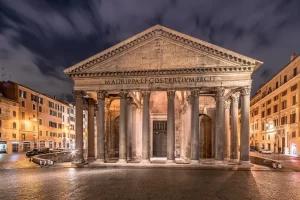
It’s thought to be one of the best-preserved temples from the ancient world. While it is now a church, it was once a Roman temple, completed by Emperor Hadrian around AD 126.
That said, its exact age is unknown. The Pantheon as it is known today is said to be built on the site of an even earlier temple, commissioned by Marcus Vipsanius Agrippa sometime around BC 27. But unfortunately the original structure burnt down in AD 80 and had to be reconstructed. Incredibly, it burnt down a second time in AD 110 before Hadrian had it rebuilt to what we see today,”—BBC.
But this cycle of replacement is relatively modern – medieval houses would often last for centuries, and there are examples from around the world of buildings that have lasted for many hundreds or even thousands of years while remaining in use – The Pantheon, Aula Palatina, Brihadeeswarar Temple, Verona Area, Chartres Cathedral are a few examples,” explains the website, Construction Physics, in its 17 December 2021 article headlined “How to design a house to last 1000 years (Part I)”.
World Monuments Fund states “Shunet el-Zebib was built circa 2750 B.C. and served as a funerary cult enclosure of the Khasekhemwy, a second dynasty king. The structure is one of Egypt’s oldest standing royal monuments and one of the oldest preserved mud brick buildings in the world.
The two-part funerary complex, consisting of the underground tomb and the above-ground enclosure, is of great architectural importance, as it portrays the earliest stages of the evolution of the pyramid. The enclosure walls stand 11-12 meters high in some places but suffers from structural instabilities as a result of a rising water table due to agricultural development, animal intervention, and wind and rain erosion.”
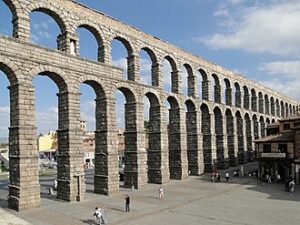
The Culturist, with its 15 May 2024 story titled “How Do Buildings Last 2,000 Years?” raises critical questions that we have always asked ourselves and we will answer in one of our upcoming articles. The Culturist says “Rome’s Pantheon has been used continuously since it was built around 128 AD. The Aqueduct of Segovia [in central Spain, northwest of Madrid] carried water from antiquity until the 1970s,” before adding “What do these structures have in common?
They’re stunning examples of ancient craftsmanship, and they’ve lasted far longer than anything else. But how do Roman buildings remain standing for millennia? Why aren’t there more of them left? And what can they teach us about construction — and culture — today?”
Copper
The Bronze Age is the third phase in the development of material culture in the ancient peoples of Europe, Asia, and the Middle East. It came after the Paleolithic [Old Stone Age ] and Neolithic [New Stone Age] eras. The Bronze Age also means the first period in which metal was employed. The date when this age started differed with regions. For example, it began before 3000 BCE [Before Common Era (years before Christ/ the Christian epoch)] in Greece and China. However, in Britain it waited until about 1900 BCE.
The beginning of the Bronze Age is sometimes termed the Chalcolithic (Copper-Stone) Age. It denotes the initial use of pure copper along with its antecedent tool-producing material, namely the stone. Rare at first, copper was initially used only for small or precious objects. Its use was known in eastern Anatolia by 6500 BCE, and soon turned widespread.
Anatolia, today, forms most of modern Turkey. In 6500 BCE, Anatolia constituted a region inhabited by Neolithic farming communities — not a province of Mesopotamia or any other state. The Neolithic period is the period when people had started farming, but still availing themselves of a stone to create weapons and tools.
By the middle of the 4th millennium, a rapidly developing copper metallurgy industry, with cast tools and weapons, became a factor resulting in urbanization in Mesopotamia. By 3000, the use of copper was famous in the Middle East, had spread westward into the Mediterranean area, and was beginning to infiltrate the Neolithic cultures of Europe.
Copper is highly relevant and widely used today. It remains a cornerstone of modern infrastructure, supporting the transition to renewable energy, electric vehicles, and advanced electronics. Owing to its exceptional electrical conductivity, durability, and versatility, it is difficult to substitute in several every-day and industrial applications.
Timber and stone
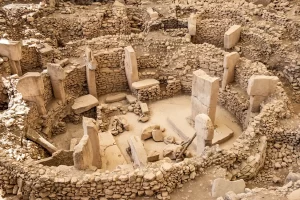
Britannica says “The development of bronze [a yellowish-brown metal which is a mixture of copper and tin], and later iron, technology in this period led to the making of metal tools for working wood, such as axes and saws. Less effort was thus required to fell and work large trees. This led in turn to new developments in building technics; timbers were cut and shaped extensively, hewed into square posts, sawed into planks, and split into shingles.
Log cabin construction appeared in the forested areas of Europe, and timber framing became more sophisticated. Although the excavated remains are fragmentary, undoubtedly major advances were made in timber technology in this period; some of the products, such as the sawed plank and the shingle, are still used today.”
According to International Timber, “Timber is one of the longest standing building materials in existence, used over 10,000 years ago as the primary construction material. Now, timber continues to be used to create both modest buildings and impressive structures that range from awe-inspiring timber high rises to Chinese temples!
The use of timber was the most important natural resource pre-civilisation. Modern timber framing was developed in 9th and 10th centuries and is seen today as an ‘exceptional building skill’. Timber framing techniques then evolved across Asia, Africa as well as the undiscovered Americas.”
Britannica further states “Like the other great river valley cultures, Egypt built its cities with mud brick; fired brick did not appear there until Roman times. Timber was used sparingly, for it was never abundant. It was used mainly in roofs, where it was heavily supplemented by reeds. Only a few royal buildings were built with full timber frames. It was against this drab background of endless mud brick houses that a new technology of cut-stone construction emerged in the temples and pyramids of the 4th dynasty (c. 2575–c. 2465 bce).
Egypt, unlike Mesopotamia or the Indus valley, had excellent deposits of stone exposed above ground; limestone, sandstone, and granite were all available. But the extracting, moving, and working of stone was a costly process, and the quarrying of stone was a state monopoly. Stone emerged as an elite construction material used only for important state buildings.”

Image by KennyOMG, licensed under Creative Commons Attribution-Share Alike 4.0,”— Diy.org. The pyramids are mostly built from limestone blocks, with granite used for inner chambers and mortar used to bind parts of the structure. The stone forms the dominant material, with a combination of different rock types. The pyramids were erected circa 2575–circa 2465 BCE, according to Britannica. Britannica describes these Pyramids of Giza as The oldest of the Seven Wonders of the World.

In ancient Egypt, stone emerged as a transformative material in royal construction, esteemed not only for its strength and durability but also for its symbolic role in ensuring eternal protection for the pharaoh’s legacy. This shift marked a dramatic departure from earlier brick traditions, culminating in monumental works engineered with massive limestone walls enclosing courtyards.
“The Egyptians developed cut stone for use in royal mortuary buildings not only for its strength but also for its durability. It seemed the best material to offer eternal protection to the pharaoh’s ka [(in ancient Egypt) an attendant spirit supposedly dwelling as a vital force in a person or statue], the vital force he derived from the sun-god and through which he ruled. Thus stone had both a functional and symbolic significance. Within the long tradition of brick masonry, stone construction appeared abruptly, with little transition.
The brick mastaba tombs of the early kings and nobles suddenly gave way to the stone technics of King Djoser’s ceremonial complex at Ṣaqqārah, the construction of which is associated with his adviser and builder Imhotep. It is a structure of somewhat curious and uncertain forms but of great elegance in execution and detail. It consists mostly of massive limestone walls that enclose a series of interior courtyards,” expounds Britannica.
It adds “There was some experimentation with iron beams to reinforce longer spans in stone, but the maximum remained about 5 to 6 meters (16 to 20 feet). Longer spans were achieved with timber beams supported by the stone frame; the solid stone roof slabs of the great Egyptian temples could not be duplicated.”
Britannica explains that Egypt’s stone frame spread throughout various regions. “Use of the Egyptian stone frame diffused throughout the eastern Mediterranean after 1800 bce, and the cultures of mainland Greece were particularly attracted to it. In the Greek world of the Aegean and southern Italy, many stone-frame temples were built; some have survived to the present day in various states of preservation. They were built largely of local marble or limestone; there was no granite for huge monoliths.
It was from the Etruscans, who lived in the northern part of Italy, that the Romans derived much of their early building technology. The Etruscans, probably influenced by a few rare Greek examples in southern Italy, developed the true arch in stone. A late specimen of the 3rd century bce is the Porta Marzia, an arched city gateway with a span of about 6 meters (20 feet), in Perugia.”
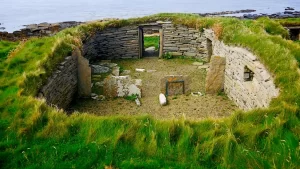
Britannica additionally says “The Romans adopted Etruscan stone construction based on the arch and built many spectacular examples of what they called opus quadratum, or structures of cut stone blocks laid in regular courses. Most of these were public works in conquered provinces, such as the late 1st-century-bce Pont du Gard, a many-arched bridge and aqueduct spanning 22 meters near Nîmes, in France, or the fine bridge over the Tagus River in Spain, with a span of almost 30 meters (100 feet), built about 110 ce.”
“Oddly enough, such long spans in stone were never applied to buildings. The surviving Roman buildings with stone arches or vaults have typical spans of only 4 to 7 meters (15 to 25 feet); small stone domes with diameters of 4 to 9 meters were built in Roman Syria. Many of these structures survived the fall of the empire, and they became models for the revival of stone construction in medieval Europe, when masons again sought to build ‘in the Roman manner. The Romans also inherited the trabeated stone frame from the Greeks of southern Italy and continued to build temples and other public buildings with this type of construction into the 3rd century ce.”
Modern humanity is beginning to imitate ancient building wisdom
For much of the industrial era, people thought that modern materials had completely transcended ancient methods. Steel, reinforced concrete, and glass turned into symbols of progress and civilization. But today, architects, engineers, and environmental researchers are increasingly returning to older techniques because some ancient approaches solved problems which modern construction begot.
Rammed earth and mudbrick construction are being reconsidered for their natural insulation and low environmental impact. Timber architecture is restored through advanced engineered wood, even in tall buildings. Roman-style concretes are being studied because some ancient marine structures have survived longer than modern concrete exposed to seawater. Traditional urban designs — thick walls, courtyards, shaded streets, natural ventilation — are being revived in hot climates, to reduce energy consumption.
So, the irony is striking: the future may partially depend on recovering forgotten ancient knowledge. In that sense, humanity is rediscovering something important: progress does not mean always abandoning the old system; sometimes it involves understanding why the old mechanism has endured.
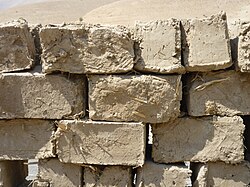
Initially on 19 November 2021, National Geographic released an article headlined “The extraordinary benefits of a house made of mud” last updated on 19 January 2023. This article highlights that traditional construction materials and ancient construction techniques should not be forsaken, “Particularly not now, when climate change is making already hot regions even hotter, and concrete is fueling some of that warming.
The manufacture of cement, a key ingredient of concrete, accounts for around 8 percent of global carbon dioxide emissions. Proponents of traditional building techniques are adamant that climate-battered communities need more, not fewer, homes, schools, and civic buildings made in the traditional way.”
Francis Kéré, a Burkina Faso–born architect and globally renowned advocate of eco-sensitive architecture told National Geographic “The reality is that cement construction is simply sexy. But it’s bad sex. It is not producing comfort.”
National Geographic further states “Mud walls, when built thick enough, can absorb and store a lot of heat, which then dissipates as outside temperatures cool in the evening. By contrast, thin concrete cinder blocks, with their hollow recesses, allow heat to pass through freely, rapidly warming interiors.”
ACASH [Advisory Center for Affordable Settlement & Housing], with its 17 June2023 article titled “Adobe Construction”, also explains that using adobe construction materials provides environmental benefits. “One of the most compelling reasons to embrace adobe construction material is its minimal environmental impact. Unlike concrete or steel, which require significant energy to produce, adobe is made from renewable resources that are readily available in most regions. The production process involves little more than mixing, shaping, and sun-drying, resulting in a dramatically lower carbon footprint compared to conventional building materials.
The sustainability of adobe extends beyond its production. Buildings made from this material often have excellent thermal performance, reducing the need for artificial heating and cooling. This natural insulation helps conserve energy and lowers utility costs over time. Moreover, because adobe construction material does not rely on synthetic chemicals or additives, it avoids the potential health risks associated with modern building materials. By prioritizing adobe construction material, societies can take meaningful steps toward reducing their ecological footprint.”
SWASYA’s 12 December 2025 story entitled “Mud Blocks: The Timeless Building Material for a Sustainable Future” echoes “Well, what do you think of when you consider building materials? Concrete, steel, glass? Even though these are indeed most commonly considered today in the building profession, one archaic product is becoming fashionable again, blocks. Well, you heard that right! Mud blocks, adobe blocks, or compressed earth blocks, nowadays, are being paid extra attention concerning sustainability, cost-effectiveness, and versatility.
Mud blocks were ubiquitous in ancient Mesopotamia, Egypt, and the Indus Valley. Rammed earth techniques were even incorporated into the Great Wall of China. Modern revival: the current revival of mud blocks is occurring due to an increased emphasis on sustainability. Why Choose Mud Blocks? The advantages offered by mudblocks render them highly preferred construction materials in the contemporary world.”
Some of the advantages, according to SWASYA, besides the fact that mud blocks are eco-friendly, sustainable, and energy-efficient, they offer health benefits. “Locally available soil for making mud blocks minimizes transportation and environmental impact. Mud blocks contain no dangerous substances which makes them safe to use for both construction workers and future occupants. Breathable walls: these materials enable vapor to escape the area which decreases mold development while providing better air quality inside buildings.”
Lessons
Perhaps the deepest lesson from the ancient civilization which employed these extremely old materials to contemporary humanity is humility. Modern humanity often assumes itself to be at the peak of intelligence because it possesses digital technology and intensely advanced industrial power. Yet the continued survival of ancient structures forces a sobering realization: people thousands of years ago solved engineering, environmental, and urban problems with astonishing sophistication, using tools far simpler than ours. In some respects, they built less aggressively but more wisely.
The oldest building materials remind humanity that true progress is not merely the ability to build higher or faster, but the wisdom to build in ways that endure — physically, environmentally, and morally.
There also lies a civilizational lesson hidden beneath the physical materials themselves: civilizations collapse when they lose the capacity to think beyond immediate gain. Several ancient ruins surviving today are reminders that endurance is not accidental—it is developed into a culture.
One major lesson is that durability matters more than spectacle. Ancient societies built with materials drawn directly from nature — stone, clay, wood — and many of their structures still stand thousands of years later. Meanwhile, much of modern civilization is obsessed with speed, scale, and visual splendor, often producing buildings designed more for economic turnover than permanence. The contrast quietly raises a question: has humanity become technologically advanced while growing less capable of building for the long future?
Another lesson pertains to relationship between humans and nature. Early civilizations worked in symbiosis with the environment. Modern civilization often behaves as though nature is merely raw material for extraction rather than a partner in survival. Yet today, amid climate crises, environmental degradation, and urban overheating, architects are increasingly rediscovering ancient techniques — earth construction, natural cooling, lime plasters, timber engineering — precisely because older societies sometimes understood sustainability better than industrial modernity.