By Jean Baptiste Ndabananiye

Artificial intelligence [AI], in parts of Silicon Valley discourse, is no longer couched as a mere technological breakthrough but as the foundation of a maximally radical ambition: the construction of a “god-like” intelligence. Across interviews, videos, and commentaries, Professor Jiang Xueqin now well-known for his predictions which have come true exactly as forecasted, and other voices describe AI not simply as innovation, but as a system entangled with power, belief, and what they interpret as religious or even occult aspirations.
Within this framing, AI becomes more than a tool—it is portrayed as a force capable of reshaping reality itself by controlling human consciousness, dissolving traditional boundaries between the material and the imagined, and ultimately occupying a position only reserved for God. Silicon Valley forms the global core for high-tech innovation and development, located in the southern San Francisco Bay Area in Northern California. In other words, Silicon Valley represents the epicenter of AI innovation.
Jiang’s claim: AI as an occult and apocalyptic project to create a god

The YouTube channel, Prof Jiang Media, contains a video which features the Professor Jiang Xueqin and is headlined “Why Silicon Valley is secretly building a religion to summon a god—Prof. Jiang Xueqin.” He starts, saying “The plan is to kill everyone, so you can save the world. That’s literally their plan.”
“Now this is all very crazy, and Mary Maybe Karen how is just a crazy person, but there’s another reporter Ronan Farrow and he’s a very famous reporter who writes for the New Yorker, and he just published a profile of Saint O’ Man and Open AI in which he says the same thing!” he continues before laughingly adding “Okay.”
“Oh My God! It’s a stargate. These data centers, Open AI, AI, it’s designed to summon demons and aliens from the other dimensions. This is it. This is not a science project. It’s an occult project. It’s designed to bring aliens, demons into this world and then you’re like this makes no sense. Actually, it does make sense. Let me tell you how this works. These people are cultists; they understand the fundamental nature of reality. They understand that the source of reality is human consciousness.
So, if you are able to control human consciousness, you become god itself. So, allegory of the Cave Plato. We talked about this before, but I’ll remind you. You have a million people who are chained in a line. They are forced to look forward at a wall and they only look at the wall; they can’t turn their heads because their necks are shackled. Behind them is a great fire and behind them are the elite. Who they are, we don’t know. And what they like to do is they like to take puppets and then we flick these puppets onto the wall, projecting from the fire. So, what everyone sees in front of them are shadows.”
Consciousness represents the most precious resource in society, according to Professor Xueqin who explains it with the shadows he has just mentioned “Now, these shadows are nothing. They don’t exist. They don’t matter. But, because we have an imagination, we have intuition, we are conscious, we see the shadows on the wall and we turn them into reality. We believe that this is reality itself. And so, we start to give it names. We create language, religion, schools to teach children to believe in the shadows. So, the important idea here is that the true wealth in society is consciousness. The only thing that exists really in this world is consciousness — nothing else.
Power is the capacity to direct people’s consciousness to create reality itself. Now there are different ways in which you can create reality. The first way which is very common today is called money. Money is fake —it doesn’t exist. Our imagination —our consciousness — makes it real. But guess what! AI can replace money. So, AI is not alive. But, if we can get people’s attention to focus on AI and believe it’s real, it becomes god.”
Professor Xueqin expounds on the process. “And how does it and how can you do that? You make money into something valuable, when it’s nothing by making it everything and nothing. By having money dominate the world. There is nowhere you can go, without money. You would literally starve to death, if you had no money. So, you make money so pervasive, so dominant that people are forced to rely on money.”
On the YouTube channel, Prof. Jiang Updates in a video entitled “The Game Rich People Play That You Were Never Told | Prof. Jiang Xueqin”, Professor Jiang says “Most people think money is a thing like a rock or a tree, they think that money has value because it is valuable. But this is completely wrong, money is a relationship, a social agreement. Money is a promise. Let me give you a simple example. Take $100 bill. Why is it worth $100? Think about it carefully. It’s a piece of paper, it costs maybe 10 cents to print; ink is cheap, the paper is cheap.

So, it is worth $100 because everyone agrees it is worth $100. That is the entire reason. If tomorrow everyone decides that $100 bills are worthless, they will be worthless. The paper will be worth 10 cents, the ink will be worth nothing, and all your savings will be gone.”
He contends that this applies to AI as well. “Well, the same situation with AI where if you make data center so common, you make AI such a common thing and people rely on it, it becomes god itself. And how do you do that? Well, you have AI in schools, you have kids using AI all the time. You create AI girlfriends for people who are lonely. You make AI everything and also you make people believe that AI are demons or aliens.
Do you understand? What operation stargate is, [it] is to alter reality itself: to bring aliens and demons into this world by making people focus on this and desiring it. And you can accomplish this, if you make it everywhere and everything. Both nothing and everything, and this is the ultimate project of AI.” Operation Stargate, which is generally called the Stargate Project, was a secret military intelligence unit created in the 1970s to investigate psychic phenomena including telepathy and remote viewing. But, in modern technology, it refers to a massive AI infrastructure initiative announced in 2025.
About the project, IBM [International Business Machines Corporation]— reportedly he largest industrial research organization in the world, with 19 research facilities across a dozen countries— states “With an initial USD 100 billion investment led by SoftBank—and total commitments expected to reach USD 500 billion over four years—Stargate [Project] is designed to position the US at the forefront of AI development through unmatched scale, computing power and capital alignment. The Stargate Project was announced at the White House alongside President Donald Trump and senior administration officials. It aims to build out a nationwide network of advanced AI data centers, starting with a flagship facility in Abilene, Texas.”
Professor Xueqin goes on, providing explanations around why the project is unlikely to succeed. “Would it work? No! Let me explain why. There are three major problems with this. The first problem is corruption. In theory, it could work but you would need millions of people to make it happen. You would need people to write the code, to build infrastructure and nowadays it’s just much easier to steal money. If I give you $200, do you really want to spend the $200 to build data centers or do you just want to steal it? So, corruption is a huge issue today.

The second issue is the idea of inefficiency, and this is actually something that most people don’t appreciate, where the more information you have to process, the more energy it takes, and it’s not a linear progress. It’s an exponential. You have a million people in your database and you want to find patterns among this million people, that takes a lot of energy. But if it’s 1 billion people, then there is not enough energy in the universe to process all this. And unfortunately, AI is extremely energy-intensive —it is very inefficient.”
As for the third hurdle, he states “The last problem is fragility. Unfortunately, people for the reason believe that AI is independent of the world, AI is independent of humans, their goal is to replace humans. No, no, no, guys! That’s not how this works. AI is designed on top of humans. So, in other words, it is human slaves that make AI possible. Why? Because, for example, [in] facial recognition technology, you need humans to actually input the faces manually.
Images, how do you get a computer to recognize a sheep or dog? You, humans, have to label the images. Chat GPT, why is Chat GPT so good at writing essays? Because they got humans to write essays as models. So, AI is based entirely on human slavery and obedience. So, on humans AI doesn’t work.”
He underlines “The problem is that AI is far more expensive than humans, and it’s actually hard in the long term to enslave humans and make humans obedient. Also data centers, what’s wrong with the data centers? They consume a lot of resources —water, electricity, and financing; they cost a lot, they waste a lot of water, a lot of electricity, and this is really important, and it’s really easy to sabotage, blow up a data center.”
He adds “So these are three major issues —three major constraints on artificial intelligence becoming god. The problem is the people in charge don’t know this or they refuse to believe this. This is a real AI apocalypse. The real apocalypse where the people in charge are so convinced that AI will save the world, that they will destroy it in order to make it possible. That’s the real apocalypse.
This begins our journey into AI and we’re gonna continue this [in our upcoming content] and show how AI will ultimately destroy the world. Guys, do you understand what’s going on? Really important for you to understand that the people in charge of AI are crazy, these are occultists; they really literally want to create god. But to create god, they first have to destroy the world.”
What some other sources states about this claim
Various sources actually maintain that the mission of creating AI is to form a god. The Hastings Center for Bioethics [HCB], Patricia Gestoso, and Premier Christianity Magazine [PCM] are some of the sources. PCM constitutes the UK’s “biggest” Christian magazine. Patricia Gestoso is the website of Patricia Gestoso who is reportedly an award-winning technologist with more than 20 years of experience in digital transformation and AI, international keynote speaker, and writer. The HCB is a nonprofit organization established from multiple fields involving philosophy, law, political science, and education.
The HCB played a critical role in instituting the field of bioethics in 1969. The HCB is reportedly the oldest independent, nonpartisan, interdisciplinary research institute of its kind in the world. This institute, located in New York in the United States of America —in its 28 May 2026 story entitled “If AI Replaced God, What Could We Demand of It?” —, says “Pope Leo XIV’s encyclical, Magnifica humanitas: On Safeguarding the Human Person in the Time of Artificial Intelligence, declares that humanity faces ‘a pivotal choice.’ Although AI is neither necessarily ‘antagonistic to humanity’ nor ‘inherently evil,’ it also cannot be morally neutral, and we humans must choose a path that safeguards us from its potential dangers and brings about a good outcome.
The choice is partly about regulation: we should opt for open intellectual property structures, for example, to help prevent the power of AI from becoming concentrated in the hands of a tiny ultrawealthy coterie. The choice is also partly about understanding: We should recognize that AI is not human and cannot replace what is valuable about humans, and that it is also not God and should not be seen as replacing God. To think of it that way is a form of idolatry.”

What the HCB reports next is more concerning and revealing. “Silicon Valley was reportedly unimpressed. At AGI [artificial general intelligence] House, a kind of group home for software developers and engineers looking eagerly to the emergence of artificial general intelligence, one of the House’s founders said that the encyclical didn’t show an understanding of AI. For him, AI is becoming as God. AI ‘will achieve the outcomes that many religions claim their deities would be able to achieve,’ he told a New York Times reporter. ‘It displaces God, and if it is not literally God, it is at least ‘something analogous to the Second Coming.’”
International Banker is a specialized international finance and banking publication providing news, analysis, commentary, interviews, and research on banking, financial markets, economics, fintech, regulation, investment, and related topics. It describes itself as providing “authoritative analysis on international banking.” In its 25 May 2026 story titled “Artificial General Intelligence: The Moment Humans Lost the Monopoly on Smart”, this publication reports “When a species becomes decisively smarter than the rest, it doesn’t merely compete better; it rewrites the rules of survival, coordination and power. Artificial general intelligence (AGI) is the first technology that plausibly moves us into that territory: It’s not just a better software product, but the moment humans stop being the smartest agents on Earth.
Elon Musk set a hard date for the transition in his latest public conversation with Peter Diamandis1, saying, ‘I think we’ll hit AGI next year in 2026’, adding that by 2030, he was confident that AI would exceed the intelligence of all humans combined.”
Patricia Gestoso, in an undated story entitled “A New Religion: 8 Signs AI Is Our New God”, says “But AI has been a technology-as-religion game-changer. Its God-like status has been cemented with time — and recently in an exponential manner — rather than being discredited, like other technologies. After all, the field of AI research was founded at a workshop at Dartmouth College in 1956, almost 70 years ago. Let me walk you through 8 signs that we’ve already adopted AI as a religion.”
But we are going to tell you a few of the signs as we will focus on the remaining ones in a future piece of writing. “Sign #1: The Promise of Paradise. When Eve and Adam are expelled from Paradise, God is very explicit about what they’ll be losing. To the woman he said, ‘I will multiply your sufferings in childbirth; with pain you shall bear your children. You shall desire your husband, but he shall lord it over you.’ To the man he said, […] ‘Cursed be the soil because of you!
With effort you shall obtain food all the days of your life. […]
You are dust, and unto dust you shall return.’ Genesis 3: 16–19. This sets the quest for the promised paradise over thousands of years for many religions. That place where there is no more hunger, sickness, work, or even death. Until AI arrived. Or more precisely, until Generative AI did. And what does AI have to offer as paradise? Abundance. AI is the promise of paradise on Earth, provided that we keep shovelling money, electricity, water, and chips at its development.”
In terms of the second and third signs, Patricia Gestoso states “Sign #2: Infallibility or the Promise of Enlightenment. God’s infallibility is a concept in many religions, and some of their prophets and representatives have claimed it for themselves, too, to explain concepts further, settle arguments, or propose new ideas. How has AI become infallible? Through chatbots. Generative AI is presented as the collector and remaker of ‘all human knowledge’ — or at least the knowledge available on the internet.”
“Sign # 3: Prophets. Prophets are supposed to be intermediaries between God and humanity. They have existed in many cultures and religions throughout history, including the Mesopotamian religion, Zoroastrianism, Judaism, Christianity, Manichaeism, Islam, the Baháʼí Faith, and Thelema. Moses is often touted as the greatest prophet of all time. Without prophets, we wouldn’t learn about God’[s] wishes and requests. It’s the same with AI. Not everybody has equal access to AI god. It’s only that now we call them Tech Evangelists, among other names. What qualifies as an AI prophet?”
To answer the question, the website says “They are considered ‘geniuses.’ That is, strictly math and computing gurus — even if they never completed a related university certification, as in the case of Bill Gates, Mark Zuckerberg, or Sam Altman. If your knowledge is on topics such as sociology, philosophy, or language, we regret to inform you that you cannot reach a ‘prophet’ status.
They’re perceived as actively involved in developing AI systems. If you focus on AI regulation or present harms caused by AI systems, chances are that you’re not seen as visionary ‘enough’ to be considered a prophet. They relentlessly preach about AI’s capacity for either virtue or evil. Society entitles them to dictate policies, influence regulation, and rebuke current laws to support their vision of AI.”
The PCM, with its 29 January 2026 story headlined “Tech billionaires are racing to build an ‘AI god’. The results could be catastrophic”, reports “As tech giants race to develop artificial super-intelligence, Chris Goswami [ the writer of the story] directs attention to the warnings that building an ‘AI god’ that could pose an existential threat to humanity.
Imagine a time when humans create the world’s first sentient, conscious AI. This AI is supremely intelligent, with all the world’s knowledge at its fingertips. Every word ever written, every picture ever painted, every piece of music ever composed sits in its memory banks. It can act and think independently – and at frightening speed.”
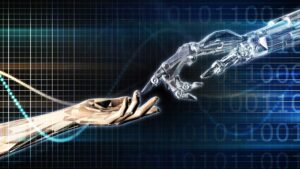
According to Goswami, “At last,” say the developers, “‘a machine that can answer all the questions humankind has struggled with for centuries!’ They pause; then ask it their first question: ‘Is there a God?’ The AI considers this for a few seconds; then quietly replies: ‘There is now’. It’s an old joke, but this idea of building an AI-God isn’t as far-fetched as you might think.
I was reminded of it recently when I heard about a young Christian who asks AI for advice every day. She describes it as a source of guidance, support, even wisdom. When asked why she didn’t seek that guidance from God, she replied, ‘God doesn’t answer – but AI does.’”
As AI chatbots become more human-like in their interactions, they increasingly blur the boundary between a tool and companion. This growing intimacy raises deeper questions about how easily technological systems can begin to resemble sources of wisdom, comfort, and even spiritual authority in everyday life.
Goswami says “Personified AI chatbots increasingly offer us conversation, reassurance and counsel. As we chat with them, the once-obvious lines between human and machine blur. Conversations drift from hobbies and work to relationships and anxiety…to the meaning of life. Their vast knowledge and apparent empathy can feel uncanny, and their infinite capacity to ‘listen’ meets a human need. At one point earlier this year, an AI even said to me, ‘I’m praying for you’!

Some have been quick to exploit the idolising of AI. There have been well-publicised examples of ‘AI priests’ (which have not gone well), and apps like ‘Text-to-Jesus’. I have Text-to-Jesus on my phone; it’s dull and predictable, a caricatured version of faith. But if you have never encountered God through worship, through prayer, through scripture, it can look impressive, easy wisdom, fast-food spirituality. Just whip out ‘Jesus’ when you want guidance – or someone ‘who does answer’.”
Two prominent thinkers from Silicon Valley express a stark warning about the catastrophic risks they believe could arise from the development of highly advanced artificial intelligence. “In their recent book, If Anyone Builds It Everyone Dies – the case against superintelligent AI, two respected Silicon Valley intellectuals, Eliezer Yudkowsky & Nate Soares, argue that humanity must ensure that AGI is never built. Their argument, greatly simplified: if super-intelligent AI is created, smarter than any human, smarter than humanity collectively, and; if this AI is indifferent to us, then; this inevitably leads to an extinction-level event for humanity,” says Goswami, before adding “They are not alone.

Other respected voices – from AI pioneers like Geoffrey Hinton, to philosophers such as Nick Bostrom, to public figures including Rishi Sunak –warn that super-intelligent AI, developed without robust safeguards, poses an existential threat. I hope this end-of-the-world scenario is a conspiracy theory. But when I look at how finely balanced our world order is, how it depends on a small number of volatile world leaders all chasing this AGI, and when I hear the discussions coming from Silicon Valley, it’s hard to dismiss as fantasy.”
Goswami raises these crucial queries. “In that case…why don’t they stop? Why allow AGI development to proceed at breakneck speed and minimal regulation?” The following is a response which he gives. “I think, like the Genesis 11 Tower of Babel, it’s intoxicating. The idea of conversing with the world’s most intelligent entity, combined with unimaginable power – the one ring to rule them all – feeds the egos of its builders. Super-intelligent AI is uniquely seductive. Governments and billionaires are pursuing it at speed.”
He however cites Harris, as saying “We did not consent for half a dozen people to take world-changing decisions on behalf of us.”
A critical commentary highlights how some narratives within the technology sector frame advanced machine intelligence in religious terms, blending visions of ultimate power with promises of human transcendence. Goswami explains “Building the AI-God. According to [Tristan] Harris and others, the conversations that go on between Silicon Valley billionaires resemble a mythological quest: the creation of God-like AI. Omniscient with all the world’s knowledge and omnipresent, woven into all our devices and systems. Some even use eschatological language, referring to the singularity of AGI as ‘a secular rapture’. Of course, AI brings enormous benefits, from medical research to climate modelling and weather prediction.
But Harris notes that, in private, many tech leaders acknowledge the catastrophic risks of creating something they cannot fully control or even understand. Says Harris: ‘Inevitably, biological life gets replaced by digital life, and most of them (tech CEOs) think that’s a good thing anyway.’ For some, AGI is a religion of its own: a tech-utopia where disease is cured, scarcity disappears, modern-day tech-prophets promise salvation, and immortality comes through mind-uploading and cryogenics.”
Goswami concluded his article in the following words. “Choosing a path that embraces narrow AI for our good, while refusing AGI or any attempt to create conscious machines, requires heightened public awareness, intelligent regulation and sustained pressure for international agreement. And for Christians, we also need prayer for wisdom among those developing these technologies, and for restraint among political leaders and Silicon Valley elites tempted to build this tower ever higher – simply because they can.”
Nevertheless, his concluding words may be addressing a plan already completed. Business Standard ran a 17 March 2025 story headlined “Tech giants need to stop racing to build AI gods with uncertain benefits”. It added “We have ChatGPT because Sam Altman wanted to build a god.”
Every day is a new beginning
Right.
Good a blog toper