By Jean Baptiste Ndabananiye
When faced with adversity, our instinct is often to avoid it, resist it, or wait for it to pass. But nearly 2,000 years ago, the Stoic philosopher and Roman Emperor Marcus Aurelius offered a radically different perspective: “What stands in the way becomes the way.” It constitutes a statement that has outlived empires and philosophies, not because it’s comforting—but because it stands true.
This quote flips our understanding of hardship on its head: the very thing that blocks our path represents the thing that defines it. In a world obsessed with shortcuts and comfort, the late Marcus challenges us to lean into resistance, seeing it not as a barrier, but as a doorway to stunning growth, meaning, and transformation.
The power of perspective: turning trials into tools
At the heart of Aurelius’ insight lies a shift in perspective. Life doesn’t promise smooth roads—it promises experience. When we hit obstacles—be it a failed project, rejection, illness, or heartbreak—our first impulse might be frustration or defeat. But to a Stoic, the challenge is not just something to endure; it forms the very material with which greatness is forged. Obstacles are not detours—they’re instructions. Once we change how we see the obstacle, we change how we move through it.
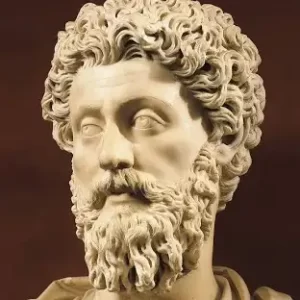
This shift in perception—from obstacle to opportunity—is not about denying pain or pretending struggle is pleasant. Rather, it includes acknowledging that resistance does not constitute a signal to stop, but a cue to be transformed—often unbelievably greatly. Consider how nature works: diamonds are formed under pressure; seeds must break to grow. In much the same way, personal growth rarely comes during periods of ease. It is in discomfort that we meet the rawest version of ourselves—and that is where real work begins.
When you view your obstacle as a tool, it becomes a source of self-awareness. A rejection is no longer evidence of inadequacy, but an invitation to maximally refine your purpose. An illness is no longer just suffering—it can be a reminder to slow down, re-evaluate, and live more deliberately. Each difficulty, no matter how unwelcome, carries a lesson coded within it—often one that would never be revealed without the friction of challenge.
The Stoics believed that we don’t control what happens to us, only how we respond. That response begins with perspective. Do we see the problem as a curse, or a forge? As something that broke us, or shaped us? The answer defines whether we emerge bitter or better. Stoics are individuals with the quality of experiencing pain or trouble without complaining or showing emotion. The Collins Dictionary characterizes “stoicism” as acceptance, patience, and indifference—where indifference refers not to apathy, but to a profound detachment from both pleasure and pain.
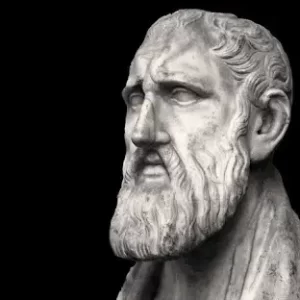
Stoicism, an ancient Greek philosophy founded in the 3rd century BCE by Zeno of Citium, is often misinterpreted as emotional suppression. In reality, Stoicism constitutes a sophisticated framework for emotional mastery. It teaches resilience, self-control, and rational thinking—qualities that are remarkably beneficial for mental health. In today’s fast-paced world, where stress, anxiety, and depression prevail, the Stoic approach offers a powerful antidote. At its core, Stoicism teaches that we should focus on what lies within our control and free ourselves from the grip of what does not. This simple yet profound shift in mindset can significantly improve mental well-being.
In the end, the obstacle forces a kind of creativity. It demands that we look for alternate paths, develop inner strength, or build a new skill. In doing so, we don’t just overcome—we evolve. As Aurelius reminds us, the challenge doesn’t divert us from the path; it becomes the path. And the moment we realize that, the weight of the obstacle doesn’t vanish—but our ability to carry it, and learn from it, expands.
Growth through resistance: how struggle builds strength
Just as a muscle grows only when challenged, the human spirit matures in the face of resistance. “What stands in the way becomes the way” suggests that struggle is not only inevitable but essential. Without failure, we don’t develop resilience. Without loss, we don’t learn to cherish what matters. In this sense, hardship doesn’t hinder us—it strengthens us. Every obstacle serves as a chance to cultivate patience, adaptability, and courage—the qualities most needed not when life is easy, but when it’s hard.
Strength does not arise in stillness—it emerges in resistance. Just as lifting heavier weights tears and rebuilds muscle fibers stronger, life’s challenges break down our assumptions, our comfort zones, and even our egos—so we can rebuild into something more resilient. The growth may not be visible at first. In fact, it often looks like defeat. But beneath the surface, struggle is developing the kind of strength that lasts: emotional endurance, mental clarity, and spiritual depth.
Growth through resistance requires discomfort, and discomfort is not a sign you’re doing something wrong. It often constitutes a signal that you’re undergoing something meaningful. Whether you’re navigating grief, facing a failed dream, or rebuilding after betrayal, these moments become inner training grounds. We may not choose the trials, but we can choose to let them carve out strength instead of bitterness.
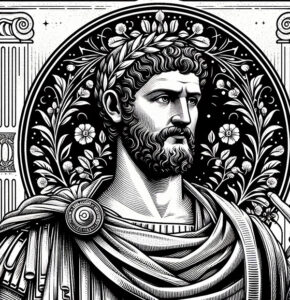
Marcus Aurelius, born into a distinguished Roman family, received a comprehensive education marked by Stoicism. As a Stoic philosopher, he emphasized virtue, resilience, and acceptance of the natural order, which is reflected in his famous work ‘Meditations.’ His philosophical rule as emperor is considered to be in line with Plato’s idea of a Philosopher King, and his teachings on self-discipline and virtue guided others during troubled times. Marcus Aurelius left behind not only a philosophical legacy but also architectural works that celebrated his military victories and philosophical rule. His influence on literature and his enduring legacy have continued to inspire leadership and personal development long after his time.“
Think of history’s most inspiring figures—those who have created an incredibly colossal impact weren’t shielded from adversity. They were shaped by it. Their legacies were not built in moments of comfort but in hours of uncertainty, loss, and perseverance. What seemed at first to block their path later defined it.
The same holds true in everyday life. A difficult relationship can teach boundaries and emotional intelligence. A setback at work might ignite innovation or fuel a new direction. Struggle forces us to adapt, to examine our values, and to rely on strengths we didn’t know we held.
There lurks no shortcut to real strength—it’s earned, not granted. And the process is often uncomfortable. But once you’ve passed through resistance and come out stronger, you begin to welcome it. Not because it’s pleasant, but because it’s powerful. The struggle doesn’t just renders you tough—it makes you true. In resisting less and embracing more, you realize: growth never stood beside the obstacle—it lay within it.
Action over avoidance
Choosing to engage with what blocks you. The quote also carries a call to action: don’t sidestep the challenge—move through it. When something stands in your way, it offers direction, not just delay. Do you fear public speaking? That fear is your path to confidence. Do you face rejection in your work? That rejection is pushing you toward mastery. Life invites us not to escape discomfort but to transform it. What was once your greatest obstacle can become the defining chapter of your personal evolution—if you dare to walk toward it.
Avoidance feels safe—but it keeps us small. Every time we dodge a difficult conversation, procrastinate on a dream, or retreat from fear, we reinforce the false belief that we’re not capable of confronting what challenges us. But the late Marcus Aurelius didn’t say “what stands in the way should be avoided.” He said it becomes the way. The implication is clear: progress demands engagement, not evasion.
When we lean into what scares us—whether it’s uncertainty, vulnerability, or failure—we reclaim our agency. Avoidance postpones discomfort but prolongs suffering. Action, even if imperfect, creates momentum. Taking a single courageous step toward what blocks you transforms fear from an immovable wall into a door—one that opens only when pushed.
Choosing action doesn’t mean rushing blindly. It means engaging fully in action to change your status, again and again, even when the outcome is unclear. It signifies recognizing that the challenge in front of you is not an interruption, but part of the process. A difficult decision, a creative block, a crisis of confidence—each is an invitation to grow into your potential. But you only grow by stepping into the fire, not circling around it.
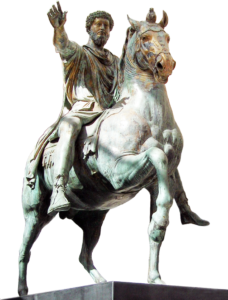
Often, what we avoid the longest becomes the very thing our future self wishes we had faced sooner. The fear of failure? It’s really the fear of discovering your strength. The sting of rejection? It’s sharpening your clarity and resolve. Avoidance keeps life on pause; action puts it in motion.
In the end, action isn’t about heroic leaps—it’s about intentional steps. When you dare to engage with what resists you, you not only move forward—you evolve. The obstacle is transformed, not by waiting for it to disappear, but by deciding to face it. Because growth doesn’t happen in avoidance—it happens in movement.
Closing thought
Marcus Aurelius didn’t write these words from a peaceful retreat—he wrote them in the midst of war, loss, and deep responsibility. His wisdom speaks across centuries because the truth hasn’t changed: pain, resistance, and failure are not the end of the path—they are the path. What stands in your way today will be what ultimately leads you to yourself.
And when the path feels too heavy or uncertain, remember this: the victory is not in never stumbling, but in choosing to meet the moment. Show up tired. Face the moment, unsure. But rise up anyway. Because each time you do, the obstacle begins to lose its power.