By Ephrem Murindabigwi
When drought grips Uganda’s Karamoja region, the immediate explanation is often climate change. Yet the region’s recurring hunger crises raise a deeper question: are erratic weather patterns alone responsible or are governance failures, environmental degradation, and political attitudes allowing drought to escalate into deadly famine?
Meanwhile, there exist different nations across the globe which have proven that successfully fighting droughts and desertification is possible, as these articles : Desertification in Mauritania and beyond— success stories from China, Israel and South Korea offer hope and Can initiatives like the Green Amayaga Project in Rwanda help to shape responses to a worldwide crisis:land degradation-erosion, drought and desertification? establish it.
As desperate families in Uganda certainly mourn loved ones lost to starvation, controversial official remarks can’t go overlooked, because the remarks are likely to ignite a debate over accountability. Against this background, this investigation examines whether Karamoja’s tragedy is primarily a natural disaster or a preventable human-made crisis.
Brief backdrop of the problem
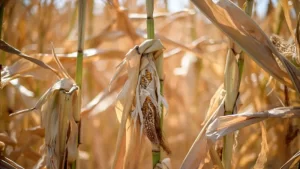
The Ugandan Government is stating that at least 16 people have starved to death in recent weeks in the north-eastern region of Karamoja as a result of a long drought. Farmers report that their crops have failed because the region has gotten little or no rain since April when the planting season starts. Maize, sorghum and soybeans in big plantations have therefore been devastated, ruining hopes of an excellent harvest.

Robinah Nabbanja serves as the Chief of Government. She says that thousands of families have been thrown into a foodless situation, agreeing that the dry spell which has wreaked havoc on crops is behind this woe battering these Ugandans.
The government, meanwhile, says that it has already begun distributing emergency food aid. Nabbanja points out that her office has to look for cabinet approval on Monday [13 July 2026] to purchase additional provisions for affected places. It is not the first time that catastrophic food shortages have transpired in Uganda’s semi-arid north-east. According to a report by an official human rights organization, over 2,200 people in 2022 succumbed to death out of starvation and associated diseases.
Experts caution that the region’s persistent shortages are engendered by climate change, deforestation, poor rainfall, crop pests, and overgrazing. These issues all conspire to render communities increasingly vulnerable to starvation. Experts are urging better forecasting, investment in irrigation and drought‑resistant crops.
While these experts exhort relevant bodies to search for a solution to this drought through investment in irrigation, among others; shocking are the words of the former foreign minister, Henry Okello Oryem, that called those who had died of hunger “idiots”. He then [2022] argued that Uganda possessed favorable climate and fertile land so that people ought to be able to produce food for themselves. These words transformed despair into disbelief.
Where the Karamoja calamity actually lies
Is climate change the principal driver of Karamoja’s recurring hunger crisis, or are governance failures and environmental degradation turning drought into famine?
Global assessments paint a grim picture of Karamoja’s food crisis
Partnership among the Food and Agriculture Organization of the United Nations (FAO), the Intergovernmental Agency on Development (IGAD) and Interpeace culminated in a 2023-year report: Conflict, climate change, food security and mobility in the Karamoja Cluster. The report was a result of a study to analyze interactions among conflict, food security, climate change, migration and displacement factors.
The report’s foreword reads “Karamoja Cluster has one of the highest levels of food and nutrition insecurity in the world. Its acutely food-insecure population represents 20 percent of the 135 million global total highlighted in the Global Report on Food Crises 2021–2022.
This is because of the multiple threats to food security that are accelerated by violent conflicts, severe drought since 2019, followed by widespread floods that affected more than three million people at the tail end of the year 2019, and the worst wave of invasion of desert locusts in 25 years. Persistent conflict and insecurity in the region force millions of people to abandon their homes and livelihoods and migrate within their countries and across borders in search of better opportunities.”
IPC [Integrated Food Security Phase Classification] constitutes an innovative multi-stakeholder global initiative aimed at enhancing food security and nutrition analysis to inform decisions. It employs a set of standardized tools and protocols, to analyze and classify the severity of food insecurity and malnutrition. The IPC is a partnership which exists at global, regional and national levels and is founded on a governance structure that brings together governments, regional bodies and international agencies including the UN.
The IPC conducted “Acute Food Insecurity and Acute Malnutrition Analysis, March 2026-February 2027” published on 18 June 2026. The analysis report states “Uganda (Karamoja). Vulnerable households remain at risk due to climatic shocks, rising food prices, and persistent conflict.
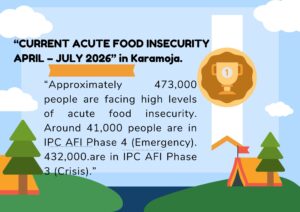
Approximately 473,000 people are facing high levels of acute food insecurity—IPC Acute Food Insecurity (AFI) Phase 3 or above—during the current period (April to July 2026) in the Karamoja region of Uganda. Around 41,000 people are in IPC AFI Phase 4 (Emergency), while 432,000 (29 percent of the analysed population) are in IPC AFI Phase 3 (Crisis). These populations require urgent actions to protect livelihoods and reduce food consumption gaps.”
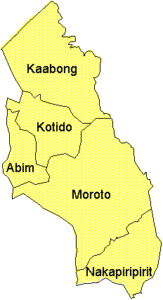
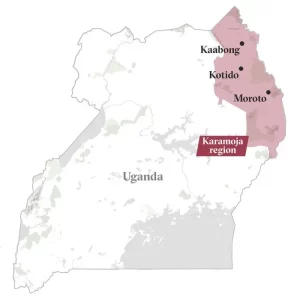
It adds “Results of the latest IPC analysis classified all nine districts in the region in Crisis (IPC AFI Phase 3), with 32 percent of the population facing high levels of acute food insecurity (IPC Phase 3 or above), including 3 percent in IPC Phase 4 (Emergency). The districts of Kaabong, Karenga, Kotido, Moroto and Nabilatuk present the most severe situation, each with 5 percent of their population classified in IPC AFI Phase 4 (Emergency) due to prolongued dry spells, livestock and crop pest diseases highly affecting the overall seasonal yields.
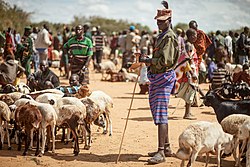
The highest proportions of populations in IPC AFI Phase 3 or above are observed in Kaabong and Kotido, where 45 percent of people are affected. In contrast, districts in the western wetter belt (Abim, Amudat and Nakapiripirit), which receive relatively higher rainfall, show the lowest percentage of population in need of urgent humanitarian assistance.”
The analysis shows that the situation has been gradually aggravating, though it is anticipated to change. “In comparison to the previous analysis (April–August 2025), the food insecurity situation has moderately worsened with 2 percentage points deterioration of population in IPC Phase 3 or above due to the impact of ongoing average to below-average food and livestock production due to climate related shocks, hazards and endemic pests/diseases.
The food security situation is expected to improve between August 2026 and February 2027, with an estimated 24 percent of the population (352,000 people) expected to face IPC AFI Phase 3 or above (Crisis or worse) conditions, marking an 8 percentage point decrease compared to the April–July 2026 period. This improvement is anticipated due to the expected good harvests prospects.”
However, notes the analysis report, “food insecurity remains persistent in Kaabong, Kotido, Karenga, and Moroto, where between 35 percent and 45 percent of the population is still classified in IPC AFI Phase 3 or above. It remains essential to implement activities aimed at reducing the food consumption deficits of the food insecure population as well as strengthening their resilience capacities.
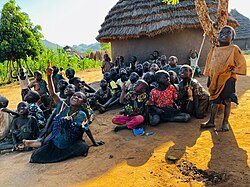
Acute malnutrition remains of high concern in Karamoja, where approximately 122,100 children aged 6–59 months are suffering or expected to suffer from acute malnutrition and will need treatment between March 2026 and February 2027. This includes 91,500 and 30,600 children likely to suffer from moderate acute malnutrition (MAM) and severe acute malnutrition (SAM), respectively. An estimated 8,000 pregnant and breastfeeding women are also expected to suffer from acute malnutrition within the same period in the region.”
This latest food security assessment paints a grim picture of Uganda’s Karamoja region, where acute malnutrition has reached critical and serious levels across most districts, underscoring the deepening humanitarian crisis. “In the current analysis period (March–August 2026), two districts—Kaabong, and Kotido—are classified in IPC Acute Malnutrition (AMN) Phase 4 (Critical), while five districts— Amudat, Karenga, Moroto, Nabilatuk, and Nakapiripirit—are classified in AMN Phase 3 (Serious), and Abim and Napak districts are classified in IPC AMN Phase 2 (Alert).”
In December 2024, Mercy Corps produced and released “Climate & Conflict Situation Report/Integrating Climate Action in Fragile and Conflict- Affected Areas of Karamoja and Turkana [in Kenya]”. This Mercy Corps learning brief reads “Climate change is acknowledged as one of the most significant challenges facing humanity on a global level. There is strong evidence that climate change is directly affecting the social, economic, and human development of all countries.
The Notre Dame Global Adaptation Initiative (ND-GAIN 2021) ranks Uganda as the 10th most vulnerable country to the impacts of climate change and 35th least ready in terms of preparedness. Uganda is highly vulnerable because of prevalent poverty levels, dependency on weather sensitive sectors and exposure to climate risks. This indicates a significant and urgent need for investment and innovation for climate adaptation.”
The brief highlights that there exists a link between climate and conflict in this region of Uganda too. “It is generally acknowledged that climate change is a driver of conflict in the Karamoja cluster, primarily on account of its impact on the capacity of the rangelands to provide pasture, water and other resources that support pastoral and agropastoral livelihoods. Moreover, the impact of climate change on the health and productivity of the rangelands exacerbates competition for resources and increases the potential for conflict.
Since 1980, Uganda has experienced a temperature increase of up to 1.5°C, with projections suggesting a further rise of 2°C over the next 50 years. Rainfall patterns are becoming increasingly erratic and intense, contributing to extreme weather events such as prolonged droughts and severe floods. These changes are expected to exacerbate challenges for communities reliant on climate-sensitive livelihoods, with the economic costs of inaction projected to range from US$3.1 billion to US$5.9 billion annually by 2025.”
What evidence shows
In fact, evidence demonstrates that climate change forms a primary driver of the Karamoja tragedy—but not the primary one; it adds to others.
The IPC says “Climate and poor harvests (2025 season). Late, erratic, and poorly distributed rainfall severely cut crop yields, leaving household food stocks critically low. Only 54.1 percent of households reported having stocks, with most districts depleted in less than a month post-assessment.
Pest and diseases. Erratic weather triggered a surge in crop pests (e.g., African armyworm, grasshoppers, sorghum diseases) and livestock epidemics (foot-and-mouth disease, Swine fever, and tick-borne diseases), causing massive harvest and livestock losses.”
According to the IPC, other factors include human-wildlife conflict, among others. “Human-wildlife conflict. Wildlife invasions (elephants and buffaloes) caused extensive destruction to mature millet, maize, and sorghum gardens between August and October, primarily impacting Karenga, Kaabong, Kotido, and Abim.
Agricultural input deficits (April 2026). Limited income and a failure to save seeds from previous failed harvests left farmers unable to purchase essential farming inputs, severely crippling the 2026 planting season. High food prices. Skyrocketing market prices forced low-income households to spend over 50 percent of their income on food. This has triggered severe malnutrition and forced a dietary shift toward cheaper, less nutritious options.”
The IPC attributes this situation to several interrelated drivers which add to those already explained. “Acute Food Insecurity Current Situation Overview and Key Drivers In Karamoja (April – July 2026). Populations in the Karamoja region remains extremely vulnerable to severe food insecurity and malnutrition; this vulnerability is deeply tied to recurring climate-related shocks (such as severe dry spells and localized flash floods), environmental degradation, high disease burdens, weak infrastructure, seasonal price shocks, and persistent civil insecurity—driven primarily by armed cattle rustling.” Rustling is the crime of stealing farm animals.
The IPC adds “Consequently, Karamoja continues to experience the highest food insecurity and acute malnutrition levels in the country. According to the 2024 National Census and Multidimensional Poverty Index (released by UBOS in March 2026), Karamoja stands as Uganda’s poorest region, with a staggering 91.4 percent multidimensional poverty headcount ratio and a poverty intensity of 62.3 percent—more than double the national average.
Within the region, districts like Kaabong and Napak suffer from the highest concentration of overlapping deprivations. The structural crisis is further compounded by critical gaps in human capital and demographics. Approximately 70 percent of household heads and 76 percent of women and caregivers lack any formal schooling background, while 65 percent of households are female headed, navigating a high dependency ratio of 124.”
The FAO, IGAD and Interpeace report also corroborates IPC. According to their study report, the following major findings have been reached on the key issues. It also highlights that the two major causes of conflict in the Karamoja Cluster involve competition for access to pasture and water, and cattle rustling.
“The key drivers of conflict include climate change, unemployment, insecurity of communal land tenure, the limited reach of government and poor enforcement of the rule of law, proliferation of firearms, persistence of cultural attitudes and practices that glorify violence, commercialization of cattle rustling, forced displacement and migration, the politicization of conflict, erosion of authority and effectiveness of traditional institutions of governance and natural resource management, and simmering interstate border disputes.”
“The three major hotspots for cross-border conflict are Karita in Amudat, Kobebe in Moroto District and Kibish on the border between Kenya, Ethiopia and South Sudan. The communities most active in cross-border conflicts are the Turkana, Jie, Toposa, Pokot and Nyangatom. The main impacts of conflict in the Karamoja Cluster are evident in the way they undermine livelihood security and cause or drive food insecurity and environmental degradation and constrain the communities’ adaptation to climate change.”
Firearms inflame the already worsen problem
According to the report, in focus group discussions [FGDs] in Kapoeta and Moroto, the study team received reports that guns are bought and sold in Kapoeta, Kotido, Kaabong, Moroto and Amudat. This report underlines that the expansive and porous borders render it easy for illegal guns to cross from one country to another. Respondents claimed that communities arm themselves because “they cannot depend on the state security system for protection.”
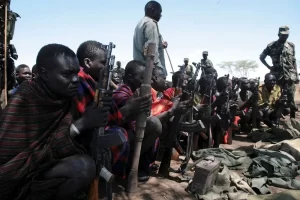
The report cites one key informant, as explaining “We used to tell communities that disarmament was the answer to conflict-related challenges. However, the experience of the local community following disarmament has convinced them that they cannot depend on the government for their security and that of their livestock, as those who surrendered their guns have become easy targets for cattle raids, which happen even in so-called protected kraals. People do not trust the government.”
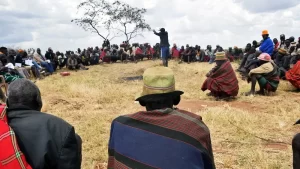
The study personnel repeatedly learned from stakeholders in Moroto, Amudat and Kotido that disarmament cannot be effectively executed in the Karamoja Cluster in the absence of a regional approach integrating all relevant countries. This perspective was shared among communities, government officials and local political leaders.
According to the study, one respondent observed “Disarming the Karamojong [indigenous, semi-nomadic pastoralist people inhabiting the arid Karamoja region in Uganda] without disarming the Turkana [people native to the Turkana county in Kenya] and the Toposa [semi-nomadic, agro-pastoralist South-Sudanese] is not only an exercise in futility, it is counterproductive as it exposes the Karamojong to attacks from their neighbours.”
The study emphasizes “The ready availability of guns has contributed to the commercialization of cattle raids across the Karamoja Cluster. Gangs of armed youth conduct raids to service a flourishing cross-border market in livestock that is said to be linked to international markets in the Middle East. Respondents in Turkana claimed that cattle raids for trade purposes are financed by wealthy businessmen, politicians and traders. In Moroto, the study team was informed that there is a ready market for stolen livestock in Nakabat.
In Kapoeta, respondents in a FGD with a peacebuilding organization described how livestock are stolen and loaded into trucks at strategic locations to be ferried to Juba and across the border into Uganda and Kenya. Cattle raiders reportedly make use of mobile telephones (calls, text messaging and WhatsApp) to communicate with each other as they mobilize for attacks and also with traders to whom they deliver the livestock they capture from the raids.”
Response to the question at the very beginning of the preceding section
The available evidence indicates that climate change represents a major reason for Karamoja’s recurring hunger crisis, but it does not constitute the sole or principal explanation in isolation. Rather, drought becomes far more destructive when it interacts with environmental degradation, conflict, poverty, weak infrastructure, crop and livestock diseases, limited livelihood opportunities, and persistent insecurity.
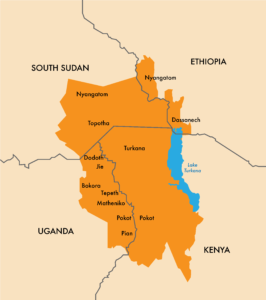
The IPC, FAO, IGAD, Interpeace, and Mercy Corps consistently identify these factors as interconnected drivers that reinforce one another rather than operating independently. Governance challenges are among these drivers, but frankly they should not be understood as the responsibility of the Government of Uganda alone. The Karamoja Cluster stretches across Uganda, Kenya, South Sudan, and Ethiopia, and many of its challenges—including cross-border cattle rustling, the illicit movement of firearms, displacement, and competition over pasture and water—are inherently regional.
Consequently, lasting solutions require coordinated action among the governments of all affected countries, regional organizations, development partners, and local communities. Equally important, environmental degradation cannot be attributed exclusively to governments, since unsustainable practices such as deforestation, overgrazing, and poor natural resource management also involve the actions of individuals, communities, and private actors.
Likewise, governments alone cannot build resilient societies without the active participation of citizens in protecting ecosystems, embracing sustainable livelihoods, and promoting peaceful coexistence. The evidence therefore suggests that recurring hunger in Karamoja results from the convergence of climatic, environmental, socioeconomic, governance, and security-related pressures.
Drought may trigger food shortages, but these underlying structural vulnerabilities largely determine whether a drought develops into a humanitarian emergency. Accordingly, the question should not be framed as a choice between climate change and governance failures, but as an examination of how multiple interacting factors collectively intensify food insecurity. Addressing Karamoja’s recurring crises therefore demands a comprehensive regional approach founded on shared responsibility, stronger governance, environmental stewardship, conflict transformation, and sustained investment in climate resilience.
Remember that climate change which is pounding Uganda stems disproportionately from greenhouse gas emissions produced over decades by wealthier industrialized nations, even though countries such as Uganda have contributed only a small fraction of global emissions.
This reality means that addressing Karamoja’s recurring humanitarian crises is not solely a national or regional responsibility, but also a shared international obligation requiring stronger climate finance, technology transfer, and sustained support for adaptation and resilience.
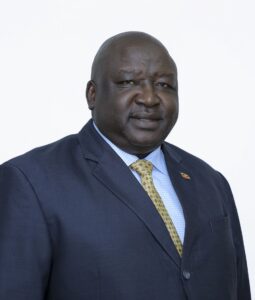
Oryem Henry Okello. Credit: The Embassy of Uganda.
At the same time, external assistance cannot substitute domestic action, making it essential for governments, communities, citizens, and international partners to work together in tackling the interconnected challenges of climate change, environmental degradation, conflict, and food insecurity.
Interpretation of Oryem’s words
What do official responses—such as Henry Okello Oryem’s 2022 remarks calling hunger victims “idiots”—reveal about the state’s approach to chronic food insecurity in Karamoja?
The evidence presented above demonstrates that Karamoja’s recurring food insecurity is a complex humanitarian crisis shaped by the interaction of climate shocks, environmental degradation, conflict, poverty, weak infrastructure, disease burdens, and other structural vulnerabilities. Against this background, Oryem’s description of people who died from hunger as “idiots” was inappropriate because it failed to reflect the complexity and gravity of the crisis — documented by the IPC, FAO, IGAD, Interpeace, Mercy Corps, and other credible sources.
Such remarks risk oversimplifying a tragedy that experts consistently ascribe to multiple interrelated factors extending far beyond individual responsibility. Nevertheless, Life In Humanity‘s examination of these comments is not intended to portray them as evidence of a systemic attitude within the Ugandan Government. Rather, the remarks are treated as an isolated instance of poor judgment by a public official, not as a reflection of the government’s overall position or response to the humanitarian emergency.
Indeed, the government’s efforts to distribute emergency food assistance and its acknowledgement of the drought’s impact demonstrate that official responses cannot be reduced to a single statement. Even so, senior public officials bear a heightened responsibility to communicate with accuracy, compassion, and respect, particularly when communities are experiencing loss of life and severe deprivation.
Public statements should therefore be informed by available evidence and should acknowledge the multiple structural drivers identified by authoritative institutions rather than implying that victims alone are responsible for their suffering. This stands especially important since official rhetoric can influence public perceptions, policy debates, and the dignity accorded to affected populations. Consequently, Life In Humanity‘s purpose is not to generalize from one official’s remarks to the entire government, but to underscore that statements issued by public leaders chiefly during humanitarian crises should uphold empathy, factual accuracy, and accountability.
Action to address the Karamodja crisis
The action, as already said above, primarily involves a regional mechanism; which is justified by Mercy Corps in these words. “Similarly, the Turkana region in northwestern Kenya faces worsening climate impacts, which add to its existing socioeconomic challenges. Limited access to adaptive resources and fragile governance structures further impedes resilience in the region.
These pressures often lead to competition over scarce natural resources such as grazing lands and water points, increasing conflicts between communities. Women and girls, tasked with resource collection, face heightened risks as they travel longer distances for water or firewood.”
The IPC, FAO, IGAD, Interpeace, Mercy Corps, and other reliable sources propose various recommendations to address the Karamoja calamity, but we will just provide a few of them. We will soon prepare an article exclusively on these recommendations. Conflict transformation pervades the recommendations of these organs.
The IPC, on response priorities – acute food insecurity, underscores “There is a need to provide food plus any livelihood assistance to households in IPC Phase 3 (Crisis) and Phase 4 (Emergency). Vaccination of livestock against common livestock diseases especially foot and mouth disease to ensure livestock farmers have a fall back in case of below average crop performance.
Introduce programs aimed at reducing human wildlife conflict in the districts neighboring national parks. Invest in post-harvest handling and management to ensure harvests are preserved for future use to support households to keep enough food stocks. Put mechanisms in place to monitor crop performance trends through conducting Mid-season crop surveys to gather relevant information for understanding the crop trend as well as any risks that may have a negative bearing on food situations.”
It further states “District Local Governments, continue to mobilize people to enroll in the Government programs like Parish Development Model (PDM), Labour Intensive Public Works (NUSAF 4) and Climate Smart Agriculture. Government and partners should seek to identify structural challenges leading to recurrent food insecurity in Karamoja, for example, conduct an IPC analysis that evaluates protracted food insecurity conditions.”
Mercy Corps says “Resource-Sharing Agreements and Peace and Security: expand and institutionalize Natural Resource Sharing Agreements (NRA), integrating Multi Hazard Early Warning Systems (MHEWS) to address both climate and conflict risks. Government-backed frameworks should ensure sustainable resource management and cross-border cooperation to align agreements with peace building objectives.
Additionally, a critical recommendation is the development of a comprehensive policy framework for rangeland management. Such a policy would provide the necessary guidance for sustainable rangeland use, supporting conflict prevention and enhancing cooperation between neighboring communities. This policy should integrate climate resilience measures and promote long-term peace by addressing the root causes of resource-based conflicts.”
The FAO and its partners’ report highlights “Strengthen coordination of policies, programmes and actors on cross-border conflict management and peacebuilding for more efficient prioritization and scaling of interventions. In this connection: in partnership with IGAD and the four Karamoja Cluster countries, convene a regional forum on lessons learned, opportunities and challenges to conflict management and peacebuilding in the Karamoja Cluster to agree strategies for better programming.”
Mercy Corps advances the successful implementation of critical areas, namely the proper management of water and the development of livelihoods. “Water Resource Management: effective water resource management is essential for enhancing climate resilience in Karamoja and Turkana, where water scarcity remains a major challenge.
Recommendations include investing in community-led water protection through water user committees to ensure equitable access, sustainable development, and regular maintenance of water infrastructure. A comprehensive water management strategy should integrate traditional and modern approaches, including rainwater harvesting, solar powered irrigation, and the use of monitoring systems like remote sensing to ensure sustainable water use across seasons.”
On boosting livelihood, it says “Promoting livelihoods based on eco-system services: Environmental degradation threatens both livelihoods and ecosystems, requiring stronger climate resilience strategies. Key actions include enforcing regulations on deforestation, illegal charcoal production, and overgrazing, while empowering communities to manage natural resources. Promoting community-led reforestation, alternative energy sources like solar cookers, and rotational grazing will help restore ecosystems and ease resource pressures. Additionally, providing youth with vocational training and access to climate-smart agriculture can reduce vulnerability and foster peace.”