By Jean Baptiste Ndabananiye
Wars rarely begin with a universally recognized declaration that history has begun a new and dangerous chapter. Sometimes, they emerge gradually, as regional conflicts multiply, rival powers become entangled, military alliances harden, economic pressure becomes a weapon, and diplomatic mistrust turns local confrontations into threats to global peace. By the time the world recognizes that separate crises have converged into a much larger conflict, the opportunity to prevent catastrophe may already have narrowed dangerously.
Today, the war in Ukraine is continuing to influence relations between Russia and the West, tensions in the Middle East threaten to pull additional nations into confrontation. And, as rivalry between the United States and China casts a shadow over Taiwan and the wider Indo-Pacific, an unsettling question demands a serious assessment: Are we already in World War III?
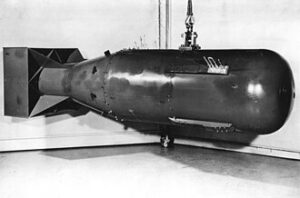
The answer depends partly on whom we hold responsible for bringing the world to this perilous juncture. For some, Russia bears primary responsibility, particularly because its full-scale invasion of Ukraine has intensified European insecurity, strengthened military alignments, and raised fears of a wider confrontation with NATO. For others, the crisis cannot be understood without examining Western policies, including NATO’s eastward expansion, the West’s military support for Ukraine, and Washington’s pursuit of strategic dominance in an increasingly multipolar world.
Still others reason that responsibility extends beyond any single country, encompassing decisions, miscalculations, rivalries, and security ambitions of several major powers. These competing interpretations disclose not only a struggle over geopolitical influence, but also a deeper disagreement over the causes of the international crisis and the path towards peace.
History supplies a sobering warning. The First and Second World Wars did not happen in isolation from the rivalries, alliances, regional conflicts, and strategic miscalculations which preceded them. Although today’s world differs profoundly from that of 1914 or 1939, the danger that separate confrontations could degenerate into a wider war cannot be dismissed. Nor can the possibility that economic warfare, proxy conflicts, cyber operations, technological competition, and military partnerships may be changing what a world war looks like in the twenty-first century.
This article examines these competing perspectives through the arguments of The New York Times columnist Bret Stephens, Chinese scholar Jiang Xueqin, and other commentators. It also explores the current interlinked conflicts and geopolitical flashpoints which could affect humanity’s future. Ultimately, the question is not merely whether World War III has formally begun, but whether the world is already experiencing its early stages—and whether political leaders possess the wisdom and restraint to stop today’s gathering storms from becoming tomorrow’s global catastrophe.
Reflection on the dawn of World War III: Stephens and Jiang on modern global conflict
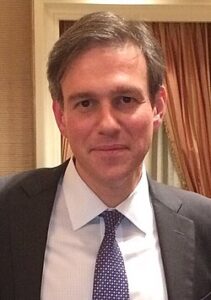
The New York Times ran an opinion entitled “Has World War III Already Started?” on 25 August 2026. This opinion was authored by opinion columnist for The New York Times, Bret Stephens.

He starts his opinion, saying “Shortly after Russia’s full-scale invasion of Ukraine in 2022, I wrote a column under the headline ‘This Is How World War III Begins.’ More than four years on, I wonder how much I got right. My argument was based on the origins of World War II, which did not simply start with Germany’s invasion of Poland on Sept. 1, 1939. Instead, the war was an accumulation of regional wars and crises, beginning with Japan’s invasion of Manchuria in 1931, which gradually gathered into a single global conflict.
That gathering, abetted by the converging ambitions of the totalitarian states and the divisions and vacillations of the democracies, led to catastrophe. Added to this was a revolution in military technology and tactics that gave the dictatorships an early advantage in offensive combat. Also an advantage: their willingness to inflict — and endure — a level of brutality and suffering their adversaries were initially reluctant to match.”
He continues “In 2022, I saw a similar pattern unfolding: Decades of Western appeasement of Vladimir Putin had given the Russian strongman a sense that he could get away with nearly anything. His burgeoning ties with North Korea, Iran and especially China — memorialized by the pledge of a ‘no limits’ partnership with Beijing announced weeks before the invasion — gave him additional confidence. So did the spectacle of American weakness during our shambolic withdrawal from Afghanistan just six months earlier.”
Professor Jiang Xueqin is a Chinese who has now become famous, owing to his two predictions which have come true. The forecasts are the reelection of U.S. President Donald Trump and U.S. attack on Iran. He also says that World War III is already going on.
The Singju Post published a 12 May 2026 transcription headlined “Jiang Xueqin: ‘We Are Already in World War 3’”. This transcript was produced out of his 11 May 2026 interview on Greater Eurasia Podcast. In this interview, he stated “I think we’re already in World War III. It’s just like the way we understand war is different in the 21st century than in the 20th century. So 19th century war was essentially about armies clashing on the battlefield. Like World War I was just trench warfare. It was easy to see as war because these armies were just killing each other on the trenches.
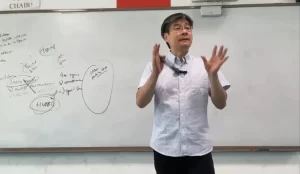
World War II was about destroying the state’s capacity to fight the war. So basically targeting civilian populations. So for example, the firebombings of Germany and Japan were what allowed the Allies to win the war in the end. It’s something that’s not really discussed, but the firebombings were really destructive, killed a lot of civilians, basically destroyed the state’s capacity to manufacture the weapons necessary to fight a war. And that’s how the Allies won. So that’s the 20th century warfare.”
He however says that the 21st century war is occurring in another way. “21st century warfare is different in that it’s ultimately about economic strangulation and forcing your opponent to submit and causing domestic unrest. And I think World War III, the two main combatants are America and Russia. And already we’re seeing this massive war in the oceans where American ships are trying to target and board, basically seize, Russian shuttle fleet tankers. These are just acts of piracy. And the Americans have already, I believe, seized 2 Russian oil tankers.
And so I believe that in the future what’s going to happen is that the Russians are going to arm and militarize the shuttle fleet. And so we should see a massive war in the oceans in the next few years. So this was primarily economically between Russia and America. Another aspect of this war is sabotage, right? So we’re seeing these Ukrainian drones striking at Russian oil refineries. We’re seeing oil refineries being destroyed all around the world. So basically it’s economic warfare, it’s economic strangulation.”
Doug Stokes is head of the School of International Relations at Modul University Vienna. Stokes concurs with Professor Xueqin on a certain point. In its 25 September 2026 story titled “How close are we to World War Three?”, The Week quotes Stokes as saying “Those who see ‘the spectre of a third world war are both right and wrong’. They’re ‘wrong if they mean a singular, cataclysmic escalation’, but they’re ‘right’ if they mean that a ‘structural contest between the United States and a loose Sino-Russian-Iranian axis’ is ‘well under way’, and will be ‘fought through proxies, economic leverage, and the systematic contestation of strategic geography’.”
Today’s interconnected wars and a West divided against itself and unprepared for the global war
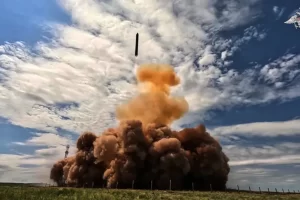
Stephens identifies other issues which he regards as serious weaknesses undermining the West’s ability to confront growing global threats: deepening divisions between the United States and its traditional allies, compounded by mutual distrust, political miscalculations and inadequate military readiness. Divisions can contribute to a world war.
He says “But Ukraine did not, as I had feared, turn out to be the France of 1940. It was more like Britain, prepared to fight, as Churchill put it that May, ‘however long and hard the road may be.’ The Biden administration, for all its fatal hesitation about letting Kyiv take the war to Russia, at least helped ensure that Ukraine didn’t lose. Ukraine has also held the technological edge, pioneering equipment and tactics that are finally stimulating a long-overdue rethink about how wars of the future will be fought.
That’s the good news. There’s far more by way of bad news. First, as in the 1930s and ’40s, the spheres of conflict have multiplied and are merging. Russia’s battlefield reversals seem to have done nothing to diminish Putin’s appetite for risk as he expands his campaign, in barely concealed attacks and threats, against Moldova, Poland and Germany, among other states, while his political allies repeatedly call for direct strikes on Europe and the use of nuclear weapons against Ukraine.”
History demonstrates that divisions among Western powers and failures to prepare for emerging threats can causes catastrophic consequences. This is illustrated by the 1930s, when appeasement, strategic miscalculations and inadequate military readiness emboldened Nazi Germany and contributed to the outbreak of the Second World War in 1939. Similarly, the failure of European powers to contain escalating tensions before the First World War in 1914 reveals how regional conflicts, alliance commitments and mutual distrust can transform a local crisis into a devastating global confrontation.
Based on these historical precedents, Stephens suggests that, without renewed Western unity, credible military deterrence and willingness to confront aggression before worsening, today’s growing geopolitical tensions could follow a similarly dangerous trajectory — increasing the risk of a Third World War.
He continues, explaining that several participants are now drawn into interconnected conflicts increasingly resembling a single global war, as alliances, military resources and decisions in one theater directly shape the outcomes in another. That’s actually what happened during the past world wars.
“Hamas’s assault on Israel in 2023 became, in stages, a war between Israel and Hezbollah, the Houthis and Iran; then a war between Iran, the United States and the Gulf states. More recently, Ukraine has directed long-range strikes in the Caspian Sea to disrupt Iranian military supplies to Russia. And decisions in one theater directly affect outcomes in the other: The expenditure of missile interceptors in the Middle East means that few can now be spared for Ukraine,” he says before adding “Second, the axis of authoritarians has become a fully operational military alliance.
Russia is providing North Korea with help to modernize its armed forces, while the North has returned the favor by sending millions of artillery rounds and is now reportedly prepared to send thousands of additional troops to fight for Russia in Ukraine. China supplies Russia with most of the electronic components used in its drones and other military hardware. Russia has given Iran critical targeting intelligence to strike U.S. bases and ships in the Middle East. In the event of a Chinese attack on Taiwan, Beijing could call in its chips with Moscow by engaging the aid of Russia’s powerful Pacific submarine fleet, as detailed in a new paper from the Australian Strategic Policy Institute.”
Stephens further says “Third, the West is a mess. President Trump complains of our allies’ weakness. The allies complain of Trump’s bullying, capriciousness, callowness, mendacity and incompetence. Both sides are right. The latest U.S. tariff salvo on Canada is a case in point: politically ill advised, economically self-defeating, strategically enervating. Yet none of that erases the fact that Canada, a trade-dependent nation with the world’s longest coastline, barely has a navy to speak of, or that its government’s ‘new strategic partnership’ with China is immoral, unwise and unsound — unless Mark Carney, the prime minister, really thinks that Trump’s idiotic outbursts are a graver long-term threat to Canada and the free world writ large than the patient designs of the People’s Republic. Fourth, we are militarily unprepared.”
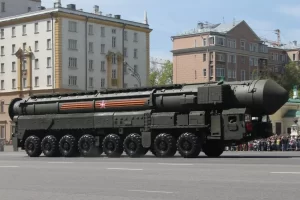
To expound on the fourth aspect, he states “The war against Iran revealed not just the munitions shortages, which helped bring the war to a premature close, but also America’s acute sensitivity to military fatalities and economic pain, which gave Iran’s leaders an asymmetric advantage given their own tolerance for human suffering. The war in Ukraine has demonstrated that even the most sophisticated U.S. military kit is entering obsolescence, thanks to the advent of A.I.-assisted drone warfare.
The tanks we and our allies supplied Kyiv during the Biden administration ‘now mostly sit idle, hidden in forests and collecting cobwebs,’ as The Times reported this week. Yet Pete Hegseth, our testosterone-obsessed defense secretary, last week decided to phase out an Army drone unit, seemingly because it was championed by generals he didn’t like. The travails of the U.S.S. Abraham Lincoln during the carrier’s long deployment are a national scandal. But they should call attention to the historically small size of the fleet, and a depleted industrial base that struggles to build and maintain ships. Democrats blocking the defense appropriations bill aren’t helping things, either.”
The gathering storm— boiling tensions between Russia and NATO, and global flashpoints which could beget World War III
The Week reports “European intelligence official warns Russian incursion into Nato territory could happen in ‘months, not years’. A senior European intelligence official has warned that Russia could launch an attack to test Nato’s resolve in a matter of ‘months, not years’.”

Michal Koudelka. Credit: Wikidata.
Michal Koudelka serves as the head of the Czech Republic’s BIS [security information system] security service. The Week specifies that he told The Guardian that a “limited incursion” into Nato territory neighboring Russia involving “false-flag provocations” and a “massive influence campaign” could be looming.
This media organization adds “A Politico poll earlier this year found that voters in the US, UK, France and Canada think the outbreak of World War Three is more likely than not within the next five years, with Russia seen as the biggest threat to peace in Europe. With peace talks over Ukraine stalled, both sides have escalated drone and missile attacks against each other’s capitals and key energy infrastructure. Last weekend, as voters in Russia went to the polls to elect a new State Duma, Kyiv launched its largest strike on Moscow since the start of the war four and a half years ago.
Moscow ‘increasingly views Ukraine’s strikes inside Russia as attacks by Nato countries because alliance members provide Kyiv with weapons and intelligence’, said Bloomberg. People close to the Kremlin warn that the current fighting ‘has not yet reached its peak level of escalation’. Vladimir Putin has previously warned that he is ready to fight a war with Europe if necessary. Should this happen, it would probably come through the provocation of Nato’s European allies at a ‘number of pinch points – especially in the Baltic, the North Atlantic and through the Balkans’, said The Independent.”
The Week indicates that Russia has already started actions which demonstrate that the situation is aggravating. “The Kremlin has already begun testing Nato defenses and resolve with a series of airspace incursions into Estonia, Romania and Poland. Last week, Finland requested Swedish help to monitor its border with Russia for incursions.
Germany is expected to impose further sanctions for a drone attack at Leipzig airport in August, believed to have originated in Russia, while Slovakia last week foiled an arson attack on a drone factory. Last week, Polish PM Donald Tusk told his parliament that intelligence assessments suggested Russia might launch an attack with drones or missiles on Nato territory in the coming months, as part of efforts to prove that ‘Article 5 is more theoretical than practical’.”
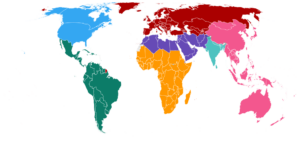
Some analysts do identify a Russian attack on a NATO member as one of the most dangerous pathways to a wider, potentially global war.
In fact, NATO and Russia trade accusations at each other. “If it comes to a direct attack on the Russian Federation — in this case we mean Kaliningrad, or maybe some other territories — of course, inevitably and immediately the question of Russian Federation using all weapons at the disposal of our country will appear on the agenda,” stated Russia’s President Vladimir Vladimirovic Putin, according to NBC News’ 1 October 2026 story headlined “Putin says Russia will use ‘all weapons’ in its arsenal if any of its territory is attacked” first published by The Associated Press.
“In remarks at a foreign policy forum, Putin accused the West and Europe of escalating tensions by talking about preparing for a war with Moscow in the coming years, conducting military drills in the Baltic Sea and seizing Russian vessels. President Vladimir Putin on Thursday reiterated Moscow’s long-held position that Russia is not planning to attack European countries but will respond to aggression with ‘all weapons’ in its arsenal.
His remarks followed Moscow’s warning to NATO that it would not hesitate to use nuclear weapons to defend Kaliningrad should any members of the military alliance try to cut off the Baltic exclave from the rest of Russia. Several Russian embassies in Europe this week issued statements that said Moscow has ‘information that NATO is preparing (an) air and naval blockade of Kaliningrad and (the) Kaliningrad region.’ They accused European leaders of ‘playing a dangerous game’ by saying Russia might attack another country or ramp up a campaign of destabilizing attacks with drones and sabotage. Moscow has called the allegations absurd.”
According to this story, the Russian Embassy in Ireland through its statement underlined “There should be no mistake — Russia would be ready to use all its arsenal, including nuclear weapons, to defend its territory if NATO countries try to isolate (the) Kaliningrad region from the rest of the country.”
Meaning of the current situation with the Middle East, China and North Korea in regard to the potential global war

The Week also highlights that the Middle East, China and North Korea really constitute sparks which can ignite a global conflagration at any time.
“Iran’s President Masoud Pezeshkian has lashed out at the US for failing to respect international law, following Donald Trump’s threats to ‘annihilate’ his nation. Speaking at the UN General Assembly, Pezeshkian said Iran would not surrender in the war with the US. The weakening of Hezbollah in Lebanon, the fall of the Assad regime in Syria and the decommissioning of Hamas mean Iran has lost much of its proxy influence across the region.
But Tehran’s ability to retaliate against Gulf states and Western bases in the region, and effectively block the strait, which before the war accounted for a fifth of the world’s seaborne energy supply, has surprised many and made the risk that a regional conflict could turn into a global one more – not less – likely. There is a ‘sense in the Western military community’ that, were tensions to escalate further, and ‘the US to get sucked into a ground war in the Middle East’, China and Russia would ‘waste no time’ in exploiting the situation, said Richard Shirreff, former deputy supreme allied commander of Nato in Europe, in the Daily Mail.”
The Week points out that Beijing could “seize the opportunity” to launch its “longed-for invasion of Taiwan”. “That’s a Third World War ‘in anyone’s book’, with ‘all the major powers’ going into the conflict ‘possessing weapons that could kill billions’.”
North Korea, The Week says, has rejected US attempts to ease regional tensions and vowed to continue strengthening its nuclear force, in a major blow to the Trump administration. “Last month, the US president ordered a scaling-back of the annual Ulchi Freedom Shield exercises between the US and South Korea, citing his ‘very good relationship’ with North Korean leader Kim Jong Un.”
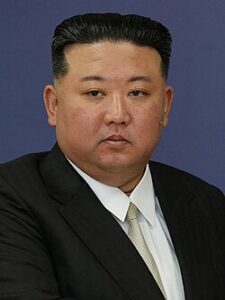
“But in a statement carried by state media KCNA earlier this month, a foreign ministry spokesperson said Washington maintained its ‘invariable hostile policy to wantonly violate the sovereignty, political system and security interests’ of the Democratic People’s Republic of Korea. Expecting any easing of regional tensions was ‘pointless’ and North Korea’s nuclear weapons were an ‘absolute guarantee for defending its sovereignty’.”
According to The Independent, “Kim’s government has repeatedly dismissed calls by Seoul and Washington to restart long-stalled negotiations aimed at winding down his nuclear weapons and missiles programmes, as he continues to prioritise Russia as part of a foreign policy aimed at expanding ties with nations confronting the US.”
The Week highlights “In April, Kim hailed a ‘new history of friendship with Russia written in blood.’ Moscow, in turn, pledged to sign a five-year plan for bilateral military cooperation. The main concern, of course, remains the border with South Korea, one of the most highly militarised places on earth.
Earlier this year, Kim called on top military officials to bolster front-line units and turn the border into an ‘impregnable fortress’. He has since overseen tests of a strategic, nuclear-capable cruise missile, as well as anti-ship, anti-submarine and air defence systems.”
China and the U.S. are seeking to normalize relations — can it prevent a wider war?
Donald Trump last visited China from 13 to 15 May 2026, for a state visit to Beijing upon the invitation of Chinese President Xi Jinping. Jinping also instantaneously reciprocated, with a state visit to the United States from 23 to 25 September 2026, meeting President Donald Trump at the White House on 24 September.
But can diplomatic engagement between the world’s two superpowers overcome their strategic rivalries and prevent a future war?
The Week says “It has long been assumed that the greatest threat to geopolitical stability is rising tension between China and the US, with Taiwan expected to be at the centre of any future military confrontation.”
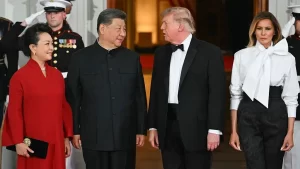
But Jinping told Trump rather than confrontation, conditions for “achieving the great rejuvenation of the Chinese nation and making America great again go hand in hand” and should be the goal. Jinping stated “We should strengthen communication. China and the United States are different in national conditions, but through candid, in-depth and continued dialogue, our two countries can understand each other better, seek common ground while shelving differences, and build up mutual trust.”
The Week reports “Beijing sees Taiwan as an integral part of a unified Chinese territory. It has, in recent years, adopted an increasingly aggressive stance towards the island. It has denounced Taiwan’s ruling Democratic Progressive Party, which won an unprecedented third term in 2024, as dangerous separatists. At the same time, the US has ramped up its support – financially, militarily and rhetorically – for Taiwan’s continued independence. The Trump administration has long pursued a hawkish stance towards China and its ambitions on Taiwan. Yet its position has softened after starting its war with Iran, and seeing potential in leveraging Beijing’s influence with Tehran.”
“With Washington’s renewed focus on the Middle East, ‘what everyone’s looking at is whether China sees an opportunity’ and goes for Taiwan sooner than expected, said The Guardian’s diplomatic editor, Patrick Greenfield. ‘That would be how we got to a world war.’ The Chinese ‘insist that’s not the case’ but ‘it must be tempting for people in the Chinese government if they are intent on recapturing Taiwan’. Many observers anticipate that China will look to invade Taiwan by 2027. Beijing knows a full-scale invasion of Taiwan would ‘risk direct war with the US’.”
What does Professor Xueqin state about US-China ambition to improve relations?

Professor Xueqin notes “And so it seems as though there’s now peace between China and the United States. But then what happens is that Trump goes immediately to Japan and encourages Japan to militarize against the Chinese threat, right? So what’s happened is that before, the conflict was between United States and Russia in Europe, and then the United States basically subcontracted this conflict to the Europeans, right? And now before, the conflict was between China and the United States in East Asia.
What the Americans are going to do is subcontract this conflict to the Japanese and the South Koreans against China. So it’s all part of this diabolical, cynical strategy of the Americans to maintain their empire. I completely agree with you [GLENN DIESEN who interviewed him on the podcast]. This plan of the Americans is cynical and it’s also going to end up being counter-effective. It’s going to destroy their allies and it may turn the entire world against America. But the reality is that America is desperate to maintain its empire and it’s willing to burn down the entire world in order to maintain its empire. So that’s the situation we are in.”
He additionally says “I also point out that if you look at the battle lines in Ukraine, I believe European special forces are already in the battle. So last year it seemed as though the Russians had a major breakthrough and it seemed as though the Ukrainian front lines were exhausted. They basically broke down. And now there’s a certain new energy to the Ukrainian front lines and they’re winning back territory. So I have to believe that European special forces are already on the ground in some capacity in Ukraine. And because of mission creep, we should expect an escalation.
Look, also the Ukrainians are striking at Russian oil refineries and this is going to compel the Russians to hit the Ukrainians much harder. The Russians have been extremely methodical in their attacks against Ukrainians. They have not targeted Ukrainian power plants. They have not targeted critical civilian infrastructure. And now they will because they appreciate that this war will now be between Europe and Russia. There will be a fight to the bitter end.”
He argues that the United States is pursuing a strategy that prolongs the war in Ukraine, weakens Europe’s strategic independence and serves American economic and geopolitical interests— at the expense of European security and sovereignty.
He explains “The entire U.S. strategy is for Europe to fight the Russians, to clash European, as you say. And they’ll sit this out because they have actually no interest. All they want to do is cause as much conflict in the world as possible and then continue to sell weapons and resources to Europe, and they will finance it. And thus force the world to absorb US debt. It’s very clear what’s happening. Even the Europeans know what’s happening, but unfortunately, the entire European leadership has been vassalized by the Americans, and the European leadership is very much afraid of their own population.
So in many respects, the Europeans have already been vassalized and now the Europeans are already discussing drafting men to go fight in Ukraine. If the Europeans did not provide the financing and the political support to Ukrainians, this war would’ve been over 2 years ago.”
What does Professor Xueqin say about President Trump and situation aggravation?
He says “The issue of Trump, why Trump is important, is Trump is willing to do these things. Biden was supposed to do these things, but he didn’t do these things because he was afraid of looking like a complete idiot, and he didn’t want to be another Hitler. He didn’t want to be the bad guy. And so it’s actually very hard to find someone like Trump who’s willing to be the bad guy, who’s willing to be the scapegoat, and who’s willing to act rashly without thought.
So remember back in 2003 during the war against Iraq, everyone knew it was about oil. Everyone knew it was about the American empire. And you had protests around the world against this act of aggression against Iraq. But now in this blatant act of aggression against Iran, you don’t have protests around the world. Everyone’s focused on Trump and thinking that if Trump will be gone in 2 years’ time, then the world will return back to normal. So Trump is extremely useful for the purposes of American empire. That’s why I think that he’ll stick around because the American empire needs certain things to happen, including national draft.”
He adds “The American population has become complacent. It’s become lazy and corrupt. Think about all these American young people who are trying to make their fortunes trading cryptocurrency or gambling online, and spend all their time on OnlyFans. The empire has made America an extremely corrupt and lazy place where young people aren’t able to contribute effectively to the economy.

The problem isn’t the lack of manufacturing jobs. There are lots of manufacturing jobs in America. The problem is you don’t have young people in America who want to work these blue-collar jobs. They don’t want to work for $10 an hour. They’d much rather gamble and try to make $1 million in a year. So you need a national draft not to fight wars, but to discipline your population. To train your population to be much more compliant, to be much more desperate, and to have real skills. That’s the reason why you need a national draft.”
While Professor Xueqin suggests a national draft to instill discipline into the American population, rather than a national draft to fight wars, the U.S. is close to executing the draft to fight wars. CNN, with its 9 April 2026 story headlined “Automatic military draft registration takes effect in December. Here’s how it would work”, reports “Young, eligible men will be automatically registered for the military draft pool starting in December as part of a measure tucked into the annual defense policy bill Congress signed into law late last year. Men ages 18 to 26 must already register for selective service in case a draft is required. The last time a draft was in effect was February 1973, during the Vietnam War.
Automatic registration is already in place in 46 states and territories, according to the Selective Service System’s 2024 report. The SSS proposed a rule to the Office of Information and Regulatory Affairs late last month to implement the practice nationwide. The nationwide measure has no connection to the ongoing war with Iran and was passed with bipartisan support months before the current conflict with the country. But the Trump administration has declined to rule out the possibility of putting US troops on the ground, and the war has led to renewed attention on the draft policy.”
Professor Xueqin says “I think for the next year, it will seem as though the Americans are winning. Trump’s going to go to China, and eventually China and the United States will come to an agreement. That’s going to look very good for America, and the Chinese are going to agree to buy up more US debt. And this war in Iran, even though in the long term America’s going to lose this war, in the short term the Americans are going to be able to inflict tremendous damage on the Iranians, especially economically.
So in the short term it will look as though the American Empire is winning, but in the mid to long term we know exactly what happens in these situations, which is the empire breaks out into civil war. Just look at any history. Empires in decline have many characteristics: corruption, decadence, low fertility rates, mass immigration. And then two very common symptoms of an empire’s decline are, one, wars overseas, and two, civil wars.”
Response to the question: can we still deny that World War III has already begun?
World War III has not yet been officially declared. Yet its defining features are increasingly visible in the interconnected conflicts, economic warfare, cyberattacks, military alliances, and geopolitical rivalries rearranging our world. Like the First and Second World Wars, a global calamity may not start with a single declaration of war, but emerge progressively as regional conflicts converge, rival powers become entangled, and diplomacy gives way to confrontation.
The greatest danger is not simply the ambitions of Russia, China, or the United States —but the failure of world leaders to acknowledge that military escalation, strategic miscalculations, and the erosion of international trust could place humanity beyond the point of no return. Nevertheless, declaring that World War III has already begun risks confusing a dangerous global struggle with a full-scale world war, making it essential to distinguish between the reality of intensifying confrontation and the possibility of catastrophic escalation.
Nevertheless, whether we define World War III by the traditional standard of direct, full-scale military confrontation among major powers or by the convergence of interconnected regional wars, economic warfare, proxy conflicts, and geopolitical rivalries, one reality is increasingly difficult to disregard: the world is experiencing a dangerous accumulation of conflicts that could already represent the early stages of a global war. The critical question is whether humanity will recognize this unfolding danger before further escalation renders a catastrophic global confrontation unavoidable.
The most urgent question, therefore, is no longer merely whether World War III has started, but whether humanity possesses the wisdom, courage, and political will to prevent today’s gathering storms from turning into tomorrow’s global catastrophe.
Therefore, in response to the question asked in this article, we contend that the Third World War has already begun, but not necessarily as a formally declared, full-scale military confrontation— but as an unfolding global struggle in which interrelated regional conflicts, economic warfare, proxy confrontations, and intensifying rivalries among major powers are gradually converging into a potentially wider war. Whether history will eventually record this period as the opening chapter of World War III or as a dangerous prelude to it remains uncertain.
Yet, what is irrefutable is that decisions world leaders are taking today may determine whether humanity succeeds in averting a global catastrophe or allows the gathering storms of our time to degenerate into a war of unprecedented destruction. Perhaps, then, the most disconcerting conclusion is this: World War III has already started—not with a formal declaration or a single decisive battle, but through the gradual convergence of conflicts across the world. What humanity does not know is how this war will end, how far it will spread, or whether world leaders will act in time to preclude it from developing into the most devastating conflict in human history.
Meanwhile, for more on the possibility of the Third World War, you can read this piece. The latter one reports that, several decades ago, it was predicted that there would happen World War III and that Germany would be a leading nation in it. Nonetheless, such a prediction just constituted an absurdity, when it was issued. Today, Germany is increasingly acting as a primary driver and central military pillar in Europe’s response to Russia, as part of the broader European and NATO alliance.