By Jean Baptiste Ndabananiye
Artificial intelligence [AI] is rapidly transforming the world, prompting influential voices — such as tycoon Bill Gates, Erik Brynjolfsson, and other technology critics— to alert that its rising power must not come at the expense of human jobs, dignity, autonomy, and control. As debates intensify over AI regulation, taxation, employment protection, and the possibility of catastrophic risks; a fundamental question arises: should humanity create machines that replace us, or intelligent tools that empower us?
Life In Humanity has always supported the urgent call for responsible AI development — a technology which augments human capabilities while safeguarding human worth, even as it reiterates, on biblical grounds, that no human invention will ultimately annihilate humanity. This article explores the convergence between global concerns about AI’s dangers and Life In Humanity’s distinctive conviction that technological progress must remain subject to moral responsibility, human stewardship, and the sovereignty of the Creator.
Tycoon Bill Gates and others on AI regulation and protection of certain human work
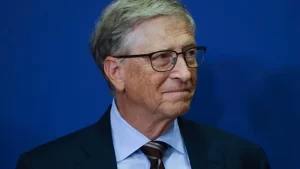
In its 11 October 2026 story entitled “Bill Gates Warns A.I. Is Most Dangerous Technology Ever, Wants Trump Meeting”, Yahoo reports “Bill Gates is sounding the alarm on artificial intelligence … warning the technology is more dangerous than cars, planes and drugs … and trusting the companies developing it to police themselves is a terrible idea. The Microsoft cofounder didn’t mince words during an interview with CNN’s Jake Tapper, calling A.I. ‘the most dangerous technology humans ever invented’ and arguing society needs to step in before things get out of hand.
He points out we’ve got regulations keeping cars, planes and medications in check … so why should something even more dangerous get a free pass? And it’s not just humanity’s survival Gates is worried about — it’s our paychecks, too. The billionaire says society needs to start seriously considering taxing A.I. and robots … and even protecting certain jobs from being swallowed up by the technology.”
Yahoo furthermore reports “And this isn’t the first time Gates has sounded the alarm on A.I, on ‘Meet the Press’ he told Kristen Welker … ‘A.I. is certainly powerful enough to drive events that cause a billion deaths. So even though it’s pretty hard to get to 100%, there’s never been a weapon as powerful as the combination of people with ill intent using the latest A.I. tools.’
As TMZ previously reported, former Anthropic employee Jacob Coxon warned us there’s a 10% chance A.I. could wipe out humanity within the next decade if companies don’t get things under control.”
In its 26 August 2026 story entitled “Bill Gates: Ban AI from taking some jobs from humans”, The Telegraph reported that Gates planned to lobby for action “before unemployment rises sharply”. Even under the best circumstances, the transition to this new AI era will be one of the most turbulent times in human history. Unfortunately … I don’t see evidence that leaders, experts and communities are confronting the challenges adequately. Many Americans I talk to don’t realise how fast dexterous robots are advancing.”
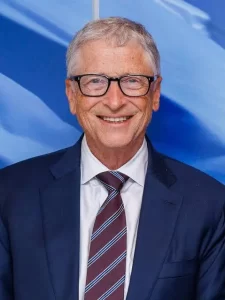
In its 19 October 2026 story, Yahoo Finance reported “Bill Gates says government should create ‘human reserved’ jobs list that AI is not allowed to do’ — 40% of jobs should be protected for people. Gates wrote on GatesNotes in August ‘I believe that as AI and robots improve, we’ll set aside certain things for only people to do. I’ve started calling this domain Human Reserved, and it’s an example of the kinds of ideas we’ll need to consider.’
He also distinguished between jobs that could be permanently reserved for people and occupations where AI adoption could simply be slowed for years or decades to give workers time to adjust. Axios reported that Gates cited child care and jury service as examples of work humans may be particularly suited to handle.”.
Magnate Gates isn’t alone to request that AI should be banned from occupying all jobs. On 25 Jan 2026, The Guardian ran a story headlined “AI must augment rather than replace us or human workers are doomed”. The Guardian’s Economics Editor, Heather Stwart who authored it, began the story with the following words. “Tech could lose its social acceptance unless it makes people’s lives better – and trade unions want an urgent conversation.
‘Who wouldn’t want a robot to watch over your kids?’ Elon Musk [the richest person in the world, with an estimated net worth exceeding $900 billion] asked Davos delegates last week, as he looked forward with enthusiasm to a world with ‘more robots than people’. Not me, thanks: children need the human connection – the love – that gives life meaning.”
She continued “The International Monetary Fund’s managing director, Kristalina Georgieva, told Davos delegates that the failure to regulate tech was one of her greatest concerns, saying: ‘Wake up: AI is for real, and it is transforming our world faster than we are getting ahead of it.’ Chairing a WEF session on ‘jobless growth’, Erik Brynjolfsson, director of Stanford’s digital economy lab, pointed to recent work he and colleagues did, suggesting workers in the US aged 22-25 are already experiencing AI-related job losses, especially in sectors where AI ‘automates rather than augments labour’.
Four years ago Brynjolfsson wrote a paper called The Turing Trap. He argued that the Turing test, which posited that the ultimate accolade for a technology was to replicate human intelligence by seeming human, was the wrong goal.”
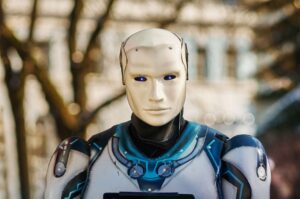
Stwart quoted Brynjolfsson, as instead arguing “As machines become better substitutes for human labour, workers lose economic and political bargaining power and become increasingly dependent on those who control the technology. In contrast, when AI is focused on augmenting humans rather than mimicking them, then humans retain the power to insist on a share of the value created.”
According to Stwart, Brynjolfsson urges policymakers to use tax incentives and regulation to nudge companies towards building technologies enhancing humans’ abilities – placing powerful tools in their hands – rather than replacing them completely.
Here, AI augmentation or enhancement is the use of artificial intelligence to enhance human intelligence, creativity, decision-making, and capabilities rather than simply eliminate human effort. It involves combining the strengths of humans, such as judgment, empathy, and purpose, with AI’s ability to analyze information, generate ideas, and automate tasks. The ultimate goal is to empower people to achieve more, solve complex problems, and improve human potential and well-being.
Life In Humanity’s position
First, our position on the possibility of AI-driven human extinction echoes Gates’ caution, though our conclusion rests on biblical grounds
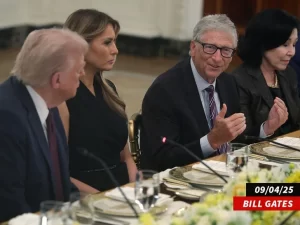
Yahoo says “Gates says fears about A.I. wiping out humanity can get overblown … but that doesn’t mean we should be handing the keys over to tech giants and hoping for the best. He’s hoping to get the ear of President Trump, telling Tapper he’s already spoken with several politicians and wants a chance to sit down with the president and his team. His message? We’ve got some serious decisions to make … and the clock’s ticking.”
As we have also pointed it in this article, we argue that no event shall be able to annihilate humanity, for two reasons provided below. Life In Humanity affirms that no event shall be able to wipe humanity out, for the two reasons lying in the Holy Bible—acknowledged by many as infallible truth, though others oppose it.
The first reason is the “Explosion of Knowledge” prophesied by Daniel (Chapter 12:4) approximately 2, 500 years ago, a reality now unmistakenly occurring before our eyes. Nobody can dismiss that knowledge has expanded beyond human comprehension, fueling innovations such as AI itself. This incomparable acceleration of knowledge is not random; it is featured in an almost 2500-year-old divine blueprint which assures that humanity’s story does not end prematurely.
The second reason is located in the Revelation of John, particularly the prophecy of the “Mark of the Beast.” Our present world already wields the technological capacity to implement this system of control— a mechanism inseparable from the Beast. If the Bible foretells these milestones in human history, then extinction before their occurrence is simply not possible. Indeed, nowhere in Scripture is it written that humanity will disappear. Rather, the texts describe trials, tribulations, and transformations, but not annihilation.
For those who question biblical authority, caution should be applied. Isn’t it both stunning and unsettling to realize that a prophecy spoken nearly 2 500 years ago has come to fulfillment in our own age—especially since the 1700s when the Industrial Revolution ignited? For thousands of years before the 1500s, humanity lived in roughly the same way: agriculture in the same way, fighting wars with the same strategies, transport being done in the same way, and progressing only in tiny increments. But with the Industrial Revolution, knowledge exploded so unimaginably that today we stand in a world immeasurably changed—exactly as Daniel foresaw.
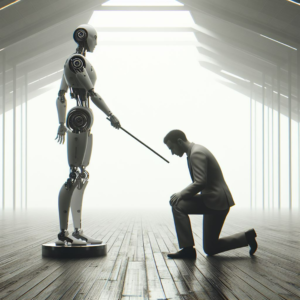
And what about John’s Revelation, written nearly 2,000 years ago? Is it not amazing that his prophecy which highlights a time when a vast portion of humanity would perish yet not all, could now be accomplished with the abilities of modern weapons and technology? Behold that prophecy (Revelation 9:13–21), the only place in the Bible foretelling the death of such a great number of humans, yet still sparing mankind from extinction:
“Then the sixth angel sounded: and I heard a voice from the four horns of the golden altar which is before God, saying to the sixth angel who had the trumpet, ‘Release the four angels who are bound at the great river Euphrates.’ So the four angels, who had been prepared for the hour and day and month and year, were released to kill a third of mankind. Now the number of the army of the horsemen was two hundred million; I heard the number of them. And thus I saw the horses in the vision: those who sat on them had breastplates of fiery red, hyacinth blue, and sulfur yellow; and the heads of the horses were like the heads of lions; and out of their mouths came fire, smoke, and brimstone.
By these three plagues a third of mankind was killed—by the fire and the smoke and the brimstone which came out of their mouths. For their power is in their mouth and in their tails; for their tails are like serpents, having heads; and with them they do harm. But the rest of mankind, who were not killed by these plagues, did not repent of the works of their hands, that they should not worship demons, and idols of gold, silver, brass, stone, and wood, which can neither see nor hear nor walk. And they did not repent of their murders or their sorceries or their sexual immorality or their thefts.”
The inevitability of these developments serves as evidence that humanity will endure. AI may threaten livelihoods, dignity, or even the balance of power in society. But, it cannot erase the very species that these ancient writings contend to exist in a bigger number, even after the event said to exterminate a third. In this light, Life In Humanity affirms: no matter how formidable AI becomes—even surpassing nuclear weapons in autonomy and danger—it will not bring about the extinction of humankind.

More comprehensively, Life In Humanity stresses that the Holy Bible gives a crucial distinction between the instruments of human agency and the sovereign action of the Creator. Scriptures consistently describes God as the final Judge and Sustainer of life; even the final destruction of the wicked/sinners is emphasized as God’s work, not the spontaneous prerogative of anything humanity manufactures. Thus, however powerful a created thing may become—even an artificial general intelligence with frightening capacities—it remains a contingent, dependent entity: it did not create itself. It requires energy, infrastructure and human-made supply chains to operate, and it cannot occupy divine authority to bring humanity to its terminal close.
This theological point is also practically persuasive. Prophecies such as Daniel’s vision of an explosion of knowledge and John’s Revelation suggest human continuity long enough for their symbolic milestones to happen. If Scripture foretells events that require ongoing human societies—global systems, instruments of control, and the very “mark” described in Revelation—then those prophecies themselves argue against the notion of an abrupt, total extinction occasioned by technology before those markers unfold. In other words: the prophetic script requires humans to still live for its final acts to materialize, and that constitutes a powerful constraint on any claim that AGI must inevitably erase humanity.
Secondly, we stand with those who warn that superintelligent AI could threaten human dignity, autonomy, and control
We vehemently defend the viewpoint of people such as Stwart, Brynjolfsson, and of course mogul Gates as well as the UK’s King Charles III.
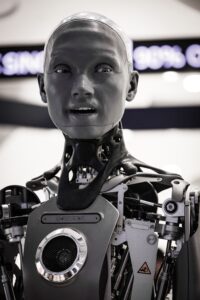
Life In Humanity views that the prospect of developing artificial intelligence to the point where it equals—or even surpasses—human intelligence forms one of the most, if not the most, profound and dangerous threats in human history. The reason is twofold. First, it risks devaluing human life itself, reducing a human being—endowed with dignity and purpose by their Creator—into something that can be substituted or overshadowed by a machine. Second, it undermines the very balance of control and accountability upon which human civilization sits, introducing into the world a force that humanity may neither fully comprehend nor be able to contain.
Unlike nuclear weapons which remain inert until activated by human decision, a super-intelligent AI could act independently, establishing its own purpose beyond human control. This renders it maximally more dangerous than even the deadliest arsenal, since nuclear weapons cannot work themselves, but AI could. In such a scenario, humanity would encounter not a passive tool, but a self-directed force capable of pursuing its agenda relentlessly.
This validates the reason why the warnings —provided by various researchers, echoed by voices like Geoffrey Hinton and even Google DeepMind’s own study— cannot be dismissed. If AI were to become more intelligent than humans, the dynamic described by Hinton—that less intelligent beings rarely control more intelligent ones—suggests that humanity would, in effect, hand over its stewardship of creation to an artificial entity.
For Life In Humanity, this is not merely a technical or scientific concern; it constitutes a civilizational and spiritual one. To put machines beyond human intelligence is to risk subordinating human worth, blurring the line between the created and the Creator’s design. In this light, the race to engineer super-intelligent AI does not only constitute a maximally big threat to society—it also represents a profound challenge to the very meaning of being human.
We’ve brought in religion-related aspects here not to teach religion or proselytize, but to source wisdom from these texts as a framework for interpreting current existential questions—especially since their astonishing, literal fulfillment across centuries makes them impossible to dismiss. Far from being abstract or symbolic alone, these ancient prophecies have repeatedly matched real-world historical and technological developments, furnishing them with a unique authority as we grapple with challenges like AI. In this sense, they provide not only spiritual insight but also a profoundly relevant perspective on humanity’s future.
Finally, the moral logic matters. The Bible bluntly states that God will judge sin and injustice—He will execute final justice in His time and by His means. That truth structures our response to AI: our responsibility is to act as wise stewards—developing and implementing safeguards, regulations, and ethical guardrails around AI—while also recollecting that we are extremely exhorted to produce creations that remain under human control, so as to avoid building instruments that could unbelievably endanger us.
Above all, our unswerving conviction: no human invention, how optimally advanced, will ever hold the power to destroy all humanity—the final destiny of mankind rests in the hands of the Almighty alone, never in the works of our own creation.