By Ephrem Murindabigwi
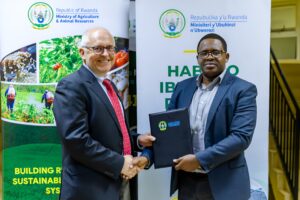
The Africa Centre of Excellence for Sustainable Cooling and Cold-Chain (ACES) and the Ministry of Agriculture and Animal Resources (MINAGRI), according to a press release shared by the ACES, are partnering to unlock Rwanda’s cold-chain infrastructure and agricultural markets. The ACES states that both institutions have undertaken the partnership because across Africa the real problem now occurs between farms and markets. This center highlights that this partnership amounts to a significant opportunity anticipated to strengthen Rwanda’s farming sector.
The initiative is expected to greatly decrease post-harvest losses, improve market access, and draw green investment into Rwanda’s agricultural value chains. Post-harvest loss means decrease in the quantity and quality of food between harvest and the point of consumption, encompassing losses during handling, transportation from a farm, storage, processing, packaging, and transportation to the market. Such a partnership is vital not only in Rwanda but also in whole Africa since this continent suffers a colossal quantity of post-harvest loss. The entire worlds also needs this kind of partnership because post-harvest losses form a global crisis.
Infrastructure to be upgraded under the partnership
The 26 March 2026 press release emphasizes that the partnership represents a vital development in the farming sector in Rwanda. It reads “This story holds strong national relevance, especially in the context of climate-smart agriculture, food security, and export readiness. The initiative goes beyond infrastructure deployment. It is designed to build the systems required to connect farmers to markets, reduce post-harvest losses, and unlock new opportunities for value addition and export growth.”
It goes on, highlighting “Rwanda has taken a major step towards strengthening its agricultural value chains and unlocking green investment by signing a strategic Memorandum of Understanding (MoU) between the MINAGRI and the ACES. The agreement will see the technical rehabilitation and operationalisation of 10 cold-room packhouse facilities across Rwanda, transforming underutilised infrastructure into a national network of climate-resilient, capacity-building, research and market-linked food systems. The 10 facilities, strategically located across Rulindo, Rwamagana, Gatsibo, Ngoma, Nyanza and Karongi, will serve an addressable market of over 400,000 smallholder farming households across Rwanda’s key agricultural zones.”
The ACES specifies that each packhouse will contain 120m² processing space with cold storage capabilities, temperature-controlled environments (12–15°C processing; up to 4°C storage), solar-powered energy systems, and post-harvest handling and aggregation infrastructure. “This will enable the movement of produce from farm to market under controlled conditions, significantly reducing losses and extending shelf life.”
Investment, export readiness, and agricultural transformation
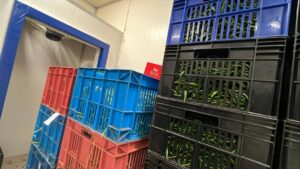
The partnership will reportedly unlock scale from production to investment, especially since according to the ACES, “Rwanda’s agricultural production base presents a significant opportunity for cold-chain investment.” The ACES further says that technical assessments show that (1) Rwanda’s total addressable market (TAM) for fruit and vegetable cold chains spans 495,155 hectares across 13,379 production sites, (2) the 10-packhouse network will directly serve 4,811 production sites (36% of TAM), extending across 185,447 hectares, and (3) this represents a market of over 2.3 million metric tons of produce annually. “Even at modest utilisation levels (1.6% of the serviceable market), the facilities can operate at full capacity, demonstrating both commercial viability and scalability.”
TAM refers to the full potential demand for a product or service—it means the maximum revenue that a company could generate, if it captured 100% of the market. It represents the upper limit of opportunity, assuming no competition or constraints. Businesses use TAM to gauge how large and worthwhile a market is before investing or scaling.
The ACES and the MINAGRI will build food corridors and export readiness as well as a systems approach to agricultural transformation, through this partnership which will establish “integrated food corridors, linking farmers to domestic premium markets, exporters, and regional and international value chains.
The facilities will operate under HACCP and Rwanda GAP certification, with progression toward Global G.A.P. standards, ensuring compliance with international food safety requirements and enabling access to export markets. The MoU reflects a broader strategic shift—from isolated infrastructure to integrated systems development.”
HACCP (Hazard Analysis and Critical Control Points) and Rwanda GAP (Rwanda Good Agricultural Practices) are certification systems that are designed to safeguard food safety and quality across the production chain. HACCP focuses on identifying and controlling potential hazards in food handling and processing, while Rwanda GAP sets national standards for safe, environmentally responsible, and well-managed farming practices. Together, they signal compliance with both international food safety requirements and Rwanda’s agricultural best practices.
As per the agreement, each partner bears their specific responsibilities. The MINAGRI will provide policy support, oversight, and stakeholder coordination. The ACES will lead technical design, operationalization, training, and business model development. As reported by the ACES, facilities will act as “living laboratories” for training, innovation and research while joint steering committee will oversee implementation and upscaling. “The initiative also aligns with Rwanda’s NST2 [Second National Strategy for Transformation], PSTA5 [Fifth Strategic Plan for Agriculture Transformation] and Vision 2050, supporting green growth, job creation, and rural economic transformation,” states the ACES.
Officials’ remarks on the partnership
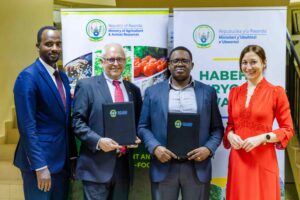
Photo: CCN – Mireille Isimbi.
The Permanent Secretary of the Ministry of Agriculture and Animal Resources Dr. Olivier Kamana, underscores the national significance of the initiative. “This partnership reflects our commitment to transforming agriculture into a modern, competitive and market-oriented sector. By strengthening cold-chain infrastructure and connecting farmers to reliable markets, we are addressing post-harvest losses while unlocking new opportunities for value addition, exports and rural incomes. This is not just about infrastructure, it is about building systems that enable farmers to participate fully in the economy, supported by innovation, partnerships and sustainable investment.”
Professor Toby Peters, Executive Director of ACES, highlights the systemic importance of the initiative. “Across Africa, we often focus on production, but the real challenge lies between the farm and the market. This initiative is about building the systems that connect the two: cooling, logistics, standards, skills and market access. By turning underutilised infrastructure into integrated food systems, Rwanda is demonstrating how climate-smart agriculture can deliver both economic and environmental returns.”
The ACES is a first-of-its-kind global Center of Excellence, focused on developing holistic and sustainable system-level cold-chain solutions. Built on a “Hub and Specialised Outreach and Knowledge Establishment (SPOKE)” model, the ACES shares knowledge and provides training and technical support across markets. The ACES works as the first regional hub, while SPOKEs developed with in-country expert partners give local training and community support to implement tested real-world solutions.
The ACES has been created through the joint support of the Governments of Rwanda and the United Kingdom, the United Nations Environment Program [UNEP], the University of Birmingham leading a UK academic consortium including Heriot-Watt University, Cranfield University, London South Bank University, Exeter University, besides the University of Rwanda and Rwanda Polytechnic.
“A platform for scaling across Africa”.
“Beyond Rwanda, the initiative positions ACES as a continental platform for scaling sustainable cold-chain systems, supporting food security, climate resilience, agricultural exports and green industrial development. It also opens opportunities for partnerships with investors, off-takers, logistics providers and agribusinesses,” says the ACES.
Indepth Research Institute (IRES) describes itself as “a leading provider of data-driven insights, innovative solutions, and transformative training, empowering organizations” across the world. IRES, in its 9 July 2025 story entitled “Post Harvest Losses in Africa: Challenges, Solutions & the Future of Food Security” says “According to the Food and Agriculture Organization, Africa loses up to 30% to 50% of its total agricultural produce post-harvest. This translates to approximately $4 billion worth of food annually. These losses are especially severe in perishable commodities like fruits, vegetables, dairy, meat, and cereals.”

This institution established in 2003 explains that the major reason behind the challenge of agriculture losses still continuing in Africa is insignificant investment in post-harvest systems. “African agriculture has focused heavily on production with minimal investment in post-harvest infrastructure and systems. For decades, traditional storage methods, weak rural infrastructure, and lack of cold chain technologies have exacerbated the issue. In the past, farmers stored grain in granaries made from mud or woven baskets, which exposed crops to pests, moisture, and rot. The absence of standardized packaging and poor road networks made it difficult for produce to reach markets in time, especially in rural and remote areas,” highlights IRES.
Inadequate storage facilities, poor transportation infrastructure, insufficient processing capabilities, lack of packaging and handling standards, limited awareness and training, and market access issues are essential factors that have to be addressed, to deal with post-harvest losses in Africa, according to IRES. “Lack of proper storage units results in spoilage due to humidity, pests, and temperature fluctuations. Rough rural roads and lack of cold transport lead to physical damage and spoilage of perishable goods. Many regions lack affordable and accessible food processing units for drying, milling, or value addition.
Non-standard packaging exposes produce to physical and microbial damage during transport. Farmers often lack knowledge about post-harvest handling techniques and technologies. Delays in accessing markets can result in oversupply, forced sales at lower prices, or complete spoilage.”
What can rescue Africa from the loss?
“Proven solutions to reduce post harvest losses” which IRES recommends to Africa significantly match the ACES’ system designed to handle post-harvest losses. These solutions include improved storage technologies, investment in rural infrastructure, cold chain development, training and capacity-building, processing and value addition, and digital and mobile-based solutions. “Metallic silos, hermetic bags (e.g., PICS bags), and refrigerated storage units are being adopted to reduce spoilage of grains, fruits, and vegetables.Enhancing rural road networks, market access points, and energy supply can significantly reduce transit losses.
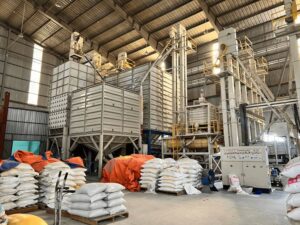
Building cold storage facilities, refrigerated transport, and decentralized cooling hubs has shown significant promise, especially for high-value perishables. Farmer field schools, agricultural extension services, and private sector-led training programs are improving post-harvest handling skills across Africa. Encouraging small and medium enterprises (SMEs) to invest in local level food processing such as drying, canning, and juicing extends shelf life and marketability. Mobile apps are helping farmers find real-time market prices, connect with buyers, and access logistics services, reducing delays and inefficiencies.”
IRES points out that post-harvest management demands a multi sectoral approach and that success in solving the challenge will generate several benefits and considerably develop the agriculture sector on the continent. “Governments, private sector actors, NGOs, and farmer cooperatives must collaborate to build resilient value chains.
Innovations such as solar-powered cold rooms, IoT based monitoring systems, and AI-driven supply chain analytics will be central. Additionally, with Africa’s food demand projected to triple by 2050, tackling post harvest losses is not optional it is essential for achieving food security, reducing poverty, and ensuring sustainable agribusiness growth.”
IRES emphasizes “Post harvest losses in Africa represent both a challenge and an opportunity. By addressing key bottlenecks in storage, transport, processing, and training, stakeholders can unlock billions in value, empower smallholder farmers, and strengthen food systems across the continent.”
A study report entitled “Post-harvest management in Africa: A review of innovative technologies and multidisciplinary approaches for reducing food losses” released by Research Gate in May 2025 reads “An estimated 60% of the total crop harvested is lost due to post-harvest losses in many African countries, leading to high rates of hunger, decreased edible food mass, reduced nutritional value, low income for farmers, and compromised food security as well as livelihoods.
Successful technologies for managing food losses include proper storage, handling, and transportation, suitable packaging materials and design, and adequate monitoring and sensing technologies. Moreover, other approaches can be integrated, such as extension services, combining agronomy and material science, and policy frameworks supporting post-harvest management.” The 30%–50% post-harvest loss in Africa describes the typical overall situation, while the 60% highlights extreme or localized/specific cases where post-harvest systems are especially weak.
The study also indicates that there exist approaches which have proven effective in Africa. “Successful post-harvest management initiatives in Africa have identified other promising and cost-effective technologies, including establishing post-harvest working groups at the national level that link researchers and other food value chain actors concerned about lowering post-harvest losses, as well as providing farmers with practical training and capacity building. A post-harvest loss reduction strategy should be integrated into agricultural programs in Africa to offer farmers practical guidance and reasonably priced solutions.”
So, Africa can be rescued from post-harvest losses through a coordinated set of proven solutions involving improved storage technologies such as metallic silos and hermetic (PICS) bags, expanded cold-chain systems, and stronger rural infrastructure like roads and energy supply. Scaling up farmer training, extension services, and agro-processing—such as drying, canning, and juicing—can further reduce spoilage while increasing the value and shelf life of agricultural produce. In addition, digital tools, private sector investment, and innovations like solar-powered cold rooms and AI-driven supply chain systems bear the potential to streamline market access and logistics, rendering food systems more efficient, resilient, and profitable across the continent.
“Postharvest management is crucial for global efforts to end hunger.”
We have not managed to obtain any data identifying Africa as the region with the highest rate of post-harvest losses globally. Nevertheless, on one hand existing studies indicate that the continent—particularly Sub-Saharan Africa—experiences some of the highest levels of post-harvest losses, especially at the production, storage, and transportation stages. On the other hand, post-harvest losses constitute an issue pervading the entire planet, the reason why the research on Research Gate recommends global efforts to address this global crisis.
The study highlights “Postharvest management is crucial for global efforts to end hunger, increase income, and enhance food security. It plays a key role in preserving the quality of fresh produce by maintaining microbiological safety, nutritional value, and sensory attributes. Essential practices include extending shelf life, managing diseases, and improving packing, coating, sorting, cleaning, and storage to reduce crop deterioration and prevent food loss (El-Ramady et al. 2015; Siddiqui et al. 2016).
Globally, 24% of food is lost during production, 24% during postharvest, and 35% during consumption, totaling over 80% of food lost across these stages (Xue et al. 2017). This represents a significant waste of resources such as water and energy and reduces economic value (Blakeney, 2019). Food losses particularly impact low-income families, compromise food quality and safety, hinder economic growth, and have negative environmental effects. Reducing food loss can increase the availability of food for human consumption and improve global food security.”
Causes of food loss across the global don’t differ from those in Africa. The study explains “Factors contributing to food loss include insufficient skills and knowledge among supply chain actors, logistical challenges, inadequate technology, poor infrastructure, and delayed market access (Kitinoja and Gorny, 1999; Parfitt et al. 2010).”
This study adds “Addressing food loss and waste requires collaboration among farmers, government bodies, managers, and the public (Cakar et al. 2020).”
The growing body of discourse on post-harvest losses—both in Africa and globally as well as the increasing number of institutional efforts aiming to reverse the situation— demonstrates that the issue is no longer confined to rhetoric or theoretical concern.
Evidence from institutions such as the Indepth Research Institute and recent studies on post-harvest management clearly shows that substantial proportions of agricultural produce are continuing to be lost between farms and markets, largely due to infrastructural and systemic deficiencies.
Initiatives such as the partnership between the ACES and the MINAGRI illustrate that solutions are known, tested, and increasingly available. However, what remains critical is the translation of this knowledge into large-scale, coordinated, and sustained action on the ground not only in Africa but also worldwide.
Addressing post-harvest losses requires more than acknowledgment of the problem—it necessitates investment in cold-chain systems, rural infrastructure, training, and integrated value chains that connect production to markets efficiently. In this sense, the challenge is no longer connected with awareness, but implementation. Without concrete and systemic measures, the persistent gap between what is known and what is practiced will continue to undermine food security efforts. Conversely, bridging this gap carries the potential not only to reduce losses but also to revolutionize agricultural systems, enhance livelihoods, and strengthen resilience across Africa and beyond.
Thus, unless initiatives such as those led by the ACES are effectively supported and extended to create and or strengthen post-harvest handling infrastructure and technologies—particularly across Africa—the gap between knowledge and practice will persist. Consequently, post-harvest losses shall remain a critical barrier to food security for the world.