By Editorial Staff.
The current circumstances across the globe and the remaining time to reach the agenda raise suspicion whether the world will manage to fulfill the 2030 Agenda for Sustainable Development. Accomplishing the agenda will be a miracle attained by humanity.
“The sub-Saharan Africa region faces an array of health challenges that are corrosive to economic development and regional stability. The World Health Organization (WHO) estimates that HIV/AIDS, tuberculosis, and malaria claim approximately 3 million lives in the region each year,” says The National Institute of Allergy and Infectious Diseases (NIAID) in its July 10, 2024 article. NIAID is one of the 27 institutes and centers that form the National Institutes of Health (NIH) in the United States. It is renowned for its research efforts aimed at understanding, preventing, and treating infectious diseases, allergies, and immune-mediated disorders.
There however exist countries that have attained the level of zero case of those diseases. For example, China bears zero malaria, according to 24 April 2024 article by Springer, an international publishing company specializing in academic and scientific literature.
Meantime, SDG Move’s June 5, 2024 article states “The changing global power landscape significantly affects health beyond the direct casualties. International conflicts lead to widespread disruptions in healthcare services, from vaccination campaigns to preventing non-communicable diseases, besides providing adequate maternal and child healthcare. Epidemics during war worsen the situation, with public health officials often unable to control disease outbreaks. Notably, fragile areas affected by war are hotspots for outbreaks, with more than 70% of global outbreaks occurring in such regions.” SDG Move is a research and engagement center based at Northumbria University in the UK.
This entire situation as illustrated by the above information has first caused us to wonder secrets that some countries have employed, to achieve zero case of certain diseases. Secondly, it has also prompted us to ask ourselves how all nations on the planet will able to attain this stunning feat. Eventually, the situation has galvanized us to wonder how all countries in the globe will succeed in accomplishing the Sustainable Development Agenda 2030 under the current atmosphere of international conflicts in addition to regional ones. The latter point indirectly contains this question “Are all countries in the world able to access and apply secrets having permitted the developed countries to realize amazing progress like registering zero case of some diseases, so that all the nations on the Earth will have turned perfect in every aspect of life by 2030?”
Further details on the 2030 Agenda and its related subjects
According to the 2030 Agenda, the Sustainable Development Goals (SDGs) form a bold commitment to end the epidemics of AIDS, tuberculosis, malaria and other communicable diseases by 2030. We are meanwhile approximately 6 years only away from 2030. The United Nations says “The aim is to achieve universal health coverage, and provide access to safe and affordable medicines and vaccines for all. To overcome these setbacks and address long-standing health care shortcomings, increased investment in health systems is needed to support countries in their recovery and build resilience against future health threats.” The quote is situated within the context of SDG 3 adopted to address health “Ensure healthy lives and promote well-being for all at all ages.”
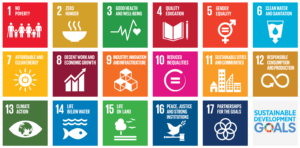
The 2030 Agenda for Sustainable Development was embraced by all United Nations Member States in 2015. It furnishes a shared blueprint for peace and prosperity for people and the planet, now and into the future. It comprises 17 SDGs which stand as an urgent call for action by all countries in the world. These SDGs highlight that ending poverty and other deprivations must coincide with strategies improving health and education, decreasing inequality, and spurring economic growth. You can rarely find an SDG which is not maximally ambitious. For instance Goal 1 is “No poverty”. Goal 2 is “Zero Hunger.”
All the 17 goals apply to every place in the world, meaning that for instance the whole world aspires to have become poverty and hunger-free by 2030. For example, no person in every country in the world shall experience poverty and hunger anymore from 2030 and on, according to the plan. These two goals specifically read “End poverty in all its forms everywhere. End hunger, achieve food security and improved nutrition and promote sustainable agriculture.”
Secrets used by the developed world
For developed countries such as USA, France, Russia and China to attain outstanding achievements to the extent of realizing stunning advancements like zero case of some illnesses, they have worked extremely hard. It does not mean that they have not first gone through similar situations which developing countries are facing. They have first ensured advancements in medical research and technology, public health interventions, strong governance and policies, education and awareness, economic development and social determinants, among others.
Advanced countries have invested heavily in medical research and technology, resulting in the development of effective treatments, vaccines, and diagnostic tools. For example, antimalarial drugs, combination therapies for HIV/AIDS (antiretroviral therapy), and antibiotics for tuberculosis have momentously enhanced outcomes and reduced mortality rates.
These countries generally possess stronger healthcare systems with better infrastructure, healthcare facilities, and trained healthcare professionals. This permits timely diagnosis, treatment, and management of diseases; which is vital to upgrade outcomes.
Robust public health interventions, including disease surveillance, prevention programs, and vaccination campaigns, play a vital role. For example, widespread use of insecticide-treated bed nets has assisted the advanced world in reducing malaria transmission, while tuberculosis control programs emphasize early detection and treatment adherence.
Effective governance and health policies have enabled the developed world to assure coordinated efforts across sectors, allocation of resources, and implementation of evidence-based strategies. This entails regulatory frameworks for drug approvals, public health guidelines, and funding mechanisms for research and interventions.
The developed world has employed public education campaigns, to raise awareness about disease prevention, symptoms, and treatment options. This has helped to decrease stigma, promote early healthcare seeking behavior, and encourage adherence to treatment regimens.
Higher standards of living, better nutrition, access to clean water, and improved sanitation have contributed to overall health improvements and reduced susceptibility to infectious diseases in advanced nations.
The developed world is hower not perfect. Though these factors have generated significant progress in the developed world, some challenges still prevail there. These diseases are continuing to hit vulnerable populations globally, the developed world included. Efforts to eliminate these diseases worldwide require sustained investment, innovation, and collaboration across countries and sectors.
Poverty and conflicts are deeply interconnected and puzzles which present unspeakable challenges for not only the field of health. Poverty prompts conflict and the latter one also causes the former one. Every time that these issues still occur, efforts to eradicate the diseases will remain futile. Because of the current conflictual circumstances, countries will scarcely cooperate, whereas cooperation is crucial in this interconnected world turned into a global village. “The reemergence of polio in Pakistan and Afghanistan illustrates the threatening health consequences of conflict. Similarly, Yemen’s cholera outbreak from 2016 to 2022, the largest in history, has not only resulted in countless deaths but also highlighted the fragility of health systems in war-torn regions.
The conflict has severely hampered access to clean water and sanitation, creating a breeding ground for cholera and other waterborne diseases,” states SDG Move focusing on supporting the implementation and monitoring of the United Nations SDGs by connecting research, policy, and practice to promote sustainable development.
It further states “The healthcare infrastructure in Yemen has been destroyed, with hospitals bombed, medical supplies dwindling, and healthcare workers often working in dangerous conditions. The tragic situation in Yemen serves as a stark reminder of how geopolitical conflicts can devastate health systems and communities, making global solidarity and action more important than ever.”
Negative impact of current wars in multifarious places in the world
The world is currently witnessing wars in (1) Ukraine against Russia, (2) Gaza where Israel and Hamas are fighting, and the Democratic Republic of Congo. All these wars risk metastasizing, attracting more countries.
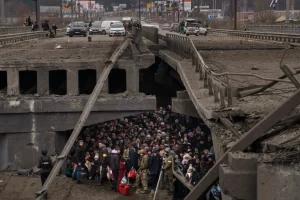
These wars are producing disastrous consequences not only to victims in particular and their countries directly involved, but also globally. For example, SDG Move in its mentioned article states “Moreover, over 114 million people have been displaced globally due to war and conflict, facing uncertain futures and significant impacts on their mental health. The displacement leads to overcrowded living conditions in refugee camps and communities, with inadequate sanitation, further spreading communicable diseases.
The challenges extend beyond immediate health concerns, affecting access to education and career development opportunities, which profoundly affect health and well-being. This brings to light the broader implications of geopolitical instability on global health, not just in immediate terms but also in shaping the future of societies and their well-being.”
SDG Move points out that the extensive impact of conflict spreads beyond healthcare, hindering various spheres of our lives and emphasizing upon the profound interconnectedness of our world. “Troubles in one place, like the ongoing conflict in Ukraine, can have ripple effects that reach far and wide, even influencing something as seemingly unrelated as the price of instant noodles in Thailand.
Before the conflict, Russia and Ukraine played crucial roles in the global agricultural sector, notably in the production wheat, barley, and corn and as major chemical fertilizer exporters. However, the onset of war disrupted the export of these commodities, directly impacting global food production costs. In Thailand, this disruption led to a significant increase in the price of instant noodles, with prices rising by 7 Baht per pack by mid-2022.”
According to SDG Move, the surge in instant noodle prices in Thailand constitutes a typical example of the broader economic impact of geopolitical tensions on global food prices.
Poverty is battering countless souls in the world. An Apr 02, 2024 World Bank [WB] article reads “Around 700 million people live on less than $2.15 per day, the extreme poverty line. Extreme poverty remains concentrated in parts of Sub-Saharan Africa, fragile and conflict-affected areas, and rural areas.
After decades of progress, the pace of global poverty reduction began to slow by 2015, in tandem with subdued economic growth. The Sustainable Development Goal of ending extreme poverty by 2030 remains out of reach.”
Proposed remedy
SDG Move and the WB give some recommendations, to accomplish global health coverage and meet other critical areas for the SDGs to become reality.
Saying that discussions at PMAC [Prince Mahidol Award Conference] 2024 focused on navigating conflict challenges to enhance global health through three key areas, SDG Move highlights “These focuses aim to bridge the gaps that geopolitics often widens, highlighting the interconnectedness of health equity and global solidarity.”
The three focuses including power, knowledge and economic imbalances. “Addressing Power Imbalances: advocating for a paradigm shift from competition towards collaborative efforts in tackling common health challenges, and emphasizing the role of global governance mechanisms in fostering health equity.
Addressing Economic Imbalances: Emphasizing the need for sustainable and equitable financial resources to achieve global health equity, focusing on supporting developing countries. Addressing Knowledge Imbalances: promoting the decolonization of knowledge to support research that benefits all nations equally, prioritizing local knowledge generation and utilization, and advocating for reevaluating global university rankings to emphasize social impact.”
SDG Move adds that the discussions at the PMAC also illuminated the persistent issue of educational colonialism within the global health sector. According to it, this type of colonialism, characterized by the dominance of Western educational and research institutions, sustains inequalities by marginalizing non-Western knowledge systems and imposing a homogenized view of health. “Are We Still Under Educational Colonialism?”
“The financial barriers to publishing and accessing academic research further exacerbate these inequalities, underscoring the need for a more inclusive and equitable global health discourse. The intricate connections between geopolitics and global health equity present significant both future challenges and opportunities. It is possible to guide these complexities effectively through a collective approach emphasizing equity and collaboration. The ongoing discussions around geopolitical dynamics, educational colonialism, and the need for more equitable global health governance are crucial for advancing health equity and sustainability.”
The WB says “We cannot reduce poverty and inequality without also addressing intertwined global challenges, including slow economic growth, fragility and conflict, and climate change. Climate change is hindering poverty reduction and is a major threat going forward. The lives and livelihoods of poor people are the most vulnerable to climate-related risks. Millions of households are pushed into, or trapped in, poverty by natural disasters every year. Higher temperatures are already reducing productivity in Africa and Latin America, and will further depress economic growth, especially in the world’s poorest regions.”
This bank underscores that eliminating poverty necessitates handling its several dimensions. It also underlines that countries cannot sufficiently tackle poverty without also upgrading people’s well-being comprehensively, involving through more equitable access to health, education, and basic infrastructure and services, among others.
The bank recommends policymakers to intensify efforts to raise their economies in a way generating high quality jobs and employment, while protecting the most vulnerable. “Jobs and employment are the surest way to reduce poverty and inequality. Impact is further multiplied in communities and across generations by empowering women and girls, and young people.”
Further details on the PMAC Conference and Prince Mahidol
The PMAC was first held in 1998 to celebrate the 5th anniversary of the Prince Mahidol Award, then again in 2002 to celebrate the 10th anniversary of the award. Celebrating the 15th anniversary of the award and the 115th Birthday Anniversary of His Royal Highness Prince Mahidol of Songkla, Her Royal Highness Princess Maha Chakri Sirindhorn, President of the Prince Mahidol Award Foundation, requested the conference to be conducted annually since 2007.
Since 2007, the Prince Mahidol Award Conference has been taking place as an annual international conference focusing on policy-related public health issues of global significance. The conference is hosted by the Prince Mahidol Award Foundation, the Royal Thai Government and other global partners. Some of the latter ones involve the World Health Organization, the WB, the United States Agency for International Development, the Japan International Cooperation Agency, the Rockefeller Foundation, the China Medical Board, and other related UN agencies.
The general objective of the conference is to assemble foremost public health leaders and stakeholders from around the world to exchange on high priority global health issues, summarize findings and suggest concrete solutions and recommendations.
The Prince Mahidol Award constitutes an annual award for outstanding achievements in medicine and public health worldwide. The award is provided by the Prince Mahidol Award Foundation formed by the Thai Royal Family in 1992.
His Royal Highness Prince Mahidol of Songkla was born on January 1 st, 1892, to their Majesties King Chulalongkorn and Queen Savang Vadhana. Prince Mahidol is a remarkable man who has renounced royal advantages, to contribute to the advancement of higher education, especially in the fields of basic sciences, public health, medicine, nursing, and medical research.
His contribution to those fields has been titanic. According to Prince Mahidol Award Foundation, his work produced a most remarkable and lasting impact on the improvement of modern medicine and public health in Thailand such that he was subsequently honored with the title of “Father of Modern Medicine and Public Health of Thailand”.
Prince Mahidol forcefully translated the resounding message affirming the dignity and the value of life into action, according to the foundation. The message was consequently enunciated in 1948 with the United Nations Universal Declaration of Human Rights.
His teaching promoted the spirit of brotherhood towards all human beings without discrimination of any kind, and it is well known. Several of his exhortations and pronouncements to his medical students have been highly valued for their wisdom and eternal moral values.
For example, this amazing man who only lived for 37 years, 8 months, and 23 days once told his medical students “I don’t want you to be only a doctor, but I also want you to be a man” “True success is not in the learning, but in its application to the benefit of mankind.”
For more on him, read the the foundation’s article.
Your point of view caught my eye and was very interesting. Thanks. I have a question for you.
We appreciate your feedback.
Your article helped me a lot, is there any more related content? Thanks!
Your point of view caught my eye and was very interesting. Thanks. I have a question for you.
Can you be more specific about the content of your article? After reading it, I still have some doubts. Hope you can help me.
I don’t think the title of your article matches the content lol. Just kidding, mainly because I had some doubts after reading the article.
Thanks for sharing. I read many of your blog posts, cool, your blog is very good.
Thank you so much for your kind words and for taking the time to read my blog posts! I’m truly glad you’re enjoying them. Your support means a lot and keeps me inspired to keep writing and sharing more. Always feel free to share your thoughts or ideas on any topic you’d like to see covered!
Your article helped me a lot, is there any more related content? Thanks!
We so gladdened to hear the article was helpful to you! Yes, we have more related content.
Thank you for your sharing. I am worried that I lack creative ideas. It is your article that makes me full of hope. Thank you. But, I have a question, can you help me?
Thank you so much for your heartfelt message — it truly means a lot to know that the article gave you hope. And yes, of course — we’d be more than happy to help with your question. Just let us know what you need!
Your article helped me a lot, is there any more related content? Thanks!
We are overjoyed to hear the article was helpful to you — thank you for your kind words! Yes, we do have more related content. If there’s a particular angle or topic you’re most interested in, feel free to let us know so we can point you in the right direction. Thanks again for reaching out!
Your article helped me a lot, is there any more related content? Thanks!
Thank you so much for your kind words—we’re really glad to hear the article was helpful to you! Yes, we do have more related content. Feel free to let me know what specific aspect you’re most interested in, and we can point you in the right direction!
Your point of view caught my eye and was very interesting. Thanks. I have a question for you.
Thank you a lot your thoughtful comment—we’re really glad the perspective captured your interest. Please go ahead with your question; we’ll be more than happy to respond and engage further!
I don’t think the title of your article matches the content lol. Just kidding, mainly because I had some doubts after reading the article.
We have heeded your kidding. Please, clarify the doubts.
I don’t think the title of your article matches the content lol. Just kidding, mainly because I had some doubts after reading the article.
We appreciate your kidding, and you can clarify your doubts.
Can you be more specific about the content of your article? After reading it, I still have some doubts. Hope you can help me.
Thank you for your feedback. We appreciate you taking the time to read the article. Could you kindly clarify which specific parts left you with doubts or felt unclear? That way, we can better address your concerns and improve the content where necessary. Looking forward to your input.
Can you be more specific about the content of your article? After reading it, I still have some doubts. Hope you can help me.
We thank you for your engagement with the article, and if you elucidate the doubts, we will immediately respond.
Thank you for your sharing. I am worried that I lack creative ideas. It is your article that makes me full of hope. Thank you. But, I have a question, can you help me?
Thank you so much indeed.
Can you be more specific about the content of your article? After reading it, I still have some doubts. Hope you can help me.
While we thank you for the engagement, we would be happier to get clarifications on your doubts so that we may handle them.
Thanks for sharing. I read many of your blog posts, cool, your blog is very good. https://accounts.binance.info/en-IN/register?ref=UM6SMJM3
Thank you so much indeed for this galvanizing and kind words.
Thank you for your sharing. I am worried that I lack creative ideas. It is your article that makes me full of hope. Thank you. But, I have a question, can you help me?
We are delighte indeed by your feedback. Please, ask the question, we are ready to provide support we can.
Your enticle helped me a lot, is there any more related content? Thanks!
We are delighted with these very good words. Yes, there is more related content.
Thank you for your sharing. I am worried that I lack creative ideas. It is your article that makes me full of hope. Thank you. But, I have a question, can you help me?
We thank you so much and are already prepared to respond to your question, immediately after you express it.
Can you be more specific about the content of your article? After reading it, I still have some doubts. Hope you can help me.
Thank you for your message! We’d be happy to clarify—could you tell us which parts of the article left you with questions?
Thank you for your feedback. We appreciate your interest in our article and would be glad to clarify. Could you let us know which parts left you with doubts? We’ll furnish more specific details to help make everything clearer.
I don’t think the title of your article matches the content lol. Just kidding, mainly because I had some doubts after reading the article. https://www.binance.info/register?ref=IXBIAFVY
We have really noticed your kidding — and it actually motivates us. It shows that you read the piece attentively enough to question it, and that kind of engagement is always welcome. If any part of the article raised doubts or seemed disconnected from the title, we would genuinely appreciate hearing more. Constructive reflections help to sharpen both clarity and depth. Thank you for reading so critically — that is how meaningful dialogue begins; nonetheless, we have not been enlightened on your doubts.
Can you be more specific about the content of your article? After reading it, I still have some doubts. Hope you can help me.
Thank you for reading the article and for sharing your feedback. We understand that some points might need more detail. Could you clarify us sections or ideas which raise doubts? We’d be glad to provide clarification and expand on those points so the content may stand clearer and more useful.
Can you be more specific about the content of your article? After reading it, I still have some doubts. Hope you can help me.
Thank you for reading the article and for sharing your feedback. We’re sorry if some parts are not as clear as they should have been— we truly value your engagement. We’d be glad to clarify and provide more specific details. Please let us know sections or ideas which have caused you doubts, and we will address them carefully.
Your article helped me a lot, is there any more related content? Thanks!
We are in fact galvanized by your feedback. Yes, the website contains more related content.
Thank you indeed for the feedback. Yes, the website features more related content.
Your article helped me a lot, is there any more related content? Thanks! https://accounts.binance.info/kz/register-person?ref=K8NFKJBQ
We are thrilled to hear that our article has helped you a lot. Yes, the website features more related content.
Thanks for sharing. I read many of your blog posts, cool, your blog is very good. https://accounts.binance.com/ur/register-person?ref=SZSSS70P
Thank you very much indeed!
Your article helped me a lot, is there any more related content? Thanks!
Yes, there is. Thank you a lot for the comment.
I don’t think the title of your article matches the content lol. Just kidding, mainly because I had some doubts after reading the article. https://www.binance.com/register?ref=IHJUI7TF
We will be excited to welcome clarifications on your doubts, and we thank you for engaging with the article.
Thank you for your sharing. I am worried that I lack creative ideas. It is your article that makes me full of hope. Thank you. But, I have a question, can you help me? https://accounts.binance.info/register/person?ref=IXBIAFVY
Please, raised it. Thank you for your great feedback.
Can you be more specific about the content of your article? After reading it, I still have some doubts. Hope you can help me.
Please tell us more about your doubts so we can address them.