Pontien Niyonambaza is a professional and successful farmer dwelling in Nyabitare Village, Munyana Cell in Minazi Sector in Gakenke District, Rwanda’s North Province. This man has been surrounded by intensely harsh and bitter life which, he declaims, has become for him a remarkably great motivation and lesson for his life. He has attempted to commit suicide numerous times and actually perpetrated it twice, it’s God who has rescued him as he maintains it. The excessively severe life, his current status and ambition transform him into an interesting lesson for people of different backgrounds including you who are reading this article. In my opion, this man features among people who can teach almost every person in the world, since his repository of experiences contains so numerous things he can employ to inspire everybody.
This man’s testimony and experiences constitute an undeniably great relief for especially desperate and ambitious people. Niyonambaza is a perfect example proving that no adversity is perpetual how maximallly strong it were, even though while struggling with it, you feel it will never end. In brief, he is an amazing man. That is why as soon as I heard his story, I rushed to approach him so that he could narrate to us the story in detail. Despite the seemingly insurmountable adversity that he has crossed, he has turned considerably successful. But I have not interviewed him alone, I have also talked to his neighbors and even his father in efforts to cross-check his story because otherwise you cannot fully trust it. They all agree on what this man says, but we won’t feature them in this dialogue with Niyonambaza. The title of this story affirms that this man is an extremely rare and stunning case not only in the region of East Africa or even Africa, but also on the whole planet. This is true. But, Life In Humanity doesn’t demonstrate it in this article, because we have decided to recount his very long story in various segments. One or two sections can only dilute the story.
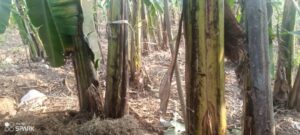
Niyonambaza is now aged 38, married and has 2 children. It is at 9 AM on 9 November 2021. I am with him on his farm where I am going to converse with him. His farm comprises a modern or improved breed of pigs and different crops like edible banana plantation, avocadoes, tree tomatoes, and coffee. But now we are not going to say much about the farm, we will come back to it later. We are instead going to address unspeakable hardships that he has experienced, before climbing to his current success.
Niyonambaza’s penetratingly hard school life
Jean Baptiste Ndabaniye: Let us first thank you maximally, Niyonambaza, from the bottom of our heart for your accepting to share your immeasurably bitter story with us. We thank you, because there are people reluctant to share their inspiring stories, often thinking that sharing their bitter stories will discredit them. Some regard it as a weakness. However, neither is true. A truth is that sharing our hardships constitutes a noble act which optimally benefits those who read or hear about our experiences. For instance, I cannot fear to affirm that your case has also maximally helped and inspired me. That is why we have decided to incorporate a beat, namely Hardships, which exclusively covers this area.
Even the category ‘Share With the World‘ will sometimes feature this aspect, especially since we have decided to include this dialogue in this beat. These two beats forming some of Life In Humanity’s innovations have been designed to create us room to deal thoroughly with this underreported field of hardships. Nevertheless, “Share With the World” won’t be limited to hardships. Niyonambaza, I promise you that I will soon tell my own experience since I also bear a puzzling and bitter one. Niyonambaza, that was to highlight the mammoth importance of sharing your story. You can now begin your story with your circumstances at secondary school.
Pontien Niyonambaza: While talking about this subject, I come back to the history which has characterized this province particularly some of its parts including our sector of Minazi and our district of Gakenke. I went to secondary school in 2001. Then a child having passed a national examination taking them to secondary school, his/her parents and the family in general were regarded as people who had already been rich. I then went to study, people saying ‘The child has passed the examination permitting him to enter secondary education, already he’s become rich, it’s finished.’ And it was actually justifiable because it really represented pride for you, your family and even some neighbors since it came to pass that a whole sector lacked even one child passing the examination. Yet, we were then 7 children who had succeeded in the examination in the entire sector.
The reason why I come back to the history is because our abject poverty was notably based on the war of infiltrators which happened to this area and negatively affected my family. My family was impoverished by the war that destroyed the property of our family. It was a family which was already poor but the war aggravated the poverty. As people who spent a lot of time without working, without cultivating because of the war; you understand that even very few possessions we owned were exhausted by the infiltrators who came to plunder them and damage them. The war raged in this area in the 1998s to 2000. People who were already staggering economically found themselves without anything.
Jean Baptiste Ndabananiye : You have just said they were staggering, how were they?
Pontien Niyonambaza: As a child who was going to study while our family didn’t possess a cow, a home, a job, and food because of that time that people had spent without working, you understand that the family was destitute. Even before, our family was floundering, because it didn’t have much property. That is why I have said our family was limping. Before the infiltrators’war, we owned 3 cows but they were all eaten by the infiltrators. So, in 2000 we possessed nothing. Since we were even numerous children, there were even times when we didn’t even eat. I have 10 siblings, we were also then 10, and we were almost the same age because when a child was born, his/her next sibling followed little time after.
My family couldn’t afford to even get me transport fees, except school fees only which they obtained with intense difficulty; moreover, for a very short period of time. You remember that then we paid 7 000 Rwandan Francs ([RWF] which then equalled around $12) as school fees. When you were lucky to be paid the fees by the MINALOC [Ministry of the Local Government], you were only left with the burden of how you will reach the school. I remember, it happened that I didn’t wish to live here because of that tragic history that this area has experienced. I benefit from this opportunity to thank the government for pacifying this part. We have nicknamed our sector ‘Umurenge w’Amahoro Abahiriwe n’Imana/ the Sector of Peace, People Blessed by God,’ because after all those hardships we eventually enjoyed achievements which surprise us. Those development infrastructures you have seen are things which came after 2010. Before, even the sector’s office didn’t use to be there where it is located now. The schools and even the parish were erected after 2010 but they came concurrently. The sector is secure and its residents are only interested in their progress.
Back to the issue of schooling, it actually constitutes a point which has immensely wounded me mentally because going to school required me and another colleague to rise from the bed at 01 AM and then walk. It was so overwhelming that I did this only three times, for the 4th time I decided to remain at school during the holidays. We would get up during the night, and then took footpaths. I won’t name the other person since he has even become a leader, but we both shared this adversity. Yet at least when he arrived in Kigali while tired, he possessed some cash so that he caught a taxi which drove him to school and I then stayed alone.
I also seize this occasion to express my gratitude to security organs since our principle was that while the night was invading, we had to seek accommodation no where else than at a police station or barracks. We thought “As the night is already descending, if we go to a barracks or a police station; the soldiers or the police people will give us food and a bed.” May God bless those people, because if they have served us in that way, there are other people like us they have supported in the same way. It’s a service that I will always recognize about them.
Jean Baptiste Ndabananiye: How much time did it take you, to reach the school?
Pontien Niyonambaza: From home to the school, it took me days for me to arrive there because if other students were to reach the school on Monday, I started the trip at least 4 days before because I had to walk from here to the school.
Jean Baptiste Ndabananiye: Using your legs and feet, to get to school; and moreover, being a child, did you arrive there, feeling how in your legs and feet?
Pontien Niyonambaza: I cannot tell you how I felt, since you are eventually accustomed to a situation. There are things you suffer and are finally familiarized with them so that you feel no problem while experiencing them. When I was lucky to find where to get food and a bed, before getting to school, I felt satisfied and life continued. In fact, you can feel sad, for instance if you owned transport fees and then lost them. When you already know that you must walk to school, this becomes a part of your life. Therefore, I had accepted this situation so that my mind never thought about walking as a burden. That is why I nowadays regret when I see some children refuse to study while the government has furnished them with infrastructures and opportunities to learn, whereby they only travel a few meters, 1 kilometer or 2 kilometers from home to school.
Jean Baptiste Ndabananiye: That’s how you acted in the 1st term of the 1st form/year, did you continue doing the same for all the 6 years a pupil has to pass for them to complete secondary education in Rwanda?
Pontien Niyonambaza: I remember that in the 1st term, I went to school only possessing 3,000 RWF, an amount which my parents provided for me to satisfy all needs including transport, basic school materials and even school fees. Let me profit from this occasion to tell you that I was finally compelled to drop out.
Jean Baptiste Ndabananiye: But you have talked of the MINALOC which was responsible for financing pupils, from poverty-stricken families, to pursue their seconary education studies.
Pontien Niyonambaza: Then, the MINALOC had not placed me on the list of people to be funded by it, and the MINALOC never put me on the list. If it’s because they didn’t know my identification, I don’t surely know the reason. But meanwhile, I struggled to finish the 1st year. When I was promoted in the 2nd year, the school introduced a program designed for people who had failed to pay the school fees and those who sustain abject poverty. The school consented to keep us at school and then conduct some works but works which we regarded as a punishment since we were required to empty the toilets and then carry that dirtiness to the school’s fields.
Jean Baptiste Ndabananiye: Why did you consider the works a punishment?
Pontien Niyonambaza: We thought we were subjected to the works as a punishment for not having paid the school fees. We didn’t view it as a kindness; we instead judged it to be a punishment which was like telling us “Why are you here, while you have no school fees?” It probably seemed that they designed these works, saying to themselves “Let’s assign them to these works, maybe there are those who have refused to pay the fees while they really have them, if they find that these works are tough, it will motivate them to agree to pay the fees.” It wasn’t really a program meant for generating profit to the school, we believe that it was a program initiated to indirectly force us to pay the fees.
Jean Baptiste Ndabananiye: Are there reliable facts you held proving to you that the school employed you in those works, in a bid to prompt you to surrender if you really kept the fees?
Pontien Niyonambaza: Yes. The reaosn why it was conspicuous is that they first expelled you from school but they eventually noticed you didn’t go home, or you could go to a resident near the school and you passed a day there. On the following day you returned to school. Afterwards, they conducted investigation about you and observed that you really possess no means, the reason why they decided to employ you in the works. But as already suggested, they were not totally convinced though their investigation had showed them you are penniless.
Jean Baptiste Ndabananiye: How long did you go through this life?
Pontien Niyonambaza: I continued persisting in this life from the 1st year to the 4th year. But as soon as I entered the 4th year, I found this life too insuperable for me, because from the 2nd year to the 4th year I stopped returning home. I remained at school with my 4 schoolmates; they cooked us food and we ate, that was all. In fact, I walked from home to school for the 1st year during which my parents sold all remaining insignificant possessions. For instance, sometimes they sold a goat for me to obtain an insignificant amount of money. The next time they sold a very small piece of land so that seeing that all the property was liquidated because of me, I decided not to return home on holidays since I could take nothing from there.
Jean Baptiste Ndabananiye: I have understood that your burden of payment of school fees was eliminated by your involvement in the school works from the 2nd year to the 4th year, but during this period how did you afford to acquire school equipment like notebooks, pens, and so on?
Pontien Niyonambaza: In terms of notebooks, actually I fear to talk about it since people can think I am exaggerating or sensationalizing things. We possessed a technique we employed to obtain notebooks, since as already mentioned, I wasn’t alone facing the problem. We requested our classmates from rich families to take double sheets of paper from their notebooks and then give them to us. You could sometimes use tricks, to get a double sheet of paper from your colleague. For me since I was intelligent, I explained to my classmates courses they didn’t comprehend, I benefitted from this to easily get the sheets of paper from them. With those sheets we then produced notebooks. We used some wires, to bind the sheets into notebooks or would sew the sheets into notebooks with threads and needles.
Jean Baptiste Ndabananiye: Could you manage to have notebooks for all courses, you studied, which amounted to more than 10?
Pontien Niyonambaza: You attempted to work things out, there were certain courses we simultaneously memorized while educators were teaching them to us. Besides, we mastered the courses while explaining them to our colleagues who had written them, especially as the school didn’t have a control mechanism to check whether all the pupils possessed notebooks or not. The school was teaching too numerous pupils to be able to effectively inspect each and every one.
Jean Baptiste Ndabananiye: it is here where we conclude this part that has focused on Niyonambaza’s school life from the 1st year to the 4th one which he didn’t then complete. Let us tell you that he was then learning at Mutenderi Secondary School in Zaza in Ngoma District in the Eastern Province. He had to walk through 5 districts: Rulindo, Nyarugenge, Gasabo, Rwamagana, and Kayonza besides Gakenke from which he came and Ngoma which was his destination. The distance between Gakenke and Ngoma Districts in Rwanda approximately stands at 150 to 180 kilometers (around 93 to 112 miles) by road. The exact distance can vary depending on a specific route taken. We cannot say that this is the distance that Niyonambaza exactly travelled, but it at least gives a general idea of a distance that he covered on foot from his home to the school.
This man who has struggled to finish his secondary studies is now pursuing a Master’s Degree in Agribusiness and Agricultural Economy online at Brainae University in the United States of America, after he has obtained a bachelor’s degree in Agri-Business in Rwanda. Studying at Brainae University also constitutes another story.
Now in 2024 he earns not less than $ 1138 a month, an amount which remains, after he has deducted all expenses including household ones. He farms pigs which grow so large that some of them reach 400 to 500 kilograms. He sells grown-up pigs alive at 2300 RWF to 2500 RWF a kilo, meaning that a pig weighing 400 kilograms [gross weight] will cost between 920 000RWF and 1 000 000RWF. His pighouse accommodates 87 pigs. He now possess 27 pigs, since he sold 60 ones to those who were going to raise them. But he expects to get other 60 piglets within a month.
Yet, we are not going to dwell on Niyonambaza’s success since we will detail it, while will be addressing the achievement of his ambition as he’d vowed it in November 2021. He told me “In about three years from now, I need to have multiplied my production by ten times and without even changing the area of the land. I project to be then earning between 2 500 000RWF and 3 500 000RWF.”
Commenting on a story- about this amazing man’s success- aired by Rwanda Broadcasting Agency, a government-owned media organization, Brainae University has written “Congratulations Mr. NIYONAMBAZA Pontien, on your remarkable journey from Brainae University 2023 alumnus to a successful farmer in Gakenke District and now also serving as an agronomist for the APESCO Project. Your achievements inspire us all. We’re thrilled to welcome you back as a Master’s student in Agribusiness and Agricultural Economy. Your practical experience will be invaluable to your studies and future contributions to the field.”
Our next edition in this beat will concentrate on Niyonambaza’s school dropout, walking to Kampala in Uganda and coming back to Rwanda also on foot, life as a street child in Kigali for 9 months and failed suicide, among others.
Your article helped me a lot, is there any more related content? Thanks!
Yes, the platform features more content relating to this article. Moreover, we are determined to share such content abundantly.
Your article helped me a lot, is there any more related content? Thanks!
Thanks for sharing. I read many of your blog posts, cool, your blog is very good.
Thanks for sharing. I read many of your blog posts, cool, your blog is very good.
Your point of view caught my eye and was very interesting. Thanks. I have a question for you.
Can you be more specific about the content of your article? After reading it, I still have some doubts. Hope you can help me.
Can you be more specific about the content of your article? After reading it, I still have some doubts. Hope you can help me.
Thank you so much for your feedback and we would appreciate more if you could specify where your doutbts lie.
Thanks for sharing. I read many of your blog posts, cool, your blog is very good.
Thank you so much — we really appreciate your support and kind words! It’s great to learn you’ve read many of our posts and found them valuable. If there’s anything in particular you’d like to see more of or any feedback you entertain, we’re all ears. Always happy to connect with engaged readers like you!
Your article helped me a lot, is there any more related content? Thanks!
Thank you, your article surprised me, there is such an excellent point of view. Thank you for sharing, I learned a lot.
We appreciate your feedback indeed!
Your article helped me a lot, is there any more related content? Thanks!
Yes, the website features more related content and we are pleased with your comment.
Can you be more specific about the content of your article? After reading it, I still have some doubts. Hope you can help me.
While we thank you for engaging with the article, we would be pleased to obtain clarifications on your doubts, so we can address them.
Your point of view caught my eye and was very interesting. Thanks. I have a question for you.
Feel free to ask it please. And, thank you for your motivating feedback.
Can you be more specific about the content of your article? After reading it, I still have some doubts. Hope you can help me.
Thank you for your engagement and we would be more pleased, if you enlightened us on where you face doubts so we can address them.
Your article helped me a lot, is there any more related content? Thanks!
We are indeed pleased with your feedback and grab this occasion to anwer you that there lies more related content on the website.
Can you be more specific about the content of your article? After reading it, I still have some doubts. Hope you can help me. https://www.binance.com/en-IN/register?ref=UM6SMJM3
Thank you for taking the time to read our article and for sharing your honest thoughts. We really value your engagement. We’d be glad to explain more and clear up any doubts you still harbor—could you let us know which part felt unclear or which point you’d like us to go deeper into?
Can you be more specific about the content of your article? After reading it, I still have some doubts. Hope you can help me. https://www.binance.info/ka-GE/register?ref=RQUR4BEO
Thank you so much for your feedback. We’re gladdened that you took the time to read the article, and we truly appreciate your openness in sharing your doubts. We’d be more than happy to clarify and go into more detail about the content—please let us know which part you’d like us to expand on, and we’ll do our best to clarify it to you.
I don’t think the title of your article matches the content lol. Just kidding, mainly because I had some doubts after reading the article.
Please, clarify where you are experiencing doubts so we can address them. In the meantime, we thank you for engaging with the article.
Your point of view caught my eye and was very interesting. Thanks. I have a question for you.
We thank you so much for your encouraging comment. We are ready to respond to your question, please raise it.
I don’t think the title of your article matches the content lol. Just kidding, mainly because I had some doubts after reading the article. https://www.binance.info/en/register-person?ref=JHQQKNKN
Haha, we appreciate your honesty and sense of humor! Your feedback is valuable—it helps us to reflect on how to make the title and content align even better. We’re glad that you’ve taken the time to read and share your thoughts. Meanwhile, clarify your doubts.
Your point of view caught my eye and was very interesting. Thanks. I have a question for you.
We really appreciate your kind words—thank you! We are gladdened that our point of view has resonated with you. We’d be happy to hear your question, please feel free to ask the question.
Thank you for your sharing. I am worried that I lack creative ideas. It is your article that makes me full of hope. Thank you. But, I have a question, can you help me?
We are greatly excited! Raise the question, please.
Your article helped me a lot, is there any more related content? Thanks!
Thank you so much indeed for your kind and uplifting words. Yes, the website features more related content.
I don’t think the title of your article matches the content lol. Just kidding, mainly because I had some doubts after reading the article.
Hihih, thank you for kidding but in a way aiming to help us grow! We appreciate your perspective—it actually helps us to see how the title can fit. We’d love to hear more about the doubts you have harbored; it could spark a really useful discussion.
Your article helped me a lot, is there any more related content? Thanks!
Yes, there is more related content which is also very helpful. Thank you so much for your feedback.
Thanks for sharing. I read many of your blog posts, cool, your blog is very good.
Thank you so much indeed for your motivating feedback.
Your point of view caught my eye and was very interesting. Thanks. I have a question for you.
Thank you very much! Please, raise your question.
Your article helped me a lot, is there any more related content? Thanks!
Yes, there is more related content and we are happy to hear that.
Can you be more specific about the content of your article? After reading it, I still have some doubts. Hope you can help me.
Thank you for engaging with the article. We are will be more delighted to receive clarifications on your doubts so we can address them.
Thanks for sharing. I read many of your blog posts, cool, your blog is very good. https://www.binance.com/bg/register?ref=V2H9AFPY
Very happy to learn it.
Thank you for your sharing. I am worried that I lack creative ideas. It is your article that makes me full of hope. Thank you. But, I have a question, can you help me? https://accounts.binance.bh/register/person?ref=W49FLGDN