By Jean Baptiste Ndabananiye
A sequence of painstaking articles— about the Congo Basin— which this article can permit you to explore has investigated the basin’s mammoth ecological wealth, growing threats involving weak governance frameworks, among others, action to take and the increasing set of interventions striving to protect this worldwide crucial ecosystem. The series is situated within Life In Humanity’s reporting project “Echoes of the Earth: From the Congo Basin to the Amazon.”
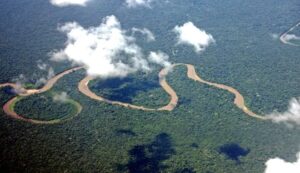
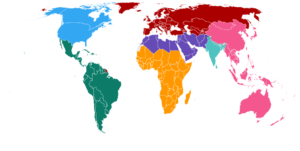
From the Congo Basin, our journey now crosses the Atlantic to the Amazon Basin, another ecosystem whose fate is inseparable from humanity’s future. Our first series on the Amazon Basin will explore the centrality of this extraordinary ecosystem not only to South America, where it is located, but also to the entire world—from North America, Africa and Europe to Asia and Oceania.
Amazon background
The Amazon basin includes roughly 60 percent of the world’s rainforest. A rainforest constitutes a lush, densely wooded ecosystem which receives high levels of rainfall throughout a year, enabling it to support an exceptionally rich variety of plants, animals, fungi, and microorganisms. Rainforests feature among the most biodiverse ecosystems on the Earth and fulfil a vital role in regulating the global climate, storing carbon, producing oxygen through photosynthesis, and maintaining the water cycle.
The Amazon Basin encompasses the single largest tropical rainforest in the world. “The Amazon rainforest is more than three times larger than that of the Congo Basin, the world’s second largest rainforest,” according to Earth.Org.
The Amazon Conservation Association [ACA] says “Covering about 40% of the South American continent, it spans more than 1.6 billion acres across nine countries. Stretching east from the foothills of the Andes Mountains, the upland glaciers, streams, and wetlands feed the Amazon Rivers that wind all the way to the Atlantic Ocean, creating the world’s largest river basin.”
The Science Panel for the Amazon [SPA] constitutes an international group of scientists created to provide the most comprehensive, evidence-based understanding of the Amazon region—its ecosystems, people, and future risks. This group describes itself as the world’s first regional high-level science initiative dedicated to the Amazon.
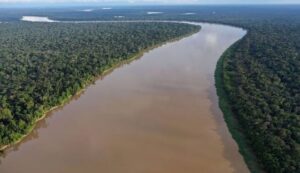
In its undated piece titled “What is the Amazon and why is it important?”, SPA corroborates the preceding sources. “The Amazon Basin is the world’s largest tropical forest and watershed, spanning about 7 million km² and across the countries of Bolivia, Brazil, Colombia, Ecuador, Guyana, Peru, Suriname, Venezuela, and the overseas territory of French Guiana.”
Amazon Basin’s indispensability
ACA highlights “Trees. Oxygen. Water. Food. Wildlife. Life. Protecting the Amazon ensures a healthy future for all of humanity. A thriving Amazon matters to the people who live there, to the countries it encompasses, and to the entire world. The Amazon’s forests and waters make it the most important terrestrial biome on the planet.” Saying that the Amazon forms the most important terrestrial biome on the planet means that it represents the world’s most important land ecosystem because of its unmatched role — in sustaining biodiversity, regulating the climate, and supporting life on Earth.
SPA says “It [the Amazon] comprises a mixture of more than 50 interconnected aquatic and terrestrial ecosystems, including flood plains and upland forests, and is home to over 10% of known global biodiversity (including ~34% of mammals and 20% of birds found nowhere else in the world), with still much left to be discovered. Amazonian biodiversity is, therefore, unique and irreplaceable.”
The ACA also stresses that the Amazon Basin contains irreversible biodiversity with new secrets every 12 months. “The Amazon’s diverse forests, rivers, and savannas harbor the greatest known richness of species than any other ecosystem. With over 100 new species discovered each year, the Amazon is still revealing its secrets.”
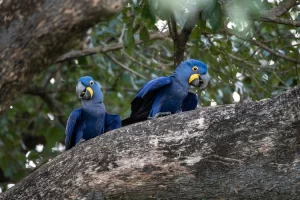
Geographical, with 25 November 2024 story headlined “What would happen if the Amazon was destroyed?” echoes “The Amazon’s level of biodiversity is one of the richest in the world, with more than three million species – including one-third of all tropical tree species that are known on the planet – residing there. If the Amazon were to disappear, this fascinating hotspot of biodiversity would be entirely lost. And as some species are endemic to the Amazon, their loss would be irreversible.”
The ACA says “The Amazon’s waters and forests are a crucial resource for South America’s economic development. As much as 70% of the South American continent’s GDP is produced in areas that receive water from the Amazon. It is estimated that the Amazon’s ecosystem services contribute as much as $8.2 billion to Brazil’s economy alone.”
Brazil’s economy generates approximately US$2.28 trillion annually through sectors such as manufacturing, agriculture, mining, energy, finance, tourism, and services. Yet numerous of these industries depend directly or indirectly on the Amazon, whose forests regulate rainfall, sustain river systems, store carbon, support agriculture, produce hydropower, and underpin biodiversity.
This signifies that the basin’s significance extends far beyond the estimated US$8.2 billion in annual ecosystem services often attributed to it. In reality, the Amazon is not merely one contributor to Brazil’s economy—it acts as a natural foundation upon which much of the country’s broader economic prosperity depends.
Sustainable Agriculture Network is an international coalition of nonprofits that establishes standards for environmentally and socially responsible farming. In its 5 September 2025 story headlined “The Ecological Importance of the Amazon Rainforest and the Role of Sustainable Agriculture”, it reports “The trees in the Amazon release water vapor through a process called transpiration. This moisture is then carried by winds and forms rain clouds, which provide rainfall not only to the Amazon itself but also to adjacent regions, including parts of South America and even North America.
The Amazon’s influence on weather patterns and precipitation extends far beyond its borders, affecting the global climate system. Changes in the Amazon’s health can disrupt these processes, leading to more extreme weather events worldwide.”
Why the Amazon is indispensable to life on the Earth
East of Nowhere, in its story entitled “The Vital Heart of Our Planet: Why the Amazon Basin is Indispensable”, points out “The Amazon River, the lifeblood of the basin, discharges an average of approximately 209,000 cubic meters of water per second into the Atlantic Ocean. This contributes significantly to the global water cycle, particularly through the process of transpiration where plants release water into the atmosphere. This process is critical for maintaining local and regional climates, and any disruption to it can have far-reaching implications.
The Amazon Rainforest is often termed a ‘natural pharmacy’ because of the vast number of medicinal plants that grow there. Over a quarter of natural medicines have been sourced from its plants, some of which are key in developing life-saving drugs. Preserving the Amazon could be crucial to discovering new medicinal compounds that might one day treat or cure diseases.”
The Amazon River is the world’s largest river by volume. As said, it pours an average of about 209,000 cubic meters of freshwater into the Atlantic Ocean every second—more than any other river on Earth. Indeed, it contributes roughly one-fifth [20%] of all the freshwater that rivers deliver to the world’s oceans, underscoring its extraordinary influence on the global water cycle.
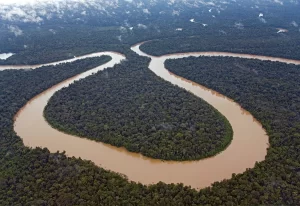
“Amazon River, the greatest river of South America and the largest drainage system in the world in terms of the volume of its flow and the area of its basin. It is estimated that about one-fifth of all the water that runs off Earth’s surface is carried by the Amazon. The flood-stage discharge at the river’s mouth is four times that of the Congo and more than 10 times the amount carried by the Mississippi River. This immense volume of fresh water dilutes the ocean’s saltiness for more than 100 miles (160 km) from shore,” explains Britannica in
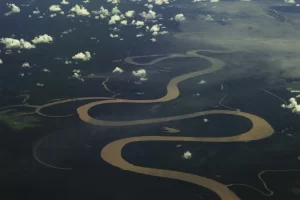
its 24 June 2026 piece of writing entitled “Amazon River”.
East of Nowhere thus underlines “As we continue to face global environmental challenges, the role of the Amazon Basin in maintaining ecological balance becomes more apparent and more critical than ever. Thus, it is incumbent upon us, as global citizens, to advocate for policies and practices that protect and preserve the Amazon Basin.”
The SPA explains “The Amazon is also a critical element of the Earth’s climate system, lowering land surface temperatures, generating rainfall, storing 150-200 billion tons of carbon in its soils and vegetation, and exerting a strong influence on the atmosphere and circulation patterns, both within and outside the tropics. The Basin produces about 16% of all the photosynthesis in the biosphere, while providing the largest river discharge on Earth, corresponding to 16-22% of the world’s total river input to the oceans.
Beyond its climate and ecological significance, the Amazon is home to around 47 million people, including nearly 2.2 million Indigenous people belonging to 410 ethnic groups (80 of which remain in voluntary isolation), and vibrant local communities, including maroons, quilombolas, and ribeirinhos. Amazonian people are culturally diverse as reflected by the 300 languages spoken in the region that embody the diversity of their experiences, knowledge systems, and deep connections to the Amazon. Indigenous peoples and local communities have also played a critical role in the conservation, and management of Amazonian biodiversity.”
What would happen, if the world didn’t possess the Amazon Basin?
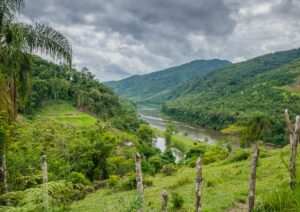
BBC, in August 2019 published a story titled “What would the world be like without forests?”, reports “Trees don’t technically breathe, but they do respire, like we do. However, instead of taking in oxygen and releasing CO2, they do it the other way round. They suck carbon from the atmosphere and provide us with oxygen in a process called photosynthesis – this is why President Macron of France described them as ‘the lungs of the world’
The Amazon rainforest (among others) doesn’t just provide life through the air we breathe, but also with the ingredients for life saving medicines. Over the years, plants containing chemicals that can fight cancer and HIV have been found in the depths of the Amazon and are in development in labs as we speak. The worry then is that if we lose all our forests, we could be losing things that have the potential to cure countless diseases.”
Dr Rebecca Senior, conservation biologist at the University of Sheffield, was quoted by BBC as saying “There’s a whole bunch of potential medicines in the tropics that we don’t know about yet and we could therefore be losing things before we even realise their value.”
Geographical says “The Amazon is home to more species of plants and animals than anywhere else on the planet. But what would happen if the entire Amazon rainforest were to be wiped out? Each year, 40 billion tons of CO2 is released into the atmosphere across the world, and the Amazon absorbs two billion tonnes.
Already, research indicates that the Amazon is becoming less effective at storing carbon, with some estimates suggesting it may only be absorbing just half as much CO2 as it did back in 2004. As well as this, the effects of forest fires – which produce three times more carbon than forests can absorb – compound the Amazon’s growing inability to store CO2.”
Geographical warns “Estimates suggest that if the Amazon were to collapse and all trees were destroyed, it could release 32 billion tons of CO2 over the next 30 years – an event that could trigger a ‘global climate collapse’. For comparison, the worldwide burning of fossil fuels releases an estimated 34 billion tons of CO2 each year.
A global climate collapse: scenario where Earth’s climate system becomes so severely disrupted that the natural patterns and processes upon which humans, ecosystems, and the planet’s life-support systems depend begin to fail on a global scale.
Geographical further states “No more ‘flying rivers’. The Amazon is home to ‘flying rivers’ – huge areas of water vapour generated by the rainforest and carried by air currents – which condenses to form rain, vital to weather patterns, agriculture and the water cycle as a whole.
If the estimated 400 billion trees which reside in the Amazon – were to vanish, the impact would be significant on the water cycle. Each day, one of these trees generates enough water to fill ten bathtubs, and combined, they release 20 billion tonnes of water into the air each day. Clearly, without them, the extent of the Amazon’s flying rivers would be extremely reduced. It would have further impacts on the regulation of rainfall not only in the Amazon but beyond.”
Both Brazil and the United States of America, according to this official magazine of the Royal Geographical Society (with IBG), are among countries which rely heavily on the Amazon Basin. “In particular, changes in rainfall would impact the success of Brazil’s agricultural industry, as only around six per cent of its cropland is currently irrigated, making it heavily reliant on rainfall. If the Amazon were to disappear, its effects would be far-reaching and even impact the US’s food security, according to a study which simulated the effects of such a collapse.
The study’s hypothesis is based on other research that points to a depleted Amazon causing a weather pattern similar to El Niño. As the Amazon would experience depleted rainfall, its temperature would rise, sending a pattern of dry air moving with wet and cool air from the south. This would cause more rainfall in the Gulf of Mexico but dry out the United States’ northwest regions and the Sierra Nevada snowpack.”
The magazine adds that California benefits immensely from the Amazon Basin. “In particular, this snowpack is vital to California’s water supply – as it acts like a reservoir for frozen water, which melts over the summer months. The state’s water supply is directly related to its ability to sustain its vital agricultural output. As such, a shift in this water supply could have a cascading impact on food security in the US.”