By Jean Baptiste Ndabananiye
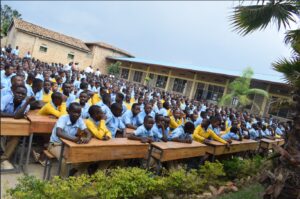
A significant challenge negatively affecting education across the globe and more deplorably Africa is the acute shortage of qualified teachers. The lack of trained educators results in overcrowded classrooms, poor student-to-teacher ratios, and inadequate learning outcomes. “A school is overcrowded when the number of learners grows so big that learners’ ability to learn and teachers’ ability to teach effectively is limited. A school becomes overcrowded when it has too few teachers and/or not enough infrastructure to serve the number of learners that are enrolled,” says Equal Education, a social entreprise intervening in education for vulnerable and disadvantaged students in the United Kingdom. This problem of teacher shortage is compounded by insufficient professional development opportunities and low wages which hinder teacher retention and motivation.
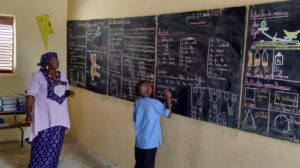
Addressing this issue requires large-scale investments in teacher training programs, improved working conditions, and innovative recruitment strategies to ensure that all children, regardless of location or socioeconomic background, receive quality education. Meanwhile, the entire world expects the continent of Africa to produce a global workforce, since other continents are facing acute aging. Africa’s being uniquely positioned to supply a global young, educated workforce justifies that investments in education on this continent constitutes a matter of global significance.
Shortage of teachers in the world and Africa in particular
United Nations Educational, Scientific and Cultural Organization (UNESCO), initially published an article on 22 February 2024 and updated it on 4 October 2024. Life In Humanity is going to cite the updated version. The latest version is headlined “Global report on teachers: What you need to know.” The article estimates that so numerous teachers need to be recruited by 2030 to meet the continent’s educational demands, particularly with increasing school-age populations and push for universal access to quality education.
This UN’s agency says “Teachers play a key role in shaping the future, unlocking every learner’s potential, and achieving the Sustainable Development Goal 4 of inclusive and equitable quality education. Approaching 2030, a major issue looms large: the world is facing a significant teacher shortage. The global report on teachers, a collaboration between UNESCO and the International Task Force on Teachers for Education 2030, is a tool to mobilize international and country efforts to empower, recruit, train, and support teachers.”
“The global report on teachers reveals an urgent need for 44 million primary and secondary teachers worldwide by 2030. Sub-Saharan Africa is especially affected, with an estimated need for 15 million new teachers by 2030. Understanding the scale of this demand, its geographical implications, and the subsequent effects on educational infrastructure and student-teacher ratios is fundamental to comprehend the gravity of the situation.”
While Sub-Saharan Africa faces the most pronounced teacher shortages, this issue is far from isolated. As already suggested, teacher shortages represent a global challenge, negatively impacting the developed world too, despite its strong education systems. In fact, attrition rates for primary teachers worldwide have nearly doubled in recent years, illustrating how this crisis transcends borders and threatens educational quality and equity everywhere.
UNESCO points out “Teacher shortages are prevalent not only in developing nations but also in high-income regions like Europe and North America. Despite well-resourced education systems, these regions struggle to recruit and retain qualified educators, posing significant challenges to educational quality and equity.
Notably, attrition rates among primary teachers almost doubled from 4.62 per cent globally in 2015 to 9.06 in 2022, with teachers often leaving the profession within their initial five years. Understanding the widespread nature of this shortage and its socio-economic impacts is crucial in formulating effective, all-encompassing solutions.”
The United Nations in its 5 October 2023 story titled “Addressing the Teacher Shortage—a Global Imperative” highlights some dire realities faced by educators. “Today, teachers are overworked, undervalued and underpaid, and more and more are forced to leave the profession.
At the same time, fewer young people aspire to be teachers. It’s easy to see why. Working conditions have deteriorated, pay has not kept up with inflation, workloads have skyrocketed, and professional autonomy has been steadily replaced with never-ending controls and bureaucracy.”
Teacher shortages, an issue needing to be dealt with immediately
The shortage does not just mean a number—it’s a devastating force.UNESCO states “Why is the shortage of teachers a pressing issue? The shortage of teachers stands as a major challenge as we approach 2030. The UNESCO-Teacher Task Force’s global report on teachers exposes alarming statistics. This scarcity is not just a number: it is a crisis undermining educational systems globally. The effect of a worldwide teacher shortage is profound, leading to larger class sizes, overburdened educators, educational disparities, and financial strain on educational systems. It is crucial to understand the profound impact this shortage has on educational quality and access.”
The global teacher shortage is not just a looming crisis—it’s a call to action that demands immediate and comprehensive solutions. The Global Report on Teachers emphasizes that addressing this shortage requires more than just increasing numbers. “The global teacher shortage demands urgency. It’s not solely about quantity but also about the quality of prepared and retained teachers. The Global Report on Teachers aims to offer evidence-informed solutions to ensure every child has access to qualified and motivated teachers.
Recasting teaching as a collaborative profession, lifelong professional development, professional autonomy, and engaging teachers in decision-making are crucial aspects highlighted in the report. Delving deeper into the proposed strategies [addressed in the next section] and understanding their transformative potential is essential to reshape the teaching landscape.”
Large-scale investments in teachers
UNESCO says “How to tackle the teacher shortage effectively? Addressing teacher shortages requires a holistic approach. Beyond recruitment, factors such as teacher motivation, well-being, retention, training, working conditions, and social status need attention. Creating attractive career pathways with equitable access to professional development, autonomy, and purpose is crucial in sustaining teachers’ motivation. Recognizing the multi-faceted nature of this issue and proposing comprehensive strategies is crucial to finding lasting solutions.
How can countries address teacher shortages? Enhancing wages, working conditions, and investing in education significantly impact a teacher’s well-being and motivation. Involving teachers in decision-making and fostering a collaborative school culture can attract and retain quality educators. Adequate investment in novice teachers can reduce attrition and address shortages sustainably. Exploring the nuanced details of these measures and their potential impact on the teaching landscape is vital to implement effective reforms.”
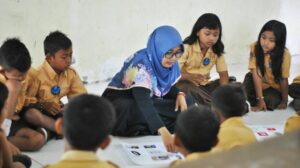
While UNESCO recommends teacher professional development and teacher involvement in decision-making, a very recent study highlights that this aspect sustains difficulties in Africa. “Teacher professional development in Africa (TPD)” is the title of the study published by the British Council in Rwanda in March 2024.
The study focused on TPD provision in the Sub-Saharan region. It was commissioned by the British Council as part of the Secondary Teachers’ English Language Improvement Rwanda (STELIR) project. STELIR constitutes a collaboration, with the Mastercard Foundation, which is carried out by the British Council in partnership with the Rwanda Basic Education Board (REB).
The study was collaboratively formulated by scholars from various African universities including the University of Cape Coast in Ghana, St John’s University of Tanzania, University of Rwanda, Mekelle University in Ethiopia, and University of Johannesburg in South Africa. Besides, different scholars from the Centre for Comparative and International Research in Education (University of Bristol, UK) have also contributed to the development of this study.
The study contains various quotes but which don’t explicitly show those who have articulated them. One of the quotes reads “Professional development is only active on paper. Practically, nothing was changed as a result of the CPD [continuing professional development] program. From the onset, the initiative was not clear. A module was prepared by the central reform planners [Ministry of Education] and sent to us for implementation.
We simply were forced to accept it without having the necessary awareness and understanding of the CPD program. There was no follow-up or support for the teachers. You produced a plan and submitted a written report indicating that you have done what you planned. No one checked whether the report was true or not. So, it was the plan that was evaluated, rather than the actual work accomplished. All decisions were made at the centre. We expressed our dissatisfaction at various times, but our voice was unheard.”
Another one reads “We were not asked what we need, what skill gaps we have or, what suits our context and so on. We were all made to participate in the same professional development program that didn’t address our needs.”
This establishes that to effectively address the teacher shortage, a comprehensive strategy is essential that creates an educational environment where teachers feel valued, involved, and supported in their professional growth. Sustainable change will require systems that prioritize relevant, context-driven development and ensure that teachers’ voices are integrated into decision-making processes, ensuring their needs and challenges are met at every level.
The United Nations underscores it. It states “Teachers require supportive environments to do their job effectively. This is underpinned by adequate resources, trust, respect and societal recognition. We need to uphold teachers’ rights in line with international standards, ensuring that freedom of expression, freedom of association and academic freedom are guaranteed. A protected teacher is an empowered teacher. Safeguarding their rights is non-negotiable. Countries should follow comprehensive, holistic, national education policies crafted in consultation with teachers and their unions. A road map for hiring, training and supporting teachers is crucial.
Teachers are the heart of all education systems, their well-being and working conditions determine students’ learning conditions. It is imperative to fund public education, invest in teachers, guarantee their labour rights and ensure that their working conditions are sound. Investing in education is not only about funding; it is about respecting and valuing pedagogical expertise, and involving teachers in decision-making processes.”

In this respect, financial decisions surrounding teacher salaries, infrastructure investments, and professional development are critical to the health of any education system. However, in order to meet the continental and global education targets, countries must also plan substantial costs of expanding their teaching workforce. Projections show that by 2030, the cost of financing new teaching positions will reach an eye-watering $120 billion annually for universal primary and secondary education worldwide.
UNESCO says “Determining how much to pay current teachers or investing in infrastructure or professionalization initiatives are key financial decisions for any education system. In addition, however, many countries must also factor in projected costs of new teaching positions.
According to latest projections, and in order to meet the SDG target 4, the financing of the additional teachers needed will cost US$12.8 billion for universal primary education, and US$106.8 billion for universal secondary education. Combined, additional financing needed to cover new primary and secondary teaching posts’ salaries by 2030 reaches US$120 billion annually.”
Africa uniquely placed to provide a global workforce, investment in its education being of global significance
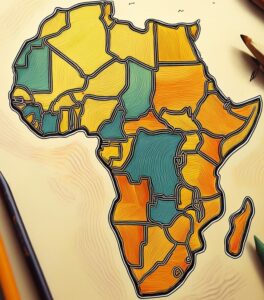
Africa is uniquely positioned to provide a global workforce due to its youthful and rapidly growing population. The continent is home to the world’s largest youth demographic, with more than 60% of its population being age below 25, transforming it into a potential reservoir of future talent.
As the global population ages, especially in regions such as Europe and East Asia, Africa’s young people can play a critical role in addressing labor shortages worldwide, particularly in sectors like technology, healthcare, and education (World Bank, 2023).
However, for Africa to capitalize on this demographic advantage, significant investment in education is required to equip the youth with the skills and knowledge necessary to compete in the global job market (UNESCO, 2021). Such investment is not only crucial for Africa’s own development but is of global significance, as the continent’s success in education will directly influence global productivity, economic stability, and innovation (McKinsey & Company, 2022). For more on this, you can read this article.
Conclusion and what’s next
The light generated by some of the above details effectively ties Africa’s educational challenges to its global significance, emphasizing the strategic importance of addressing these issues. By framing investments in African education as a global priority, it underscores how the continent’s youthful demographic can counterbalance the aging populations in other regions, contributing to the global workforce. This perspective not only emphasizes the urgency of addressing systemic educational gaps but also appeals to international stakeholders to view Africa’s educational progress as a shared responsibility with far-reaching benefits.
While numerous strategies and declarations have been stated, to address the educational deficits in Africa, actual implementation often falls short. The gap between policy formulation and on-the-ground impact remains vast.
Similarly, despite calls for improved teacher wages and working conditions (UNESCO, 2024), different governments struggle to allocate the necessary resources. This disparity highlights a fundamental challenge: while the global community recognizes the need for educational investment, the actions required to fulfill these goals often lack the urgency and commitment that they demand. Thus, for Africa to truly leverage its demographic advantage and contribute to the global workforce, it is imperative to translate these promises into tangible, effective measures. Will these policies evolve from rhetoric to concrete and impactful actions? Life In Humanity cannot provide a sure and credible response. Only, time will tell.
Hey there are using WordPress for your site platform? I’m new to the blog world but I’m trying to get started and create my own. Do you require any coding expertise to make your own blog? Any help would be greatly appreciated!
I have found that WordPress requires some knowledge, and I eventually decided to hire a website designer to develop me this one. But I think that if you make some effort, you can even be able to create your own. In this regard you can seek some documents which address it, even ChatGPT can help you— I believe. If you still face any other questions, I am ready to provide my contribution to answering them.
Hiya, I am really glad I’ve found this information. Today bloggers publish just about gossips and internet and this is really irritating. A good blog with exciting content, this is what I need. Thank you for keeping this web site, I’ll be visiting it. Do you do newsletters? Can’t find it.
Hi there,
Thank you so much for your kind words and for appreciating the content we share—it truly means a lot! I’m glad you found the article valuable.
Yes, I do have newsletters, though they’re hosted on LinkedIn. You can find them under the names “Mind and Body Healthy” and “Healthy Organization.” Every time we publish articles on this website, we share the summary of the article with our subscribers, encouraging them to read the full articles on the website.Feel free to check them out and subscribe. And of course, you’re always welcome here—thanks again for visiting!
I’ll right away take hold of your rss as I can’t to find your email subscription link or e-newsletter service. Do you’ve any? Kindly allow me recognize so that I may subscribe. Thanks.
Thank you for your interest and support! We’re thrilled that you’d like to stay connected. We are actually happy to let you know that the subscription option is already available on our website. You can find it under the “Useful Links” section — just click on “Subscribe” to join our community and receive updates. To find it, simply scroll down to the very bottom of the homepage — you’ll see “Subscribe” listed under the “Useful Links” section.
We’d be thrilled to have you join our community at Life In Humanity and stay updated with our latest stories!
We look forward to having you with us at Life In Humanity! If you encounter any issues, inform us. Meanwhile, we also possesses two LinkedIn newsletters in which we regularly provide summaries of articles that we have just published. The newsletters are Mind and Body Health as well as Healthy Organization— to subscribe to them respectively, you can click on these links: https://www.linkedin.com/pulse/silent-collapse-why-disengaged-managers-pulling-brink-ndabananiye-x5wzf/?trackingId=%2F7LuIBF1REWC4e8nbSJQvg%3D%3D and https://www.linkedin.com/pulse/one-supreme-effort-can-you-revolutionize-your-life-ndabananiye-ewocf/?trackingId=%2BtWnIAskSqy4PQKj8f1w0Q%3D%3D , to reach there.