By Jean Baptiste Ndabananiye
The significance of time and patience in overcoming life’s challenges stands unchallenged, serving as a reminder that even in the darkest moments, perseverance leads to unexpected positive outcomes. The late Albert Einstein’s case reinforces the idea that time and patience are among the most important factors in life. It offers a powerful lesson for those experiencing loss, such as the loss of a job, urging them not to succumb to despair.

In moments of deep sadness, it’s crucial to avoid risky behaviors like substance abuse or suicide which can ultimately lead to irreversible harm. Einstein achieved incredible status but after such immense hardships that he was once regarded as a person who would never accomplish any success in life. We decided to write this piece built upon his case, spurred by extremely tragic news that we heard at the end of the last week. This article contains these essential sections:
- Heartbreaking news
- Life lessons from Einstein’s case in relation the poignant news
- Conclusion
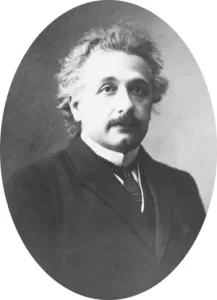
Einstein was a German-born theoretical physicist, famous for developing the theory of relativity which revolutionized our understanding of space, time, and energy. He arrived on the Earth on March 14, 1879 in Germany and passed away on April 18, 1955, in the United States of America where he had emigrated. Einstein became one of the most influential scientists of the 20th century and is praised as one of the greatest minds in history.
His legacy is continuing to influence science, philosophy, and popular culture, with his name remaining synonymous with genius and groundbreaking thought. He was however once considered a person who could remain a total failure throughout his life.
Britannica states “In 1902 Einstein reached perhaps the lowest point in his life. He could not marry Maric and support a family without a job, and his father’s business went bankrupt. Desperate and unemployed, Einstein took lowly jobs tutoring children, but he was fired from even these jobs.”
But, read this passage about him from Britannica. “The turning point came later that year, when the father of his lifelong friend Marcel Grossmann was able to recommend him for a position as a clerk in the Swiss patent office in Bern. About then, Einstein’s father became seriously ill and, just before he died, gave his blessing for his son to marry Maric. For years, Einstein would experience enormous sadness remembering that his father had died thinking him a failure. With a small but steady income for the first time, Einstein felt confident enough to marry Maric, which he did on January 6, 1903.”
The heartbreaking news
On 14 December 2024, I and some other people received a piece of extremely sad news of a person from my friend. The man is Kenyan, but I won’t identify him since it is not only wise to keep a deceased person’s identity anonymous while addressing a tragic story about them, but several reasons dictate us to do so.
For example, we need to respect privacy. Even after death, individuals and their families often wish to keep certain details of their lives private. Revealing their identity could violate this privacy, especially if the circumstances surrounding their death are sensitive or distressing. The anonymity will help us to ensure that the story remains respectful and focused on the underlying message, rather than exploiting the individual’s identity. It is in this context that I won’t even disclose the identification of my source whom I have given the fictional name ‘Billy’.
Billy told us “You know that I used to work for the man who was a pilot of a certain aviation company operating in Rwanda. The pilot developed misconduct and was therefore fired. He used to be very well paid. He would get the monthly salary of $ 12 000 and $2 000 of mission per flight. He was actually leading pleasant life. Even his family is wealthy; his father is a rich and strong politician.

But, he failed to accept the dismissal so that he abused alcohol and refused to eat so that I always feared that his behavior could bring me imprisonment. I was living with him, cooking for him and providing other services at his home. As soon as this incident happened, he drowned in alcohol drinking so that I thought that on a certain morning, we could rise while he had died. I thus dreaded that this could cause me to be imprisoned since I could not be able to explain his death. This is exactly what happened. His family eventually took him back from Rwanda, and because of alcohol excess he experienced cardiac arrest in a moment while he appeared normal. He is now no longer alive.”
While facing excessively hard times, this philosophy by Tony Robbins can reinvigorate you. “One belief that I’ve developed to carry me through extremely tough times is simply this: God’s delays are not God’s denials. Often, what seems impossible in the short term becomes very possible in the long term if you persist. In order to succeed, we need to discipline ourselves to consistently think long term. A metaphor that I use to remind myself of this is comparing life’s ups and downs to the changing of the seasons. No season lasts forever because all of life is a cycle of planting, reaping, resting, and renewal. Winter is not infinite: even if you’re having challenges today, you can never give up on the coming of spring. For some people, winter means hibernation; for others, it means bobsledding and downhill skiing! You can always just wait out the season, but why not make it into a time to remember?” says Robbins, one of the best-selling authors on this planet, in his book “Awaken the Giant Within” that has sold over a million copies.
He adds “We all have dreams. We all want to believe deep down in our souls that we have a special gift, that we can make a difference, that we can touch others in a special way, and that we can make the world a better place. At one time in our lives, we all had a vision for the quality of life that we desire and deserve. Yet, for many of us, those dreams have become so shrouded [buried] in the frustrations and routines of daily life that we no longer even make an effort to accomplish them.
For far too many, the dream has dissipated—and with it, so has the will to shape our destinies. Many have lost that sense of certainty that creates the winner’s edge. My life’s quest has been to restore the dream and to make it real, to get each of us to remember and use the unlimited power that lies sleeping within us all.” For more on this amazing man who has gone through intense adversities which seemed impossible to overcome, read this article “Tony Robbins’ hardships: proof that with adversity, you are on the right path to incredible success and transformation.”
Life lessons from Einstein’s case in relation the poignant news
The heartbreaking news shook us deeply, but through the lens of Einstein’s own struggles, we can find hope and valuable lessons on resilience, perseverance, and the transformative power of time.
The juxtaposition of Einstein’s journey with the tragic story of the pilot offers profound life lessons that can help guide us through our own challenges. From both stories, we can extract the following compelling lessons.
- The Power of Patience and Perseverance— Einstein’s life teaches us that even in the darkest times, patience and perseverance can lead to extraordinary outcomes. Despite being considered a failure at various points in his life, Einstein’s breakthrough moment came when he least expected it, underscoring that perseverance through hardship can yield remarkable results. Similarly, the pilot’s story highlights the dangers of losing hope and succumbing to despair, but it also reminds us that accepting difficult circumstances with patience could have led to a different outcome.
- Resisting Despair— in both cases, individuals faced moments of despair—Einstein with his professional and personal setbacks, and the pilot with the loss of his prestigious job. However, Einstein eventually regained hope and success through resilience, while the pilot spiraled into self-destructive behavior. This contrast serves as a critical lesson to resist the temptation to drown in negative emotions which can lead to irreversible harm, as seen with the pilot’s tragic death.
- Mental Health is Crucial— the pilot’s struggle with alcohol abuse after losing his job highlights the importance of mental health during times of crisis. Einstein, despite feeling immense sadness and failure, focused on constructive action rather than destructive behavior. This teaches us that seeking support, focusing on healing, and understanding that setbacks are not permanent can prevent the downward spiral of mental health issues.
- Time Heals and Transforms— just as time allowed Einstein to obtain stability and success, it could have helped the pilot, had he allowed himself the opportunity to heal. Both stories emphasize that with time, even the most painful challenges can be overcome, and change, though slow, often leads to personal growth. It is a reminder that immediate reactions to setbacks often cloud our judgment, but with time, solutions and clarity emerge.
- Accepting Change and Moving Forward— Einstein’s ability to accept the changes in his life and adapt accordingly—whether it was the death of his father or a drastic career shift—shows that change, while difficult, can be the stepping stone to success. The pilot’s inability to accept change engendered his tragic end, reinforcing that letting go of past grievances and embracing change is vital for mental peace and future progress.

These lessons, drawn from Einstein’s life and the pilot’s tragedy, emphasize that overcoming life’s challenges requires resilience, patience, mental health awareness, and a willingness to accept change. By internalizing these lessons, we can avoid self-destructive behaviors and instead take steps toward healing, growth, and eventual success.
Conclusion
In conclusion, the remarkable stories of figures like Elon Musk, Oprah Winfrey, Tony Robbins, Donald Trump, and late Nelson Mandela serve as powerful testaments to the fact that success often follows the most unspeakable adversities.
Each of these individuals has faced immense struggles—be it financial hardship, personal setbacks, or even imprisonment—but their resilience, perseverance, and unwavering belief in themselves have propelled them to extraordinary heights. Just as Einstein’s journey from despair to brilliance teaches us the value of patience and time in overcoming life’s toughest moments, so too do the experiences of these iconic personalities remind us that the path to greatness is often forged through adversity.
Their successes are not just the result of talent or luck, but of enduring life’s hardships with courage and perspiration, and finding strength in the face of adversity. Ultimately, their stories reaffirm the timeless truth that the greatest triumphs are often born from life’s greatest challenges, urging us all to hold steadfast in our pursuit of our own dreams, no matter how difficult the road may seem.
For those currently facing circumstances similar to those that led the pilot to his tragic end, there still prevails hope and they can be guided to recover it. The pilot’s story reminds us of the destructive power of despair, and how surrendering to negative emotions and harmful behaviors can ultimately cut short a life full of potential. Yet, through the example of Albert Einstein, we learn that challenges, no matter how overwhelming, can be endured with patience, resilience, and a belief in time’s healing power.
If you find yourself overwhelmed by loss, rejection, or personal struggle, remember that hardship does not equate to failure. Like Einstein, who rose from being labeled a failure to becoming one of history’s greatest minds, you too can overcome your darkest days. Seek help when needed, whether through mental health support, guidance from loved ones, or constructive actions that focus on healing. The road ahead may not always be easy, but with patience and perseverance, brighter days will come.
Adversity often constitutes the catalyst for transformation. Just as seasons change, so too do our circumstances, and the winter of our suffering can eventually give way to the spring of growth and success. In these trying moments, remember that your story is still being written, and the best chapters often come after the most challenging ones. Hold on, for time and patience will guide you to a future brighter than you can imagine. If your current circumstances are due to mistakes that you have committed; instead of indulging in negative practices, immerse yourself in action to rectify them and be determined not to repeat them any longer.