By Jean Baptiste Ndabananiye
The weight of causing another person’s suffering constitutes a burden that can shatter even the strongest spirit. As we find it in —The unforgiving weight of guilt— a journey through torturous remorse and sometimes redemption— some perpetrators of the Genocide against the Tutsi in Rwanda are haunted not only by the memory of atrocities which they committed but also by the unrelenting voices of their victims. These voices echo in their minds, a torment that persists long after the violence has ceased. For many, redemption remains elusive, leaving them trapped in a lifetime of remorse that stains their humanity. Milan Babić, a former leader of the Serb forces, described this anguish poignantly. “The regret that I feel is the pain that I have to live for the rest of my life.”
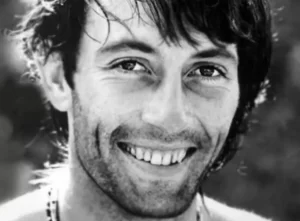
This torment, however, is not unique to those who commit acts of physical violence. The story of Kevin Carter, the South African photojournalist who captured the iconic yet haunting image of a starving Sudanese girl stalked by a vulture reveals how even witnessing human suffering without intervening can exact a profound emotional toll. Carter’s photograph exposed the world to the grim reality of famine but left him grappling with guilt over his inability to help the girl. Criticized by the public and anguished by his conscience, Carter succumbed to despair, writing in his suicide note “I am haunted by the vivid memories of killings and corpses and anger and pain of starving or wounded children, of trigger-happy madmen.” This article contains these major components:
- Lessons out of the incident
- The story: the vulture and the little girl, 1993. Original title: Struggling Girl
- Conclusion
- Call-to-action
Lessons out of the incident
Whether through direct actions or passive inaction, leaving another person in horrendous trouble comes with an unbearable cost. The pain we inflict upon others—whether by choice or circumstance—inevitably returns to haunt us. The case of Elie Musabyimana—explained in the above article around the Genocide against the Tutsi in Rwanda in 1994— a genocide perpetrator who sought forgiveness from the family of those he killed, and Carter’s tragic end stand as stark reminders of this truth. The echoes of harm, once set in motion, ripple outward and inward, consuming not just the victim but also the one who has prompted it.
It is a harsh yet vital lesson: to harm another is to harm oneself. True healing, both individual and collective, requires acknowledgment, genuine remorse, and the courage to confront the consequences of our actions. For those who refuse this path, the unrelenting burden of guilt becomes a punishment of its own, a lifetime spent in the shadow of unimaginable suffering.
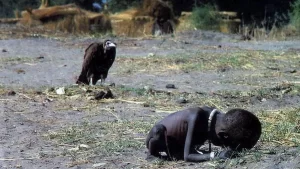
The story of Kevin Carter and his haunting photograph serves as a profound lesson in the complexities of human suffering, morality, and the emotional toll of witnessing unimaginable tragedy. Carter’s image of a starving girl closely monitored by a vulture represents a stark reminder of the power of photojournalism to shed light on distant horrors, compelling the world to confront uncomfortable truths. However, it also highlights ethical dilemmas faced by those who document suffering: the tension between bearing witness and intervening, between capturing a moment to inspire action and being haunted by the inability to do more.
Carter’s experience teaches us the heavy price of empathy in the face of overwhelming suffering. Carter actually wielded the power to accomplish two noble feats: rescuing the child and the powerful photo. His all-consuming regret over not being able to help the girl, compounded by public criticism, underscores psychological burdens carried by those who expose the darkest corners of humanity. The pain that he endured acts as a stark call for greater understanding and support for those on the frontlines of storytelling, who often wrestle with guilt and trauma long after the world has moved on.
Above all, Carter’s story reminds us of the urgency of action. It challenges us to go beyond mere observation and ask ourselves what we can do to address the systemic injustices and suffering that images like his disclose. It serves as a call to recognize that behind every photograph of suffering is a deeper story that demands not only awareness but also meaningful change.
The story: the vulture and the little girl, 1993. Original title: Struggling Girl.
The source of the story is Rare Historical Photos, a website exclusively dedicated to historical and rare photographs. We have preferred to provide the story, with little editing. The story is as follows.
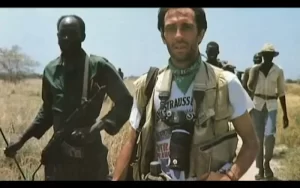
The vulture is waiting for the girl to die and to eat her. Carter took the photo, while on assignment to Sudan. He took his own life a couple of months later due to depression.
In March 1993, Kevin Carter travelled to Sudan. Near the village of Ayod, Carter found a girl who had stopped to rest while struggling to a United Nations feeding center, whereupon a vulture had landed nearby.
Careful not to disturb the bird, he waited for twenty minutes until the vulture was close enough, positioned himself for the best possible image, and only then chased the vulture away.
At this point, Carter was probably not yet aware that he had shot one of the most controversial photographs in the history of photojournalism.
“The parents of the children were busy taking food from the plane, so they had left their children only briefly while they collected the food. This was the situation for the girl in the photo taken by Carter.
A vulture landed behind the girl. To get the two in focus, Carter approached the scene very slowly so as not to scare the vulture away and took a photo from approximately 10 meters. He took a few more photos before chasing the bird away”.
The photograph was sold to The New York Times where it was released for the first time on March 26, 1993.
Practically overnight hundreds of people contacted the newspaper to ask whether the child had survived. It prompted the newspaper to run a special editor’s note saying the girl oozed enough strength to walk away from the vulture, but that her ultimate fate was unknown.
Because of this, Carter was bombarded with questions about why he did not help the girl and only used her to take a photograph.
As with many dramatic photographs, Carter came under criticism for this shot. The St. Petersburg Times in Florida wrote “The man adjusting his lens to take just the right frame of her suffering, might just as well be a predator, another vulture on the scene”.
The attitude that public opinion condemned was not only that of taking the picture instead of chasing the vulture immediately away. The fact that he did not help the girl afterward —as Carter explained later— leaving her in such a weak condition to continue the march by her self towards the feeding center was also castigated.
However, Carter was working in a time when photojournalists were told not to touch famine victims for fear of spreading disease. Carter estimated that twenty people per hour were dying at the food center.
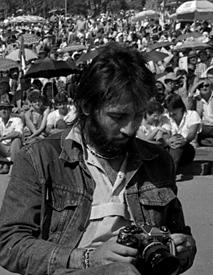
The child was not unique. Regardless, Carter often expressed regret that he had not done anything to help the girl, even though there was not much that he could have done.
In 1994, Kevin Carter won the Pulitzer prize for the disturbing photograph of a Sudanese child being stalked by a vulture. That same year, Kevin Carter perpetrated suicide.
Carter is the tragic example of the toll photographing such suffering can take on a person. Along with his famous photograph, Carter had captured such things as a public necklacing execution in 1980s South Africa, along with the violence of the time, including shootouts and other executions.
Carter spoke of his thoughts when he took these photographs. “I had to think visually. I am zooming in on a tight shot of the dead guy and a splash of red. Going into his khaki uniform in a pool of blood in the sand.
The dead man’s face is slightly gray. You are making a visual here. But inside something is screaming: ‘My God!’. But it is time to work. Deal with the rest later. If you can’t do it, get out of the game”.
The suicide: 0n 27 July 1994 Carter drove his way to Parkmore near the Field and Study Center, an area where he used to play as a child, and committed suicide by taping one end of a hose to his pickup truck’s exhaust pipe and running the other end to the driver’s side window. He died of carbon monoxide poisoning at the age of 33. Carter’s suicide note read “I’m really, really sorry. The pain of life overrides the joy to the point that joy does not exist… I am depressed… without a phone… money for rent … money for child support… money for debts… money!!!…
I am haunted by the vivid memories of killings and corpses and anger and pain… of starving or wounded children, of trigger-happy madmen, often police, of killer executioners… I have gone to join Ken [recently deceased colleague Ken Oosterbroek] if I am that lucky”.
Conclusion
The unbearable weight of guilt, the relentless torment of remorse, and the elusive pursuit of redemption form a stark, haunting journey that many individuals face after inflicting or even witnessing suffering. From perpetrators of violence— such as those involved in the Genocide against the Tutsi in Rwandan in Rwanda in 1994— to those like Kevin Carter who were trapped in the agony of passive inaction, the cost of causing pain or standing idly by in the face of human suffering is immense.
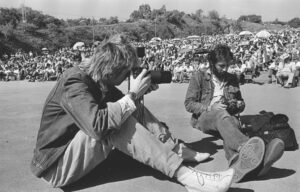
Carter’s haunting image of a starving Sudanese girl stalked by a vulture encapsulates not just the physical anguish of the subjects he photographed, but also the internal devastation of the photographer himself. His regret, exacerbated by public criticism and personal pain, ultimately led to his tragic end. This serves as a poignant reminder that the consequences of suffering extend far beyond the immediate victim, affecting those who cause or document it as well.
As we reflect on these stories, we must recognize the urgent need for empathy, action, and responsibility. It is essential to remember that behind every photograph, every historical account of tragedy, there are lives waiting for meaningful change. We must confront the haunting truths of our shared humanity and ask ourselves: what can we do to make a difference? How can we prevent others from being subjected to the same suffering that continues to reverberate through the lives of those affected by it?
Call-to-action
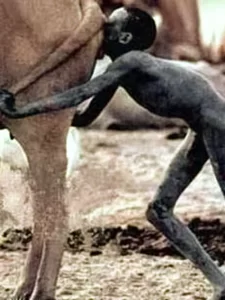
We all have a role to play in shaping a world where suffering is met with compassion, action, and a collective responsibility to intervene. Whether through advocacy, volunteering or simply spreading awareness, we can help to alleviate the burdens that weigh on those suffering in silence. Let us not merely observe the pain of others but strive to contribute to the healing process.
We can’t undo past wrongs, but together, we can create a future where empathy and meaningful action replace the haunting consequences of inaction. Join the conversation, share the stories, and take action—because every life, every moment of suffering, demands our collective humanity.
Imagine, how Carter could have been celebrated if he had saved the child? If he had happened to have a picture with him and the girl—a powerful image of not just suffering but redemption and human compassion? Heroic acts demand bravery, fearlessness, and thinking beyond the box, and such a moment could have redefined his legacy and inspired the world in unimaginable ways. Our next article will focus on some comments expressed on Carter’s story. Let this story inspire us to perform such positive acts, even if we were in an unfavorable environment.