By Editorial Staff

More than seven decades ago, the World Health Organization (WHO) defined ‘health’ as “a state of complete physical, mental and social well-being, and not merely the absence of disease or infirmity.” This definition has stood since 1948 — despite being sometimes questioned, and even dismissed.
A certain edition having appeared in the LinkedIn newsletter—Mind and Body Health— has attempted to simplify the meaning of ‘health’ — framing it not just as freedom from illness, but also freedom from all causes of suffering, and the active promotion of conditions that sustain well-being. Still, reflection has forced us to ask: is the WHO’s definition enough? And does the definitiin in the newsletter capture what health really is, though we subscribe to it?
This article goes deeper, challenging the completeness of WHO’s definition and exploring how it may be limiting the medical field itself. We argue — along with experienced voices like the late Dr. Alistair Tulloch — that the concept of health remains murky, underdefined, and dangerously vague. Ironically, even the very professionals tasked with protecting health — doctors — seem to struggle with what it truly means. Why does it matter? Because what can’t be defined can’t be measured. And what can’t be measured can’t be managed — not in policy, not in practice, and not in the lives of real people.
What is the WHO and who is Dr. Tulloch?
We are convinced that while the WHO may not be known by every individual, it is undeniably one of the most globally recognized institutions. The WHO constitutes the leading global public health organization dedicated to promoting global health and well-being. It’s been established to provide leadership on global health matters and help countries, particularly developing countries, to attain their health goals. WHO is assigned to directing and coordinating international efforts to improve global health.
Life In Humanity and Dr. Tulloch argue that the WHO’s definition of health is incomplete—a point we will substantiate shortly. While the definition isn’t set in stone and can be revised to reflect contemporary realities, it remains the WHO’s prerogative to initiate such changes. In the meantime, each development domain must be distinctly defined, as we will also explain. Ultimately, any globally recognized definition of ‘health’ requires formal endorsement by the WHO, the UN agency responsible for global health governance.
Dr. Tulloch was born and raised in Scotland and trained as a doctor at Aberdeen University before undertaking his two-year National Service in the Royal Air Force [RAF]. RAF is the United Kingdom’s air force. The university- the fifth oldest University in the UK- features among the most powerful higher learning institutions globally. It figures among the top best 250 universities across the world in 2025.
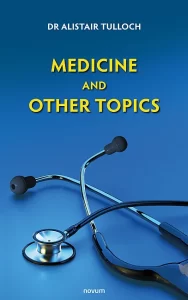
Dr. Tulloch retired in 1987, aged 61. He qualified as a GP in 1950. GPs, general practitioners, handle a range of health problems and are usually the first persons that patients turn to for help. They are general experts in the whole field of medicine, attending to both children and adults. He wrote the book ‘Medicine and Other Topics’ which is an autobiography from someone steeped in the values of the National Health Service [NHS]. The NHS is the publicly funded healthcare system in England, and one of the four National Health Service systems in the United Kingdom. The NHS stands as the second largest single-payer healthcare system in the world after the Brazilian one.
This distinguished Scottish general practitioner was known for his contributions to medical thought, particularly his critiques of the WHO’s definition of health. His insights are continuing to influence discussions on public health and medical philosophy.
What should be the complete definition of ‘health’?
The late Dr. Tulloch’s arguments will contribute to showing what the complete definition of health ought to be. The arguments lie in his document entitled “What do we mean by health?” It was published by the PubMed Central (PMC)on 1 April2005. PMC constitutes a free digital archive of biomedical and life-science journal literature maintained by the National Center for Biotechnology Information (NCBI) under the U.S. National Library of Medicine (NLM). The NLM operates within the National Institutes of Health (NIH), the primary agency of the United States government responsible for biomedical and public health research. The U.S. National Library of Medicine also forms the world’s largest medical library.
His work starts, stating “The main objective of the doctor’s work, in whatever field he or she functions, is ultimately the restoration and maintenance of health. Yet, as Smith pointed out some time ago, disease and health are ‘slippery concepts’ that we have not been able to define clearly hitherto. The difficulty of defining health was clearly illustrated when the distinguished figures of the World Health Organisation (WHO) were asked to undertake this task in 1948. Their response was that ‘health is a state of complete physical, mental and social wellbeing and not merely the absence of disease or infirmity.”
The late Dr. Tulloch’s piece doesn’t concur with this definition. He indicated that no other credible source furnishes the satisfactory definition of ‘health’ either. “Now, a definition should define clearly the nature of a subject as it is or by what effect it has; that is, what it does. In addition, in the fields of science and medicine, it should indicate how the subject is produced and enable it to be measured. The WHO definition did none of these things — it merely took one vague entity ‘health’ and defined it in terms of another equally obscure concept, ‘wellbeing’. It did, however, point out that there was more to health than simply the absence of disease, but this was not really a definition at all, being merely a rather vague description.

The waters remained as muddy as ever and the measurement of health was in no way facilitated. Incidentally, the Oxford English Dictionary is no more precise on this subject. It offers a number of meanings including ‘soundness of body, that condition in which functions are duly discharged, spiritual, moral or mental soundness, salvation, well-being, safety and deliverance’ — all parts of the picture, but a real definition is still some way off.”
The document underlines a certain interesting thing. This is that, according to the late Tulloch, physicians fail to define ‘health’ while this forms their field. He didn’t nevertheless blame them. “Now one does not have to be Wittgenstein to recognise the absurdity of the situation in which doctors regard health as the main currency of their work, despite the fact that they cannot define exactly what they mean by the term.
Indeed, they may even take refuge in the belief that ‘health’ is impossible to define. Even more remarkably this extraordinary fact seems of little concern to the medical profession. It certainly did not concern me in any way throughout my entire career. After all, we seemed to manage reasonably well with the current vague concept of what we mean by the term ‘health’. Is this complacency justified? In retirement I have come to think that it is not.”
However, ‘health’ like all other fields needs to be explained perfectly or fully for people to completely understand it. This complete understanding of ‘health’ permits people to perfectly execute the right actions to perfectly ensure it.
Different personalities with whom we completely concur point out that it can be hard for people to apply a concept/field which they don’t comprehend. Oshadhi Herath from the Department of Philosophy at the University of Kelaniya in Srilanka is one of them. He has also underlined that it can be difficult for people to operationalize a concept, if they’re not enlightened on it. He was then contributing to defining ‘peace’, when he said “If[a] person defines something vague, it will be difficult to put [it] into practice.”
A field not fully defined will create room for limitations and this is observed in the medical field. As we agree upon it with the late Dr. Tulloch, the current official definition of ‘health’ omits key aspects. This creates room for doctors not to intervene massively in those key aspects. The definition fails to incorporate external andenvironmental influences, nor does it suggest any strategies, mechanisms, or actions related to them for ensuring health. This vagueness allows practitioners to overlook these dimensions, not necessarily out of negligence, but because the definition they are trained to uphold does not require their attention.
However, the definition of a science field like health ought to indicate action to take so as to promote or support the field as even implied by Dr. Tulloch.
When a scientific field lacks a comprehensive definition, it invites confusion and limits its practical effectiveness — as it currently represents the case with the medical field. Together with the late Dr. Alistair Tulloch, we contend that the WHO’s definition of ‘health’ omits vital dimensions, thereby giving insufficient guidance on preventive action and environmental determinants of health. This shortfall contributes to a reality in which doctors may overlook crucial factors simply because these aspects fall outside the definition they are trained to uphold. As the WHO definition fails to incorporate external, environmental influences and offers no guidance on mechanisms or pathways to sustain or achieve health and that Dr. Tulloch observed, a robust definition ought to point toward action — not merely describe an ideal state.

He noted “In this context, the task of the doctor is primarily (and prior to the start of the 20th century was almost exclusively) the identification and management of disease presented to them by their patients. Of course there were pioneers like Edward Jenner and John Snow in the 18th and 19th centuries who drew attention to the importance of preventive measures and control of environmental forces. However, the profession was slow to learn from them and it was not until the 20th century that preventive care programmes focused on disease, accidents and a variety of other environmental factors likely to affect health.”
He added that this form of prophylaxis has been developed very slowly and tends to be seen even as a supplementary back-up service. “Thus, disease is the main focus of the doctor’s work and the background to disease does not enjoy the same attention, which is why occupational health has only established itself very slowly across the last 50 years while the specialty of rehabilitation has an even shorter lifespan.
By contrast, clinical care of diseases and accidents goes back thousands of years. So, I am suggesting that our failure to define health may well have been more influential in the evolution of our philosophy of medical care than, perhaps, we recognised in the past. Philosophers, who claim to be seeking ‘the ultimate nature of reality’, would no doubt point out to doctors that this is precisely what they are failing to do and that their patients are paying the price as a result.”
In fact, with the WHO definition of health, we understand that the focus is only placed upon fighting diseases, but without considering the context of diseases. The definition doesn’t reflect other factors like those in the physical environment which create or can create diseases. Health as defined by the WHO needs to be enormously supported by favorable external/environmental conditions and behaviors, for it to materialize as exactly as defined by this organization.

Nonetheless, the definition doesn’t conspicuously address these conditions. The late Dr. Tulloch suggested it in these words “Supposing, instead of the conventional model, the starting point of our thinking was that men and women live day-by-day in an alien environment subject to a variety of hostile forces, which constantly threaten and sometimes damage them.
Their response has been one that enables them- with the assistance of better hygiene, sanitation, diets, health education and medical care in most cases- to adapt to these forces and function normally in the community most of the time — in advanced Western societies at least. Thus, we have a simple definition of ‘health’ as the capacity to make this adaptation, while ‘ill-health’ can be defined as failure to adapt to environmental forces and function normally in society.”
He added that the alien forces referred to above are several and varied. Some of the most serious ones include accidents, infections, other physical disorders, psychological factors, lack of exercise, poverty, social deprivation, inadequate diet, obesity, poor quality or unsuitable accommodation (including poor heating) and lack of sanitation. “To this can be added poor working conditions, inappropriate social behaviour (for example, smoking and drug abuse), ageing, weather conditions, foreign travel, inadequate medical care (either from poor provision or low standards) and the most hazardous sporting or recreational activities. These environmental forces are mainly external but can occasionally be internal when, for example, they take the form of congenital or autoimmune disease”.
The late Dr. Tulloch encouraged a broad view toward the sector of health and we agree with him without any reservations. “I would contend that the planning of health care today could be facilitated by the medical profession taking much more account of the context of disease than at present and there are many instances in which this is important. For example, doctors in the UK do far less than they should to halt the carnage on the roads. A significant minority of the general public are all too often indifferent to this heavy loss of life, as witnessed by their hostility to the introduction of cameras on the roadside that expose their excessive speeding and save lives.

The profession should therefore be pressurising the government much more vigorously to take more action in this field.” “So, if human health is to be seen as a process of adaptation which, with the help of medical care, is improving slowly generation by generation, what is the best way for it to be developed? Surely by making people better equipped to adapt to these hostile environmental forces which, in turn, need to be much better controlled to reduce their harmful effects on human beings. Or, put another way, by the highest standards of clinical care associated with better health education and environmental control.”
The late Dr. Tulloch recommended that people ought to be protected from environmental hazards to which they are exposed day by day, as they go about their lives. “This different perspective on health defines its nature and suggests the need for more emphasis on the context of disease than at present, while, at the same time, maintaining the highest standards of clinical care.”
Our definition of health tallies with the late Dr. Tulloch’s comments. We try to define ‘health’ as the state of enjoying life free of diseases but also all factors leading to diseases and other conditions causing a person to suffer, while promoting all conditions fully supporting health. But, here, we don’t intend to maintain that our definition is perfect. That’s not our purpose. Our purpose is instead to argue that the current definition of health ought to be amended, adding those key areas still lacking in it. In our opinion, the amendment shouldn’t remove anything from the current definition; it should only conspicuously include the two aspects lacking in.

The two aspects involve (1) dealing with all factors/conditions leading to diseases and (2) promoting all conditions fully supporting health which includes health education. You can argue that these aspects are also carried out. We will concur on it, but reply to you that these areas aren’t clearly covered in the current definition and that this represents a limitation.
As even highlighted by the late Dr. Tulloch, if these aspects are reflected in the definition, healthcare practitioners will include them in their primary tasks and it will yield more considerable results by far. Yet, today it can cause them to feel that it doesn’t behoove them to intervene significantly in those areas. Thus, as we have begun it with this article, we will carry advocacy on so as for the current definition of health to be revised.
In one of our upcoming articles, we will explore how the definition of health must evolve beyond the traditional focus on the absence of disease, incorporating dimensions such as resilience, emotional wellbeing, socioeconomic context, and the individual’s capacity to contribute meaningfully to society—drawing inspiration from recent scholarly efforts to redefine health in a more holistic and actionable manner.