By Jean Baptiste Ndabananiye.
The mysteries of our world often elude tangible evidence, leaving us to ponder and debate their truths. Among these enigmas, the question of what happens after death stands as one of the most profound and contentious puzzles. Despite the universality of death—an event every living human being must face, its aftermath remains shrouded in uncertainty and intrigue. Exploring the afterlife and the essence of death constitutes an exceptionally intricate endeavor. To truly understand it, one would need to die and return to life, a feat beyond our current capabilities. Near-death experiences and accounts from those who claim to have been resurrected provide tantalizing glimpses, yet such cases are exceedingly rare and often met with skepticism.
Our publication, “Mystery“, is dedicated to delving deep into these unfathomable topics, striving to quench the insatiable curiosity of our readers. In our inaugural edition, we tackle the provocative assertion: “Death does not exist.” This statement immediately raises a pivotal question: “Does death truly not exist?” Opinions diverge sharply on this matter. Some people believe that death merely represents a transition to another form of existence, while others contend that it marks the definitive end of life. So, join us as we embark on a journey through the unknown reality, investigating myriad perspectives and evidence surrounding death and the afterlife. Our goal is to illuminate these enduring mysteries and provide a comprehensive understanding which challenges conventional wisdom and sparks thoughtful discourse.
“What happens when we die? What does our consciousness become? Does it survive brain death?” These are profound questions which confronted Stéphane Allix at the time of his brother’s death. He has since harnessed all his skills and instincts as a journalist, to try to unravel the mystery of consciousness.
“I began investigating the subject after the accidental death of my brother Thomas in 2001, while we were both on a mission in Afghanistan for the French Explorers Society. The shock was immense. This moment marked a major turning point in my life. Where did my brother go? It was then that death became a subject of constant inquiry for me. Since then, I have continually used my experience and investigative tools to try to scientifically understand what we know about this moment, laden with fear and mystery,” he narrated to the Catholic daily paper based in France, La Croix, on 30 December 2023.
“I have particularly questioned neuroscience and other disciplines, to try to uncover the nature of consciousness. I have interviewed numerous researchers around the world, as well as witnesses, especially those who have gone through near-death experiences. This is how I slowly became convinced that the continuation of some form of life after death is a rational hypothesis, supported by both science and countless testimonies.”
This work by Allix has generated his latest book “La Mort n’Existe Pas” literally translated to “Death Doesn’t Exist.” This book is a 2024 best-seller. Life In Humanity has not managed to know the exact date on which the book appeared, but it is probably the 4th October 2023. The brief description of the book on Amazon and even the below image contain the date, but not explicitly clarifying that it is on that date that it was published.

The description and this photo highlight that this book constitutes the outcome of 15 years of investigation into the afterlife, to gain serenity in the face of death. A section of the book description by this multinational technology company widely known for its e-commerce platform and founded by one of the wealthiest tycoons in the world-Jeff Bezos- in 1994, Amazon, reads “Thanks to this relentless scientific investigation, coupled with a profound spiritual exploration, Stéphane Allix has formed a deep-seated conviction. This is the account of a journalist, but also of a man and a father, eager to pass on to his daughter the peace brought by this journey to the borders of life.”
Allix is a journalist, former war reporter and founder of INREES [Institut de Recherches sur les Expériences Extraordinaires [Institute of Research on Extraordinary Experiences] and the magazine Inexploré [Unexplored], creator and host of Enquêtes extraordinaires [Extraordinary Investigations] on M6. He has published several best-selling books, including Le Test [The Test], Après…[After…], and Nos Âmes oubliées [Our Forgotten Souls].
“I investigated death, and it was life that truly emerged. As my research progressed, I became convinced of the spiritual dimension of every human being. I also believe in the existence of a fundamental consciousness, a soul that transcends and survives our bodies. Hence the title of my book, La Mort n’Existe Pas. In a way, I discovered a door within me leading to the divine.
For years, I sought the ultimate proof that death does not exist, and it was science that brought me closer to this understanding, through a multidisciplinary approach combined with personal exploration and the study of ancient knowledge. Science and spirituality have proven to be extraordinarily complementary paths,” he emphasized to La Croix to which he explained that he was not religion-motivated.
“My parents were baptized and came from a Christian tradition, but they did not practice their faith. As a result, I was not raised in a deeply rooted tradition. I only attended church when I visited my grandparents. I received my First Communion at the age of 12 after an extraordinary encounter with a young deacon.
It was a truly deliberate and thoughtful act of commitment. The meeting with this man was remarkable, but I did not continue in the Catholic faith. At 19, I went to Afghanistan to cover the ongoing war. There, I would say that the harshness of the world and its violence crushed all my spiritual aspirations. For a long time, I felt that spirituality was, in fact, a luxury—a luxury for those who enjoyed the leisure to think about it.”
Other corroborating sources
Source 1. The Scientific American: near-death experiences
Scientific American constitutes a renowned science magazine known for its authoritative and accessible articles on a wide range of scientific topics. It forms one of the oldest continuously published magazines in the United States, having been originated in 1845. Its articles are produced by journalists, scientists, and experts in different spheres. Scientific American stands famous for its in-depth reporting, expert analysis, and contributions from notable scientists, including Albert Einstein, who have written for the magazine.
Scientific American published a long article entitled “Lifting the veil on near-death experiences [NDEs]” on May 14, 2024. Data held in this article suggest that one’s death doesn’t mean their life end.
It reports “Near-death experiences have been reported across time and cultures. An astounding 5 to 10 percent of the general population is estimated to have memories of an NDE, including somewhere between 10 and 23 percent of cardiac arrest survivors. A growing number of scholars now accept NDEs as a unique mental state that can offer novel insights into the nature of consciousness.”
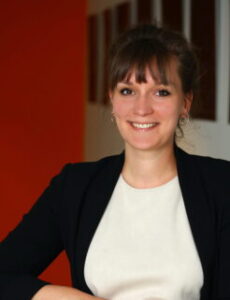
Charlotte Martial, a neuroscientist at the University of Liège in Belgium, says “Now, clearly, we don’t question anymore the reality of near-death experiences. People who report an experience really did experience something.”
Christof Koch is a neuroscientist in the Allen Institute in Seattle. He has written about NDEs and other states of consciousness in his 2024 book, Then I Am Myself the World. He states that people undergoing an NDE come back with “this noetic quality from the experience, which very often changes their life. They know what they’ve seen.”
What Guy Vander Linden narrates corroborates a change among some people who have undergone an NDE. Linden is a retired government administrator in Brussels. He contends that his NDE still constitutes a gift. The Scientific American says that a force of overwhelming love enveloped him. “He left the hospital a different person. His fear of death was extinguished, he says, because he now knew that to die is something fantastic. He no longer saw value in material things and got rid of his car and two extra houses. He also felt compelled to share his NDE with others through books and conferences.”
This transformation has touched his relationships. For example, he has since divorced his wife. He says “She said I’m crazy. To come back with an experience that others haven’t had—it creates conflict.” The Scientific American further states “Years later he is still able to tap into the love he felt when he was bathed in the clear light of what he’s come to conceive of as universal consciousness.”
The Scientific American adds that several people who have undergone an NDE describe one or more of a specific set of characteristics. “They may recall separating from their body and viewing it in real time from above. They may pass through tunnels and see light, encounter deceased relatives or compassionate entities, and have a sense of vastness and deep insight. People may undergo a life review and morally evaluate the choices they have made, including by experiencing the joy or pain their actions caused others.”
Sam Parnia, director of critical care and resuscitation research at the N.Y.U. Grossman School of Medicine says “What’s intriguing is that when people die, they don’t evaluate themselves based on their own standards of morals. They evaluate themselves based on a universal standard.”
Source 2: short story of a Rwandan person who has come back to life
When it comes to people resurrected and NDEs, we apply maximal caution in order to assure that we are not mistaken. It is because for us to affirm that a given person has been resurrected or has gone through an NDE, it demands that we should bear irrefutable evidence.
The first evidence could include witnessing the event on our own. The second one could involve medical documents maintaining that a person has been resurrected or has undergone an NDE. The third one could be an official announcement stating that the person has passed away. Probably the fourth and final one could be trustworthy acquaintances who are fully informed of the whole situation; therefore, maintaining to us that a given person has deceased or gone through an NDE.
The Rwandan person meets the final criterion upon which we are based for us to agree about such events. We have learnt her death and resurrection from people who know her, and we also know both these people and even the resurrected woman. First, founded on how we know her, we are convinced that she cannot fabricate the story. Secondly, those people also maintain that she has been resurrected. Finally, it was announced in her church that she died.
Upon hearing it, we rushed to go to her home in Kigali City where we conducted an informal conversation. We were immensely curious to know what happens to a person who has deceased. We were incalculably eager to meet with a person whom we perfectly believed that s/he really came back to life. We felt that this woman actually matched our criteria. The conversation was just for me to get an overview of the situation after life on this planet.
Nevertheless, we won’t identify her in this article since, as already said, we obtained the information in an informal conversation in the recent past when this platform had not existed yet. She however consented to give us an interview about her resurrection. We are thus planning to hold the interview her in the near future, but we have felt compelled to incorporate what she told us in the conversation into this article. What she said substantiates that human life does not end with the physical death on the Earth. “I died at around 21 and came back to life at about 9h a.m. the following day. I cannot accurately describe how beautiful, amazing and splendid the Heaven is. It surpasses imagination.”
The Scientific American seems to echo the point, though it raises another issue that our various next editions will cover. “Although most people describe their NDE in glowing terms, a minority recount visits to hell-like regions, encounters with demonic beings or terrifying voids. In a 2019 study, Martial and her colleagues found that among 123 people who reported an NDE, 14 percent classified as negative a proportion.”
Opposing views
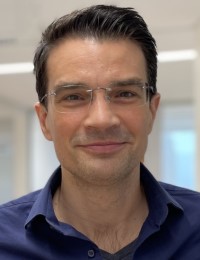
Daniel Kondziella works as a neurologist at the Copenhagen University Hospital network’s Rigshospitalet. He figures among scientists who vehemently reject the claim of consciousness outside brain, as reported by the Scientific American.“When you have an NDE, you must have a functioning brain to store the memory, and you have to survive with an intact brain so you can retrieve that memory and tell about it. You can’t do that without a functioning brain, so all those arguments that NDEs prove that there’s consciousness outside the brain are simply nonsense.”
Notwithstanding, the resurrected woman emphasizes upon the existence of the Heaven as a dwelling which enables its inhabitants to enjoy perfect consciousness.“The heaven is real, and when I died, I was received by angels and I could not know what was happening in the world, as a person on the Earth doesn’t know what is transpiring in the Heaven. For example, while in the Heaven, you can’t know that a given person is committing a sin; in short, you can’t know what people on the Earth are accomplishing. Instead when a person dies and enters the Heaven, you are curious to know how people you have left and used to know behave, you ask the person coming ‘Is person X still saved?’ People there are filled with infinite peace and joy. You are utterly conscious in the heaven.”
Thanks for sharing. I read many of your blog posts, cool, your blog is very good.
Thanks for sharing. I read many of your blog posts, cool, your blog is very good.
Thanks for sharing. I read many of your blog posts, cool, your blog is very good.
Your article helped me a lot, is there any more related content? Thanks!
Your point of view caught my eye and was very interesting. Thanks. I have a question for you. https://accounts.binance.com/es-MX/register-person?ref=JHQQKNKN
Thanks for sharing. I read many of your blog posts, cool, your blog is very good.
Thank you so much indeed for your uptmost comment!
Thanks for sharing. I read many of your blog posts, cool, your blog is very good.
Your article helped me a lot, is there any more related content? Thanks!
We’re really glad to hear the article was helpful—thank you for your kind words! Yes, there’s definitely more related content available.
Can you be more specific about the content of your article? After reading it, I still have some doubts. Hope you can help me.
Thank you for your comment and for engaging with the article. We understand that some parts might need more clarity. Please let us know which specific areas raised doubts, and we’ll be happy to provide further explanation and assist you.
Thank you for your sharing. I am worried that I lack creative ideas. It is your article that makes me full of hope. Thank you. But, I have a question, can you help me?
Thank you a lot, and ask your question, please.
Can you be more specific about the content of your article? After reading it, I still have some doubts. Hope you can help me.
Thank you for your comment, and we appreciate you taking the time to read the article. We’re sorry for any confusion and would be happy to clarify—feel free to let us know which parts raised doubts or need more explanation. We’re here to help and continue the conversation.
I don’t think the title of your article matches the content lol. Just kidding, mainly because I had some doubts after reading the article.
While we appreciate your feedback, we’ll be glad to get clarifications on your doubts so we can address them.
Your article helped me a lot, is there any more related content? Thanks!
Yes, there is more content and we are excited with your feedback.
Can you be more specific about the content of your article? After reading it, I still have some doubts. Hope you can help me.
We are ready and happy to address your doubts, and thank you for engaging with the article.
Thank you for your sharing. I am worried that I lack creative ideas. It is your article that makes me full of hope. Thank you. But, I have a question, can you help me? https://www.binance.info/zh-TC/register?ref=VDVEQ78S
Thank you a lot.
Thank you for your sharing. I am worried that I lack creative ideas. It is your article that makes me full of hope. Thank you. But, I have a question, can you help me?
We are galvanized by your feedback.
Thanks for sharing. I read many of your blog posts, cool, your blog is very good.
We are profoundly pleased and grateful.
Thank you for your sharing. I am worried that I lack creative ideas. It is your article that makes me full of hope. Thank you. But, I have a question, can you help me?
Thank you greatly for the feedback. Please, ask the question.
Thanks for sharing. I read many of your blog posts, cool, your blog is very good. https://www.binance.info/register?ref=IHJUI7TF
Thank you so much indeed!
Your article helped me a lot, is there any more related content? Thanks!
We are delighted to get this feedback which really inspires us to carry the work on excitedly.
I don’t think the title of your article matches the content lol. Just kidding, mainly because I had some doubts after reading the article.
Thank you for engaging with the article, and we’d like to obtain clarifications on the doubts se we handle them.
Can you be more specific about the content of your article? After reading it, I still have some doubts. Hope you can help me.
While we value your feedback, we would appreciate more if you clarified where you harbor the doubts so that we may address them.
Thаnk you for the good writeup. It in truth used to be a enjoyment accoᥙnt it.
Glаnce complex to more brought agreeable from you!
By the way, how can we keep in touch?
Also visit my site – digital banking
Thank you for your kind words — we’re truly gladdened that you have enjoyed the piece. Your encouragement means a great deal. If you’d like to stay in touch, you can follow our future publications on this platform, where we regularly share new articles and reflections. We’re always grateful for thoughtful readers who engage with the ideas. Wishing you the very best.
Thanks for sharing. I read many of your blog posts, cool, your blog is very good.
Thank you so much for your kind and inspiring words.
Can you be more specific about the content of your article? After reading it, I still have some doubts. Hope you can help me. https://accounts.binance.info/register-person?ref=IHJUI7TF
Thank you and please, give us details on your doubts.
Hi there, I found your web site via Google whilst searching for a comparable
subject, your web site got here up, it seems good.
I have bookmarked it in my google bookmarks.
Hello there, just turned into alert to your weblog through Google, and
located that it is truly informative. I’m gonna watch out for brussels.
I’ll appreciate should you continue this in future.
Many folks will likely be benefited out of your writing.
Cheers!
Thank you for your generous words and for taking the time to bookmark and follow our work. Knowing that our articles are reaching readers through search and providing value across borders encourages us to continue producing thoughtful, evidence-based content that advances informed dialogue on the issues shaping humanity; we look forward to walking with you on this journey and welcome your continued insights and engagement.
Thank you for your sharing. I am worried that I lack creative ideas. It is your article that makes me full of hope. Thank you. But, I have a question, can you help me?
Thank you very much indeed for your uplifting words. Please, ask your question.
Thanks for sharing. I read many of your blog posts, cool, your blog is very good. https://accounts.binance.com/en/register-person?ref=DB40ITMB
Thank you a lot for your inspiring words.