By Jean Baptiste Ndabananiye
Rwanda will celebrate the 20th edition of Kwita Izina, the country’s flagship Gorilla Naming Ceremony, at the foothills of Volcanoes National Park in Kinigi on 5 September 2025. This year, 40 baby mountain gorillas will be named, including 18 born in 2024. The occasion constitutes more than symbolic—it represents a powerful reminder of Rwanda’s dedication to conservation and the intimate, evolving relationship between humans and these formidable creatures.
As the world turns its eyes to Kinigi, it’s worth reflecting not only on the conservation success story of mountain gorillas, but also on the truly unbelievable strength and mystery that lie beneath their calm, watchful presence. The gorilla, often viewed as a gentle giant of the forest, is in fact an astonishing powerhouse of muscle, instinct, and resilience. Their immense physical power defies easy comparison, rivaling even the most elite human feats of strength—not in the setting of a gym, but in the untamed wild.
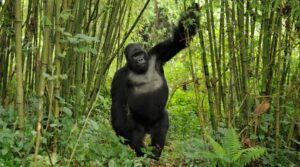
In this article, we delve into the awe-inspiring might of gorillas—from the raw weight they can lift with ease, to their thunderous bite force that exceeds that of lions. But more than that, we explore the paradox of their power: that beneath the bulging muscles and bone-breaking strength lies a world of deep emotional complexity. Gorillas laugh, grieve, nurture, and express—with intelligence and sensitivity that often mirrors our own. Let us, then, not only name the gorillas—but come to know them. Their strength, their soul, their survival: this is their story.
Gorillas’ incredible might
“Gorillas are stronger than you and me combined. The silverbacks are in fact stronger than 20 humans combined, as they can lift or throw up to 815 kgs while a well-trained man can only lift up to 400kgs. Any adult gorilla can lift up to 450 kilograms, not with a body size that can go as high as 200 kgs,” reports the Nyungwe Forest National Park.
The Nyungwe Forest National Park saying that a well-trained man can lift up to 400 kilograms, you may feel that it is exaggerating. But Guiness World Records states “The greatest weight ever lifted by a human being is 2,422.18 kg (5,340 lb) for two cars with drivers on a platform backlifted by Gregg Ernst (Canada, b. 30 September 1961), performed and notarized at South Shore Exhibition, Bridgewater, Nova Scotia, Canada, on 28 July 1993.
‘The greatest weight ever raised by a human being’, according to our 1955 book, ‘is 4,333 lb (1.84 tons) [1,965 kg] by the 25-stone [158.7-kg] French-Canadian Louis Cyr (1863-1912) in Chicago in 1896 in a back-lift (weight raised off Trestles). Cyr had a 60 ½-in [153.6-cm] chest and 22-in [55.8-cm] biceps.”
However, it’s important to understand the distinction: while these human feats are astonishing even beyond imagination, they are singular, specialized, and often supported lifts—accomplished under strict training, equipment, and controlled circumstances. Gorillas, on the other hand, exhibit their power without coaching, warm-ups, or world records in mind.
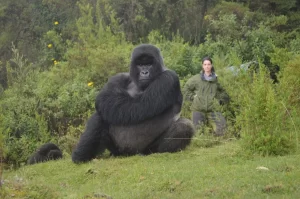
Their strength is effortless, instinctive, and part of their daily survival, embedded in muscle and bone. The ability of a 200-kg silverback to lift over 800 kg with ease—regularly, not exceptionally—is not only biologically remarkable; it constitutes a silent testament to nature’s raw engineering.
Their muscle-packed frames aren’t just for show. Beneath the calm, observant gaze of a silverback lies an astonishing reserve of raw, untamed power—power that can bend thick branches like twigs and hurl the weight of a grand piano with chilling ease. Yet their might isn’t limited to brute lifting force alone. Nyungwe Forest National Park further reveals a lesser-known but equally fearsome trait: their bite. It explains “Mountain gorillas are strong primates but they do not show much of their strength most of the time as they are gentle and placid creatures. They are the kind to want to spend an afternoon lazing around rather than being a problem or causing havoc. They are indeed capable of causing damage and harm to those that are deserving of their wrath, say poachers.
Gorillas have large canines that give bites that are comparable to any from those carnivores like lions and crocodiles. A bit from a gorilla can cover about 1300 pound per square inch, which is way higher to the predatory lions that have 650 pounds per square inch. Best be advised to avoid play around you, more with your ears, you just might lose them.”
Strength with soul: the emotional world of gorillas
While gorillas are celebrated for their extraordinary physical power, perhaps the most astonishing part of their nature lies not in their muscles—but in their emotions. These gentle giants of the forest do not live as silent brutes; they experience, express, and respond to feelings in ways that are strikingly similar to humans. In fact, beneath that formidable chest and commanding presence lies a creature capable of joy, fear, tenderness, sadness, and even empathy.
Just like us, gorillas are social beings. They live in tightly knit family groups led by a silverback, where bonds are not only formed but actively nurtured. Mothers cradle their infants lovingly, grooming them with careful attention. Juveniles play together, laugh, and engage in mock wrestling matches, just like human children in a schoolyard. Researchers have even observed gorillas comforting one another after distressing events—placing a hand on the back, sitting close in silence, or offering a soft vocalization meant to soothe.
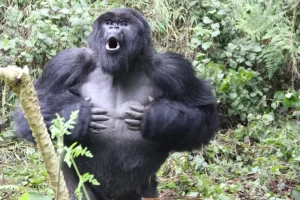
And yes, gorillas talk. While not in words, their communication is far from primitive. They possess a rich repertoire of vocalizations—more than 20 distinct sounds—that express a range of emotions and intentions. A low rumbling sound often means contentment, like a purr during rest or feeding. Loud chest-beating, a gesture rendered famous by films, is not just about aggression but can also signal excitement or act as a warning. When danger lurks, a sharp bark or hoot alerts the group. During playful moments, giggles echo through the forest canopy.
These vocalizations are complemented by facial expressions and body language. A furrowed brow, a turned head, an intense gaze—each carries meaning in gorilla society. Scientists have documented that gorillas can exhibit laughter-like vocalizations when tickled, and signs of grief when a member of their group dies. In one documented case, a female gorilla mourned the loss of her baby for days, refusing to leave its side, her behavior eerily mirroring the mourning rituals seen in humans.
It’s not only in wild gorilla groups that this emotional capacity shines. In sanctuaries and zoos, gorillas have been seen forming deep attachments to their caregivers. In one famous case, a gorilla named Koko learned hundreds of words in sign language and used them to express desires, emotions, and even jokes. Koko cried when her pet kitten died, signed “sad,” and showed an understanding of loss that stunned even seasoned scientists.
The Guardian in its 21 June 2018 story headlined “Koko, famed gorilla that learned sign language, dies aged 46” explains “The female western lowland gorilla, who formed friendships with celebrities such as Robin Williams, who gained fame for her mastery of ‘gorilla sign language’, died peacefully in her sleep at the Gorilla Foundation’s preserve in California.”
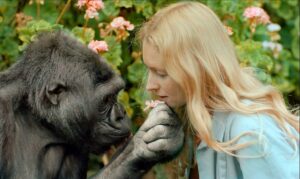
“Originally named Hanabi-ko – Japanese for “fireworks child” – after being born at San Francisco Zoo in 1971, Koko learned a rudimentary sign language through a researcher, Dr Francine Patterson. Koko reportedly understood about 2,000 words of verbal English.”
Citing The Gorilla Foundation, The Independent in its 17 October 2015 story entitled “ Koko the sign-language speaking gorilla has adopted two kittens” recounts “Koko has been saying for years how much she wants children, often signing the word ‘baby’ and playing with toy dolls as though they were her own. Upon meeting the litter of kittens, Koko signed ‘cat’ and ‘baby’ — apparently informing her handlers that these are now her children.
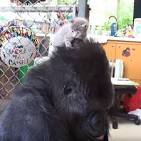
The beautiful introduction has been captured on film and posted to YouTube by the foundation’s ‘kokoflix’ account. Koko is shown to be careful and patient with the kittens, allowing the little creatures time to get to know her and only delicately lifting one up after they had been effectively introduced. In a particularly charming part of the video, Koko requests that the kitten known as ‘Ms Gray’ be placed on her head. Meanwhile another kitten – ‘Ms Black’ – is caught trying to claw her way out of an animal bag in the hopes of playing with the gentle giant.”
The Independent adds that the text that appears in the video reads “Koko fell in love with one, and the other fell in love with her. Koko has adopted these two kittens into her family, and it has energized her world.” “Not only have Koko’s maternal and play instincts kicked in, but she is signing more to her caregivers and generating new content every day that can be used by The Gorilla Foundation to create empathy for great apes.”
The Guardian its aforesaid story reports “Further anguish was to come for Koko following the death in 2014 of the actor and comedian Robin Williams. Koko and Williams had struck up a firm friendship in 2001, with the two filmed laughing and cuddling together. The Gorilla Foundation said that Patterson told them Koko was ‘quiet and very thoughtful” when told of Williams’s passing’.”
The Gorilla Foundation once said “Her impact has been profound and what she has taught us about the emotional capacity of gorillas and their cognitive abilities will continue to shape the world.”
So, such stories remind us that the gorilla’s world is not just one of brute strength, but of rich emotional depth. Their responses to joy, pain, and connection do not differ much from our own. They mourn. They play. They protect. They love.
In understanding their emotions, we are reminded that strength is not only measured in kilograms lifted or trees snapped in half. It is also found in gentleness, in feeling, and in the quiet moments shared between beings who—despite different forms—are far more alike than we often acknowledge.
Respecting giants— how to safely visit mountain gorillas
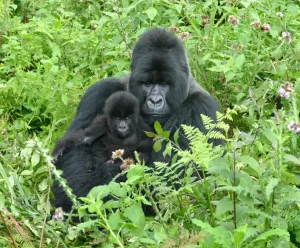
A male gorilla’s strength is used not for aggression but to defend his group and compete for mates—natural predators are rare”—Dian Fossey Gorilla Fund.
As thrilling as it is to come face-to-face with a mountain gorilla in its natural habitat, such encounters come with a great responsibility. The following is a set of essential guidelines to ensure that tourism not only protects the gorillas, but also respects their wild nature.
One of the most crucial rules: maintain a distance of at least 7 meters (about 23 feet) between yourself and the gorillas at all times. This buffer is not a mere formality—it forms a vital safeguard for both visitors and primates. Gorillas, much like humans, are susceptible to airborne diseases. A common cold passed unknowingly by a tourist could spread rapidly through a troop, with potentially devastating consequences. Keeping that physical boundary preserves their health and maintains their comfort in their territory. Furthermore, doing so will prevent the gorillas from feeling that they are threatened. Threatened, they attack you.
Tourists are also advised to avoid direct eye contact which may be perceived as a challenge, especially by dominant silverbacks. Speaking softly, moving slowly, and refraining from sudden gestures are all part of creating a peaceful, non-threatening environment. Flash photography is strictly prohibited, as it can startle the gorillas and disrupt their natural behavior.
Before trekking, visitors must undergo a briefing session led by park rangers. During this session, the importance of wearing masks, sanitizing shoes, and staying in small, controlled groups is explained. These protocols are not just about visitor safety—they’re a form of respect for a species that is said to share over 98% of our DNA.
Even gestures as simple as not littering, or avoiding touching vegetation unnecessarily, contribute to minimizing human impact. Every step taken in the forest must be mindful. After all, you’re entering not a zoo, but the living room of a powerful and intelligent creature—one that deserves dignity, space, and quiet admiration.
Crucially, do not touch or respond to juvenile gorillas, no matter how playful or curious they may seem. It is not uncommon for young gorillas to approach visitors with innocent interest, tugging on clothing or attempting to interact. But as adorable as this may be, any contact can alarm adult members of the group—especially the protective silverback—leading to unpredictable and dangerous consequences. Moreover, physical contact poses serious health risks to the animals. What may seem like a harmless moment of bonding could expose gorillas to viruses or bacteria their immune systems are not equipped to handle.
Born very small, growing strong: triumphs and trials
According to Volcanoes National Park Rwanda, mountain gorillas— the world’s most endangered ape— are found only in small portions of protected afro Montane forests in northwest Rwanda, southwest Uganda, and eastern DRC. “The mountain gorilla is one of many species unique to these forests. The mountain gorilla was unknown to science until 1902, when two were first encountered by a German explorer and promptly killed. It set the tone for the relationship. For much of the time since, due to deforestation and poaching, it has seemed that the mountain gorilla was swiftly destined to be lost to the world again. Not long after the species’ greatest champion, the American zoologist Dian Fossey was killed in Rwanda in 1985-there were fewer than 300 of the giant primates left in the wild.
Today nearly half of the world’s 700 remaining mountain gorillas live in the Virunga Mountains of central Africa, at the intersection of Uganda, Rwanda, and the Democratic Republic of the Congo. Gorillas can climb trees but are usually found on the ground in communities of up to 30 individuals. These troops are organized according to fascinating social structures. Troops are led by one dominant, older adult male, often called a silverback because of the swath of silver hair that adorns his otherwise dark fur. Troops also include several other young males, some females, and their offspring. The leader organizes troop activities like eating, nesting in leaves, and moving about the group’s 0.75-to-16-square-mile (2-to-40-square-kilometer) home range. Mountain gorillas have longer hair and shorter arms than their lowland cousins. They also tend to be a bit larger than other gorillas.”
Multiple silverbacks—mae gorillas at around 14 years of age— can live in the same family, with one clearly dominant leader. Others assist, challenge, or eventually leave to start their own troop. It’s a dynamic system that balances power, protection, and reproduction. We will return to this fascinating subject in one of our upcoming articles, where we will go deeper into gorilla social hierarchies and leadership transitions.
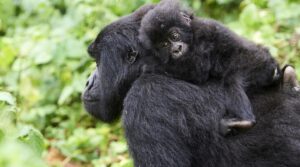
Surprisingly, gorilla babies are very small at their birth. As they grow, they reach the level where they behave like children. Volcanoes National Park Rwanda explains “Unlike their powerful parents, newborns are tiny weighing four pounds (two kilograms) and able only to cling to their mothers’ fur. These infants ride on their mothers’ backs from the age of four months through the first two or three years of their lives. Young gorillas, from three to six years old, remind human observers of children. Much of their day is spent in play, climbing trees, chasing one another and swinging from branches.” However World Wildlife Fund (WWF) UK says that an average silverback gorilla can weigh up to 180 kgs and be 170 cm (over 5’5”) tall on all fours. In contrast, it highlights, female mountain gorillas weigh 90kg, and measure up to 150cm (4’9”).
According to Volcanoes National Park Rwanda, with the help of dedicated wildlife rangers, comprehensive monitoring, and community education programs, the endangered gorilla population in the Virungas experienced a nearly 20 percent increase in the early 2000s, but in 2007, at least ten gorillas in Virunga National Park were lost to murder and chaos.
There exist two types of gorillas in the world, namely the eastern gorilla and the western gorilla. The mountain gorilla belongs to a subspecies of the eastern gorilla. WWF UK reports that there live about 1,063 mountain gorillas in the wild, according to the latest census results appearing every 5-10 years. As reported by the Gorilla Organization, wild gorillas can be found across 10 Africa countries. THis organization clarifies that eastern gorillas live in the Democratic Republic of the Congo (DRC), Uganda and Rwanda and that western gorillas exist in Nigeria, Cameroon, Central African Republic, Equatorial Guinea, Gabon, Republic of Congo, Angola and also DRC.
It points out “However, the gorilla habitat is being lost at an alarming rate. Deforestation is being driven by farming and mining, among other threats, and humans continue to encroach, which is why the Gorilla Organization works to plant trees and build a natural buffer between people and gorillas. The remaining gorilla populations are now largely isolated and protected in National Parks.”