By Jean Baptiste Ndabananiye
Timeless stories in every corner of the world have been told to guide, inspire, and illuminate the path through life’s greatest challenges. The Golden Peacock and the Boy Who Listened is one such tale — a captivating journey of patience, courage, and unwavering faith. Set in a kingdom where miracles and mysteries intertwine, it reveals how quiet determination and a humble heart can overcome betrayal, hardship, and doubt. More than just a fairy tale, this story holds a mirror to our own lives, reminding us that true success is born from perseverance, guided by the wisdom within, and rewarded by integrity.

As you step into this enchanting world of golden fruits, magical creatures, and life-altering trials, prepare to discover lessons that transcend time — lessons about loyalty, justice, and the quiet power of listening to the voice that whispers within us all.
The vanishing fruit and the talking mongoose
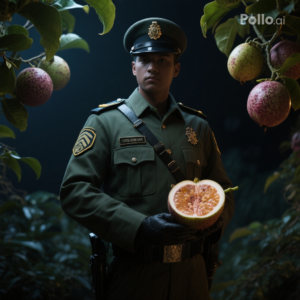
Long ago, in a quiet corner of a prosperous kingdom, a humble man lived with his three sons. Nearby stood the King’s most prized treasure — a golden passion fruit tree. Every night it bore a new golden fruit, and every morning, one was missing.
The King grew furious and summoned his people, telling them “Whoever finds the thief will be honored beyond measure!”
Hearing this, the man sent his firstborn son, brave but proud, to guard the tree. That night, a small animal emerged — a wise, dusty mongoose named Tiba. The mongoose advised him “Stay awake all night. Do not lean, do not speak, and do not blink more than needed.”

The firstborn laughed. “A talking mongoose? I need no rodent’s advice.” But as midnight deepened, he dozed off. By the dawn, one golden fruit was gone.
The second son, clever but impatient, took his turn. Again, Tiba the mongoose appeared with the same advice. The boy rolled his eyes. “I’ll catch the thief my way.” He, too, fell asleep. The fruit disappeared again.
The youngest son and the golden feather
It was now the youngest son’s turn. He was quiet, thoughtful, and asked his father to afford him a chance. Nevertheless, he was rarely treated with the seriousness he deserved. “Your old brothers have failed totally. How will you succeed? Leave it out.” But as he insisted with unswerving determination, the father sighed “Very well. Try, if you must.”
Before nightfall, Tiba returned and repeated his advice. The boy bowed. “Thank you. I will do exactly as you say.”

The night was long and cold, but the boy never leaned, blinked too long, or even spoke. Just before dawn, a soft flutter pierced the silence — a golden peacock swooped down from the clouds and plucked the golden passion fruit!
With one swift movement, the boy lunged and pulled a single feather from her tail. But the peacock flew away.
The next day, he went to the King and presented the golden feather and recounted what happened. The King’s advisors gasped. “This feather is worth more than all the fruits combined! Your Majesty, this bird is a miracle!”
The King’s eyes sparkled. “Then, bring me the peacock. And you shall be richly rewarded.”
The journey of trials and ignored warnings
The boy set off, and Tiba the mongoose joined him. “You will face three trials. I will tell you how to escape each — but only if you listen completely.”
First, they came into a burning forest. “Walk backward,” Tiba warned, “and you won’t be burned.” The boy ran forward instead and was nearly scorched, escaping with burned clothes.
Second, a deep river. “Tread lightly on the lily pads — they float only for the calm-hearted,” Tiba whispered. The boy jumped too quickly and nearly drowned.
Third, a golden gate. “Do not knock. Blow this horn instead.” The boy knocked, and angry guards captured him. He was nearly executed, but again escaped thanks to a passing storm that scattered the guards.

Chastened, he finally listened to Tiba’s full instructions and reached a glowing palace. There he found the golden peacock — now revealed to be a magical princess under a spell. With him was a human princess held captive in the palace. He rescued both with great care.
Betrayal on the road
As they returned, Tiba gave him one final instruction: “Do not stop for any event or noise on the road. Just go to the King.”
They were nearly home when they came upon a heartbreaking sight: the two elder brothers tied to posts, accused of theft and sentenced to death.The youngest son paused. “I cannot ignore them. They’re my brothers, and maybe this is not what the mongoose warned me against.”He bargained with the guards, surrendering all his treasure to save them.
The brothers embraced him. But once alone, they threw him into a river, thinking he would drown, and brought the princess and peacock to the King. “Our young brother failed,” they lied. “But we succeeded. Here is all you wanted.”The King, overjoyed, declared them heroes.
The materialization of the true hero
But Tiba had not abandoned the boy. He appeared on the riverbank and said “This is your last chance. Obey without question.” The boy nodded.

With Tiba’s help, he arrived at the King’s court in secret. The help that Tiba offered in this moment was crucial and deliberate. Far from merely offering encouragement, Tiba’s intervention was active and strategic—he ensured the boy’s secret passage to the King’s court, bypassing the dangers and eyes that would have stopped him. His sudden appearance on the riverbank served not only as a sign of renewed guidance but also as a test of the boy’s readiness to trust and act without hesitation.
Here are two specific pieces of advice that Tiba the mongoose provided to the boy as part of his help:
- “Speak only when the time is right.” — Tiba warned the boy not to rush into explanations or questions upon reaching the King’s court. Instead, he instructed him to watch closely and wait for a sign from the peacock or the princess, ensuring that his words would carry the weight of truth and recognition when finally spoken.
- “Carry this feather—it holds the memory she lost.” — Tiba handed the boy a single golden feather, secretly plucked from the peacock before her transformation. He told the boy to present it only if the peacock remained silent, as its presence could stir her memory and awaken her voice.
By demanding obedience and orchestrating the covert arrival, Tiba positioned the boy exactly where he needed to be—inside the court, where the enchanted silence of the peacock and the princess awaited the one person capable of breaking it. Inside, the peacock and the princess had refused to eat or speak, no matter the feast or question. As soon as they saw the youngest son enter, they leapt in joy and finally ate.

The court fell silent and completely baffled by this astounding situation. The King turned to the trembling brothers. “Explain.”

Truth was laid bare. The youngest son told the whole story simply. The princess and peacock confirmed it all. The King declared “Your compassion saved you. Your obedience redeemed you. Your truth has triumphed.”
He rewarded the youngest son with control over the half of the kingdom and a princess’s hand in marriage.
The brothers were banished to a desolate island teeming with ferocious beasts— not for failing, but for betraying. And Tiba— the mongoose? He vanished into legend, but some say he still speaks to those humble enough to listen.
Lesson from the Story
People should strive not to harm those who were once kind to them — though sadly, this is often what happens. The betrayal of the youngest son by his older brothers illustrates a painful truth: those who show us the greatest kindness are not always repaid in kind. In the story, the youngest son risked everything to save his brothers from certain death, only to be cast into a river by the very people he rescued. This type of injustice is all too common in real life — history and daily experience offer countless examples of kindness repaid with cruelty.
Yet, figures like Henry Ford and Thomas Edison remind us that loyalty and gratitude can also drive great partnerships. Edison helped Ford by offering encouragement and respect when Ford confided in him about his ambition to manufacture a car. Ford, in turn, never forgot Edison’s support—so much so that he came to Edison’s rescue in a time of indescribable need. These men demonstrated that recognizing and honoring those who uplift us can be the key to long-lasting achievement — not betrayal. For more on the late Ford and Edison, click on this article.

You might be able to harm someone who has helped you — but you will surely pay the price. In the tale, the older brothers gain temporary glory by deceiving the King and betraying their younger brother. Yet their reward is short-lived: the truth is revealed, and they are cast out to a savage, desolate island. This reveals a deeper moral law: while betrayal may offer short-term advantage, it always invites long-term consequences. The idea is echoed in every culture — that moral debts, like any other debt, come due. Betrayal is not just an ethical failure; it constitutes a self-inflicted wound that inevitably brings regret, loss, and disgrace. It is better to suffer for doing good than to succeed through treachery, because in the end, truth and justice carry longer memories than lies.
Though fictional, the story reflects real truth: the mongoose symbolizes your inner voice, conscience, or the Holy Spirit — and you must listen. Tiba the mongoose, while fantastical, is not just a charming guide; he represents the whisper of inner wisdom, moral intuition, or spiritual guidance that we all possess. In moments of crisis, the boy succeeds only when he listens completely and obeys — not selectively, but wholeheartedly. Whether one interprets this voice as the conscience, intuition, or even the Holy Spirit, the message is the same: true guidance often comes quietly, and those who humble themselves enough to heed it are those who overcome.
Though the tale is imagined, the experience it reflects is real: when we ignore our deepest inner voice, we often suffer. When we obey it, we find our way. Those who listen with humility, act with integrity, and forgive with compassion may stumble — but will always rise.
Enduring hardship is not the end of the road, but the path itself—success rises not in spite of suffering, but because of it. The tale reminds us that what often looks like a breaking point is really a shaping point. Just as gold is refined through fire, true success is forged in the crucible of hardship and unrelenting trials.
The story evokes to us that greatness often begins in the shadows of suffering and disregard. Those who are overlooked, doubted, or disrespected at first glance are often the ones who rise to unparalleled brilliance through quiet strength and perseverance. If you find yourself underestimated, let such stories galvanize you—not to prove others wrong, but to prove to yourself that quiet beginnings can lead to extraordinary destinies. Never let the doubts of others drown your determination.