Life In Humanity Analysis Desk
“The two greatest healers are God and time”—words found in the publication, Thought for Today, which first appeared in the Barbados Advocate. Few truths speak more directly to the universal condition of being human. Life, for all its beauty, is often marked by hardships that leave deep and lasting wounds. Disappointments strike when dreams collapse, betrayals pierce the heart, losses leave gaping emptiness, and daily struggles grind away at resilience. Some wounds are visible, like the scars of injury or illness; others remain hidden, etched into the mind and spirit where no eye can see. Hardships, in their numerous forms, are perhaps humanity’s greatest burden, plunging people into valleys of grief, fear, and uncertainty.
Healing, in this respect, constitutes one of the deepest longings of the human heart, especially since every person—at some point— certainly faces wounds—whether they are physical injuries, emotional scars, or spiritual battles. The journey toward recovery can feel slow, uncertain, and often lonely. Yet, even in the darkest seasons, two quiet but powerful forces rise above all others as the greatest healers: God and time. Across all cultures, religions, and human experience; the two forces actually stand out as the greatest healers— they stand apart as universal remedies for the human condition.

When we embrace faith in God, while allowing time to run its course, we discover that pain can be transformed into strength, despair into hope, and brokenness into resilience. In other words, when faith anchors us in God’s strength, and that patience allows time to soften the rawness of suffering; the impossible begins to shift— what once felt unbearable becomes survivable, and then transformative. The pain is transformed into incredible strength, despair into hope, and brokenness into resilience. This article explores the wisdom behind the sentence.
God as the Ultimate Healer
For millennia, human beings have generally looked beyond themselves to divine intervention for healing, especially when every ounce of their own strength has been exhausted. The belief that God is the ultimate healer runs deep in religious traditions, from the Bible and the Qur’an to even indigenous spiritual practices. This recognition stems from the understanding that God is the source of life itself, and only the Creator can fully mend what is broken at its core.
For example, participants in this 2018 study clearly articulated that healing, as well as illness and health, is given by God. The healing process happens by seeking the assistance of God through supplication and scripture-based cures and through nature spirit actors, as stated by this study on PubMed Central—the free digital repository of biomedical literature maintained by the U.S. National Library of Medicine [NLM]. NLM forms part of the National Institutes of Health (NIH) under the U.S. Department of Health and Human Services (HHS).
The study report reads “This paper explores the relationship among religion, spirits and healing in the Tehuledere community in the northeastern part of Ethiopia and focuses on how this knowledge can inform primary healthcare reform. Healing is thought to be mitigated by divine assistance obtained through supplication and rituals and through the healing interventions of nature spirit actors. We found that the health, illnesses and healing were inextricably linked to religious and spiritual beliefs.
The participants related a God-centric narrative wherein God’s will was manifested in the granting of good health or the plight of illness. Moving from illness to health was said to require the individual to seek God’s cure directly through prayer, supplication and recitation of the Qur’an, or indirectly through human agents, and sometimes both. Our findings suggest that religious and spiritual elements should be considered when drafting and implementing primary healthcare strategies for the study communities and similar environments and populations around the globe.”
This indicates that, within the Tehuledere community, healing is understood to occur both directly through God and indirectly through intermediaries including nature spirit actors or human agents.
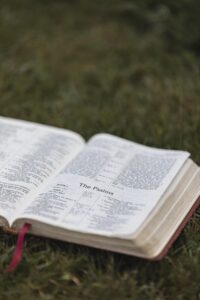
Meanwhile, by contrast, the Holy Bible emphasizes that believers can approach God directly for healing without the need for any other intermediaries, except through Jesus Christ. For example, passages such as Hebrews 4:16 encourage believers to “approach the throne of grace with confidence” to receive mercy and help in times of need. Therefore, while the Ethiopian study highlights culturally specific practices involving intermediaries, the Biblical perspective centers on direct access to God’s healing power through faith in Jesus Christ.
It is in fact important to clarify the distinction between indigenous healing practices and the Biblical perspective, while highlighting a key commonality: even within culturally specific practices, God is recognized as the ultimate healer. As a typical instance, the study of the Ethiopian Tehuledere community notes that healing is sought through supplication and rituals, including interventions of nature spirit actors. While the last point contradicts the Bible, these practices do not diminish the centrality of God; the participants’ narratives remain fundamentally God-centric, with divine will seen as determining health and illness.
To make this vivid, consider the testimony of a Rwandan who, only consulting a sorcerer once for healing, was admonished by this sorcerer. “You need not seek me or any other; only turn fully to the Almighty God, and all else will cease.” The dramatic power of that moment—shunning intermediaries and sorcery to embrace direct reliance on God—underscores the universal acknowledgment that true healing originates from God, even when indigenous rituals are woven into the process.
Thus, while indigenous practices may include spiritual or ritual intermediaries, the core belief aligns with the Biblical understanding: God is the ultimate source of restoration, and turning to Him is the decisive step toward healing.
Healing of the Heart and Spirit
Physical wounds are visible, but emotional and spiritual wounds are often invisible and harder to carry. A broken heart, betrayal, grief after the loss of a loved one—these constitute pains that medicine alone cannot cure. In these moments, prayer and surrender to God bring comfort beyond human explanation. Spiritual healing touches the inner core, allowing one to release bitterness, find forgiveness, and regain peace.
Restoration beyond human power
There are times when human skill and effort reach their limits. Doctors can prescribe medicine, therapists can give guidance, friends can offer support—but none can guarantee complete restoration. Believers often testify that in moments when no earthly solution worked, they experienced divine intervention: a sudden peace, an unexpected recovery, or strength to endure. God’s healing does not always mean immediate removal of suffering; sometimes, it manifests as the grace to bear the burden and emerge stronger.
A source of meaning
Part of God’s healing comes from giving meaning to suffering. Pain without purpose is unbearable, but when people see their trials as part of a divine plan, they gain the courage to persevere. Many of history’s most resilient individuals—leaders, thinkers, survivors—credit their faith in God as the anchor that healed their despair and gave them direction even amid suffering. Thus, God’s healing is not confined to the body. It transforms the mind and soul, offering wholeness that surpasses human understanding.
To better comprehend all this, you can read this article: Are there proofs demonstrating that spirituality and medicine go together?
Time as a natural healer
If God brings the supernatural dimension to healing, time offers the natural one. Time, though silent and invisible, possesses a profound way of easing pain. It does not erase memories or magically undo hardships, but it gradually lessens the sting of suffering. Life In Humanity wholeheartedly believes that the Almighty God uses this universal asset to restore balance, strengthen resilience, and gradually transform the trials of life into opportunities for growth and wisdom. A prominent physician— Dr. Jeffrey Rediger whom you can know more by clicking on Once a skeptic of spiritual healing, a prominent physician is now its fervent promoter— points out “Western medicine has it all wrong. Everything we put into our bodies — from foods and toxins to thoughts and feelings — can shift immune function at a base level. Illness begins in the soul, and when a healing occurs there, the physical body then ‘catches up’ to this new reality.”
Amy Julia Becker helps people to reimagine good life through her writing and speaking on disability, faith, and culture. In her November 10, 2022 article titled “To be made well”—published on Comment, sides with Dr. Jeffrey whereby she also advocates for treating people wholly. She reflects on contracting Covid despite vaccination and realizes that true healing goes beyond physical recovery. She explores how Jesus’s concept of healing encompasses the whole person—body, mind, spirit, and community—rather than just curing illness. Ultimately, the article emphasizes that engaging with Jesus as a healer means participating in holistic restoration and bringing healing to others, even when physical symptoms persist.
She says “Why modern health obscures what it means to be human. Double vaccinated and boosted, I contracted Covid in April of 2022. And in spite of the supposed immunity conferred by three shots in the arm, I felt sick. Chills and fever and can’t-stand-up sick. Fuzzy-in-the-head, burning-in-the-throat, and exhausted-by-a-walk-to-the-kitchen sick. So I turned to Advil and Nyquil . . . and Jesus. No, I didn’t experience a miraculous recovery. But I had begun to take Jesus as a healer more seriously in my life. Prayer was no longer a postscript to my medicinal regimen. I believe that when Jesus walked on earth, he gave sight to the blind and calmed the seizures of an epileptic child. But for most of my adulthood I’ve behaved as if antibiotics, surgical procedures, and Lexapro had replaced Jesus’s healing work in the here and now. I’ve relegated his healing to another era.”
“So I’ve come tiptoeing back to Jesus as healer, not simply as a metaphor, and not simply as a physical fixer, but as a lived reality permeating all of existence.Despite the proliferation of the healing narratives in the Gospels, many Western Christians have misunderstood the nature of God’s healing work. We have reduced healing to biomedical fixes and imagined healing as a way to manufacture idealized bodies. Not only do such reductions ignore Jesus as one who can still heal, but they distort our perspectives on what it means to be human. Healing is central to Jesus’s identity. In his native language, Aramaic, he would have been called Yeshua, or the nickname Yasha. As biblical scholar James Edwards notes, Yasha is Aramaic for the Greek word sozein, from the Greek sozo (to save). Sozein means both ‘saviour’ and ‘healer.’ Jesus’s very name suggests healing’.”

In a world overwhelmed by suffering, where personal struggles collide with global crises, the need for true healing has never been more urgent. Physical ailments, mental anguish, and social fractures remind us daily that restoration cannot come from human effort alone, according to Becker. “Millions of people are devastated by depression, anxiety, alienation, loss, and other illnesses. On a communal level, our globe has seen increased political division and animosity and warfare. Individually and communally, we are unable to ignore our pain and brokenness. This moment offers those of us who are the body of Christ an opportunity to know Jesus once again as healer. As the one who comes to us in our bodies, minds, and spirits to make us well. As the one who sends us out in peace to bring healing into the world.”
Although Becker does not specify whether her own illness was eventually healed through turning to Jesus, it is clear that in embracing Him as a healer, she has found renewed meaning, purpose, and a deeper understanding of what it means to be truly well.
The dulling of pain
Consider the grief after losing someone dearly loved. In the immediate aftermath, the pain feels unbearable, like a wound too raw to touch. But as days turn into weeks, and weeks into months, the intensity of sorrow softens. The wound may not disappear, but time dulls its sharp edges, allowing the heart to breathe again.
Space for perspective
Time also grants perspective. What once seemed catastrophic, with distance, appears as a turning point or even a blessing in disguise. An ended relationship, a failed business, or a health setback might feel devastating in the moment. Yet, after time has passed, people often see how those very experiences redirected them toward growth, wisdom, or better opportunities.
The slow work of renewal
Biologically, time is essential to healing. The body requires days, weeks, and sometimes years to repair itself. Similarly, the human mind requires time to process trauma, rebuild trust, or develop resilience. The very structure of human existence is built on seasons—moments of loss followed by gradual regrowth. Nature itself demonstrates that healing takes time: trees regrow after storms, rivers cleanse after floods, and people, too, mend slowly but surely.
Time’s healing is subtle. Unlike a sudden miracle, it works in the background, gently carrying people forward until they realize that their wounds no longer dominate their lives.
The harmony of God and time in the healing process
While God and time are powerful healers individually, their greatest power is revealed when they work together. Faith in God provides meaning, strength, and peace, while time allows the healing process to unfold gradually and sustainably.
Patience and trust

Healing requires patience. People often demand quick fixes—instant relief from pain or immediate solutions to problems. Yet, God often heals through time. Faith invites trust in God’s timing, recognizing that what feels like delay is often part of a larger, wiser plan. The combination of prayer and patience helps individuals to accept what they cannot change and wait with hope for what lies ahead.
Balance between divine and natural
Some mistakenly believe that trusting God alone means rejecting time or human effort. Others, conversely, rely solely on time while ignoring the role of God. True healing often lies in the balance: praying for God’s guidance and strength while allowing time to accomplish its quiet work. A person who has lost a loved one, for instance, may feel deep comfort in prayer while also recognizing that it will require months or years for the heart to adjust.
Healing for the whole person
God and time together heal not only the immediate wound but also the whole person. God heals the spirit, offering peace and purpose; time heals the memory, reducing the rawness of pain. Together, they transform suffering into wisdom and resilience. What was once unbearable becomes a testimony of survival. What once broke a person becomes the very story that empowers them and inspires others.
A universal truth
Whether one is deeply religious or not, this truth resonates universally. Even non-believers often admit that some wounds need more than medicine—they need hope, forgiveness, and meaning which are spiritual dimensions often associated with God. Likewise, nearly everyone agrees that time is essential to healing. The union of these two healers reflects the very rhythm of human existence: the divine guiding hand and the slow march of days working together toward restoration.
Wisdom to remember
“The two greatest healers are God and time.” These words encapsulate a timeless truth about the human journey through suffering. God, as the source of ultimate healing, touches the soul, restores peace, and gives meaning to pain. Time, with its gentle and steady progression, softens wounds, grants perspective, and allows renewal. Together, they create a process of healing that is both profound and complete.
When faced with hardship, remembering this wisdom brings comfort. Trusting God and embracing the passage of time ensures that no wound is permanent, no sorrow is final, and no brokenness is beyond repair. Healing may not come in the form we expect, nor as quickly as we desire, but with God and time, it always comes.
It is also important to recognize that the Almighty God, as the Creator of all, governs not only the universe but also the very fabric of time itself. Every moment, every season, and every unfolding of life’s events occurs under His divine orchestration. Time, though it flows steadily and invisibly, ultimately forms a tool within God’s sovereign design—a medium through which He shapes growth, teaches patience, and delivers healing according to His perfect wisdom.
When we trust in God, we understand that even the slow passage of time stands purposeful, and that each trial, each healing moment, is measured and guided by Him. In this light, faith in God and patience with time are inseparable: trusting Him means accepting that He controls the timing and manner of our restoration, ensuring that no suffering is wasted and no wound remains unhealed beyond His appointed moment.
While God and time remain the greatest healers, modern medicine is by no means excluded from the process. In fact, medical care, therapy, and other human interventions work best when aligned with this holistic philosophy—supporting the body and mind as God and time guide the deeper restoration of spirit, meaning, and resilience. Healing, then, becomes a cooperation between divine guidance, natural progression, and human effort, each playing its essential part in the journey toward wholeness.