By Editorial Staff
Animals and beasts display many extraordinary traits that humans often overlook. Four of these aspects—instinctive intelligence, physical mastery, emotional/social depth and natural restraint toward humans—show that animals are not only fascinating but also carry great lessons for adaptation and compassion, among others. These qualities make animals and beasts extraordinary creatures.
Their instinctive intelligence is remarkable, allowing them to accomplish complex tasks without formal learning—such as migratory birds charting vast distances with unerring accuracy or ants organizing entire colonies with efficiency that rivals human planning. Their physical mastery is equally striking: the cheetah’s explosive speed, the camel’s endurance in harsh deserts or the eagle’s ability to soar to great heights all illustrate refinement that places their natural abilities far beyond human reach. Beyond physical and instinctive traits, animals also demonstrate emotional and social depth. Elephants mourn their dead, dolphins cooperate with one another in solving problems, and wolves maintain loyalty within their packs, all reflecting bonds and empathy once assumed to uniquely belong to humans.
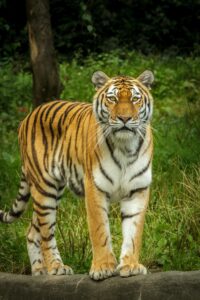
Perhaps most astonishing is their natural restraint toward humans. Despite being threatened by human activity more than any other force, most wild creatures—even involving the ferocious beasts— avoid conflict and choose retreat over aggression, displaying a survival wisdom that contrasts with human tendencies toward violence. These aspects expand our understanding of intelligence, resilience, and compassion in the natural world.
Animal instinctive intelligence and learning
Many—if not all—animals possess innate abilities that guide survival without formal learning. For example, sea turtles hatch on beaches and instinctively crawl toward the ocean, while migratory birds travel thousands of kilometers with precise navigation skills.
Animals carry within them this inborn wisdom that guides survival without books, schools, or machines. Migratory birds trace invisible paths across continents, and newborn sea turtles crawl unerringly toward the ocean. Such instinctive brilliance reflects a natural order beyond human calculation. This built-in wisdom is extraordinary, compared to human reliance on learned knowledge and technology.
The International Fund for Animal Welfare, IFAW, constitutes a global non-profit helping animals and people to thrive together. It works across seas, oceans, and in more than 40 countries around the world.
In its 23 December 2024 story entitled “Incredible animal instincts”, it states “Instincts are behaviours animals do automatically, without needing to be taught. But not every behaviour an animal has is instinctual. Some things they have to learn over time, typically from other members of their species. These are called learned behaviours, while instincts are often called innate behaviours.
For example, ducklings watch their mothers to learn how to avoid danger and eat the correct food. Similarly, young prairie dogs learn from adult prairie dogs how to watch out for predators and recognise warning calls. On the other side of the predator-prey dynamic, young coyotes learn hunting skills and the social hierarchy of the pack from their parents.”
IFAW adds “African buffalos have been observed practicing a form of voting. When deciding which direction to travel, adult female members of the herd denote their choices by standing, looking in the direction they prefer, and then lying down on the ground.”
According to IFAW, typical examples of animal instinctual behaviors include birds’ migration, spiders spinning webs, fish swimming, mammals caring for their young species, nest-building, hunting, seeking shelter, predator avoidance, and specific mating rituals. These are innate, unlearned behaviors critical for survival and reproduction. “In simple terms, instincts are the internal signals that tell us what we need to do to survive. When you need nutrition, for example, your body will tell you that you’re hungry. Instincts are things that happen without us having to think about them.
Some basic examples of animal instincts include dogs barking, birds migrating, fish swimming, and beavers building dams. Fish don’t have to be ‘taught’ how to swim in the way we go to school to learn arithmetic—they know how to do it as soon as they are born. In the same way, beavers don’t have to take a class in dam-building, and birds don’t have to study geography to find their way home.”
Difference between animal instinctual and learned behavior
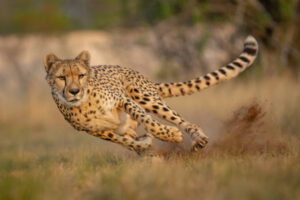
The cheetah doesn’t learn to run fast; it is born with a body built for speed—long limbs, a flexible spine, and enlarged lungs. The instinctual part lies in knowing when and how to run during hunting, but the sheer speed itself forms a physical mastery, not a behavior taught by the mother. This natural endowment represents an attribute optimally enviable to humans who can only approximate such performance through technology, training, and equipment. Even the most gifted athletes—such as Kylian Mbappé, whose blistering pace terrifies defenders—can only dream of approaching a fraction of the cheetah’s effortless acceleration.
While the cheetah’s speed is a natural gift, survival also depends on learned behaviors. Young cheetahs observe their mothers to master the art of stalking prey, choosing the right moment to sprint, and targeting the weakest member of a herd. They practice pouncing and chasing in playful ways that gradually refine their hunting skills. Without this stage of imitation and rehearsal, their unmatched speed would be of little use, since catching prey requires strategy as much as raw acceleration. This blend of instinct, physical mastery, and learned technique turns the cheetah into an extraordinary example of how nature balances inheritance with experience.
Beyond physical prowess, the cheetah also demonstrates extraordinary teaching and guidance of its young, a fact often ignored because animals are commonly regarded as unintelligent creatures. Mothers patiently instruct their cubs in the art of hunting—how to stalk, when to sprint, and which prey to target—showing a level of mentorship that resembles, in principle, human teaching.
This ability to pass on survival skills intentionally is remarkable because it requires foresight, patience, and the capacity to influence the next generation, traits we rarely associate with animals. Such teaching ensures that innate abilities, like speed, are effectively harnessed, turning instinct and physical mastery into practical success. This combination of natural endowment and guided learning underscores why the cheetah, and other animals exhibiting similar behaviors, are truly extraordinary.
Physical adaptations beyond human limits
Animals possess physical features that are almost superpowers. For instance, cheetahs can sprint up to 100 km/h, bats use echolocation to “see” in the dark, and camels endure extreme desert conditions without water for days. These adaptations showcase resilience and specialization that far surpass human physical capacity.
From the cheetah’s breathtaking sprint to the bat’s unseen echolocation and the camel’s desert endurance, beasts embody physical marvels that extremely transcend human capacity. These adaptations are not random but finely tuned responses to the environments they inhabit, a reminder of nature’s ingenious craftsmanship.
IFAW says “In order to survive in deserts, camels know instinctually to drink a large amount of water when they have the chance. They will drink up to 114 litres (30 gallons) in less than 15 minutes.”
Emotional and social depth
Beasts are not just instinct-driven; they also display empathy, loyalty, and complex social bonds. Beneath their wildness lies a surprising tenderness: elephants mourn their dead, dolphins rescue injured companions, and wolves thrive in structured and cooperative packs. Such emotional intelligence demonstrates a richness in animal life often considered uniquely human. These emotional and social bonds suggest that beasts, too, are participants in the drama of care, connection, and community.
IFAW explains “In addition to the instincts that cause animals to hunt, flee, forage, or bathe, researchers have noted more complex behaviours that seem to indicate emotional depth in some species. One fascinating behaviour observed in some species is the way they treat their dead. For example, magpies have been known to gather around their deceased flock mates, gently touch the body, and lay twigs and pine needles beside it. Red foxes have also been known to lay dirt and twigs over the bodies of deceased mates.
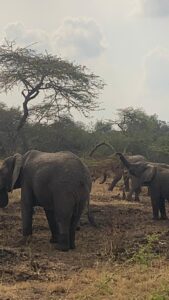
Elephants have been observed to show great empathy for each other. For instance, when one elephant lags behind the herd due to an injury, the rest of the elephants may stop and wait or walk slower. This behaviour is particularly fascinating because it’s not in the best interest of the other elephants’ survival, but they do it anyway. ”
This fund further states “Other animals, such as the chimpanzees observed by Jane Goodall, have been seen dancing with no seeming purpose other than for fun—particularly in the rain or at waterfalls. Goodall also stated that she observed what she believed to be embarrassment in one chimp after he took a tumble from a tree and looked around to make sure no other chimps had seen his fall.
Some animals rescued from precarious situations have been observed showing a form of gratitude to their human rescuers. For example, a female humpback whale who became tangled in fishing gear was freed by a team of divers in 2005. After she was free, she nuzzled each diver and flapped around in an unusual display, seeming to thank the team for saving her life. ”
The inner lives of animals remain one of nature’s most intriguing mysteries. Beyond their visible survival routines lies a world of behaviors that hint at intelligence, emotion, and even a depth of social life. “Not much is known about many of these more complex animal behaviours. It’s unclear whether they are instincts or learned from fellow members of their species.
But when animals display signs of having ‘human’ emotions, we often relate to them more or think of them as more intelligent. In reality, so many different species show signs of such ‘intelligence’ and social complexity, from tiny insects to giant whales, even if we may assume all their behaviours are rooted in their basic biological functions like eating, mating, and resting.”
Natural restraint toward humans
Perhaps most extraordinary is the restraint beasts show toward people. Despite their strength and predatory power, most beasts avoid attacking humans unless provoked, threatened, or deprived of their natural prey. This restraint reveals an extraordinary balance in nature, suggesting that animals are not inherently hostile but are guided by survival instincts and environmental pressures. Even the rare cases of “man-eaters” often stem from necessity rather than aggression, underscoring that coexistence—not conflict—is the natural order between humans and beasts.
Most animals indeed avoid humans and will only attack if they feel threatened, cornered, robbed of their natural prey or if their young are in danger. For example, snakes usually bite only when stepped on or provoked; elephants charge if they sense a threat; and big cats often lash out when startled.
This restraint points to a deeper truth: nature seems wired for coexistence, and only when harmony is disturbed do beasts become hostile.
Predatory behavior is an exception— unusual circumstances matter
However, there are some beasts—like lions, tigers, crocodiles, or polar bears—that have been documented attacking humans as prey. While rare, these attacks happen even without provocation, especially if the animal is starving or has lost its natural prey due to habitat loss.
Sometimes illness, old age, or injury can push a predator to target humans, since people may seem like “easier prey—especially when they are unarmed” than wild animals. For example, man-eating tigers in India’s Sundarbans mangroves often turn predatory due to scarcity of food.
So, while it’s extraordinary that most animals live peacefully and only defend themselves when threatened, it’s not universally true that no beast ever attacks humans unless provoked. A small number of predators sometimes break that pattern. There are those who say that such animals attack and devour humans—not out of immediate provocation or not because humans enter their dangerous zone—but because they once tasted human flesh. In such cases, when a fierce beast like a lion kills a person, it is often subsequently hunted and killed.
More on why these aspects are extraordinary
In fact, what makes these four aspects extraordinary is not that they are rare among animals, but that they display a level of refinement and effectiveness that becomes striking when compared with human standards.
Animals’ instinctive intelligence is extraordinary because they accomplish complex tasks—such as migration, nest-building, or colony coordination—without training as formal as humans receive. Young animals may indeed learn from parents or peers, but unlike humans, they do not require years of structured schooling to master survival skills. By contrast, humans often attain competence only after long immersion in formal education.
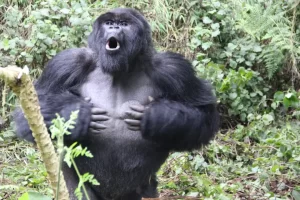
Their physical mastery is also remarkable: speed, endurance, and agility may be normal within animal species, but the extremes—like a cheetah’s breathtaking acceleration or a camel’s resilience in desert conditions—represent achievements that surpass even human technological attempts to replicate them.
Their emotional and social depth is extraordinary as well, because it goes beyond mere survival. Elephants mourning their dead or dolphins cooperating to solve problems demonstrate bonds and empathy once thought to belong only to humans.
Finally, their natural restraint toward humans is notable: many animals have the strength to cause harm, yet they often avoid confrontation, showing a kind of balance and discipline that contrasts sharply with human aggression. Thus, while these features may appear “ordinary” within the animal world, they are extraordinary in the way they highlight natural efficiency, resilience, and compassion that humans often struggle to reach.
These aspects are extraordinary because they highlight achievements—of intelligence, resilience, and compassion—that stand out as unusual or even enviable when measured against human standards.
The supreme lesson that emerges
Even beasts—creatures we often call “wild” or “savage”—show an extraordinary restraint and kill only when survival demands it. They do not eliminate life out of hatred, envy, greed, or ideology. By contrast, human beings—endowed with reason, intelligence, wisdom and moral consciousness— too often destroy their fellow humans for purposes that have bear no relation to survival. They are instead prompted by power, pride, jealousy, greed or sheer cruelty. That’s why you will hear a person say ‘The worst animal is a human being.’
When we reflect on those four aspects, the lesson, then, is that nature itself teaches restraint, coexistence, and respect for life. If beasts, with all their raw power, can embody such balance, how much more should human beings—capable of reflection and moral choice—rise above senseless violence?
In other words, animals kill to live, while it seems that humans too often live to kill. The supreme lesson is to relearn from nature the value of coexistence and the sacredness of life. We should exert all our power to avoid being likened to a status even worse than animals—we should not be said to be worse than beasts. By doing so—respecting life as revealed in animals generally considered unintelligent, we honor the Creator, acknowledging the wisdom and marvels He has embedded in all living beings. In doing so, we learn the value of coexistence and the sacredness of life, striving never to fall below the natural order He has designed.