By Jean Baptiste Ndabananiye
Every remarkable achievement begins with a moment that most people would mistake for misfortune. History repeatedly proves that behind several of the world’s most influential entrepreneurs, innovators, and changemakers lies a season of unspeakable rejection, uncertainty, sacrifice, and apparently insuperable adversity.
What ultimately distinguishes those who rise from those who surrender is not the absence of seemingly unbearable hardship but the mindset with which they respond to it. Like so many pieces on this website, the following stories reveal why crises are often disguised invitations to discover untapped potential, cultivate resilience, and embark upon the hero’s journey toward extraordinary greatness.
When crisis becomes the gateway to greatness
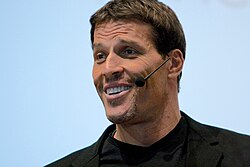
“The call: every crisis is an invitation in disguise. Tony explains why business is a hero’s journey and how pushing through the ordeal gives you immunity you can’t build any other way,” says Team Tony Robbins— Tony Robbins’ large network of staff responsible for executing his empire’s programs and communications.
The following is a story which has been shared by Tony Robbins himself. The account clarifies how a crisis actually constitutes an invitation which conceals something incredibly valuable. We release as exactly as shared —nothing has been changed on it.
The story
Imagine it’s 1989. Anastasia Soare steps off a plane into Los Angeles airport, carrying her three-year-old daughter, speaks zero English, and doesn’t have a single dollar in her pocket. Today her business, Anastasia Beverly Hills, is worth over $3 billion.
How did she do it? She lived the hero’s journey.
Her ordinary world was a country where store shelves sat empty and neighbors went to bed hungry. She knew life was meant to be more.
In a Beverly Hills salon years later, she looked at a photo of her over-tweezed eyebrows and remembered her Romanian art teacher’s lesson: eyebrows shape every emotion on the face. That was her call to adventure and the moment she knew what she was here to do.

Refusal came from the world around her. Her boss refused to let her focus on eyebrows. The Beverly Hills landlord refused to rent her a room. Her own husband didn’t believe she could build a business in America.
But Anastasia had mentors and allies who had already shown her the way. Her mother, who ran a secret dress-making business back home, had worked endless hours because she loved making women feel beautiful. Her art teacher handed her the golden ratio that she’d built her entire business on. And an immigrant landlord, who saw himself in her, gave her the room she asked for.
At 40, she crossed the threshold. She poured her $5,000 from savings into a room in Beverly Hills and there was no going back. Then came the ordeal when she had to teach customers one-on-one how to use her product line in person. It took twelve years of flying to Nordstrom stores across the country every single weekend, with her daughter selling products beside her.
After realizing success, she wrote a book full of her insights so others would know: “If I was able to do it without speaking the language, without having money, without knowing anyone, then anyone could do it.”
Instead of reacting to life, she chose to level up at every stage of the hero’s journey.
Hero’s mindset
A hero’s mindset means a way of thinking which moves a throne from a victim mentality to active personal responsibility. Instead of asking “Why is this happening to me?”, a person with this mindset asks “What can I carry out to change this?”. It rests upon core psychological pillars such personal power, hope, grit, and resilience under pressure.
The Cambridge Dictionary defines “hero” as a person who is admired for having done something very brave or having achieved something great. The Collins Dictionary defines “hero” as someone who has done something brave, new, or good, and who is therefore greatly admired by a lot of people. The commonality highlighted by both dictionaries includes bravery and admiration.

A brave person is a person who doesn’t dread dangerous or difficult things. Bravery, however, does not mean the absence of fear but the determination to advance despite it. Every hero eventually discovers that obstacles do not form roadblocks designed to end their journey but training grounds which are meant to steel their character. This is why crises often become the very moments revealing abilities, resilience, and creativity that would otherwise have remained hidden.
People who incredibly change their lives rarely wait for perfect conditions. They instead opt to act with whatever resources are already within their reach. Their optimal victory is not merely over external challenges but over the inner voices of doubt, discouragement, and helplessness. In doing so, they replace excuses with responsibility, fear with purpose, and resignation with unswerving massive action. That transformation explains why heroism is not reserved for a gifted few but stands within the reach of every ordinary person who consciously chooses courage over comfort.
As Soare’s story demonstrates, extraordinary success is usually attained through years of persistent effort rather than a single spectacular breakthrough. Ultimately, the hero’s mindset represents an invitation for each of us to stop waiting for life to change and instead become the person capable of changing it.
It’s not only Soare who has been rescued by the hero’s mindset. In fact, the world boasts such cases. One of the most compelling examples is Sara Treleaven Blakely, founder of Spanx. Her story closely mirrors the hero’s journey because it demonstrates how an ordinary person has converted repeated setbacks into extraordinary success.
Blakely: turning rejection into a billion-dollar business
Spanx sells undergarments, leggings and apparel. This business is valued at $1.2 billion, and its founder— Blakely— owns an estimated personal net worth of $1.2 billion to $1.4 billion. Blakely was selling fax machines door-to-door in Florida, earning modest commissions. She held no background in fashion, manufacturing, or business, but she became frustrated that conventional pantyhose did not work well under white trousers. Instead of dismissing the problem as insignificant, she recognized it as an opportunity. She invested her life savings—approximately $5,000—to develop a new undergarment.

Manufacturers frequently dismissed her idea, believing that no one would purchase such a product. Yet she refused to relinquish her vision. She researched patents herself, wrote her own application, and persuaded a factory owner to manufacture her invention. She personally marketed the product, demonstrating it to buyers and customers until it finally drew the attention of a major retailer. Her company, Spanx, grew into a global brand worth more than a billion dollars, transforming her into one of the world’s youngest self-made female billionaires.
Looking back, Blakely often says that her father’s habit of asking what she had failed at every week taught her to view failure not as defeat but as proof that she possessed the courage to try. Her journey illustrates that rejection, when met with persistence and personal responsibility, can become the foundation of remarkable success.
This story reinforces precisely the core lesson our article seeks to convey: crises, setbacks, and repeated refusals are often disguised invitations to develop the resilience, creativity, and perseverance that ultimately lead to unimaginable greatness.
“How it all began”
“Since I was a little girl I have always known I would help women. In my wildest dreams I never thought I would have started with their butts. As it turns out, that was a great place to start! Before starting Spanx, I wrote in my journal that I wanted to invent a product that would make millions of women feel good.
Spanx became my way to deliver comfort, support and confidence to women all over the world. At the same time, it became my platform to give back. From the beginning, I set aside a portion of proceeds to give away. As the company grew, so did my opportunity to empower women,” explains Blakely on Spanx Foundation in her undated piece titled “How it all began”.

She continues “In 2004, I was invited to be a contestant on the reality show the Rebel Billionaire: Richard Branson’s Quest for the Best. Everyone thought I was crazy for leaving Spanx for three months, but I trusted my gut. Something told me this was the chance of a lifetime, and it was. Sir Richard Branson traveled with us around the world, which gave me the opportunity to talk with him about Spanx, his experience with Virgin, and his new global foundation: Virgin Unite.
I was really interested in learning how to set up a foundation, because this had been a dream of mine, even before starting Spanx. I was very touched by our visit to a poor village in South Africa, and I wanted more than ever to find a way to help women who do not have the same rights as we do in America. At the conclusion of the show came a huge surprise. In a completely unexpected twist, Branson handed me a check for $750,000 – his paycheck from Fox for the show – for me to start my own foundation to help women! He joined me in Atlanta in 2006 to launch The Sara Blakely Foundation,” according to Spanx Foundation.
As we have detailed in our various pieces like this one: Harnessing your inner voice: lessons from Steve Jobs, Jack Ma, and the Power of Intuition, never reject your gut feelings or intuition. As Blakely’s experience demonstrates, intuition often detects opportunities long before logic can fully explain them. When that inner conviction is combined with courage, perseverance, and purposeful action; it certainly transforms an ordinary decision into a life-changing breakthrough—not only for oneself but also for countless others.
“When starting Spanx, Sara heard a lot of ‘nos’. She dug her ‘lucky red backpack’ out of her mom’s attic (the one she used during college), believing it would help change the course of her start-up. It was there each step of the way, even during her first sale at the Neiman Marcus headquarters. Her friends begged her to buy a Prada bag, but Sara refused. Now, the backpack has become a symbol of women’s potential and inner strength,” says

A backpack, according to the Cambridge Dictionary, is a large bag used to carry things on your back, used especially by people who go camping or walking. It is used to carry personal items such as books, clothes, or supplies.
Blakely’s “lucky red backpack” refers to a real, ordinary backpack she had owned since her college years. She considers it a source of motivation and a reminder of her determination during the difficult early stages of her business.
The backpack became symbolic because it represents various great values: humility, persistence, belief in oneself and the power of ordinary beginnings. Humility — she did not replace the bag with an expensive bag even after becoming successful. Persistence — it accompanied her through countless rejections and challenges. Belief in herself — it represented her confidence that she could achieve her dream despite obstacles. The power of ordinary beginnings — a simple object from her past became connected to an extraordinary achievement.
There are so numerous similar cases including the late Benjamin Franklin (who shares a core commonality with Soare)— a founding father of the U.S.A., Robbins himself , Stephanie Louise Kwolek, and the late Maya Angelou, just to name few.