By Editorial Staff
In a world teeming with noise, constant and disheartening opinions, following your inner voice can seem like an insurmountable challenge. Yet, some of the greatest innovators—like the late Steve Jobs and Jack Ma—credit their monumental success to one simple but profound practice: trusting their intuition, despite fierce opposition and countless rejections.
As the late Jobs once said, “Don’t let the noise of others’ opinions drown out your own inner voice.” This article delves into their journeys and explores how, by respecting your inner voice, you can rise above discouragement and create your path to success. It comprises these main parts:
- The journey of Steve Jobs: a case of relentless trust in intuition
- Jobs encountered difficulties on his way to incalculable success
- Jack Ma: the power of persistence and belief in one’s vision
- The persistent voice of doubt—and how to silence it
- Conclusion: The courage to trust yourself
The Collins Dictionary defines “intuition” as unexplained feelings that something is true, even when you bear no evidence or proof of it. It adds that intuition is a gut feeling, an instinctive feeling opposed to a fact-based opinion. In other words, “intuition” means a hunch, premonition or presentiment. It is also “the sixth sense”, according to this dictionary. The Cambridge Dictionary defines “intuition” as (knowledge from) an ability to understand or know something immediately, based on your feelings rather than facts, (knowledge from) an ability to understand or know something without needing to think about it or use reason to discover it or a feeling that shows this ability. Merriam Webster Dictionary defines it as the power or faculty of attaining to direct knowledge or cognition without evident rational thought and inference, immediate apprehension or cognition, knowledge or conviction gained by intuition, or quick and ready insight.
In a nutshell, you see that all these sources concur on the definition of the word, and other credible sources provide a definition which doesn’t deviate from this one.
The journey of Steve Jobs: a case of relentless trust in intuition

Steve Jobs who passed away on October 5, 2011 once said, “Your time is limited, so don’t waste it living someone else’s life. Don’t be trapped by dogma—which is living with the results of other people’s thinking. Don’t let the noise of others’ opinions drown out your own inner voice. And most important, have the courage to follow your heart and intuition. They somehow know what you truly want to become.”
This quote doesn’t just speak to the inspirational nature of Jobs’ leadership; it points to a universal human experience—the challenge of resisting external discouragement. We live in a world where people will constantly offer reasons why something can’t be done. Sometimes, these reasons are cloaked in the guise of logic, rendering them harder to dismiss. But perhaps what’s more troubling is that this discouragement will always exist. The question then becomes: can you stay faithful to your inner voice, even when everything around you suggests otherwise?
Discouragement comes in many forms. You may have already faced it, or you might be deeply involved in it right now. Even if you’ve managed to avoid it so far, you cannot guarantee that you’ll never encounter this pervasive force. It is a near-constant companion to anyone aiming to achieve a remarkable accomplishment—whether in personal development, business, or even spirituality.
And yet, if Steve Jobs’ words indeed stand true, this constitutes the precise moment to stop listening to the naysayers and amplify your own voice. This article is here to guide you through overcoming the clamor of external discouragement and stepping into the power of trusting your inner guidance. Even if you haven’t been surrounded by significant discouragement yet, remember: it remains an inevitable obstacle in the pursuit of success. Learning how to navigate it now will arm you with the necessary weapons for you to overcome challenges ahead.
To fully appreciate Jobs’ advice, we need to understand the man himself. Born on February 24, 1955, in San Francisco, Jobs grew up with a restless spirit and an insatiable drive to create. He co-founded Apple Computer, Inc. in 1976, working alongside Steve Wozniak and Ronald Wayne. Apple’s early products, like the Apple I and II, revolutionized industries—but it was only the beginning. Jobs’ unending commitment to simplicity, innovation, and design would eventually lead to the creation of iconic devices like the iPod, iPhone, and iPad—products that reshaped entire industries.
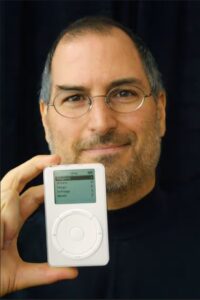
The products radically changed the industries by transforming the way people interacted with technology. The Apple II, launched in 1977, formed one of the first highly successful personal computers, helping to popularize computing in homes and schools. The Macintosh, introduced in 1984, was groundbreaking in its graphical user interface, making computers more user-friendly and accessible to a broader audience. These innovations helped to shape the future of personal computing, graphic design, and digital media, setting Apple on its path to becoming a tech giant.
In addition to his unwavering belief in his instincts, the late Steve Jobs drew inspiration from one of life’s most feared realities—death—which became a profound source of motivation for him. This represents an unusual yet powerful inspiration in Jobs’ case. His awareness of mortality drove his relentless pursuit of excellence, leaving behind lessons that remain influential even today, more than 13 years after his passing. This subject is confirmed by CNN’s 24 October 2011 article entitled “Biographer: Mortality motivated Steve Jobs.”
The biographer, Walter Isaacson, told CNN that mortality motivated Jobs to create some of Apple’s boldest products in his final years. Isaacson said “He talked a lot to me about what happened when he got sick and how it focused him. He said he no longer wanted to go out, no longer wanted to travel the world. He would focus on the products. He knew the couple of things he wanted to do, which was the iPhone and then the iPad.”
Reuters in its October 6, 2011 article reported “Remembering that I’ll be dead soon is the most important tool I’ve ever encountered to help me make the big choices in life. Because almost everything — all external expectations, all pride, all fear of embarrassment or failure — these things just fall away in the face of death, leaving only what is truly important. Remembering that you are going to die is the best way I know to avoid the trap of thinking you have something to lose. You are already naked. There is no reason not to follow your heart.”
Jobs encountered difficulties on his way to incalculable success
Jobs wasn’t a stranger to failure and rejection. In 1985, after a highly publicized clash with Apple’s board of directors, he was ousted from the company that he had built. For many, this would have been the end of the road. But not for Jobs. He went on to found NeXT, a company that would later be acquired by Apple, bringing him back into the fold in 1997. His return to Apple marked the beginning of an era of unprecedented success.
Jobs’ career provides a testament to the power of trusting one’s intuition, even when the odds are stacked against you. His unshakeable belief in his inner voice allowed him to push through some of the darkest moments of his career. As Jobs himself once said “You have to trust that the dots will somehow connect in your future. You have to trust in something—your gut, destiny, life, karma, whatever. This approach has never let me down, and it has made all the difference in my life. Intuition is a very powerful thing, more powerful than intellect, in my opinion,” Jobs told writer Walter Isaacson in his self-titled biography. “That’s had a big impact on my work.”
“Have the courage to follow your heart and intuition,” he advised graduates in his famous commencement speech at Stanford University in 2005.
According to CNN, the late Jobs said “I saw my life as an arc and that it would end.” Jobs further told Isaacson “You’re born alone, you’re going to die alone. And does anything else really matter? I mean, what is it exactly is it that you have to lose? You know? There’s nothing.”
Those words underline his awareness of life’s natural progression and its inevitable conclusion. The word “arc” suggests a metaphor for the journey of life—a rise, a peak, and eventually, a decline or ending, much like the trajectory of a curve. Jobs was reflecting on the finite nature of life, acknowledging that there is a beginning and an end, and that his time was limited. This realization drove him to focus on what truly mattered, to prioritize his goals, and to live with purpose, knowing that life would not last forever.
Highlighting the idea that once we accept the inevitability of death and the impermanence of life, many of the fears that hinder us—such as failure, embarrassment, or judgment—become insignificant. This perspective helped Jobs to focus on pursuing his passions and goals without fear, urging himself and others to live authentically and with boldness. Since he was fully aware that he would die one day and that this event could even occur unexpectedly soon, this galvanized him to work hard so that he might not die, without leaving a great legacy.
The following words, according to Inc.‘s August 23, 2024 article, have fulfilled an immense role in his life as far ambitious goals and hard work to attain them are concerned. “When I was 17, I read a quote that went something like: ‘If you live each day as if it was your last, someday you’ll most certainly be right.’ It made an impression on me, and since then, for the past 33 years, I have looked in the mirror every morning and asked myself: ‘If today were the last day of my life, would I want to do what I am about to do today?’ And whenever the answer has been ‘no‘ for too many days in a row, I know I need to change something.”
Late Jobs was adopted while a baby, and when he learnt it, it also motivated him; which also appears extraordinary. CNN says “Adopted as a baby, Jobs recalled as a child once confronting his parents in tears about why his real parents had rejected him.” Isaacson informed CNN that Jobs’ parents sat him down and told him “No, you don’t understand. We specifically picked you out. He said, ‘From then on, I realized that I was not – just abandoned. I was chosen. I was special.” Isaacson added “And I think that’s the key to understanding Steve Jobs.”
Isaacson, a former chairman of CNN and the former managing editor of Time magazine which shares a parent company with CNN, has also written biographies of Benjamin Franklin—one of the foremost of the Founding Fathers of the United States of America and Henry Kissinger— a former American diplomat and political scientist who served as U.S. Secretary of State and National Security Advisor under Presidents Richard Nixon and Gerald Ford.
Jack Ma: the power of persistence and belief in one’s vision
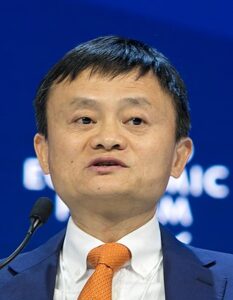
Jack Ma’s story offers another compelling case for respecting your inner voice. Ma, the founder of Alibaba, built one of the most powerful multinational technology companies in the world, specializing in e-commerce, retail, and technology. Yet, his journey was far from smooth.
Ma faced rejection after rejection, from jobs to business ideas. He applied to Harvard multiple times—each time receiving a rejection letter. When he tried to raise $5 million in venture capital for Alibaba in its early days, every potential investor turned him down. In fact, out of 24 friends he consulted when founding Alibaba, 23 told him that it represented a bad idea.
Imagine the weight of such unanimous opposition. It would have been easy for Ma to give up, to succumb to the voices telling him that he would fail. But he persevered. He listened to the one friend who said, “If you want to do it, just try it.” That single spark of encouragement was all that Ma needed. He trusted his vision, his inner voice, and today, Alibaba is one of the most valuable companies in the world, consistently ranking among the top three in global e-commerce giants.
Like Jobs, Ma faced periods of intense scrutiny and doubt. But his faith in his ideas kept him going. His advice to aspiring entrepreneurs? “Believe in what you are doing and love what you are doing, whether people like it or not.” His story shows us that even when the world tells you ‘no’ your belief in yourself can chart a different course.
This Chinese business magnate, investor and philanthropist figures among the top 10 richest Chinese billionaires in 2024, with his net worth estimated at $24.5 Billion, according to Forbes which reports “Once China’s richest person, the Alibaba cofounder and former chairman, and icon of mainland private sector success, has largely kept a low profile since his controversial remarks about China’s state-dominated banking system in 2020.
Alibaba has struggled since Ma’s departure: the e-commerce company named cofounder and fellow billionaire Joe Tsai as chairman in September. Ma and Tsai announced a $200 million share buy-back in January. Our estimate of Ma’s fortune increased to $24.5 billion from $23.5 billion a year ago based on a higher valuation for Alibaba’s financial services arm Ant, after a share buyback.”
In its story updated on December 10, 2021, Forbes says that Ma pointed out that intuition is more important than book knowledge. This platform also emphasizes upon this point. “What Jack Ma says is confirmed by entrepreneurial research: entrepreneurial success is not the result of explicit, academic learning and book knowledge–it is the product of implicit learning processes that manifest themselves in intuition and gut feeling. However, this is not something irrational or mystical; it is accumulated experience, which in turn is the result of a combination of perseverance and the willingness to experiment.”
The persistent voice of doubt—and how to silence it
There will always be voices telling you that your dreams are too big, your ideas too far-fetched, your path too uncertain. But when you allow those voices to grip control over you, you are handing over the keys to your future.
To live a life like Jobs or Ma—a life defined by creativity, innovation, and purpose—you must first learn to trust yourself. This is not to say that you should ignore all feedback or resist helpful criticism. But it is to say that your ultimate direction must come from within. Jobs’ and Ma’s successes were not the result of pandering to public opinion but rather standing firm in their vision, even when it was unpopular.
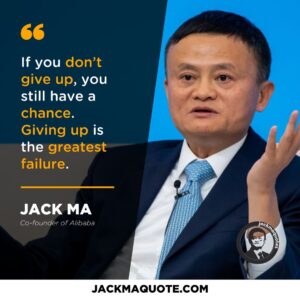 The truth is that the greatest achievements are often born out of periods of doubt. But as Ma has said, “No matter what one does, regardless of failure or success, the experience is a form of success in itself.” Every failure, every rejection, every moment of doubt forms part of the journey. The key is to trust that your inner voice will guide you through the fog, helping you to find clarity in the chaos.
Different personalities also tout intuition as a guide to be trusted unreservedly. Ann Wilson Schaef, Dawn Ostroff and Oprah Winfrey are some of them. Schaef who was an internationally known author, speaker, consultant, and seminar leader described as “one of the most important thinkers of our time”,once declared “Trusting your intuition often saves us from disaster.” “Listen to your inner voice. Trust your intuition. It’s important to have the courage to trust yourself,” an American businesswoman— Ostroff once stated. Winfrey, an American amazing billionaire woman said “Follow your instincts. That’s where true wisdom manifests itself.”
Dr. Kruti Parekh produced an article published on Jul 29, 2023 by The Economic Times. Dr. Parekh is said to be a dynamic and multi-faceted personality who has established her name as the World’s Premier Mentalist, Youngest Artistic Illusionist, Visionary Social Entrepreneur and a highly sought Global Motivational Speaker and Minder Trainer. Her expertise has reportedly taken her to perform in over 35 countries and her audience includes royalty influential world leaders such as the Emperor and Empress of Japan, Queen Silivia of Sweden, and former Prime Ministers of Australia and China namely John Howard and Wen Jiabao respectively.
In her article in The Economic Times, Dr. Perk wrote “The power of intuition is a fascinating yet often overlooked aspect of human perception. As a mentalist, I have spent years honing my ability to tap into this innate sense and utilize it to its full potential. Intuition, often referred to as a “gut feeling” or a “sixth sense”, holds a fascinating position in our lives. Indian shastras describe intuition, or “pragya,” as a transcendent form of knowledge that arises from a deep spiritual connection. It is considered a direct perception of truth and reality, unmediated by the rational mind.”
“While the concept of intuition has been explored through various lenses, the ancient wisdom of Indian shastras, modern scientific research, and even aspects of pseudo-science offer intriguing insights into how the power of intuition can benefit us in our day-to-day lives. By understanding these diverse perspectives, we can unlock the potential of our intuitive abilities and harness them for personal growth and decision-making.”
CNBC with its May 29 , 2018 article says “And like many other visionaries, including Albert Einstein and Amazon’s Jeff Bezos, the tech titan attributed this extraordinary success to his intuition.”
Conclusion: the courage to trust yourself
Both Steve Jobs and Jack Ma reached extraordinary heights because they refused to let external voices oust their own. The question is “will you do the same?” Will you have the courage to follow your heart, even when the path ahead seems uncertain or full of obstacles? If there exists one thing that these visionary leaders teach us, it’s that success comes from within. It comes from respecting your intuition, following your own path, and possessing the resilience to push forward even when the world forces you to stop. If you choose to honor that inner voice, you will just create something remarkable. And you might even inspire others to do the same.