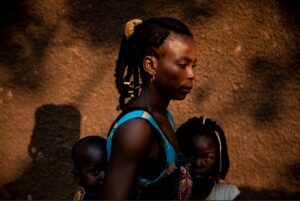
Imagine a classroom with no walls, no books, and no teacher—just the sound of gunfire echoing in the distance. For millions of children across Africa, this is not a scene from a distant past but a harsh reality of the present. On a continent where over 100 million children are out of school and conflicts continue to rage, education stands at a critical crossroads. While African nations strive to address these challenges, they face a dual battle: overcoming historical deficits and adapting to the demands of a rapidly evolving digital age. Cristina Duarte confirms it. “Education in Africa stands at a crossroads, confronting dual challenges related to the juxtaposition of existing deficits with the rapidly evolving demands of the Digital Age. Despite the work across several African countries to turn the tide, the number of out-of-school children across the continent remains stubbornly high,” she says.
She adds “And with the rapid advancement of 21st-century technologies presenting new challenges, such as the increasing necessity for digital fluency, African educational systems must adapt swiftly to remain relevant and competitive.” Duarte works as the Under-Secretary-General and Special Adviser of United Nations Secretary-General António Guterres on Africa. But, how will these education systems evolve swiftly, amid poverty, instability, and other daunting obstacles playing a major role in Africa’s children failing to study? This article explores these pressing questions and examines actionable steps to help Africa navigate its complex educational landscape.
Duarte raised the point in her 8 May 2024 article run by Africa Renewal and headlined “The duality of the education challenge in Africa: Historical imperatives and 21st-century necessities.” Africa Renewal is a magazine, founded in 1987, which is published by the United Nations. This magazine, formerly published as Africa Recovery/Afrique Relance and now appearing on a quarterly basis, focuses on the critical economic, political and social situation in Africa. Africa Renewal highlights Africa and the international community’s efforts to promote economic recovery and sustainable development in the region.
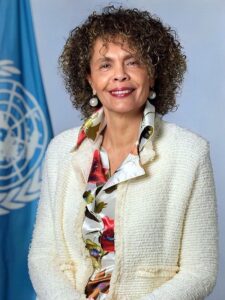
Duarte points out that in spite of recent progress, the data on the resulting deficit is disquieting. “Over 100 million children remain outside the formal education system in Africa, with the United Nations Educational, Scientific and Cultural Organization (UNESCO)’s Institute for Statistics highlighting that one-fifth of children between the ages of six and 11, one-third between the ages of 12 and 14 and nearly 60 per cent of young people between 15 and 17 are not in school in Sub-Saharan Africa.
UNESCO also reports that the continent needs more than 6 million teachers to achieve universal primary education by 2030.”
Sub-Saharan Africa comprises almost all of Africa. This region consists of 46 countries, excluding Sudan which is often grouped within North Africa. Including Sudan, the number is 47. Sub-Saharan Africa consists of all African countries located south of the Sahara Desert, and Sudan is situated south of the desert. 46 or 47 countries, which form Sub-Saharan Africa, is the most widely accepted count; depending on the context. Geographically, Sudan is considered part of Sub-Saharan Africa. Politically and culturally, it is classified in North Africa because of historical, cultural, and linguistic ties, particularly due to its majority Arab population and historical connections to Egypt and the Arab world.
On one hand, citing Professor Wole Soyinka— one of the most renowned figures that Africa has ever known, this UN official recognizes progress which this continent attained. “When Professor Wole Soyinka, the famed Nigerian Nobel Laureate and scholar, spoke on ‘Rearming the University Idea’ at our Academic Conference on Africa 2023, he made it clear that the African educational system has been delivering high-calibre results for decades, citing the spersuccesses of African universities ‘from Makerere through Ibadan, Achimota all the way to Dakar.’
Alongside Africa’s rich cultural heritage and traditional teachings that forged well-rounded individuals for many years, this has established the continent as an educational powerhouse for a period.”
On the other hand, she regrets difficulties that have always hampered the progress. “Unfortunately, political instability, conflicts, mismanagement, external shocks and other crises disrupted the system, leading to forced school closures, reducing access to safe learning environments and creating a shortage of quality teachers.
These challenges impeded academic progress while depriving students of vital social and emotional support received from educational institutions. Over time, this change triggered a cycle of poverty and marginalization, hampering socioeconomic development and stability across African communities.”
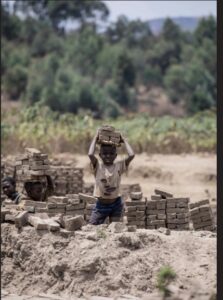
Duarte however argues that there exists an opportunity to overcome these trends and then obtain significant gains by harnessing the multiplying effect of science, technology and innovation to deliver quality education in Africa. Here again, Life In Humanity pauses a bit to ask itself “Have the challenges been so decisively defeated or there is any hope that they will be eradicated from Africa, so that we can be assured that the opportunity will be capitalized upon?”
Dissecting this question involves first guiding you through how wars and poverty profoundly disrupt education in Africa, sharing illustrative stories to highlight these challenges.
Some cases of war on the African continent
The USA’s largest and oldest media organization, Voice of America (VOA), published a story headlined “Central African Republic: 10K Children Still Fighting Alongside Armed Groups” on 12 February 2024.
These children are engaged in this civil war which has existed for more than a decade. “The mineral-rich but impoverished nation has had conflict since 2013, when predominantly Muslim Seleka rebels seized power and forced then-President Francois Bozize from office. Mostly Christian militias fought back, also targeting civilians,” the VOA reported.
Marthe Kirima, the Minister for Family and Gender, pointed out in a statement that children were still being recruited as fighters, spies, messengers, cooks and even used as sex slaves. She said that though 15,000 children had escaped from rebel forces, several were so traumatized that they found it difficult to return to normal life.
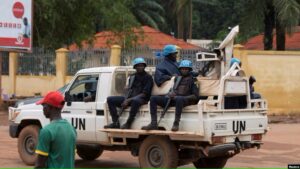
The United Nations, carrying out a peacekeeping mission in the country, estimates that the fighting has claimed the lives of thousands and displaced more than a million people— one-fifth of the population. The VOA says “In 2019, a peace deal was reached between the government and 14 armed groups, but fighting continues.”
Some former child soldiers told The Associated Press that they faced heart-wrenching experiences. Arsene said “I took up arms because Seleka killed by [my] mother and father.” Arsene reportedly insisted on only his first name due to the sensitivity of the situation. He said that a Christian rebel group recruited him when he was aged 14. Ousmane, another former child soldier, highlighted that joining the rebels shattered his life and that of those around him. “What we did is indescribable,” he said.
In its 4 July 2024 article, the NRC (Norwegian Refugee Council) says “The civilian population is caught between warring parties. Different armed groups and loyalist forces and their allies are fighting each other for the control and exploitation of raw materials. Violence against civilians and extreme weather events continue to cause displacement. As of January 2024, 2.8 million people need humanitarian assistance, equivalent to 46 per cent of the total population.”
“Education system stretched to breaking point. With half of CAR[Central African Republic]’s population under the age of 18, armed conflict and population displacement are having a devastating effect on children’s schooling. It is estimated that seven out of ten children do not attend school regularly, and around 1.2 million children are facing difficulties accessing education. Financial constraints combined with insecurity are forcing children to drop out of school.”
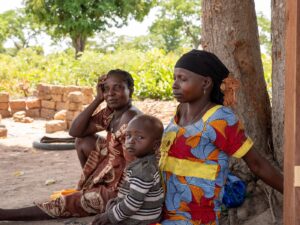
NRC underlines that families struggling to satisfy basic needs find it impossible to pay for school supplies and uniforms. “And when children are not in school, they are exposed to protection risks, including recruitment by armed groups, and being forced into child labour or child marriage.
A lot of school infrastructure has been destroyed, and qualified teachers are abandoning their posts in search of safety and a secure income, especially in remote areas. In basic primary 1, there is an average of 120 pupils for every tenured teacher.”
Association for the Development of Education in Africa [ADEA] suggests that education in Africa cannot develop, if wars continue to persist on the continent. In its 21 September 2020 article, the association says “When war erupts, education is the most adversely affected sector. Violent conflict continues to pose social-economic challenges to the African continent – destroying infrastructure, impacting teachers, swelling number of students out of school and impacting the most vulnerable.
As of June 2019, 9,272 schools were closed or had become non-operational and almost 2 million children had been robbed of education due to violence and insecurity in Burkina Faso, Cameroon, the Central African Republic, Chad, the Democratic Republic of Congo, Mali, Niger and Nigeria.”
ReliefWeb is a humanitarian information portal under the United Nations Office for the Coordination of Human Affairs. Its 28 May 2024 article sounds the alarm about the situation of violence in different countries in Africa. It reads “The people of the Central Sahel [Burkina Faso, Mali and Niger] continue to be affected by violence, conflict and overall insecurity, with 1,180 security incidents reported and 3,393 people killed between February and April 2024 alone, compared to 793 incidents and 2,497 people killed in December 2023 and January 2024.
2.6 million people are internally displaced in Burkina Faso, Mali and Niger, and 285,268 are refugees, an increase from 190,900 reported in January, with notably 67,754 and 26,013 newly arrived refugees in Niger and Mali, respectively. The displaced and vulnerable people of the Central Sahel face severe food insecurity and malnutrition and have limited access to basic services. 8,216 schools are non-functional and 478 health centres non-operational, Burkina Faso being the worst-affected country.”
Poverty impact on education in Africa
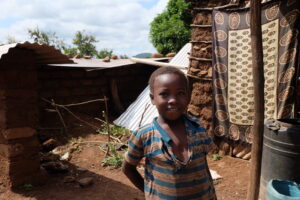
On 13 March 2023, the World Bank Group (WBG) released a story “The high price of education in Sub-Saharan Africa”. The WBG said “The promise of universal primary and secondary education is one of the Sustainable Development Goals. Yet in 2020, about 64 million children were out of primary school, including 34 million girls. Over 195 million children globally were out of secondary school.
Sub-Saharan Africa has the highest rates of education exclusion of the six developing world regions. Over one-fifth of primary-age children are out of school. There are many barriers to education for low-income households. One of them is school fees, which unfortunately remain widespread in schools across Sub-Saharan Africa, causing financial stress to families.”
According to the WBG, new Global Findex data have indicated that over half (54 percent) of adults in Sub-Saharan Africa are very concerned about paying school fees, and “29 percent name school fees as their biggest financial worry (above medical expenses, paying for old age, and monthly bills).” “In a dozen Sub-Saharan African countries, including Kenya and Nigeria, school fees are the most commonly reported financial worry.”
There are African countries which provide free of charge education, but the WBG says that citizens of these countries aren’t perfectly spared from a burden. “Even in countries like Uganda which offers free primary education, parents still have ancillary school expenses for uniforms, exam fees, school upkeep, books, or hiring an extra teacher.
The cost of sending a child to school in Uganda varies from US$168 for government schools to US$420-680 for private schools. At the same time, more than 60 percent of adults in Uganda are very worried about school fees; for 40 percent of adults, school fees are the biggest source of financial worry. This is not surprising, as about 42 percent of Ugandans live below the poverty line of US$2.15 per day (about $785 per year).”
The WBG expects the slight reduction of the number of Ugandans living below the poverty line. This group’s document titled “Uganda Economic Update/ 22nd Edition December 2023” states that the continued growth of non-farm income and declining inflation are expected to boost consumption. “Accelerated growth could reduce the poverty rate (measured at US$2.15 per person per day) from 41.7 percent in 2023 to 40.7 percent by 2024.”
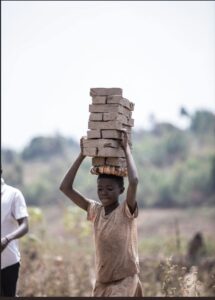
Children Incorporated is a non-profit organization dedicated to improving the lives of underprivileged children around the world. It says tha in Africa it supports children in Ethiopia and Kenya, providing them with funds for school fees, uniforms, school supplies, and food. In its 25 May 2023 article “Poverty and Education in Africa”, it points out “In Africa, children living in poverty often face huge hurdles when it comes to getting an education. Often, particularly in the areas where Children Incorporated works in Africa, attending school requires fees for teacher salaries, uniforms, books, school lunches and even the use of a desk.
For families who already struggle to make ends meet, sending children to school is often not an option. Even if parents can afford the school fees, impoverished households often do not allow for study time due to lack of electricity, crowded conditions in the home, or the need for children to work after school to help support their families. Children might not have enough food to eat at home, therefore going to school hungry and ill-prepared for the learning.”
Recommendations for Africa to ensure education
ADEA provides a certain recommendation for African governments. “Peace and security are critical ingredients in the social and economic development of any nation. Violent conflicts hamper economic development and reinforce inequalities, grievances and desperation, trapping countries in a vicious cycle of violence. To this end, African countries have no alternative but to anchor peace education in their education sector policies and plans, and mainstream peace education at all levels to ensure that knowledge, skills, values and attitudes for peaceful coexistence can be learned and practiced.”
Paradigm Academic Press is a publishing institution which published the article “Education and Social Inequality in Africa: Gender, Poverty, and Regional Disparities” on August 2023.
This article highlights that poverty, besides gender inequality and regional disparities, constitutes a crucial obstacle to education so that this publishing organ recommends interventions to eradicate poverty. “Poverty remains a significant obstacle to education in Africa. Children from impoverished backgrounds face numerous challenges, including lack of access to basic necessities for learning and the burden of child labor, which significantly impacts their educational opportunities. Poverty alleviation programs, such as conditional cash transfer initiatives and school feeding programs, play a vital role in supporting educational opportunities for children in poverty.
Targeted interventions are crucial to address the unique challenges faced by marginalized communities. By providing scholarships, school supplies, and transportation assistance, educational opportunities can be improved for vulnerable students. Community involvement in poverty alleviation efforts and education support initiatives can enhance the learning experience for children from disadvantaged backgrounds.”
Response to the question asked at the very beginning
Different sources affirm that it is now time for African governments, educational institutions, businesses, and international partners to rise to the challenge of revolutionizing their education. This entails investing in cutting-edge education, fostering innovation, ensuring stability and peace, as well as addressing inequality and poverty. If Africa does so, it will overcome the barriers that have long hindered its education.
Life In Humanity believes that no one can accurately answer the question “How will these education systems evolve swiftly amid poverty, instability, and other daunting obstacles that contribute to Africa’s children failing to study?” In other words, we are convinced that no one can now assert with certainty that these challenges will be solved using specific mechanisms at a particular time, nor can they confidently say that they will never be remedied.
Africa’s ability to successfully address these problems remains an issue that only time will clarify. However, considering that even the most developed nations have faced similar challenges, Africa can overcome them as well. The only uncertainty is when Africa will do so.