By Ephrem Murindabigwi
A shared sense of human dignity and responsibility should tie humankind together. At the core, all people – regardless of culture, ethnics and races, language, religion, wealth or nationality – share critical commonalities that ought to firmly unite them. These commonalities include the fundamental needs and aspirations that every human desires to fulfill, such as life, safety, freedom, and being loved. Recognizing the equal worth of every human life creates a moral foundation which can unite humanity beyond borders.
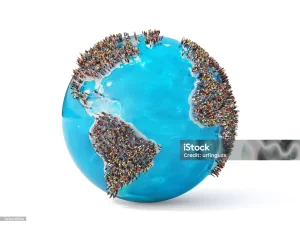
Equally important is shared responsibility. Humanity faces common challenges – like climate change, poverty, conflict, diseases and technological risks – which no nation alone can solve. Another deep challenge that binds humanity is death -the inescapable reality that both equalizes us and exposes the fragility of our life. Cooperation, empathy and solidarity don’t constitute ideals – they form necessities for survival and progress. Finally, compassion guided by justice should bind us all. Compassion persuades us to care for one another. Justice ensures fairness and respect for rights. Together, they enable peaceful coexistence and allow diversity to thrive without division and strife.
In essence, humanity should be bound by respect for human dignity, mutual responsibility and compassionate justice – values strong enough to honor our differences and remind us that we share one world and one future. In spite of this, it remains a profound puzzle why humanity repeatedly ignores these values and instead indulges in reciprocal destruction. This enigma constitutes a key issue explored in this article.
More about the commonality set
Search For Common Ground (SFCG) is an international expert peace-building organization aged over 40 years in 2025, as it was founded in 1982. This organization says “Our world is more interdependent than ever before. The challenges before us require collaborative approaches. We believe that all individuals and relationships have the capacity to change. Despite the depth and complexity of our differences, we believe that Common Ground matters. When we reveal and amplify what we share, we can trigger collaboration in ways otherwise unimaginable. Conflict becomes an opportunity for change, not a threat, nor a justification for violence.
In conflict, one part of a community’s identity is often manipulated and amplified to dehumanize ‘the other party’ and mobilize a group of people to ‘defend’ themselves against others. In such situations, people are manipulated and forced to pick one identity over others, stripping away the commonality that they may share. (For example, they may have to choose being a Christian rather than the common identity of being a parent, or a fisherman). The Common Ground Approach seeks to underscore what we have in common as a basis for transforming conflict. Despite our uniqueness, there are always common aspects to our identity.“
Common ground means common points, shared aspects or characteristics, common bond, among others. The Common Ground Approach, as promoted by SFCG, signifies a mechanism to peacefully address our conflicts. This way prompts us not to be driven by our differences, but instead by our shared attributes. In other words, while responding to conflict, SFCG strongly advises us to only resort to our commonalities so as for us to transform our conflicts. To transform a conflict means to fundamentally change its nature by addressing not only the visible disagreement but also the deeper causes that sustain it. Rather than merely ending a dispute or suppressing tensions, conflict transformation focuses on reshaping relationships, attitudes, and structures that give rise to conflict. It seeks to uncover underlying issues such as inequality, unmet needs, power imbalances, or mistrust, and to turn confrontation into an opportunity for dialogue, learning, and positive change. Through this process, conflict becomes a catalyst for social growth and improved understanding, helping to build more just, inclusive, and sustainable relationships that reduce the likelihood of future disputes.
This organization however underlines that these shared points are frequently disregarded, especially since identities are actually vital in our lives. “Identity is powerful. Identity is an essential human need. We all need to feel acknowledged, accepted and appreciated for who we are. Many are willing to make enormous sacrifices, even to giving their lives, to protect their identity, if they perceive it to be threatened. Violent conflict often blinds from seeing our common identities. These shared identities are often related to our fundamental values and aspirations, even if our inherited or biological aspects of our identity are different.“
The late Nelson Madiba Mandela became South Africa’s first Black president democratically elected in 1994, after he served a 27- year sentence by the Apartheid regime in the country. It is he who has led the successful and determined anti-apartheid campaign which has caused him to be jailed for all those years. Madiba is admired as one of the greatest peace-building icons and human rights activists of our time. He is well known for several optimal quotes including those relating peace, freedom, reconciliation, justice and human rights. The following is one of the quotes which underlines that our differences are meant to strengthen humanity, not fuel conflict- to unite us rather than divide us. “It is easy to break down and destroy. The heroes are those who make peace and build.
Peace is not just the absence of conflict, peace is the creation of an environment where all can flourish, regardless of race, colour, creed, religion, gender, caste, or any other social markers of difference. Religion, ethnicity, language, social and cultural practices are elements which enrich human civilization, adding to the wealth of our diversity. Why should they be allowed to become a cause of division and violence? We demean our common humanity by allowing that to happen.“
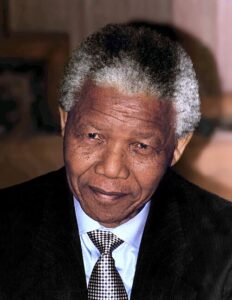
Under the theme ‘A commonality set that binds us all’, Mandela’s words remind us that justice and freedom do not represent individual privileges but shared human responsibilities, inseparably linking the dignity of each person to the well-being of all. As he emphasized it, justice involves other aspects than merely laws and their enforcement. For instance, he declared “Overcoming poverty is not a gesture of charity. It is an act of justice. It is the protection of a fundamental human right, the right to dignity and decent life. The dire poverty of some is not an affliction which impacts only on those who are deprived. It reverberates across the globe and ineluctably impacts negatively on the whole of humanity, including those who live in conditions of comfort and plenty.“In terms of freedom, he stated ” Our freedom cannot be complete, while others in the world are not free.”
Why does humanity continually disrespect those values?
Worldbuilding Stack Exchange ran a piece of writing entitled ” What reason could change people’s mentality to treat each other as members of one kind?” on 22 November 2016. Its author whom we have not managed to find says “Nowadays (as thousands of years earlier), many people bound themselves in their mind to a particular nation, country, town, neighborhood, etc. And very often, these people think they are good ones and other people, who live everywhere else are not so good, just because they are others. So, people always divide other people for allies and enemies by some factors: nationality, religion, wealth, and so on. “
This writer tries to challenge humanity to reflect. ” Now, imagine the world where people treat each other as equals. And I mean not only their doings but thoughts also. Not ‘This guy is different, and I don’t like him, but I should act like I do, because of tolerance/politeness/some other rules.’ But ‘Hmm, this guy is like me, he is human’, instead of this guy lives in another county and has a different skin color and is totally another in our current understanding of this subject.“
The author goes on, providing us with another analogy helping us to reason more. “Some more analogy. Imagine kids who laugh at other kid who is taller than they are or smaller or has big ears. But as these kids grow, this reasons become silly to laugh at, and in the age of 20 or 30, you don’t care how tall or small the person is. And if this is one step to the final state of mind, imagine this state when there are no reasons to treat one kind of people in a different way from another kind. The state, when we outgrew all this stuff, as these kids did.“
What this author says implies that humankind ignores the commonalities which could unite it, because of the mentality of perceiving others like bad ones. This mentality plays a major role in causing and stoking violent conflict. SFCG contends that our default reaction is often adversarial, “even when this is not in our best interest.“
“It is in our human nature to be competitive. Most of us see situations as win-lose, seeking to protect our interests. Our society often encourages us or even celebrates us, when we take adversarial, competitive approaches. This often prevents us from considering that there may be a win-win option. We often think that in order to win, someone must lose. When it seems we are expected to be adversarial, we usually do so without much reflection. We most often respond with fear or mistrust of those around us and assume that their interests are contrary to our own. We are often conditioned by a notion scarcity or zero-sum to believe that in order to win, someone else must lose.”
The mindset addressed by the unidentified writer and ‘our human nature to be competitive‘ are certainly key reasons why humanity generally ignores the commonalities.
In confronting the profound question, Mandela’s insistence on justice, freedom, and shared dignity resonates now more than ever, as the world watches seismic shifts in global power dynamics. The recent ousting of Venezuelan President Nicolás Maduro by U.S. forces — an intervention that has sparked both celebration and widespread criticism over sovereignty, legality, and humanitarian impact — shows how fragile peace and justice remain when force is used as a primary tool of change. Mandela’s vision and SFCG remind us that true transformation cannot be imposed from the barrel of a gun but must be rooted in mutual respect, inclusive dialogue, and the recognition of common humanity. What unites us across borders is not merely the absence of conflict, but the collective pursuit of systems where freedom and dignity are guaranteed for all, not just a few. In a world marked by division and power struggles, Mandela’s legacy and SFCG challenge leaders and citizens alike to seek solutions that heal and uplift, rather than deepen fault lines.

In the case of President Donald Trump’s removal of Maduro from power, that competitive urge in human nature is on full display, as geopolitical rivalry and national interests drive the United States to assert influence rather than seek collaborative solutions to Venezuela’s deep‑seated problems. Rather than transforming the conflict through inclusive dialogue and shared dignity, this forceful intervention highlights how power struggles often override the very principles of justice and peace that leaders like Mandela championed. This is corroborated by a 3 January 2026 story titled “Experts react: The US just captured Maduro. What’s next for Venezuela and the region?” run by Atlantic Council. It reads “’We are reasserting American power.’ That’s what US President Donald Trump said, hours after the US military launched a strike and raid on Venezuela that resulted in the capture of strongman Nicolás Maduro. The Venezuelan leader and his wife were moved to the USS Iwo Jima en route to New York, where Maduro has been indicted on multiple charges, including narcoterrorism. The US operation comes after months of pressure on the Venezuelan regime to halt drug trafficking and move the country toward democracy. ‘We are going to run the country until such time as we can do a safe, proper, and judicious transition,’ Trump said.”
This episode reveals a glaring contradiction: even as President Trump justified the capture of Maduro by accusing him of narcotics trafficking and promising to guide Venezuela toward democracy, his openly declared words “We are reasserting American power,” signal that geopolitical competition and national interest — not collaborative peacebuilding — lay at the heart of the action. Trump’s emphasis on reasserting U.S. dominance demonstrates how the competitive instinct in human nature can override principles of inclusive justice and shared dignity, the very ideals Mandela championed as essential to genuine conflict transformation
Action to place these shared bonds first?
“Understanding this reaction – to recognize that our default reaction to conflict is often adversarial, even when it is not in our best interest-, and what we can do to change it is the key to beginning how we respond to conflict with collaboration and identify shared interests with perceived adversaries,” states SFCG before adding ” Conflict and violence seem like the same thing but in reality they are not. We associate conflict with violence because our experience of conflict is often negative. Conflict arises when two or more parties have seemingly incompatible goals. This is an inevitable part of our human existence, reflected through diverse values, identities, cultures and beliefs.“
SFCG emphasizes “Conflict is inevitable and natural, and is neither positive nor negative. When handled constructively, conflict can bring about shared solutions and collaborative relationships. When conflict is not managed constructively, it can lead to violence. Violence is the use of power physical or force to inflict suffering, death, destruction or deprivation.“
According to SFCG, common causes of conflict in society are “Resources are unfairly distributed; for example, land, money or employment. Power is unevenly distributed, causing the exclusion of certain groups. Groups hold misconceptions or prejudices about each other. There is little or no communication between groups. Groups have interest or needs that are or seem to be incompatible.”
The lessons from Mandela, SFCG, and recent events like the U.S. removal of Nicolás Maduro reveal a stark truth: humanity’s recurring failure to prioritize our shared bonds often leads to needless conflict and suffering. The competitive instincts inherent in human nature, amplified by geopolitical ambitions as seen in President Trump’s declaration “We are reasserting American power,” demonstrate how force and unilateral action can temporarily assert control but never transform the underlying grievances that divide us. True conflict transformation requires consciously placing our shared humanity, dignity, and responsibility above narrow self-interest, recognizing that justice, freedom, and peace are not privileges for a few but collective rights that bind us all. Action must begin with dialogue that uncovers common ground, genuine and empathetic engagement that humanizes perceived adversaries, and collaborative solutions that address the root causes of disputes rather than merely their symptoms. Only by choosing compassion guided by justice over competition and coercion can humanity cultivate a world where diversity enriches rather than divides, and where conflict becomes an opportunity for lasting understanding and shared progress.
If people genuinely made “Only by choosing compassion guided by justice over competition and coercion…” a guiding norm in their lives, then actions rooted in exploitation, secrecy, and violence would become deeply alien to how they relate to others. Leaders who choose compassion and justice over coercion aren’t driven to protect illicit drug networks, weapons conspiracies, or corrupt power structures — the very behaviors for which Maduro and co‑defendants have been charged, including narco‑terrorism conspiracy, cocaine importation conspiracy, and related offenses under U.S. federal law, all tied to decades‑long alleged collusion with international trafficking groups and violence‑associated networks. By centering empathy and fairness, people break the cycles of harm and self‑interest that fuel such accusations, truly shrinking the space in which abuses of power, oppression, and systemic harm can take root.