By Editorial Staff
“Do not go where the path may lead, go instead where there is no path and leave a trail” is a quote widely attributed to the late Ralph Waldo Emerson, though we have not been able to identify verified evidence that he ever actually wrote or said it in any of his known works. Even if the words were not authentically his, they actually resonate deeply as a timeless true call to action. The quote encourages us to step out of our comfort zones, embrace originality, and take risks in life—yet these risks have to be calculated. This quote serves as a powerful reminder of the value of individuality, courage, and innovation in life. This quote exhorts us to seek our own unique journey instead of simply following the well-worn paths set by others.
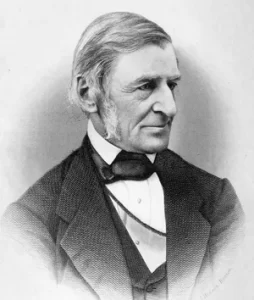
The late Emerson’s words emphasize the importance of forging our own way, implementing considered risks. Rather than adhering to conventional routes or predefined norms, passing through a place with no path enables the risk-takers to create new incredible possibilities. The words challenge the conventional wisdom of following prescribed paths and inspire us to carve our own way through the world, to attain accomplishments never imagined before. In this article, we will explore four key components of this powerful message: the importance of originality, the courage to take risks, creating a legacy, and self-discovery and fulfillment.
The importance of originality: creating your own mark
Before addressing this point, we seize an opportunity to say that Emerson arrived on the Earth on May 25, 1803 in Boston, Massachusetts, in the United States of America. He deceased on April 27, 1882. He worked as an American lecturer, poet, and essayist.
His call to avoid following the path that others have trodden is fundamentally about the importance of originality. At the heart of the quote lies a challenge to think for oneself, to push the boundaries of what’s expected, and to contribute something unique to the world. Originality is often stifled by the pressures of societal norms, traditions, and expectations. People are often guided by what has worked for others or by the safe, conventional road that guarantees minimal failure but often leads to minimal rewards as well. The call urges us to resist this temptation and instead consider the value of creating something entirely new.
To go where “there is no path” means embracing innovation, questioning the status quo, and being unapologetically or unashamedly different. By stepping away from established norms, we unlock our potential to contribute something fresh to the world. It is in the unexplored, the unknown, where true creativity flourishes.
Think of the groundbreaking work of inventors like the late Thomas Edison, who forged a path where there existed none in the field of electrical innovation, or artists like Pablo Picasso, who revolutionized art by deviating from traditional forms and producing something entirely new. These visionaries were not afraid to walk without a trail and, in doing so, they left lasting imprints on the world.
Edison, asked about his thousands of failed attempts in inventing the lightbulb, reportedly replied “I have not failed. I’ve just found 10,000 ways that won’t work.” For further details on Edison, click on these articles that feature him: Never let jealousy dominate you: Edison and Ford’s lifelong and unimaginable partnership that benefited both and If you wholeheartedly believe your idea, cling on to it. For more about Picasso, read this article— Relentless pursuit of excellence—unlocking the secrets of peak performance through daily action and discipline —which features him.
Originality doesn’t just mean creating something new that others admire; it also involves embracing one’s authentic self. Often, we hide behind societal expectations or the opinions of others, afraid to show the world our true selves. The late Emerson’s words encourage us to resist this urge and instead create a path that aligns with our values and passions. By being authentic and true to ourselves, we inspire others to carry out the same and create a ripple effect of originality and personal empowerment.
The courage to take risks— growth lies in the unfamiliar
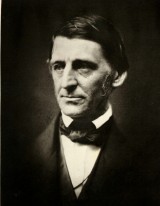
The second key component of the late Emerson’s quote is the importance of courage in taking risks. “Do not go where the path may lead” suggests that safety and comfort are not the keys to fulfillment. In fact, life’s most profound moments often come from stepping outside of our comfort zones and daring to try something new. Going where “there is no path” involves uncertainty, challenge, and fear of failure, but it is through these very experiences that growth occurs.
Taking risks is essential for personal development and success. If we choose to follow the beaten path, we may avoid failure but also miss out on the gargantuan opportunity to grow, evolve, and challenge ourselves. By creating new paths, we face the unknown and develop skills we didn’t know we held. The risk of failure represents an inherent part of innovation, but also the potential for monumental success. No significant achievement in history has come without risk. Whether in business, arts, or science, those who have produced lasting impacts were often the ones who dared to fail before they succeeded.
One of the most notable aspects of risk-taking is the courage it takes to face failure. Often, the fear of failure can be paralyzing, leading us to choose the safer route. However, failure is not a permanent condition; it is a stepping stone on the journey to success. Think of the Black American, Oprah Winfrey, who was fired from her first television job but went on to become one of the most influential media personalities in history. Her resilience in the face of early setbacks serves as an inspiration to anyone looking to break away from established paths and forge their own. We are preparing a thorough article about Winfrey.
By taking risks, we not only challenge ourselves, but we also inspire others to do the same. Our actions possess the power to ignite a chain reaction, empowering others to step out of their comfort zones. Taking risks, though scary, opens doors to new opportunities, creativity, and the possibility of achieving greatness.
Living example
We are convinced that the world abounds with examples of personalities who have applied the core message contained in the quote and realized unimaginable achievements. Such a powerful example of personal growth arising from the unfamiliar is Cheryl Strayed, author of the bestselling memoir Wild: From Lost to Found on the Pacific Crest Trail.

After the devastating loss of her mother, the unraveling of her family, and a period of self-destructive behavior including heroin use, Strayed hiked over 1,000 miles of the Pacific Crest Trail alone. Strayed, then in her mid-20s, carried no prior long-distance hiking experience.
Her journey through the wilderness, chronicled in Wild, became both a literal and metaphorical path toward healing and self-discovery. The unfamiliar terrain, physical hardship, solitude, and confrontation with nature forced her into profound introspection and transformation.
The memoir turned so impactful that it was selected for Oprah’s Book Club 2.0 and adapted into a film starring Reese Witherspoon, further cementing the credibility and wide recognition of her story.
A global media brand— with more than 100 years as it was founded in 1923, TIME, in its 5 December 2014 story titled “The True Story Behind Wild”— reported “The new Reese Witherspoon movie Wild faced a major challenge as it headed to the big screen. In the popular memoir of the same name, author Cheryl Strayed hikes the Pacific Crest Trail in hopes of finding ways to cope her mother’s death, her experimentation with heroin and her divorce.
The then-26-year-old Strayed spends most of the book traversing the trail alone and, though flashback scenes and pit stops on her journey provide some material for action and drama, the book mainly consists of Strayed’s own thoughts—material that’s hard to translate into a screenplay.”
The book “Wild: From Lost to Found on the Pacific Crest Trail” emanated from the risky endeavor that Strayed conducted. Various sources confirm it. Elon University— highly regarded nationally in the United States of America, particularly for its commitment to undergraduate teaching and student engagement— and The New York Times are some of them.
Elon University in its 7 December 2017 story headlined “Wild: From Lost to Found on the Pacific Crest Trail, An Essay Review” said “In 2012, Cheryl Strayed, formerly Cheryl Nyland, published a memoir of her personal account hiking the 1,100-mile-long Pacific Crest Trail (PCT) when she was a lost and broken 26-year-old in the summer of 1995.”
The New York Times with its 30 March 2012 story entitled “The High Road” reported “In the summer of 1995, a 26-year-old woman who had never been backpacking before set out to hike the Pacific Crest Trail. She had already separated from her husband, quit her waitressing job and sold most of her belongings.
Now she went to the outdoors store REI to purchase almost everything she could possibly think of for her three-month journey. Wild: From Lost to Found on the Pacific Crest Trail is at once a breathtaking adventure tale and a profound meditation on the nature of grief and survival.”
She acquired different items of gear that she needed during the hiking, according to The New York Times. They included a thermal shirt, a water purifier, a tiny collapsible stove, a canister of gas and a small pink lighter, two cooking pots, utensils, a thermometer, a tarp, a snakebite kit, binoculars and a compass, among others. Additionally, she took four books including one titled “Staying Found” to teach herself how to use the compass.
This adventure ignited a mammoth opportunity to grow, evolve, and challenge herself, ultimately transforming her life unbelievably. Her website—Cheryl Strayed—underlines it. “Cheryl Strayed is the author of the #1 New York Times bestseller Wild: From Lost to Found on the Pacific Crest Trail, which was made into an Oscar-nominated film.”

It adds “Her bestselling collection of Dear Sugar columns, Tiny Beautiful Things, was adapted for a Hulu television show and as a play that continues to be staged in theaters nationwide. Strayed’s other books are the critically acclaimed novel, Torch, and the bestselling collection Brave Enough, which brings together more than one hundred of her inspiring quotes.
Her books have sold more than 5 million copies around the world and have been translated into forty languages. Her award-winning essays and short stories have been published in The Best American Essays, the New York Times, the Washington Post Magazine, Vogue, and elsewhere. Strayed has also made two hit podcasts, Dear Sugars, which she co-hosted with Steve Almond, and Sugar Calling.”
Creating a legacy: leaving a mark on the world
“Go instead where there is no path and leave a trail” implies that we bear the potential to leave something behind that others can follow and build upon. A trail does not just constitute a physical mark on the ground, but a lasting impact on the world and the people who encounter it.
Creating a legacy includes more than achieving personal success. It entails creating a difference in the world and leaving behind something meaningful. This might be an innovation, a work of art, a social movement, or even the way we influence others. In every moment of life, we possess the opportunity to create something that will outlast us and benefit those who come after us. The trail we leave can guide others who are looking to make their own way.
Take, for example, the late Nelson Mandela who spent 27 years in prison and emerged as the leader of the anti-apartheid movement in South Africa. His journey was not an easy one, nor was it a conventional one. Mandela took a path that extremely numerous others feared to take, yet by doing so, he became a symbol of resistance, resilience, and hope. His legacy is continuing to inspire people all over the world to challenge oppressive systems and work for justice.
Creating a legacy through uncharted paths is not limited to world leaders or famous innovators. Every individual carries the potential to leave a positive mark on their community, their family, or their field. The key is to embrace the idea that your actions matter and that by forging a unique path, you are setting an example for others to follow. Whether it’s through the values we instill in others, the causes we champion, or the way we live our lives, we all hold the ability to leave behind a trail that will inspire future generations.
Self-discovery and fulfillment— true reward of a unique journey
The late Emerson’s quote constitutes a powerful mindset while coping with hardships. It encourages resilience, courage, and initiative in the face of adversity. Rather than following conventional paths or yielding to despair when life becomes difficult, it urges people to forge their own way, transform challenges into opportunities, and ultimately leave a meaningful legacy. This perspective aligns closely with post-traumatic growth — where individuals, after enduring hardship, emerge stronger, more self-aware, and more purpose-driven.
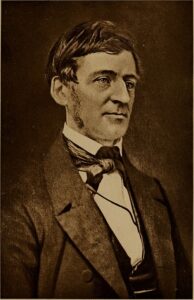
Finally, the quote reflects the deep sense of fulfillment and self-discovery that comes from charting your own course. “Do not go where the path may lead, go instead where there is no path and leave a trail” is an invitation to embark on a journey that is uniquely yours, one that leads to a deeper understanding of who you are and what you are capable of.
When we follow established paths, it’s easy to lose sight of our true desires and aspirations. We might end up living someone else’s dream, chasing goals that don’t truly align with our passions. By forging our own way, we can reconnect with what truly excites and motivates us maximally. The journey to self-discovery is often filled with uncertainty, but it is in this uncertainty that we find our true selves.
One of the great rewards of going where there exists no path is the growth that proceeds from pushing ourselves beyond what we thought was possible. Each step we realize toward something new reveals more about our strengths, weaknesses, and capacity for resilience. We begin to see the world in a different light and learn more about the depth of our own character. Ultimately, creating a new path is not just about the external achievements; it is about the inner transformation that arises when we choose to live authentically and courageously.
The power of a self-made path
The quote “Do not go where the path may lead, go instead where there is no path and leave a trail,” urges us to embrace originality, take risks, create legacies, and embark on journeys of self-discovery. It challenges us to quit the conventional and embrace the unknown, knowing that in doing so, we open the doors to personal growth, impact, and fulfillment.
Life’s most meaningful moments often come from choosing to go off the beaten track. By forging our own paths, we create new possibilities not only for ourselves but for those who follow in our footsteps. The trail we leave behind can inspire future generations, leaving a legacy that transcends time. So, as you move forward in your own life, remember Emerson’s call to action: go where no path exists and leave a trail that will light the way for others.
Very good https://is.gd/N1ikS2
Thank you for this feedback, Fernando4691.
Good https://is.gd/N1ikS2
We thank you for this feedback, Kenneth3096.
Awesome https://is.gd/N1ikS2
We appreciate it, Gabriela4038. Feel free to share what stands out to you most.
Awesome https://is.gd/N1ikS2
So happy to hear that, Cora 2008! We are always open to your thoughts.
JB, your article beautifully captures the spirit of courage and originality. It’s a powerful reminder to lead with purpose. Keep inspiring your voice truly matters!
Very good https://shorturl.fm/bODKa
We are pleased with your comment!