By Jean Baptiste Ndabananiye
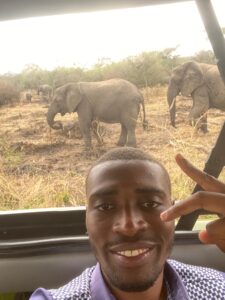
For Enock Mutambyi, the moment he finally stood face-to-face with an elephant inside Akagera National Park [ANP] felt the realization of a childhood dream. The 25-year-old agronomy student, who had passed years drawing elephants, found himself overwhelmed not only by the beast’s immense presence, but also by the deeper atmosphere of the park itself — the sweeping savannas, shimmering lakes, fresh air, and the quiet rhythm of nature moving undisturbed. What started as a personal adventure soon turned into a more profound commitment: a renewed conviction, that protecting the environment is inseparable from protecting human well-being, which has ignited his vow to safeguard the environment.
His experience mirrors a broader story unfolding inside ANP — one of recovery, resilience, and transformation. Once severely depleted by poaching and human pressure, the park has experienced one of Africa’s most striking conservation improvements through an ambitious partnership between Rwanda Development Board [RDB] and African Parks [AP]. Wildlife populations have bounced back, tourism has surged beyond pre-pandemic levels, and surrounding communities are increasingly attached to the park through education, employment, and revenue-sharing schemes.
At a time when ecosystems across Africa face mounting pressure from population growth, deforestation, climate change, and resource competition, ANP has become more than a national park. It stands as a rare example of how conservation, economic development, and community engagement can reinforce one another — and of what becomes possible when nature is treated not as a hurdle to human progress, but as part of its foundation. Well-managed national parks typically constitute an important component of economies.
Visitors describe an experience beyond tourism
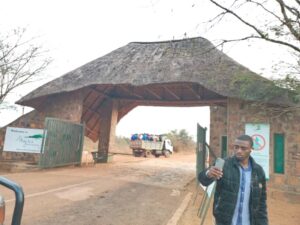
Different people who have visited ANP have recounted to Life In Humanity that they have been amazed at this natural resource. The moment you enter, the rhythm of nature prevails, offering you an experience that is both humbling and deeply enriching, as Mutambyi, has observed firsthand.
For him, ANP manifests itself as a vibrant, breathtaking and captivating ecosystem of sweeping savannas, shining lakes, and diverse wildlife moving freely in their natural habitat. A visit in this park, last year, enabled him to fulfill his childhood dream. “Visiting Akagera National Park forms an unforgettable experience, I feel I would go there at least once a month. I was particularly thrilled to see my favorite wild animal — the elephant. Even in my childhood, that was the beast I knew to draw excellently, since I am also an artist.
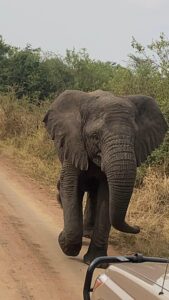
I was so fond of drawing them, capturing their form and magnificence in my artwork, that I drew it everywhere. Seeing elephants face-to-face has brimmed me with immense joy. I could closely observe their enormous sizes, the way they walked, and their graceful movements — a truly remarkable sight,” he has told Life In Humanity.
The visit in this ecosystem has ignited a vow in him. “The visit has profoundly inspired me to promote and preserve the environment. It demonstrated to me that maintaining the health of our natural surroundings — including those animals and trees — is essential for our own well-being. For instance, the fresh and invigorating air that I breathed there and gentle breezes which I felt in the park were far more revitalizing than what we typically experience outside the park in our daily surroundings, prompting me to truly appreciate the value of a healthy environment.
Thanks to this visit, I have committed myself to a personal vow that in all I do will, I will assure that it contributes to protecting the environment. As an agronomy student, I am resolved to remain in agriculture, and I will ensure that my farming practices always safeguard nature.”
Christian Ihirwe is an Information and Technology [IT] professional. Experiencing the park firsthand has allowed him to see not only the park’s thrilling attractions but also new ways in which technology can support environmental conservation. It has also produced to him an inspiration to develop ideas that could directly assist the government while combining innovation with sustainability. “I have immensely admired the Akagera National Park. I have been delighted to get there. As an IT professional and owner of Nature Tech Innovations Ltd, a company dedicated to developing solutions for environmental conservation, the visit has profoundly broadened and enriched my understanding in this field.
I am now able to conceive a promising idea that could assist the government in conserving the environment. To clarify, I harbor an idea that I am currently refining. When the right moment comes to present it, we will do so.”
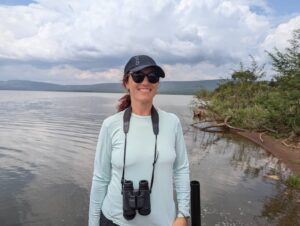
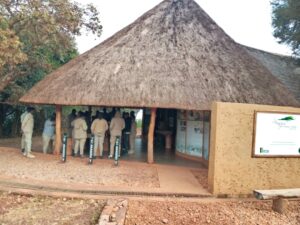
Even foreign tourists get excited, when they enter this park. “We’ve just had one hour on a boat and we saw quite a lot of crocs, we saw hypos, buffaloes, birds, and it has been amazing. They have shown the control room, it’s quite interesting to see how they manage the park and how they keep the GPS and it’s quite safe, very secure, very nice, and I will definitely recommend to other people to come”, the Brazilian, Gina Santos, has told us.
Conservation work- a quiet force behind this great experience
Not below 30% of Rwanda’s territory is covered by forests. 8.9% of the whole national territory is earmarked to conservation in parks including, among others, ANP. The majority of biodiversity is situated in national parks.
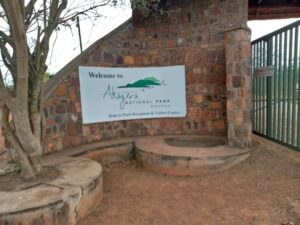
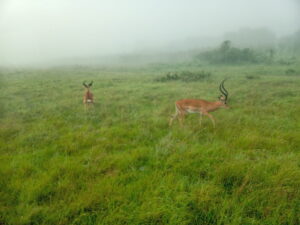
ANP was established in 1934. This park was reduced to 1120 sq km from 2500 sq km, to provide land for the resettlement of returning refugees. The park boasts over 11 000 animals. Aerial census counted 11 338 animals there in 2023. This number reflects a 50% increase from 7 892 in 2013. Those animals include approximately 140 elephants, 35 black rhinoceroses and 112 white ones, 70 lions, other different species like giraffes, buffaloes, leopards, antelopes, hippopotamuses, crocodiles, snakes, and birds of multivarious kinds.
Akagera Management Company [AMC], in charge of daily running of the park, states “Akagera National Park has achieved a remarkable turnaround. From a state of wildlife depletion and human – wildlife conflict, it has restored species (including lions and rhinos), significantly improved biodiversity monitoring, on the path to financial self – sustainability, and delivers meaningful socio -economic benefits to surrounding communities.
Since 2010, zero key species lost to poaching, through effective, intelligence – informed law enforcement. In 2013, rangers removed 1997 snares, since 2019, under 120 snares are annually removed. In 2013, 220 poachers were arrested & 91 animals poached; since 2015 arrests are under 60 people, and poached animals under 40 – most of which are outside the park.”
Generally, according to this company, the park positively affects the whole country; but more specifically, 9 sectors in 3 districts: Kayonza, Gatsibo and Nyagatare, and over 470 000 people inhabiting those sectors. “Tourism revenue sharing. 245 projects supported with more than Rwandan francs [RWF] 5.6 billion. 1.2 billion for 2024/2025,” explains AMC.
The park implements park-community programs that focus on economy as just indicated, education, and engagement. It executes the education program to create “The community that understands and advocates for conservation policies and has the capacity/skills, and motivation to influence conservation efforts.” This particular intervention area involves 2,000 students and 700 community visits per year, school eco-clubs, media engagement with radio and TV broadcasts, 35 environmental film shows a year, sporting events and a community library.
Owing to engagement activities, AMC says “All levels of governance, the private sector, and community individuals perceive they are well represented in and understand the goal of the park management planning; likewise, Akagera is a respected and consulted stakeholder in the region and nation.” This specifically includes 207 local meetings a year, quarterly village leaders’ meetings to discuss the park 5-year business plan, government engagement, as well as private sector and non-governmental organizations.
From 2010 to 2019, the park experienced steady and significant growth, with total paying visitors rising from around 15,000 to over 41,000. During this period, foreign visitors increased not only in number but also in share, reaching about half of all visitors by 2019—an indication of the park’s growing appeal as an international destination. This upward trajectory was sharply interrupted in 2020, when visitor numbers dropped dramatically to roughly 13,800, largely due to the global COVID-19 pandemic. The decline was especially pronounced among foreign tourists, but domestic visitors—both Rwandan nationals and residents—played a critical role in sustaining the park during this period, temporarily increasing their relative contribution.
From 2022 onward, the park demonstrated a strong recovery, with visitor numbers bouncing back to surpass pre-pandemic levels and reaching over 48,000 by 2024. Foreign visitors regained their prominence, while Rwandan nationals continued to represent a substantial and stable share of visitors. Overall, since 2018, international tourists have accounted for an average of about 45% of visitors, while Rwandans have contributed approximately 43% annually.
This balance reflects a strategic approach to tourism development that combines high-value international tourism with inclusive domestic access. It has also proven to be a source of resilience: when global travel declined, domestic tourism sustained operations, and when international travel resumed, it accelerated growth. In essence, the data illustrates a well-structured tourism model in which global demand and local participation complement each other, ensuring both economic viability and long-term stability.
ANP expects to achieve self-financing by 2028, with revenue projected to amount to $7.6 million, covering operating costs as the management contract with African Parks [AP] approaches its 2030 expiration.
In parks like ANP, visitor statistics normally distinguish commercial (paying) visitors and non-commercial categories. The reported figures of approximately 45% international tourists and 43% Rwandan visitors most likely reflect only paying guests recorded through ticketing or revenue systems, rather than total park entries. The remaining share consists of groups such as students, researchers, NGO partners, media visitors, staff, and complimentary or subsidized entries, which are usually tracked separately and therefore excluded from revenue reporting.
Partnership with African Parks has fulfilled a chief role
AP is a non-profit conservation organization which bears direct responsibility for the rehabilitation and long-term management of protected areas in partnership with governments and local communities. AP has trailblazed the Public-Private Partnership (PPP) model for protected area management. To carry out this model, AP signs long-term management partnerships with governments and local communities, for one or more protected areas. It renders this organization responsible for the implementation of all management functions related to that area.
In its 31 January story entitled “African Parks: 25 years of ground-breaking conservation”, AP says “Today, with funding from philanthropic individuals, institutions and governments, African Parks manages 23 reserves in 13 countries covering over 20 million hectares of wild habitat, the largest and most ecologically diverse portfolio of any conservation organisation in Africa.”
In this context, AP partnered with Rwanda Development Board [RDB]. This partnership has played a major role for ANP to accomplish this protection work. AMC says “Public Private Partnership agreement [was] signed in 2010. RDB delegates responsibility to manage park to AMC. 20-year agreement with option to renew. 49% shareholding by RDB, 51% shareholding by AP. AP sources majority of funding to close the funding gap every year.”
AP, with its undated piece titled “The Challenge: Safeguarding Africa’s Biodiversity” stresses “With over 20 million hectares of protected area under its management, African Parks has shown that if holistically managed, nature creates a foundation for thriving ecosystems, stability and wellbeing for both people and wildlife.
Together with biodiversity conservation, sustainable economic development, community engagement and education, African Parks’ mission is to ensure that each park it manages is ecologically, socially and financially sustainable for the long-term.”
A success — beyond Akagera, a continent under pressure
This story of recovery, balance, and renewal does not exist in isolation. Across much of Africa, the relationship between people, land, and wildlife stands under mounting strain. Rapid population growth, rising demand for natural resources, and expanding agricultural and industrial activities are steadily eroding the very ecosystems that sustain both biodiversity and human livelihoods. Forests are disappearing at alarming rates, wildlife habitats are shrinking, and human-wildlife conflict is intensifying as communities and animals compete for the same land and resources.
“Africa needs its forests for sustainable development, poverty reduction, food security, and to make the continent more resilient to climate change. They take up 23% of the continent. At 674 million hectares in extent, these forests occupy an area the same size as the Amazon rainforest.
But Africa has the highest rate of forest loss in the world. About 3.9 million hectares of African forest – the size of about 381 million soccer fields – was destroyed every year between 2010 and 2020,” alerts the Conversation, in its 3 June 2025 story titled “Africa has the highest rate of forest loss in the world – what the G20 can do about it”.

In several regions, conservation is not failing because it lacks intention—but because it is forced to compete with immediate human survival. From illegal wildlife trade to deforestation driven by energy needs, the pressures are systemic, complex, and deeply rooted in economic realities. The result is a continent where biodiversity, despite its global significance, is increasingly facing threat.
It is within this broader context that ANP must be understood—not simply as a protected area, but as a rare example of what becomes possible when conservation, community engagement, and economic strategy are deliberately aligned.
AP points out “To harbour resilience against climate change impacts, we first have to look after the very system that sustains life on Earth: nature. People need nature for survival. To reduce the impacts of climate change such as drought, flooding and famine, while maintaining healthy ecosystem services to provide food security, and clean water and air, experts say that 30% of the planet must be protected.
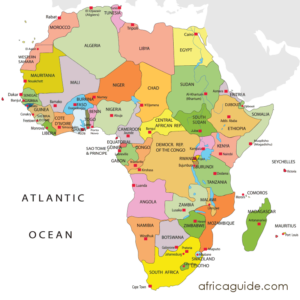
Africa harbours 25% of the world’s biodiversity, but it’s also estimated that the continent’s population will increase three times by 2100. Coupled with the impacts of climate change, weak governance, and lack of funding most of Africa’s existing protected areas and national parks that harbour rich biodiversity are severely under-resourced. We urgently need to act to protect nature to ensure resilience against climate change effects, stem socio-political instability and ensure the survival of all life on Earth.”
Oppenheimer Generations Research and Conservation (OGRC) is an institution catalyzing targeted research and harnessing dialogue between research and practice to produce an impact in African landscapes. This organization says that its work supports human wellbeing, protects important landscapes and develops better human-nature relationships for the benefit of the African continent.
In its 16 May 2025 piece headlined “Africa at a conservation crossroads: A funding crisis — and a moment of possibility”, OGRC also stresses the urgency on the continent. It reports “There has never been a more urgent — or opportune — time to rethink the future of conservation in Africa. As global attention shifts elsewhere and traditional donor streams dry up, conservation in Africa stands at a turning point.
Yes, there is a funding crisis. But there is also growing motivation to tell a different story: one of African-led solutions, resilient ecosystems, and recognition of our biodiversity not just for its beauty, but for its central role in sustaining livelihoods, economies, and life itself.”
National parks, properly governed, are vital
World Population Review is a data-centric platform supplying accessible, up-to-date statistics on global demographics, economies, health indicators, and social trends. In its dateless piece entitled “National Parks by Country 2026”, it reports “National parks are important around the world because they help preserve the natural world. This is especially important as humans develop more and more land for housing, infrastructure, or resource collection. National parks ensure that no matter how much development takes place, people can still explore the natural environment.”
National Park Trust constitutes an American nonprofit organization devoted to protecting park land and connecting people to the outdoors. In its undated story headlined “Why Are National Parks Important? A Guide to Understanding America’s Greatest Conservation Legacy”, it states “At their core, national parks are conservation tools. They safeguard habitats for plants and animals that exist nowhere else on Earth. They protect watersheds that supply water to millions of people. They preserve old-growth forests that have stood for centuries (and sometimes, even millennia).
Take the Great Smoky Mountains, the most visited national park in the United States. Its protected forests are home to over 30 species of salamanders found nowhere else in the world. The park’s biodiversity is exceptional—from the smallest insects to the largest mammals—and that natural resource represents irreplaceable wealth. The park’s streams flow into rivers that supply water to millions of people across the Southeast. Without that protection, those ecosystems (and the natural resources they provide) would likely be lost to logging, development, or agriculture.”
This organization emphasizes “But ecosystem protection isn’t just about saving charismatic species. It’s about maintaining the fundamental systems that support all life: carbon storage in forests, water filtration in wetlands, pollination by insects, nutrient cycling in soil. When we protect parks, we’re protecting the machinery of a healthy planet.”
Campaign for National Parks is an organization which says it’s the only independent charity dedicated to securing the future of National Parks in England and Wales. Through its 18 February 2025 story titled “Delivering growth and so much more”, it says “Research published last year suggested that damage to the UK’s natural environment could lead to an estimated 12% reduction in GDP [Gross Domestic Product] over the coming years, a financial hit larger than the impact of Covid-19. Investment in National Parks should therefore be viewed as insurance against the crippling future costs of the biodiversity and climate crisis.
Healthy peatlands, woodlands, and wetlands act as natural carbon sinks, helping the UK reach its net zero targets and mitigate the increasing costs of climate change. These landscapes also provide valuable flood management, protecting homes and businesses in cities like Manchester and Sheffield from extreme weather events and the damage they accrue, which are becoming more frequent due to climate change.”
Akagera National Park’s website highlights “Akagera National Park is dominated by swamps and small lakes with flow in the wake of River Kagera. The network of water sources and unique landscape together create very spectacular scenery. The Park was obviously named after River Kagera that feeds different water bodies including Lake Ihema.”
Akagera National Park illustrates this wider global importance of national parks in a particularly striking way. Beyond safeguarding wildlife, the park conserves a vast wetland ecosystem whose lakes, swamps, and river networks maintain biodiversity, regulate environmental systems, and protect natural resources. Its conservation significance is further underscored by the fact that, according to AP, Akagera constitutes Central Africa’s largest protected wetland.
Akagera’s recovery ultimately carries a lesson far beyond Rwanda’s borders. At this moment numerous ecosystems across Africa — and even the world — are collapsing under the combined pressures of climate change, deforestation, population growth, and resource exploitation. At the same moment, the park is demonstrating that environmental protection and human development do not have to stand in opposition.
With political commitment, long-term management, community participation, and sustainable investment, conservation can evolve from a defensive struggle into a driver of economic resilience, social stability, and national renewal. In this sense, Akagera no longer merely represents a Rwandan conservation story. It forms part of a growing global argument that protecting nature may become one of the defining conditions for humanity’s future prosperity and survival.