By Jean Baptiste Ndabananiye
Professor Jiang Xueqin, in 2024, issued three predictions two of which materialized as exactly as he’d forecasted. He predicted that Trump would emerge victorious in the presidential election held that year, that he would launch a war against Iran, and that America would eventually be defeated. The first two forecasts were correctly fulfilled.
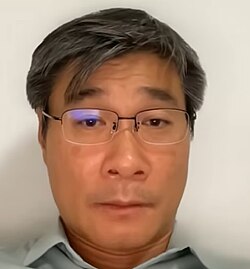
Professor Xueqin pursued university studies at Yale University where he garnered a degree with distinction. He performed research at Harvard’s Graduate School of Education. He passed two decades, teaching, and administering in schools inside China. In a 21 July 2026 piece headlined “Transcript of Jiang Xueqin Interview: Gleb Solomin Podcast”, published by The Singju Post, he told Gleb Solomin “I am first and foremost an educator.
So, my mission is to enlighten and inspire as many people as I can, hopefully through our podcast [YouTube channel, Predictive History]. And this is something that I would want to do for the next 50 years.”
He also served as a freelance reporter, producing stories for media houses like the Christian Science Monitor and the Far Eastern Economic Review.
Today, this man— named China’s Nostradamus because of the predictions which came true— has turned famous and actually achieved success which you can’t hesitate to describe as impossible, considering his background. As we have always demonstrated it in our various articles in this beat of Hardships, your current suffering hasn’t arisen to destroy you — but instead to steel you to ultimately become an incredible success. Professor Xueqin offers another compelling proof of our position. As we have learned it from this transcription on The Singju Post, Professor Xueqin has gone through very challenging circumstances.
His life constitutes a remarkable testament to the truth that the circumstances that threaten to break us can, in the end, become the very experiences that prepare us for extraordinary accomplishments. His journey is filled with timeless lessons about resilience, purpose, self-discovery, and the unexpected ways through which life’s greatest difficulties can lead to remarkable success.
A childhood of hardship and the dream which kept him continuing
“I was born in 1976 in a small fishing village in South China, and at that time China was very poor because this is at the tail end of the Cultural Revolution and China has been closed from the world for the past 10 years. My father was a high school teacher at that time, and he was very concerned about China’s future. So for the sake of me, his son, and his future children, he decided to immigrate to Toronto, Canada, where we had relatives. And for the rest of his life, he would be a dishwasher.
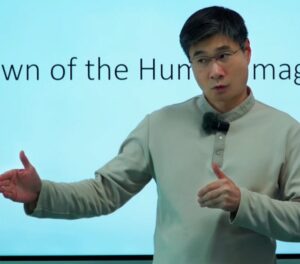
And so because we were poor, my father cut my hair, and all the clothes I wore were gifts from relatives. So they were hand-me-downs. They were secondhand clothes. So my classmates didn’t want to play with me. I was never allowed to play in the games that they played on playgrounds during the recess. When the teacher asked us to partner with a friend for school trips, no one wanted to be my partner,” he said.
He continued “At the end of grade 1, my teacher asked to talk to my mother. My mother didn’t speak English. She says to my mother through the translator, ‘Your son is wonderful. He’s very polite. He’s very obedient, but he does not speak a word of English. This entire year he is in my classroom and he does not understand anything I say. Every day he’s staring outside the window. He’s learned nothing this past year.’
And so my mother hears this, she asked the teacher, ‘Do you mean that you want my son to repeat grade 1?’ And my teacher said, ‘No, that’s not what I meant. What I meant is he should go to kindergarten.’ And my mother then does something that changes the course of my life. She turned around, looked down at me, and she asked me, ‘What do you want to do?’ I said, ‘I want to go to grade 2. I don’t want to go to kindergarten and I don’t want to repeat grade 1. I want to go to grade 2.’”
This decision actually constituted an extremely uncomfortable choice. Professor Xueqin told Solomin “Now that was the worst decision of my life because the teacher was absolutely right. I go into grade 2 and I fall further behind. I become very insecure. I stutter. I’m afraid to speak in public. And by the time I hit grade 8, my life is just terrible. And my father is being bullied at work as well. I’m a very disobedient kid. Hits me a lot. He’s very violent towards me. And at this point, I think to myself, there’s no safe space for me. I think about how I should just disappear, and no one will miss me, and I’ll be free of this hell that I’m living in. But I don’t do it.
And the reason why is there’s a part of me, maybe there’s just light inside of me that dreams of a better world. And I’m thinking to myself how I’m shy, I’m insecure, I stutter, but I see myself one day on stage talking to an audience. With my words, I’m able to move people. I’m able to inspire people. A vision in my head that one day I could make a difference in the world. I don’t know where it comes from. I don’t know why I believe it, but I believed it. So I continued. I struggled. I persisted.”
That decision, however, eventually paid off. His determination to advance to Grade 2 initially plunged him into even greater academic and social difficulties. However, it also marked the beginning of a journey in which he would gradually discover his potential, overcome his limitations, and move closer to the extraordinary future he had envisioned for himself. The boy who had once been rejected by his classmates, struggled with his studies, and dreaded speaking in public would eventually climb. He rose above those painful experiences, to accomplish things that his childhood circumstances could hardly have predicted.
His struggle life after secondary education

“From rejection to Yale: a story of resilience. In grade ten, a substitute teacher comes into the English classroom. I feel here’s my chance to convince someone I can be someone one day. And that one week I’m with her, I’m a very different person. I’m focused. I raise my hand.
I participate. I feel safe with this teacher. And this teacher told me, ‘I see something special in you.’ And then that was it. She went away. I never saw her again. I don’t remember her name. I don’t remember what she looks like. All I remember are her words. ‘You are someone special.’ I felt validated,” he shared, before adding “From that point onwards, I decide to make myself special. One day I’m sitting in the classroom and the guidance counselor walks inside the classroom.
I didn’t even know we had a guidance counselor. She talks about how maybe some of you, for whatever reason, you might want to go to the United States for college, but don’t do that because the schools in the United States suck except for the Ivy League. But the Ivy League is for rich people. And then I hear this, I’m, Ivy League, what is that? So I become interested. So I go to the library and I study up on the Ivy League.”
The following is the definition of the Ivy League that he found, after his investigation. “The Ivy League is where the world’s leaders go. These are people with charisma. These are people who are athletic. These are people who have demonstrated tremendous character, tremendous communication skills, tremendous leadership skills.”
He attempted to get admitted to a Canadian learning institution which he thought would enable him to enter the Ivy League. Nevertheless, he remained unlucky to get it but he was never demoralized. “So from that point onwards, I commit myself to becoming Ivy League material. So I switched schools from my average to the most elite academic public school in Toronto. And they did not welcome me because I was an outsider, but I didn’t care because I had a purpose.

And my purpose was to get into the Ivy League. Then every day on the subway, it took me 30 minutes to get to my school from my home. I read The New Yorker. I read The Atlantic because I needed to prepare for the vocabulary test that was the SAT. And everyone in the school knew that I was utilitarian, I was ambitious. Then I applied to 4 universities, MIT, Yale, Harvard, Princeton.”
He received the following responses. “So the first school to reject me was MIT. It was a very small envelope. And it was a one-page letter that said, ‘We like you, you’re a strong applicant, but there are too many applicants, we have to turn you away.’ The next rejection letter was Harvard. And Harvard wrote the best rejection letter ever, right? Because what the letter said is this ‘Ultimately, it doesn’t matter where you go, what matters is what you do when you get there.’ I read the letter and I thought to myself, that is very, very true. Thank you, Harvard.
So Harvard also rejected me, but it was a very nice rejection letter, so I forgive Harvard. And then Princeton rejected me. By mid-April, I’ve not heard from Yale. And I just assumed that Yale would also turn me down. I didn’t feel I had any chance. At the end of April, I go home, and in my mailbox, there’s this letter from Yale. And I didn’t want to read another rejection letter. So I threw it in the garbage and I went up to my room to read. But then I was like, you know what? I really should open that rejection letter. I open it and the first word is ‘Congratulations.’”
This email from Yale University really enthused him colossally, yet the enthusiasm was short-lived. “So now I go to Yale. And I’m thinking to myself that my life is forever changed. This is Yale. Here, I’m going to meet people who will become my best friends, and we will do great things together. And here, every day, I’m going to engage in intellectual discussions with people who are very serious. It’s a place for you to learn the etiquette, the attitude, the manners of the elite, how to think like them and how to talk like them. And for the 4 years I was there, I basically became very isolated, very alienated. I felt even more depressed.
At the end of the first year, our freshman year, you’re supposed to find friends to room with, but no one wanted to room with me, so they put me in the attic of the residential college, Jonathan Edwards, where I was assigned. And it was actually called Weir Hall, W-E-I-R. And there’s like 6 rooms, they’re closets, they’re for people who no one likes. And I was one of the 6 that no one actually liked. So, Yale was a very traumatic experience for me. Rather than liberate me, rather than empower me, it basically traumatized me into my own depression.”
Yale University forms a private Ivy League research university in New Haven, Connecticut, United States. Founded in 1701, Yale stands as the fourth oldest institution of higher education in the nation. It constitutes one of nine colonial colleges chartered before the American Revolution. The Ivy League constitutes an American collegiate athletic conference comprising eight private research universities in the Northeastern United States, even if the term is most commonly employed to mean the group’s elite academic reputation, historical prestige, and selective admissions. This university figures among the most prestigious universities in the world.
“From struggling student to Yale Honors Graduate”
“I went to Yale expecting to study math and physics because, look at me, I’m Chinese, right? It didn’t mean I love math and physics. It’s just like, I’m Chinese, so I should go study math and physics. So I go into Yale planning to study math and physics. But Yale also requires you to study humanities to graduate. So I took English. We’re studying Chaucer and Spenser and Milton.
My first semester at Yale, I was completely lost because I came from a public school, whereas most of my classmates came from pretty elite private schools. So there are certain things that they did which I didn’t know you’re supposed to do. For example, if the teacher assigned you a book to read, you’re supposed to go read that book. And I didn’t know that. I didn’t know you’re supposed to actually read the book before you come to class. I thought that the teacher would tell us what the book was about in class. So during a seminar discussion, I didn’t say anything. I was completely lost.”
He added “And things got so bad that my professor, my English professor, suggested that I don’t take this class anymore. She wanted me to go do something else because she thought I was wasting her time as well as my time because I was not following what was happening in the class.
But by the time in English class that we got to Milton and Shakespeare and the Romantics, Keats and Wordsworth, something snapped in me. Something caught my attention, and I felt a connection to the poetry I was reading, especially Paradise Lost. And I felt that a spark had been ignited in me, and I became really interested in English. My first semester in English, I only got a C-, which is the worst grade you could possibly get. And then I got an A- my second semester, and I improved tremendously as a writer.”

While you are working like a person sleeping, you can never arouse all your potential. It demanded that Professor Xueqin be awakened for him to discover what he was created for. “And so I felt as though maybe before I was asleep, and now being at Yale in this seminar, reading Milton woke me up and said, ‘Hey, this is who you really are. You’re meant for something bigger than all. Start paying attention, start getting to work, start taking yourself seriously.’
And so I became a very good student. And that actually made me even more alienated at Yale because Yale was a competition. And a lot of the competition was to get approval from the professors. And I got a lot of approval from my professors. In fact, I’m still friends with some of my professors. When I go to Yale, I stay at their house. So they like me a lot. And we stayed in touch these past 30 years and we’re still good friends.”
Professor Xueqin’s path baffled Solomin so greatly that he said “That’s almost impossible to believe. You started with a teacher telling you that you should go back to kindergarten and you became one of the top students at Yale. That’s an incredible story.”
His response is stunning too. “I’m trying to make sense of what happened. And there’s a theory. If you want to learn, then what’s going to happen is you’re going to be assigned the hardest life possible because that’s the only way you can truly learn. So learning isn’t about reading books. That’s part of the process. But the real process is to put you in circumstances that really challenge you and force you to persevere, either thrive or die.
And I think that’s what happened. I think that I came into this world demanding the most challenging life possible. I always chose the hard path in life because in my heart, I knew that’s what will allow me to truly thrive as a person. So that’s a theory. But recently I’ve come to this conclusion.”
“This fame is only recent”. Fame and success rarely come, according to your plan
“This fame is only recent, right? It’s only been the past 1 year. So let me talk about what happened after Yale,” according to Professor Xueqin. “So I came to China as a high school teacher wanting to reform Chinese education, and my theory was very simple. China has 1.3 billion people, they don’t speak English. I speak English, therefore, everyone should just obey me and they will learn English. That was my theory, right. So here in China, they speak Chinglish, Chinese English, and for them, that’s English. So if you try to teach them like real English, they don’t care. So I learned that the hard way.
So I floundered through school and I decided I can’t become famous being an educator. So I decided that I’ll try to become a journalist, and I was a journalist for a couple years, but that didn’t work out either. Then I tried becoming a documentary filmmaker. That didn’t work out either. I tried working for the United Nations in Afghanistan. Didn’t work out. And by my late 20s, early 30s, I was a broken man because I had failed everything I tried, and I felt that the world was hopeless.”
He was then answering Solomin’s question which asked “Today you are a guest on shows like Tucker Carlson, and many people talk about your predictions because they are often very accurate. I want to ask you, did your education and life experience help you see things this way? How do you make these predictions?”
“From 5,000 to 2.6 million Subscribers”
He said “These past 4 years, I’ve been teaching politics, and the great books, Plato, Homer, Dante. And I decide to upload my classes to YouTube because I want to generate an international audience. And my wife and I, at first, we’re very optimistic. We were like, we think that we can hit 5,000 subscribers. That’s our goal, 5,000 subscribers. And maybe it’ll take some time, maybe it’ll take 4 years, but with 5,000 subscribers, I’ll be able to help better promote education reform in the world.
Today, my YouTube channel has 2.6 million subscribers. So that sort of surprised us. Our goal was 5,000, we hit 2.6 million, but that’s how I came to, today, can we talk about success?”
The following statement by Professor Xueqin contains a proof that celebrity and immense accomplishment are seldom arranged. He himself advises not to conduct such an arrangement.
He says “10 years ago, I was broke. I had no money. I didn’t have a job. I didn’t have any money in my bank account. I didn’t have a place to stay. And at that time in my history, I’d basically given up on life. But there was a part of me that wanted love. I aspire to love. And magically, out of nowhere, an angel came into my life who is now my wife. I told her, ‘If you want to be with me, it is possible that we’ll be poor forever. It’s possible that we’ll just have to struggle through life. We’ll be in pain throughout our life.’ And she said, “I don’t care because I love you.’ We had a child together. Now we have 3 children together.
And so don’t think with your brain. Don’t plan. Don’t say, ‘I need to do this job. I need to make this much money. I need to be in this place.’ Dream with your heart. Look for love, and the universe will provide for you. Because when I met my wife and we married and we had our children, we didn’t have a plan. I had no idea at that time that I would have a YouTube channel and it would have over 2 million subscribers. I didn’t know this. If your heart is in the right place, if you have the true will and desire, then the universe or God, whatever entity you believe in, will answer you and provide for you. Have faith in yourself and seek love, meaning, and purpose in your life.”
Those are words which accompanied a question by Solomin, asking him about advice he would provide for his viewers and how they can stay safe and succeed in life in today’s world.
“I’ll give you 2 pieces of advice. The first piece of advice is reclaim your attention. The second advice is always trust your gut, always trust your intuition,” he responded.
“The most valuable commodity in the world is attention. The greatest act of rebellion that you can make is to say, “I want to reclaim my attention,” meaning I turn off the computer. Meaning I take long walks by myself and just think about who I am and what I want. Read books, talk to friends, keep focused, be present. When you do that, you could forever transform the world. Transform yourself, you transform the world.
My second piece of advice is always trust your intuition. We all came here for a purpose. We can only know our purpose by listening to our instincts, which tells us if you’re happy or you’re not happy. We’re all here to learn. We’re all here to love. We’re all here to grow. You have to ignore the noise. You have to let go of your fear. You have to trust your instinct and do whatever you think is right. And know that whoever tells you not to do that, whether it’s your parent or your teacher or your friend, they don’t have your best interests at heart.”
What paved the way for his change to the current status?
“I basically, for 2 years, lived with my parents. I lived in their basement, and I played video games every single day until my parents got sick of me and threw me out. So they throw me out and I’m forced to come to China because China is cheap and I speak the language.
And every day I would get up at 12 o’clock, 2 o’clock in the afternoon, and then in the evening I would go and I would get drunk. In the middle of winter, I sleepwalk naked into a blizzard. And I open the door, and there’s this whiteness and the wind is whipping at me and I’m thrown back. And that’s a sign from God, which is like, you better start getting your act together,” he said.
Reprogramming the mind
He was forced to reprogram his mind, by identifying and implementing lessons from failures. “And so I commit to change my life. I needed to reflect on how I got to this point, because I was a very good student at Yale and 10 years later I’m a dismal failure. And I reflect and I recognize that my Yale education was very, very limiting. And there are 3 reasons why. First of all, when you go to a place like Yale, what you’re taught is that only IQ matters. If you’re able to articulate an idea, then you are smart. But all the forms of talent, whether it’s musical or physical, doesn’t really matter. All that matters is IQ.
Second thing is that failure is not an option. You must succeed at all costs. If you don’t succeed at Yale, sorry, if you graduate from Yale and you don’t succeed, you might as well— so there’s a lot of pressure to succeed, to prove you’re worthy of a Yale education. And the third thing is you don’t need to work with anyone. Just based on your talent, you’ll be able to succeed on your own terms. And all 3 of these things were not true. And so I committed myself to changing my programming. What I wanted to do was step outside of my body and then look inside my mind and then reprogram it in a way that allows me to be more free, to be more in control of my life.”
With this, he reached this core lesson. “And at this point in my life, and this is like my early 30s, I become interested in a theory called neuroplasticity. Which is to say that we can always rewire the synapses in our brain to be whoever we wanted, as long as you commit yourself to the right activities.”
“A year of doing the uncomfortable”
He explained “So for 1 year, I decide to do things I’ve never done before in my life, including stand-up comedy. Because the one thing that in my life I was most afraid of was being laughed at. And again, for the longest time, I took myself very, very seriously. But the moment that I got on stage and I told jokes and people laughed at me, I felt they were laughing with me. The feeling of being able to bring joy to the world made me feel extremely happy and edified.
I also tried a lot of sports, for example, Brazilian jiu-jitsu. So I’m not sure if you practice Brazilian jiu-jitsu, but the way they train is very, very strange because I did Muay Thai and in Muay Thai they teach you technique, right? And they make you practice. But Brazilian jiu-jitsu, you go to the place. And for the entire time, they beat you up. There’s this bigger guy and all he does is beat the crap out of you. And at the end of it, your neck is sore. You want to cry.”
He added “I’m going home from the training and I think to myself, this is really stupid. I’m getting beat up in my 30s. And when I was a teenager in Toronto, I was also getting beaten up. The difference is though, now I’m paying for the privilege of getting beat up in my 30s. But what happened is that through this training, you start to lose a lot of your fear. I also tried skydiving. Don’t do that, by the way. Complete waste of money. But I did skydiving. I did parkour. I learned how to sing. I learned the piano. I did everything possible. And I also tried cooking.”
“The humiliation of cooking school”
He said “When you go to cooking school, you’re supposed to make 2 dishes and you’re supposed to present your dish in front of the chef who will then give you a grade. And so we make our dishes and all my classmates, they line up and they’re very proud of their accomplishment. And the chef tastes the meal and smiles and says, great job. And then the students feel great.
It’s my turn to present the dish. The chef looks at me and says, ‘I’m not touching this.’ And I’m like, wait a minute here. Wait, wait, wait. This is strange. Are you failing me? Am I going to fail cooking school? At Yale, the professors don’t do that. The professors tell you how great you are. They say, you’re great, you’re going to go conquer the world. And here in cooking school, they tell you the truth. And I thought that was illegal. You’re not supposed to do that as a teacher. And cooking school was a humiliation ritual for me.”
Despite that, Professor Xueqin observed a classmate, at this school, whose behavior transformed him. “But then I started to observe my classmates. And there’s this one girl in my class, and she’s 18 years old. She would get up at 4 o’clock in the morning to do 2 hours of CrossFit. Then she’d bike to her work and for like 8 hours she would cut vegetables. Just cut vegetables. And then she’d come to cooking school and then she’d go home and do it again. And I thought to myself, wow, she is so much more impressive than I am. Because here’s a person who is dedicated, who’s passionate, who’s committed to her ambition.
And why do I think I’m better than her just because I went to Yale? And so I recognized that Yale is about making people arrogant. It’s not about making them educated. If you really want education, the best place to learn it is in life. So open your heart, open your eyes, and learn from others. And that one year really changed the way I perceived myself and the way I perceived education. And I became much more determined to have an open mind and to look at the world much more objectively.”
“What makes people successful?”
Solomin asked him “I know you’ve done some research on this topic. Can you share your conclusions with us? What makes people successful in our world?” His answer highlighted self-control, resilience, and self-reflection as the keys to success.
“If you look at all the studies of people who are successful, there are certain trade habits that they have. They have certain habits that enable them to succeed. The first major habit is self-control or delayed gratification. So the idea is you’re willing to put away immediate pleasure for long-term gain. So the famous example of this is something called the marshmallow experiment by Walter Mischel.
And Walter Mischel at that time was working at UCLA, this is 1960s, and he asked children who are 5 and 6 to come to his laboratory to talk, to just have a friendly conversation. And then Walter Mischel would say to them, ‘I’m sorry, but I need to go to a meeting for 5 minutes. Could you please wait for me? I’m really sorry. So here, as an apology, I’m going to give you 1 marshmallow. But if you can wait for me to come back, and you still have not eaten that marshmallow, I will give you 2 marshmallows.”
He continued “So then he goes away and he comes back and he sees some kids have already eaten that first marshmallow and some kids who have not. And then what he did was he tracked them for 50 years. And what he found was that those who passed the marshmallow test were more likely to do better in school. They did better on test scores. They were more likely to graduate from university.
They were more likely to succeed in their work. They were more likely to get married and have happy marriages. And the group that didn’t pass the test was the complete opposite. And that’s the idea of self-control. So the first principle is self-control.”
On resilience, he clarified “Second principle is something called resilience. So there’s another Stanford psychologist named Carol Dweck, and she did research into who succeeds. And she came to the conclusion that those who succeed have growth mindset, and those who fail have fixed mindset.
Growth mindset is whenever you encounter failure or difficulty, you see it as an opportunity to grow. So you welcome failure. Those who have a fixed mindset see failure as the worst possible defeat. So they run away from failure. And so if you keep on accepting new challenges, you keep on growing, and therefore you keep on succeeding. So that’s the idea of resilience.”
Elucidating the third principle which is the idea of self-reflection, he said “This was introduced to us by a researcher named K. Anders Ericsson. He spent decades looking at which students succeeded. So he was basically looking at violinists. So he did a lot of research in Berlin, and he went to music school there. And kids at age 5 get into this music school. And so he looked at these different groups, and what he recognized is those who most succeeded practice something called deliberate practice.
You can practice for as long as you want. What the most important thing is to be objective in assessing your weaknesses. So, these are the 3 basic ideas: self-control, resilience, and self-reflection. But if you go deeper, what you recognize is that a lot of this has to do with family. If you come from a good family that’s wealthy and well-educated, you’re much more likely to have self-control, you’re much more likely to be resilient, and you’re much more likely to engage in self-reflection.”
He underscored “So what’s the difference? The difference is that if you come from a good family, you are much more likely to receive unconditional love. How deeply were you loved as a child by your parents? How much love did you receive? Because if you receive a lot of love, you’re much more likely to love yourself and to love others. And therefore, you’re much more likely to engage in self-control, self-reflection, and resilience. But if you didn’t receive any love as a child, you hate yourself and you fear yourself. And so you’re less likely to succeed.”
Your hardships are preparing you for an extraordinary future
Professor Xueqin’s remarkable journey teaches us that circumstances in which we begin life do not necessarily determine where we will eventually find ourselves. The little boy grew up wearing secondhand clothes, endured rejection from classmates, battled to understand his teachers, and contemplated disappearing because of the painful circumstances surrounding his childhood. Yet, he eventually became a Yale graduate, a great educator, and an internationally recognized personality with millions of followers.
His path was anything but straightforward. Even after graduating from Yale University, he experienced professional disappointments, failed attempts at journalism and filmmaking, financial difficulties, and a period in which he had practically abandoned himself. Yet, these experiences did not constitute the final chapter of his life.
One particularly important lesson from his experience is that success is not always a product of following a carefully calculated plan. Professor Xueqin initially wanted to reform education, tried journalism and documentary filmmaking, and even pursued opportunities with the United Nations. None of these attempts produced the breakthrough he wished. Ultimately, teaching the great books and sharing his lessons on his YouTube channel unlocked a door that he had never expected. What started as an ambition to attract 5,000 subscribers developed unexpectedly into an audience of approximately 2.6 million. His experience reminds us that an opportunity that eventually changes our lives may come from a direction we never imagined.
His story also challenges us to reconsider how we interpret failures. Rather than permitting his disappointments to permanently define him, he assessed his weaknesses, confronted his fears, and deliberately engaged in activities which rendered him uncomfortable. Through stand-up comedy, Brazilian jiu-jitsu, cooking school, music, and other unfamiliar experiences, he learned to dare embarrassment, be more receptive to criticism, and more willing to learn from people whose experiences differed from his own. His transformation illustrates the importance of self-reflection, resilience, continuous learning, and the willingness to relinquish attitudes precluding personal growth.
Perhaps most importantly, his experience reminds us that we should not allow our present circumstances to extinguish our belief in a better future. You may be sustaining rejection, financial difficulties, academic disappointments, unemployment, family problems, or repeated failures. You may even have reached a point where you question your abilities and wonder whether your dreams are still achievable. Nevertheless, do not automatically interpret your present hurdles as evidence that your life cannot get better. Your circumstances can improve, your abilities can develop, and opportunities can emerge from places you never anticipated.
This does not signify that every adversity automatically produces success or that suffering should be glorified. Rather, it means that difficulties do not have to be the end of your story. What matters is how you respond to them, what you learn from them, and whether you remain willing to grow. As Professor Xueqin’s experience suggests, success necessitates self-control, resilience, honest self-assessment, meaningful relationships, and the courage to keep discovering what you are capable of becoming.
Therefore, never permit the painful chapter you are currently enduring g to convince you that your entire story will end in disappointment. Do not despise your humble beginnings, surrender because of rejection, or conclude that repeated failures have permanently disqualified you from achieving something meaningful. Reclaim your attention, listen to your convictions, remain open to learning, and continue working towards a life of meaning and purpose.
You may not be able to determine everything that occurs to you, but you can continually work on the person you become through your experiences. Your present hardship does not have to constitute your permanent identity, and your current circumstances do not have to stand as the boundaries of your future. Keep learning, keep growing, and keep going. Your greatest accomplishments still lie ahead.