By Jean Baptiste Ndabananiye
Life operates on an undeniable principle: what you put in is what you get out. Every choice, every action, and every effort sown today shapes the reality of tomorrow. Whether you aspire to excel in your career, develop meaningful relationships, or cultivate personal growth, the seeds you plant—be it dedication, resilience, or integrity—will determine the fruits you harvest.
While shortcuts and instant gratification may offer temporary rewards, true success demands patience, persistence, and purpose. In a world that often tempts us with quick wins, the secret to lasting impact lies in the effort and value we invest over time. Choose wisely, because in the grand equation of life, the harvest always reflects the seeds you sow. The article is composed of these key components:
- The universal law of sowing and reaping
- Patience, purpose, and the harvest of true success
- The science behind sowing and reaping
- Conclusion
The universal law of sowing and reaping
The principle “You reap what you sow” is an age-old truth that applies universally across all aspects of life. Whether in career growth, personal development, relationships, or leadership, effort, dedication, and integrity that we invest today shape the opportunities and successes we experience tomorrow. Just as a farmer cannot expect a bountiful harvest without planting seeds and nurturing them, individuals cannot expect meaningful results without putting in the necessary work.
Career growth and professional success
In the professional world, success often materializes as a direct reflection of time, effort, and commitment invested. Those who consistently work hard, seek learning opportunities, and adapt to changes are more likely to advance in their careers. For instance, an employee who takes on challenging projects, regularly upskills, and builds strong professional relationships will likely be recognized and rewarded. On the other hand, individuals who cut corners, neglect responsibilities, or lack perseverance may find their career progression stagnating.
Consider the example of an entrepreneur launching a startup. If they invest time in market research, develop a strong business strategy, and focus on delivering value to customers, they set themselves up for long-term success. Conversely, if they rely on quick wins without a solid foundation, their venture may not withstand challenges.
Personal development and character building
Personal growth follows the same principle. Developing new skills, cultivating discipline, and fostering resilience require consistent effort. A person who dedicates time to learning, improving emotional intelligence, and maintaining a positive mindset will experience personal fulfillment and progress. On the contrary, avoiding growth opportunities leads to stagnation and missed potential.
Integrity also plays a significant role in shaping one’s future. People who practice honesty, kindness, and ethical behavior build trust and credibility. Their reputation opens doors to opportunities and lasting relationships, whereas those who engage in deceitful or unethical behavior eventually face negative consequences.
Typical examples of those who have applied integrity and honesty in their lives
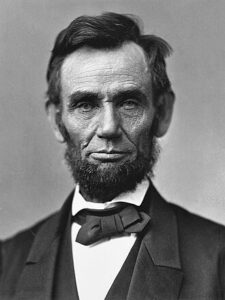
The late Abraham Lincoln-the 16th president of the United States who served from 1861 until his assassination in 1865. He led the United States through the American Civil War, defeating the Confederacy. He fulfilled a major role in the abolition of slavery, expanding the power of the federal government, and modernizing the U.S. economy. Lincoln was born into poverty in a log cabin.

A log cabin is a small log house, especially a minimally finished or less architecturally sophisticated structure. Log cabins carry an ancient history in Europe, and in America are often associated with first-generation home building by settlers.
The late Lincoln is famously known to be honest and possessor of integrity to the extent that he has been nicknamed “Honest Abe.” Great Hearts Arizona is a non-profit network of 25 tuition-free public charter schools located throughout the Phoenix metropolitan area. These academies offer a classical liberal arts education, emphasizing the pursuit of truth, goodness, and beauty. This network located in the USA has been recognized for its academic excellence. It reports that while practicing law, Lincoln—self-educated to become a lawyer famously stated “Resolve to be honest at all events; and if in your own judgment you cannot be an honest lawyer, resolve to be honest without being a lawyer.”

His honesty in business and politics earned him respect and trust, helping him to become the 16th President of the U.S. Great Hearts Arizona explains “This mindset earned Lincoln the nickname ‘Honest Abe,’ which stuck with him throughout his legal and political career. Even Lincoln’s chief political rival Stephen Douglas admitted that Lincoln’s honesty and integrity were some of his biggest assets as a politician: ‘He is as honest as he is shrewd, and if I beat him my victory will be hardly won.’”
The late Mahatma Gandhi lived by the principles of truth (Staya) and nonviolence. His commitment to honesty and justice helped him to lead India’s independence movement. His values transformed him into a global symbol of peace and ethical leadership. MKGandhi refers to Mohandas Karamchand Gandhi, commonly known as Mahatma Gandhi. The website named after him—MKGandhi regularly updated & maintained by non-profit Gandhian Organizations in India & containing a wealth of information and material for researchers, students, activists and anyone interested in Gandhi— reports “The Satya – truth of the universal unity remains as the nucleus in views of Gandhiji. The universal unity calls for equality of everyone and the welfare of one and all. Every living being is essentially included in the broad concept of equality of all.
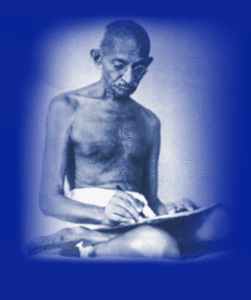
However, in this, man, as the superior being of the entire creation, who possesses extraordinary qualities like intellect and creativity, remains in priority. On the basis of these qualities, he is through the large scaled co-operation of fellow beings capable of paving the way of welfare of all. This basic spirit of the Gandhian ideas establishes Gandhiji as a Mahatma – a Great Soul, a Saint.”
Some other great personalities including the late Nelson Mandela, Warren Buffet, and Oprah Winfrey are also said to be integrity and honesty icons.
Despite 27 years in prison, Mandela never compromised his integrity or sought revenge. His honesty, humility, and reconciliation efforts helped him to unite South Africa after apartheid. He became the country’s first Black president and a global icon for justice.
Known for his ethical business practices, Buffett has built a financial empire based on trust and transparency. He emphasizes honesty in investing and corporate leadership, gaining widespread respect. Being one of the richest people in the world, he once said “Honesty is a very expensive gift, don’t expect it from cheap people.
Somebody once said that in looking for people to hire, you look for three qualities: integrity, intelligence, and energy. And if you don’t have the first, the other two will kill you. You think about it; it’s true. If you hire somebody without [integrity], you really want them to be dumb and lazy.”
NOW CFO is a full-service accounting consulting firm specializing in outsourced Chief Financial Officer (CFO), Controller, accounting, and finance services for businesses across the United States. It contends “Integrity, honesty, and generosity are the cornerstones of the renowned “Warren Buffett Method to Success.” Warren Buffett, widely regarded as one of the most successful investors of our time, attributes his achievements to these fundamental values.

Maintaining unwavering integrity, Buffett consistently upholds ethical standards and moral principles in all his dealings. He believes in conducting business with honesty, transparency, and fairness, earning his peers and investors’ trust and respect.”
Oprah’s career has been built on authenticity, transparency, and a commitment to truth. Her integrity in journalism and business earned her the trust of millions. She has used her truth-based influence for philanthropy and social impact.
Patience, purpose, and the harvest of true success
In a world where instant gratification and shortcuts often seem appealing, it is essential to remember that true and lasting success requires patience and purpose. Just as a farmer does not see immediate results after planting seeds, individuals must trust the process of growth and development.
The power of consistent effort
Consistency is key in achieving long-term success. Whether in business, leadership, or relationships, steady and purposeful effort leads to meaningful outcomes. A business leader who consistently fosters a positive work culture, empowers employees, and adapts to market changes is more likely to build a thriving organization. Similarly, in personal relationships, those who invest time, understanding, and effort into their connections will reap the rewards of strong and lasting bonds.
History is filled with examples of individuals who have achieved greatness through persistence. Thomas Edison, for instance, conducted thousands of experiments before inventing the light bulb. His unwavering determination and belief in his work exemplify the essence of sowing with patience and purpose.
The Consequences of poor choices
Just as good choices lead to success, poor choices result in setbacks. Those who rely on unethical shortcuts, manipulation, or negligence may achieve short-term gains but often face long-term consequences. Leaders who disregard their employees’ well-being, companies that prioritize profit over ethical considerations, and individuals who break trust in relationships eventually face repercussions.
The world operates on a principle of balance—what we give is what we get. When we sow positivity, hard work, and integrity, we set ourselves up for a harvest of opportunities, respect, and fulfillment. Conversely, sowing negativity, dishonesty, or laziness yields unfavorable results.
The science behind sowing and reaping
The principle “You reap what you sow” is not just philosophical—it is backed by psychology and science. Research on behavior, success, and long-term achievement consistently supports the idea that consistent effort and wise choices generate lasting rewards.
The law of cause and effect in psychology
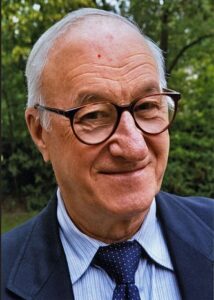
Psychologist Albert Bandura’s Social Learning Theory highlights that our behaviors create a chain reaction, shaping future outcomes. When we invest in skill-building, integrity, and perseverance, we position ourselves for positive results. Conversely, poor choices and negative habits increase the likelihood of failure. This principle is seen in professional growth, personal development, and even financial success.
The platform—Simply Psychology— says “Social Learning Theory, proposed by Albert Bandura [who died in July 2021], posits that people learn through observing, imitating, and modeling others’ behavior. This theory posits that we can acquire new behaviors and knowledge by watching others, a process known as vicarious learning.
The theory emphasizes the importance of observational learning, where individuals acquire knowledge, skills, attitudes, and beliefs by watching the actions of others and the consequences that follow, leading to the modeling and adoption of observed behaviors.”
The compound effect: how small actions lead to big results
Bestselling author Darren Hardy introduced the Compound Effect, which states that small, consistent actions accumulate over time, leading to significant outcomes. Studies in behavioral economics reinforce this idea, showing that incremental progress in areas like networking, learning, and financial planning compounds into major success, much like financial investments grow with time. The short description of the book “Compound Effect” on Amazon reads “No gimmicks. No Hyperbole. No Magic Bullet. The Compound Effect is based on the principle that decisions shape your destiny. Little, everyday decisions will either take you to the life you desire or to disaster by default.”
The Stanford Marshmallow Experiment: the power of delayed gratification
The late Psychologist Walter Mischel’s 1972 Stanford Marshmallow Experiment studied how delayed gratification affects long-term success. Children who resisted eating a marshmallow immediately in exchange for a larger reward later were found to enoy better life outcomes, including academic and career success. This aligns with the principle that patience, persistence, and resisting shortcuts lead to greater rewards in the long run.
APA—American Psychological Association says “The plot is funny, but it’s based on serious science. In a series of studies that began in the late 1960s and continue today, psychologist Walter Mischel, PhD [who passed away in 2018], found that children who, as 4-year-olds, could resist a tempting marshmallow placed in front of them, and instead hold out for a larger reward in the future (two marshmallows), became adults who were more likely to finish college and earn higher incomes, and were less likely to become overweight.
So what’s the lesson to take from this? It’s not that the marshmallow test is destiny and that preschoolers who fail it are doomed, Mischel says. Instead, the good news is that the strategies the successful preschoolers used can be taught to people of all ages. By harnessing the power of executive function and self-control strategies, we can all improve our ability to achieve our goals. Today, Mischel’s lessons are being applied on Sesame Street and in inner-city charter schools, among other places.”
By understanding these scientific insights, we can better appreciate why dedication, resilience, and integrity create lasting success. Life is a long game, and the seeds we plant today will determine the harvest we reap in the future.
Conclusion
The maxim “You reap what you sow” constitutes an unchanging truth that governs success in all aspects of life. In careers, personal development, relationships, and leadership, the seeds of dedication, resilience, and integrity determine the quality of the harvest. While shortcuts may seem attractive, true and lasting impact comes from consistent effort and value creation. As you navigate life’s journey, remember to sow wisely, because the harvest will always reflect the seeds you plant.