By Jean Baptiste Ndabananiye
The silent strength of stoicism. The Cambridge Dictionary defines “stoicism” as the quality of experiencing pain or trouble without complaining or showing emotion. The Collins Dictionary further characterizes it as acceptance, patience, and indifference—where indifference refers not to apathy, but to a profound detachment from both pleasure and pain.
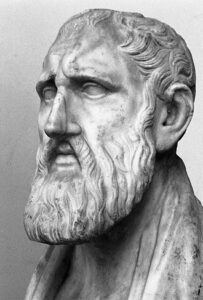
Stoicism, an ancient Greek philosophy founded in the 3rd century BCE by Zeno of Citium, is often misinterpreted as emotional suppression. In reality, Stoicism constitutes a sophisticated framework for emotional mastery. It teaches resilience, self-control, and rational thinking—qualities that are remarkably beneficial for mental health. In today’s fast-paced world, where stress, anxiety, and depression prevail, the Stoic approach offers a powerful antidote. At its core, Stoicism teaches that we should focus on what lies within our control and free ourselves from the grip of what does not. This simple yet profound shift in mindset can significantly improve mental well-being.
Stoicism, often dismissed as a relic of ancient philosophy, finds surprising validation in modern neuroscience. This article explores, among others, the deep connection between Stoicism and mental health by dissecting three fundamental Stoic principles: control what you can, accept what you can’t; the power of negative visualization; and reframing obstacles as opportunities. Each principle provides practical tools for emotional resilience, helping individuals to cultivate an unshakable mind in an unpredictable world.
The stoic brain – how ancient philosophy shapes neural pathways
The characteristics of stoicism, according to the afore-mentioned dictionaries, align closely with cognitive and emotional regulation mechanisms studied in contemporary neuroscience.
Neuroplasticity, the brain’s ability to reorganize itself based on experiences and habits, plays a key role in Stoic mental resilience. Practices such as cognitive reframing—where individuals reinterpret stressors in a constructive way—are deeply rooted in Stoicism. Marcus Aurelius’ assertion “the impediment to action advances action; what stands in the way becomes the way” aligns with modern research on the prefrontal cortex, the region responsible for rational thought and impulse control.
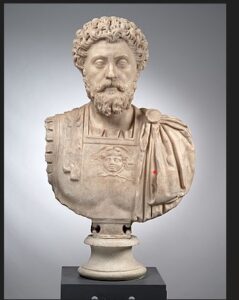
Marcus Aurelius Antoninus (121–180 AD) was a Roman emperor and a Stoic philosopher. He ruled from 161 to 180 AD and is best known for his work : Meditations, a series of personal reflections on Stoic philosophy, virtue, and resilience. His reign was marked by wars, plagues, and political challenges, yet he remained committed to the principles of Stoicism, emphasizing self-discipline, rationality, and acceptance of fate.
Studies indicate that repeated cognitive reframing strengthens neural circuits associated with emotional resilience, making individuals less prone to anxiety and depression.
Negative visualization, another core Stoic practice, mirrors exposure therapy used in treating anxiety disorders. By contemplating worst-case scenarios in advance, Stoics train their minds to accept adversity before it happens, reducing its emotional impact. Research shows that controlled exposure to fear-inducing thoughts helps to desensitize individuals, rendering real-life stressors less overwhelming. Thus, Stoicism is not just philosophical but a scientifically sound mental health tool.
Stoicism versus modern mental health trends – harmony or clash?
While Stoicism offers powerful coping mechanisms, it presents an interesting contrast to contemporary self-care movements, therapy models, and mindfulness trends. Modern mental health approaches often emphasize emotional validation—acknowledging and expressing emotions as a means of healing. Stoicism, on the other hand, encourages temperance and detachment from emotions that are deemed unproductive. This divergence raises a critical question: is Stoicism an outdated, repressive model, or is it an antidote to the pitfalls of hyper-emotional culture?
Consider cognitive behavioral therapy (CBT), one of the most effective psychological treatments for anxiety and depression. CBT mirrors Stoicism in its focus on reframing negative thoughts and controlling reactions rather than external events. However, therapeutic approaches like acceptance and commitment therapy (ACT) and mindfulness-based cognitive therapy (MBCT) promote full emotional acceptance rather than detachment. Where Stoicism tells us to remain indifferent to external outcomes, mindfulness teaches us to be fully present and accepting all experiences.
Furthermore, in today’s culture of self-care and emotional openness, Stoic suppression of emotional expression might be seen as unhealthy. While Stoicism teaches endurance through hardship, modern psychology warns against emotional bottling, which can lead to stress accumulation. Yet, proponents argue that Stoicism does not advocate for suppression, but rather the disciplined management of emotions, preventing irrational reactions that might escalate suffering.
Thus, the question remains: should individuals embrace Stoicism in a world increasingly focused on emotional sensitivity, or does it provide a necessary counterbalance to emotional excess?
Remember that “stoicism” is the quality of experiencing hardships but without complaining. The following are the late Emperor Aurelius’ words which promote Stoicism. “Dwell on the beauty of life. Watch the stars, and see yourself running with them. Think constantly on the changes of the elements into each other, for such thoughts wash away the dust of earthly life.
The happiness of your life depends upon the quality of your thoughts. Waste no more time arguing about what a good man should be. Be one. If you are distressed by anything external, the pain is not due to the thing itself, but to your estimate of it; and this you have the power to revoke at any moment.”
In a world that increasingly prioritizes emotional sensitivity, should individuals embrace Stoicism, or does it serve as a necessary counterbalance to emotional excess?
Marcus Aurelius’ words offer a compelling case for Stoicism’s relevance even today. He reminds us to “dwell on the beauty of life” and understand that our perception of hardships is within our control. This philosophy—facing adversity without complaint, focusing on rational thought, and mastering one’s emotions—directly is profoundly connected with modern tendencies toward emotional expression and sensitivity.
Modern promotions of stress management argue that we should not view obstacles as curse, and this view is immensely supported by not complaining about the obstacles. Various contemporary philosophies, from resilience training to cognitive behavioral therapy, echo this idea—emphasizing that our response to challenges shapes our growth.
By refraining from complaining and instead focusing on constructive action, Stoicism maximally supports this mindset. The late Aurelius’ words—“The impediment to action advances action; what stands in the way becomes the way”—perfectly illustrate that obstacles are not barriers but stepping stones to progress. Far from being outdated, Stoicism embodies a value that modern psychology and personal development actively promote today.
Rather than being outdated, Stoicism provides a valuable counterweight to emotional excess. The modern world often encourages people to react instantly to emotions, sometimes amplifying distress instead of managing it. The late Aurelius’ wisdom teaches that “the happiness of your life depends upon the quality of your thoughts.” In an era where mental health represents a pressing concern, this message is more relevant than ever.
Instead of dismissing Stoicism as emotional suppression, we should recognize it as emotional mastery. Emotional sensitivity and Stoicism need not be opposing forces—they can coexist. Stoicism doesn’t reject feelings; it refines them, ensuring they serve us rather than control us. By integrating Stoic resilience with emotional awareness, individuals can navigate life’s hardships with strength and clarity, rather than being overwhelmed by every emotional wave.
Unexpected Stoics – case studies in unlikely figures
While discussing Stoicism, figures like Marcus Aurelius, Seneca, and Epictetus often dominate the conversation. However, some of the most remarkable examples of Stoic resilience come from unexpected places—figures who may have never been identified as Stoics but who have embodied its principles in practice.
Viktor Frankl: a Stoic in the holocaust
Viktor Frankl, a Holocaust survivor and psychiatrist, wrote Man’s Search for Meaning, a book that echoes Stoic resilience. Enduring extreme suffering in concentration camps, Frankl developed the idea that suffering stands inevitable, but one’s response to it determines its impact. “When we are no longer able to change a situation, we are challenged to change ourselves,” he wrote—a sentiment deeply aligned with Stoic teachings on controlling what we can and accepting what we cannot.

Admiral James Stockdale: The Stoic POW
A more explicit modern Stoic was the late Admiral James Stockdale, a U.S. Navy officer imprisoned during the Vietnam War. He credited Epictetus’ philosophy with helping him to survive years of torture and isolation. “I never lost faith in the end of the story,” he said, reflecting the Stoic focus on endurance through hardship. Stockdale’s mindset prevented despair, allowing him to lead fellow prisoners through unimaginable conditions.
Oprah Winfrey: Stoicism in media and business
A surprising figure embodying Stoic resilience is Oprah Winfrey. Having faced poverty, abuse, and discrimination, Oprah’s philosophy of personal responsibility and perseverance echoes Stoic principles. She consistently emphasizes the power of choice and framing hardships as opportunities—just as Stoicism teaches.
Stoicism is more than an ancient philosophy—it acts as a timeless psychological framework, backed by neuroscience and offering an intriguing contrast to modern mental health trends. While emotional validation remains crucial, the Stoic principles of cognitive reframing, negative visualization, and strategic emotional control offer profound tools for resilience.
Whether one is a war hero, a business mogul, or an individual facing daily struggles, Stoicism provides a powerful approach to mental well-being. The question is not whether Stoicism is relevant today—but rather, how best to integrate its wisdom into our lives alongside modern psychological insights. In a world of uncertainty, the Stoic mindset remains a steadfast anchor, proving that true mental strength lies not in external circumstances, but in mastering one’s own mind.
More on tactics to cultivate Stoicism
Control what you can, accept what you can’t— the Stoic key to serenity
One of the most vital Stoic teachings revolves around differentiating between what is within our control and what is not. Epictetus, a prominent Stoic philosopher, stated, “Happiness and freedom begin with a clear understanding of one principle: some things are within our control, and some things are not.”
The mental burden of trying to control the uncontrollable
Mental health struggles often arise when we fixate on external circumstances—social validation, economic downturns, relationships, or unpredictable life events. These factors, no matter how much we stress over them, remain largely outside our control. The Stoic remedy is to focus on one’s attitudes, reactions, and decisions rather than external outcomes.
For example:
- Traffic jams: instead of fuming at the delay, a Stoic would use the time for reflection or listening to an audiobook.
- Losing a job: while the job loss itself is beyond control, refining skills and seeking new opportunities remain within one’s power.
- Negative opinions of others: rather than dwelling on what people think, a Stoic centers on personal integrity and self-improvement.
Practical application: the dichotomy of control exercise
A useful exercise is to create two lists:
- things within my control (such as my reactions, my work ethic, my choices)
- things outside my control (like others’ opinions, unexpected losses, societal changes)
By consciously shifting focus to List 1, individuals experience reduced anxiety and an increased sense of agency over their lives. This mental clarity serves as a crucial foundation for psychological resilience.
The power of negative visualization: reducing anxiety through preparedness
At first glance, imagining worst-case scenarios may seem like a counterintuitive strategy for improving mental health. However, Stoics used negative visualization as a psychological exercise to cultivate resilience and gratitude.
Why picturing the worst can make you stronger
The human brain is wired for survival, often overestimating threats and dwelling on uncertainties. Modern psychology recognizes that catastrophic thinking leads to anxiety, but Stoics approached this differently. Instead of fearing uncertainty, they actively confronted it in their minds to desensitize themselves to potential hardships.
Seneca, a Roman Stoic, advised “He robs present ills of their power who has perceived their coming beforehand.” This means that by rehearsing adversity in our minds, we reduce the shock and fear if such events actually occur.
In fact, negative visualization involved taking some time to reflect upon what to do, if a negative occurrence happened.
Negative visualization isn’t just about imagining worst-case scenarios—it’s about preparing a rational, constructive response to them. It aligns with the modern idea of proactive problem-solving rather than passive worry. By actively thinking through possible hardships and planning logical responses, a person builds resilience and maintains clarity in stressful situations.
- Visualize a feared scenario (like financial loss, failure, rejection, illness).
- Plan your response—how would you handle it logically and calmly?
- Acknowledge that life would continue despite the hardship.
- Cultivate gratitude for what you currently possess, knowing that nothing lasts permanently.
By practicing this regularly, individuals inoculate themselves against anxiety, developing a mindset of “I have already prepared for this, and I will handle it.”
Reframing obstacles as opportunities: turning adversity into advantage
Life is unpredictable, and setbacks are inevitable. While most see obstacles as roadblocks, Stoics perceive them as opportunities for growth.
The mindset shift: seeing adversity as a teacher
In modern psychology, cognitive reframing is a technique used to shift perspectives on negative experiences. Stoicism has long embraced this concept. Rather than resisting adversity, Stoics encourage embracing it as a tool for character development.
For instance,
- A failed business venture teaches resilience, adaptability, and new skills.
- A personal betrayal teaches discernment in relationships.
- A period of illness fosters deeper appreciation for health and well-being.
Application—the obstacle journaling method
To cultivate a Stoic approach to challenges, practice obstacle journaling:
- Identify a current struggle (for example, career setback, personal loss, emotional turmoil).
- List three possible ways this challenge could strengthen you more.
- Write one immediate action you can take to turn this obstacle into a stepping stone.
This method transforms adversity into an exercise in personal growth, removing the emotional weight of hardship and replacing it with purpose.
Conclusion: the timeless power of Stoicism for mental health
In an age where mental health challenges predominate, Stoicism offers a time-tested blueprint for emotional resilience. By practicing control over one’s perceptions, preparing for adversity through negative visualization, and reframing obstacles as opportunities, individuals can cultivate an unshakable inner peace.
The Stoic mindset does not promise a life without hardship but rather arms individuals with the tools to navigate life’s uncertainties with strength and clarity. The greatest lesson Stoicism teaches is that our peace does not depend on external circumstances—it resides within us.
As you reflect on your own challenges, ask yourself: What is within my control? How can I prepare for uncertainty? How can I turn this difficulty into an opportunity? In these questions lies the essence of Stoic wisdom—a philosophy not just for ancient thinkers, but for anyone seeking mental clarity, resilience, and lasting well-being in the modern world. Face adversities, without complaining; which will fill you with joy, despite encountering hardships that seem impossible to rise above.
Hiya very cool blog!! Man .. Excellent .. Amazing .. I will bookmark your website and take the feeds alsoKI’m glad to search out a lot of useful info right here in the post, we want work out extra techniques in this regard, thanks for sharing. . . . . .
I like this website so much, saved to bookmarks. “I don’t care what is written about me so long as it isn’t true.” by Dorothy Parker.
Thank you so much for bookmarking the site! I’m really glad you like it.I appreciate your support, and I hope you continue to find the content useful and enjoyable.
Nice post. I learn something more challenging on different blogs everyday. It will always be stimulating to read content from other writers and practice a little something from their store. I’d prefer to use some with the content on my blog whether you don’t mind. Natually I’ll give you a link on your web blog. Thanks for sharing.
Thank you for your thoughtful comment. We’re glad you find value in different perspectives and enjoy learning from various sources. You’re welcome to use content from our website as long as you provide a proper link back to us. We appreciate your respect and look forward to supporting your blog!
Hi there just wanted to give you a quick heads up.
The text in your content seem to be running off the screen in Ie.
I’m not sure if this is a format issue or
something to do with web browser compatibility
but I thought I’d post to let you know. The design look great though!
Hope you get the issue fixed soon. Cheers
Hi there, thank you very much for taking the time to point this out—we really appreciate it. This is actually the first time we’ve received this kind of feedback, so it’s very helpful. Just to better understand the issue, could you please let us know if it happened on all pages or only specific ones? And, did it occur on all browsers?
The design should normally be responsive, so your observation helps us to check whether it’s a compatibility issue or something we need to adjust in the layout. Thanks again for the thoughtful heads-up—we truly value it.
Can you tell us more about this? I’d love to find out some
additional information.
We have understood your request and we are now going to prepare a piece which is responding to your request. Meanwhile, thank you so much for raising this very good question.