By Editorial Staff
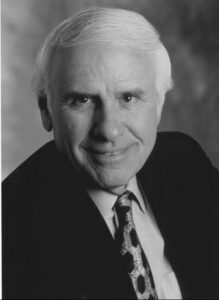
Success doesn’t happen by chance—it’s earned through intentionality and extraordinary effort. While many dream of achieving greatness, few rise above the ordinary to stand out. The secret lies in the simple yet powerful principle of “going the extra mile.” The late Jim Rohn— who was an American entrepreneur, author and motivational speaker—once said, “Success is doing ordinary things extraordinarily well,” a timeless reminder that excellence stems from consistent, deliberate action. To achieve assured success, you must therefore approach your work with extraordinary effort and strategy; this rendering you not only noticeable but also differentiating you from the competition.
Promises or commitments are generally more easily vowed than implemented. It is natural that we easily resolve ourselves to achieve a certain noble goal. But we it comes to executing it, we find it extremely difficult— if not even impossible— for us to realize it.
· If doing ordinary things is usually difficult, how can we perform them extraordinarily well?
· Can everyone do ordinary things extraordinarily well or it is reserved for extraordinary people?
This article addresses those questions, drawing from the trustable wisdom of some personalities.
Kirstin O’Donovan
Kirstin O´Donovan is a Productivity Coach and Founder and CEO of Top Results Coaching. She reportedly features an extensive background involving productivity training, time management intricacies, business capitalization strategies, and advanced psychology tactics. She is thus said to enjoy leveraging those skills to help her customers unlock their full potential.
In her 25 January 2021 article entitled “22 Hardest But Most Important Things You Must Do To Achieve Success”, she says “How many successful people do you personally know in the world? Most people can’t list more than a handful. Why is achieving success so hard and what is it that sets the successful apart from the less successful?
If you study the biographies of successful people, you will find that it is not where they came from or started out that influenced their success, but rather their habits and ways of thinking. Success has a lot to do with doing what you probably don’t want to do now, so that later on you can do what you really do want to. If you only do the easy things in life, life will be hard, but if you do the hard things in life, life will be easy.”
Among the 22 things that she mentions figures going an extra mile, as a key ingredient which will certainly change the game. “Going that extra mile. The only difference between ordinary and extraordinary is that little bit more effort you put in. It is hard and takes much more energy, but how badly do you want success? Success is possible if you are willing to do the things you need to do to get you where you want to be. Don’t give up on your goals and dreams of success; know that they are truly possible if you really want them to be. We all have the same chances of success, whether we take those chances when they come is our first choice,” explains O´Donovan.
“Doing what you truly love. One of the biggest keys to success is to love what you do. You already have the motivation, inspiration and commitment to support you from the outset and along the way. It is challenging to actually do what you love in life and make a great living from it at the same time, but don’t put limits on your life. You decide what is possible in your life; get creative and find ways to make it work if that is what you really want.”
This career development specialist—Kristin, native to South Africa and currently based in Spain since 2007— admonishes us to place comfort below results, accomplish what we can with what we now possess and where we are. She says “Putting results before comfort. You need to work harder if you want more success in life: the extent of your efforts is the extent of your rewards. It’s not about working long hours and getting as much done as possible, it is about working smarter. At the beginning you need to put in that little bit extra and work harder to give you that boost you need starting off. What you put in, you will get out.
Getting it going. It is easy to come up with a million reasons why you should put off taking ‘certain’ actions that you should be taking. How often do you say, ‘The time isn’t right,’ or ‘I’m not ready’? You just have to get it going, it doesn’t have to be right or perfect, but you need to keep taking continuous steps closer towards your goal. There is always something you can do to take you closer to your goal.”

She also encourages us to remain excited and courageous in pursuing our dreams, regardless of hurdles we face. “Staying enthusiastic. Staying enthusiastic when things don’t look good is much easier said than done. In the face of adversity, keeping that spirit of enthusiasm will give you the strength you need to keep going. What you focus on expands, so don’t focus on what isn’t working, put your focus on what you can do to make it work and be enthusiastic about the next possibility.
Finding the courage to follow your dreams. You can reach all your goals and have all the success, if you have the courage to take all the action required with a courageous mindset to back it up. Have the courage to follow your dreams and don’t give up until you reach them.”
As we have often emphasized in our various articles such as this one, Kristin also highlights regular action as the essential fuel for success. Remember, no vehicle can run without fuel, and the same principle applies to achieving success. Consistent action, especially daily effort, will propel you toward your desired destination. “Always taking continuous action.
When you go to gym, you have to go regularly to really see new results and the same goes for success. You have to take a lot of regular and continuous action if you want to have more than ordinary results. Dreaming, willing and planning alone will not get you there, continuous action will.”
Ruth Gotian “High achievers are 400% more productive than the average employee.”
Dr. Ruth Gotian, EdD, MS, is the chief learning officer and associate professor of education in anesthesiology at Weill Cornell Medicine in New York City. She is the author of The Financial Times Guide to Mentoring with Andy Lopata and The Success Factor. As her website, Ruth Gothian, indicates it; she is a globally recognized expert in mentorship and leadership development. “Hailed by Nature, Wall Street Journal, and Columbia University, she was named a top 20 mentor worldwide.” On January 06, 2023 she produced a story headlined “4 Things High Achievers Do Differently” published by Harvard Business Review. She says “High achievers are 400% more productive than the average employee — and they have four things in common. Any of us can customize them to our own lifestyle, not by copying their habits but by emulating their mindsets.”

She explains the four characteristics shared by high achievers. “Tap into your intrinsic motivation. Why did you enter your chosen profession? Getting to the “why” behind your career choice is critical, as it will help you get in touch with your deepest motivations, block out distractions, and potentially adjust (or reengage) with your current path. Get comfortable with failure. Some people fear failing, while others fear succeeding. High achievers fear “not trying” more than they fear failing.
Reinforce your foundation. Despite having done a task or routine countless times, high achievers still work on the basic skills foundational to their current, and future, success. Become a lifelong learner — but not necessarily in the classroom. High achievers learn through discussions with mentors, colleagues, peers, and mentees, coupled with reading, observing others, watching videos, and listening to podcasts.”
Gotian’s words highlight a compelling approach to working extraordinarily by subtly improving ordinary tasks. Gotian’s insights into high achievers emphasize the importance of consistent, foundational practices, such as tapping into intrinsic motivation, embracing failure, and continuously reinforcing core skills. These aren’t about reinventing the wheel or focusing on perfection; instead, they advocate for maximizing everyday actions and cultivating a mindset that elevates ordinary efforts into extraordinary results.
The idea that high achievers are “400% more productive” doesn’t just involve working harder, but also working smarter—by staying deeply connected to their motivations, learning from every experience, and never taking the basics for granted. This aligns with the idea that extraordinary achievements can stem from consistently improving ordinary ways of working.
In this context, adding little to ordinary ways of working—whether by refining your motivation, embracing failure as a learning opportunity, or continually working on foundational skills—becomes a great enabler of success. High achievers maximize their routine tasks by fostering a mindset that emphasizes growth, reflection, and continuous improvement, leading to extraordinary productivity and results.

Business Insider—in its 7 April 2016 article headlined “Mark Cuban, Kobe Bryant, and 15 other people whose incredible work ethic paid off”— reports “Talent, connections, and money can help you get to where you want to go in live — but those things alone won’t do it. You also need to work hard to be truly successful.”
Indeed, a dedicated hard worker rarely fails to optimize their creativity, efficiency, and critical thinking, especially when committed to improving their outcomes. Hard workers generally go beyond just spending long hours—they seek ways to do things more effectively, find innovative solutions, and refine their processes.
Hard work, when aligned with a mindset of improvement, certainly fosters creativity and critical thinking. A person who consistently exerts effort with a goal of maximizing results is likely to develop these qualities over time. In this sense, hard work and working extraordinarily can go hand in hand, and hard work constitutes the foundation on which extraordinary efforts are built.
In essence, working extraordinarily is not just about working hard but also about optimizing that hard work—finding smarter, more efficient ways to apply your effort, learning from experiences, and pushing boundaries. So, to achieve incredible success, hard work remains indispensable, but it is the combination of hard work and extraordinary focus that truly makes the difference.
Thus, it is fair to say that hard work, when approached with intention and dedication, inevitably leads to the development of those higher-level skills and optimizations like creativity, efficiency, and critical thinking.
Two types of extraordinary working approaches: individual and collective
Individually, adding a little extra indeed involves applying new ways or tapping into renewed energy to elevate your work. It entails embracing creativity, pushing boundaries, and striving for excellence, even in small actions. When individuals apply that extra effort—whether through adopting new skills, taking on additional responsibilities, or approaching challenges with fresh thinking—they transform what might otherwise be routine into something remarkable. This new energy is what often generates the difference between being good at something and being extraordinary at it.
On a collective level, it involves an individual assessing the competition and doing something new, exceptional or extraordinary that neither you nor your peers or competitors have done, and this is essential. It speaks to innovation and differentiation. A group also differentiates itself from others in the same way. When a group, community, or organization collectively identifies a gap in the market or an unmet need, and then pushes beyond the status quo to create something unique, that is where extraordinary impact is created. By offering something novel, whether it is a new service, a fresh perspective, or a groundbreaking approach, the collective effort stands out in a crowded space, attracting attention and creating a ripple effect. This new, shared approach can set a community, company, or even a movement apart from the competition, contributing to long-lasting change and success.
Conclusion

The path to extraordinary success is paved not just by talent or luck, but by consistent, intentional effort to surpass what is expected. As the article illustrates, high achievers differentiate themselves by embracing the discipline of doing ordinary things extraordinarily well which includes taking continuous action, and cultivating a mindset that values growth, resilience, and creativity. Whether through individual perseverance or collective innovation, the key to achieving remarkable success lies in pushing the boundaries of what is possible. By committing to hard work and an unwavering focus on improvement, we can transform routine tasks into extraordinary outcomes and set ourselves apart from the competition. Ultimately, success isn’t just about working hard—it’s about working with purpose, passion, and a relentless drive to exceed expectations.
To address the questions raised earlier—If doing ordinary things extraordinarily well is extremely difficult, what techniques can permit you to perform extraordinary things? and Can everyone do ordinary things extraordinarily well or is it reserved for extraordinary people?—the answer lies in a mindset of persistence, innovation, and continual learning. While performing ordinary tasks extraordinarily well requires immense dedication, it is not reserved for a select few. Everyone wields the potential to elevate their work by embracing strategies like incremental improvement, seeking mentorship, and practicing self-discipline.
Techniques such as breaking down tasks into manageable parts, setting clear and measurable goals, and constantly refining processes can help to unlock extraordinary results. Additionally, fostering a growth mindset—where setbacks are seen as learning opportunities and successes as a result of deliberate effort—can transform ordinary efforts into extraordinary achievements. Therefore, with the right mindset and consistent action, anyone can transcend the boundaries of the ordinary and create exceptional outcomes.
In summary, one can say that working extraordinarily means going beyond expectations by applying exceptional effort, creativity, and consistency to elevate ordinary tasks into remarkable achievements. Exceptional effort refers to pushing one’s limits by working to their full capacity and maintaining unwavering dedication, while creativity involves thinking outside the box and finding innovative or new solutions to challenges.