By Jean Baptiste Ndabananiye
Success and peak performance can be interchangeably used, because success actually involves the aspect of the highest point of one’s performance. There are people whom we call successful ones. In fact, there are people who turn successful locally, nationally and internationally. These successful minds, at any level, all share the commonality of peak performance to some extent. Of course, they don’t equalize the level of peak performance because for instance the 50 top most successful individuals globally exhibit the highest level of performance.

It is also conspicuous that the 1st most successful person will surpass the remaining list. But all of them are successful by far and their performance stands at its apex currently, though they still possess the capacity to push the boundaries and attain a lot more. This does not however exclude that those who are locally successful also have an excellent degree of peak performance. Meanwhile on one hand, we have noticed that a myriad of people don’t perfectly comprehend what success actually means, the reason for this article detailed to provide the right meaning of the word.
Most people only equate success with wealth; which doesn’t really constitute the case. I was among those people, very few years ago. On the other hand, for people to accurately implement a given field and then reap fabulous rewards from it, first of all they need to deeply comprehend it. This article is predominantly based on an amazing man, Richard Denny. This article consists of these sections:
- More about Richard Denny
- How people generally interpret success and how it should be construed
- Deep meaning of success: happiness and wealth—its anatomy
- Happiness as a result of own efforts
More about Richard Denny
Denny— one of the United Kingdom’s foremost authorities on sales, management training and personal development who was highly sought after as a motivational speaker in company conventions and conferences throughout the world—is said to have improved the skills of more than one million people worldwide with his teachings, certified courses and sales diplomas.
He is said to be the most inspirational business speaker in the United Kingdom. He is additionally said to be unique with his motivating, inspiring and educating presentations permitting his audience to also acquire practical ideas achieving enhanced performance.
In 2008 he gave his 2000th presentation. His business, Richard Deny Group is recognized as being at the forefront of business training on selling, leadership, and management, customer care and business growth.
He authored six books- Selling to Win, Succeed for Yourself, Motivate to Win, Communicate to Win, Winning New Business and Successful Selling Skills– which are international best-sellers. They are selling in 46 countries and translated into 26 languages. In brief, Denny is a marvelous man who has become a legend on the international speaking circuit over 20 years.
How people generally interpret success and how it should be construed

Deny, in his book titled “Succeed for Yourself. 3rd Edition” where he advises us to unlock our potential for success and happiness, he states that one of the hardest concepts to define is success, since ‘it means quite different things to different people.’
He however regrets that this concept has been altered by media. “Sadly, the vision of success has been adulterated by the media through their continual thirst for sensation and glamour. The majority of us have been conditioned to believe that success is totally related to money. To have millions of pounds and the trappings of so-called success such as Rolls-Royces, jets and holiday islands in paradise is a common perception of what success is all about.”
Moreover, according to him, success is held to be limited to those who reach the pinnacle in their chosen sport, or individuals who earn power in politics, industry or commerce. “Parents who raise their children in a secure and happy home or the managers who develop their staff to great achievement and reward often appear to be ignored.
What is success? Success for one person might be just to get the next meal; success for another might be to get employment in a secure job; for another, freedom from worry. Success for the vast majority of us, though, is to achieve our goals, to live in a state of happiness and to have respect from those around us. So, you must be the judge and jury of what success means to you.”
Denny affirms that success for one person can differ totally from success for another one. To corroborate it, he provides an example which he says has allowed him to comprehend success better. The example applies to Nicholas Darvas who was aged 60 when they conversed.
According to Denny, Darvas had been a dancing pair associate-a pair which had been amazingly successful on the entire planet, he had accumulated the personal wealth of more than 1million US dollars. His wealth was not confined to that. Darvas then performed astute investment on the American stock exchange and obtained a further million pounds, adds Denny.
“He then even wrote a book, How to Make a Million on the Stock Exchange, and added a few millions to his ever-increasing wealth. When I met him, he was single, living between the Dorchester Hotel in London, the George V in Paris and the Waldorf Hotel in New York.”
“Through a series of discussions we had together, I found him to be a very bitter, sad, tragically lonely man. I pointed out to him his enormous financial wealth and what in those days I called success. He pointed out to me that in comparison to Bill Gates, the Barclay brothers, the Sultan of Brunei and the Duke of Westminster, he was not a success. He was worth but a pittance compared to the billions of dollars that they were worth.”
Denny says that this example has immeasurably permitted him to understand how different people perceive success. He emphasizes upon happiness, as far as success is concerned. He maintains that in order to attain true success [financial independence, security, success in your profession or some outstanding sporting achievement], you have to assure that your ultimate goals will render you happy.
Otherwise, in his mind, they will carry little purpose. “Throughout this book, when success is mentioned, it is intrinsically linked to happiness- success without happiness is not success.”
Deep meaning of success: happiness and wealth—its anatomy

Denny closely connects success, wealth and happiness. He contends that we are all born with those high expectations and that they are undisputed and unchallenged in our very early childhood. He nonetheless adds that over the years from that positive beginning we get conditioned to be negative and our expectations get lowered. “Those three powerful words [namely] success, wealth and happiness have been cynically and skeptically dismissed by many an unavailable, not achievable and out of reach for all but the favoured few.
Whatever you do, do not make excuses- you know the old expression ‘a bad workman always blames their tools’. I have heard people say ‘I’m too old’, others ‘I’m too young’, ‘I didn’t go to the right school’, ‘I didn’t go to university’ or even ‘I was born under the wrong birth sign.’ These are just a few of the thousands of excuses that are used to justify non-achievement.”
Media are blamed as major culprits in the whole issue. “We all live in a world of steeped in massive negativity which can be seen in news programmes, the media and of course in other individuals.
We are conditioned to become more cynical and skeptical about enormous opportunities and possibilities in this incredible world in which we live and work. We continually see on our TV screens the horrors of human conflict and deprivation, but surely the worst sight of all is a human face without hope. [But] there is no excuse for you not to have hope.”
Happiness
Denny argues that happiness is attained in three ways: having something to look forward to, sharing, and making somebody else happy. He contends that pleasure rarely comes from a possession you already have, but that it instead stems from looking forward to owning it. He adds that this applies to almost anything from holidays to watching a television program to getting promoted.
Sharing
Deny says that sharing really does provide happiness. “Now many of us are fortunate enough to share our lives with a partner, while others find at some stage in their lives that, maybe through separation or bereavement, they are once again on their own. Does this mean that the future is one of unhappiness?
No, of course not. Most people have wonderful friendships and wonderful family with whom they can share some of their time, joys and happiness.” “May I remind you of a saying. A joy that is shared is a joy that is doubled, a worry that is shared is a worry that is halved.”
Making someone else happy
Denny says that it is almost impossible not to be happy when you render someone else happy. He also affirms that is impossible not to be successful while helping someone else to be successful. He adds that a lot of successful business-people have proved, either intentionally or unintentionally, that by helping other people to be more financially successful, ‘they have in turn enhanced their own wealth.’

“As a child, you look forward to birthdays and Christmas obviously because these are times for surprises and presents. As you become more mature, the excitement and pleasure really comes from the giving of these surprises and presents. Walk down a street sometime and smile- it is funny how people smile back. Notice how that makes you feel. As a parent or manager, it is wonderful to be able to give somebody else some good news- you can get so much please out of that simple exercise.”
“Don’t dismiss these ideas. Cynics, beware; dismiss these three principles at your peril. Your first reaction may be to question these ideas, but realize that a full understanding of happiness is one of the major areas upon which you should concentrate. What is sad is that this is not taught in our schools and universities, and even more concerning is that parents, in so many cases, have not passed this knowledge on to their offspring. It must therefore come as no surprise that so many seeking success are heading completely in the wrong direction.”
The late Albert Einstein (March 14, 1879 to April 18, 1955), a genius of all time, once said “Strive not to be a success, but rather to be of value.” This quote reflects a fundamental shift in how we should view success—not as the accumulation of wealth or fame, but as the impact we create on others. True success, as Einstein suggests, lies in contributing meaningfully to society, fostering hope, and creating positive change.
By focusing on being of value, we cultivate a lasting legacy that transcends individual achievements and enriches the collective well-being. Einstein’s wisdom reminds us that real success is measured by the difference we produce in the lives of others, not by external accolades.
“Success is getting what you want,” Dale Carnegie—born on November 24, 1888 and passed away on November 01, 1955—once stated. The words of this pioneer in personal development encapsulate the essence of success as achieving one’s goals, regardless of their nature. Success, in this light, is personal and versatile—it could mean securing wealth, career achievements, or personal aspirations, if that is what one desires. However, if one’s goals are rooted in cultivating universal virtues like love, compassion, kindness, patience, and altruism, then success is equally realized through the pursuit and embodiment of these qualities.
In other words, success actually means securing what you want. If you want money and that you obtain it, you earn success. If you have achieved those virtues, you are successful too. Thus, Carnegie’s words affirm that success is not defined by a single outcome, but by the fulfillment of individual desires, whether material or moral. Ultimately, success includes achieving what truly matters to you, and it takes different shapes depending on your values and aspirations.
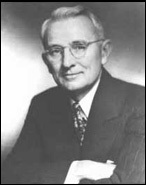
According to Good Reads, Dale Carnegie was an American writer and teacher of courses in self-improvement, salesmanship, corporate training, public speaking, and interpersonal skills. “Born into poverty on a farm in Missouri, he was the author of How to Win Friends and Influence People (1936), a bestseller that remains popular today. He also wrote How to Stop Worrying and Start Living (1948), Lincoln the Unknown (1932), and several other books.
One of the core ideas in his books is that it is possible to change other people’s behavior by changing one’s behavior towards them.”
True success, however as underlined by Einstein, involves a deeper sense of fulfillment that goes beyond mere acquisition, extending to how we contribute to the lives of others. That is what Tony Robbins calls “something greater than you.” With this true meaning of success both in mind and action, you will end up being immensely successful.
He says “You must serve something greater than yourself. When you decide to become a master in the subject area that you are passionate about you’ve got to take massive action. You must be committed to learn everything humanly possible about that subject matter. You need to know it wider and better than anyone else, and most importantly, you have to use that knowledge to serve something greater than yourself.”
“Jim Rohn and the power of change. My original teacher (mentor) was a man named Jim Rohn, an Idaho farm boy and Sears clerk who made it big as a motivational speaker and author.
He held seminars all across the country for 40 years. He was a millionaire by the age of 31, and authored 17 books. Jim taught me that as soon as I committed myself to excellence, I would really have something to give others. And that’s a big part of what makes life meaningful for me.”
Happiness as a result of own efforts
Denny argues that when money is amassed through personal endeavor in whatever form, pleasure and happiness are achievable. In most cases when money is obtained through endeavor, it does not come in a single rush: the get-rich quick scenario, he adds. “The money comes gradually, which provide the individual with an opportunity to learn how to manage money. One of the amazing, yet fascinating, realities of successful people is that they rarely achieve success on their own.

Success is usually achieved with the support encouragement, enthusiasm, advice and help of others. It is equally true that the key to achieving what you want is to help enough people to get what they want first. It is then an absolute guaranteed certainty that you cannot fail to be successful. A great manager understands that management is about helping people to grow, and I admit to the pleasure and pride I feel when other people tell me of their successes and achievements through a little help I may have given them at some stage.”
Albert Schweitzer “Success is not the key to happiness. Happiness is the key to success. If you love what you are doing, you will be successful.”
LUCK as a success principle
Deny says that the simplest and most direct explanation of the concept ‘luck’ he has found is as follows: L: labor, U: under, C: correct, K: knowledge– labor under correct knowledge. Labor- “The first word may not appear to be highly motivational because it implies work, but what it really means is ‘do something’.
At one of conferences I was speaking at we needed to get the attendees to be more proactive. I asked everybody to stand up and then said the delegates ‘Now lift up your chair and look under the seat. If you find nothing, hold it high in a raised hand.’ You can imagine the noise as 2 000 people got off their chairs to look, and then the shouts of excitement, because pinned underneath some 20 chairs was $5 note. The message I conveyed was that if you want to make money, get off your backside”
Correct knowledge- “Correct knowledge is knowing where you are today, knowing where you want to be or go, having a plan.” Denny says that the first step in ensuring correct knowledge includes a completely honest assessment of where you are today.
According to him, this involves auditing your own personal assets and liabilities. Your personal assets include both tangible and intangible assets. Some of your latter ones encompass your greatest asset ‘you/your brain/ your health mind/ your mental capacities’, your time, strengths, knowledge, experiences, healthy relationships, and contacts/network, among others. Your liabilities also include both tangible and intangible ones. The latter ones are your weaknesses. “So, to know where you are today is to have a sense of pride in yourself that corresponds with reality.”
The second stage includes knowing where you want to go whereby Denny urges you to formulate goals. “You must have goals. There is not [even] one successful person in the history of humankind who has not achieved their success by consciously or subconsciously having purpose and goals. So, for you to be lucky, goals are essential. If you omit goals from your action plan, you will be dependent on chance.”
Confucius— from 551 to 479 BCE, a Chinese philosopher of the Spring and Autumn period traditionally regarded as the paragon of Chinese sages and the first teacher in China who advocated for mass education— once said “Success depends upon previous preparation, and without such preparation there is sure to be failure.”
The 3rd and final stage of correct knowledge, according to Denny, involves action to fulfill these goals. “Again, let me remind you that every achievement has come through visualizing goals and by carrying out a systematic plan to achieve these goals, So, if you really do want to use the ‘luck principle’, remember you do not become lucky by sitting on your backside waiting for the phone to ring.”
Denny underlines the existence of luck but that it certainly emanates from the luck principle described above which includes labor or hard work. To illustrate it, he furnishes an instance of heard interviews with famous entertainers where he says “Isn’t fascinating how when they recall some of the events that turned their careers, their words are often prefaced with ‘Well, I had a little bit of luck’.”

“One of the most successful pop groups in the 1990s was the Spice Girls, but if you investigate their careers, and the work and preparation, the commitment, the dedication, and the hard times that they went through prior to their international acclaim, it becomes apparent that there was no luck involved.”
He adds “One of the greatest golfers of all time, Arnold Palmer, was quoted as saying ‘The harder I work, the luckier I get.’ Base your monetary future on luck as defined, and you will become as lucky as you want to be. Amazingly, it works! Luck is where planning meets an opportunity- become lucky!”
Also Stephen Leacock once said “I am a great believer in luck and I find the harder I work, the more I have of it.” Leacock was a Canadian writer, humorist, and professor, best known for his witty and satirical works. Born on December 30, 1869, in England and raised in Canada, he became one of the most prominent comedic writers of the early 20th century. He deceased on March 28, 1944.
Conclusion: redefining success through purpose and service
Success represents an intricate and deeply personal concept, one that evolves beyond the narrow confines of wealth, fame, or power. The teachings of Denny, Einstein, Carnegie, and Robbins remind us that true success isn’t merely the accumulation of external achievements. Success is intricately linked to happiness, personal fulfillment, and contributing to the well-being of others.
We live in a world where success is often defined by materialistic and surface-level measures, but as Denny suggests, happiness, sharing, and helping others are integral components of real success. Whether it’s the joy found in helping someone else to succeed, or the sense of fulfillment that comes from working towards something greater than oneself, success ultimately involves living a meaningful life—guided by purpose.
As Carnegie so eloquently puts it, success includes achieving what you want. Whether that means wealth, career growth, or the pursuit of virtues such as love, kindness, and compassion, success takes many forms, reflecting our individual desires and values. True success, however, also entails creating a positive impact on those around us. As Robbins asserts, mastering a subject and using that knowledge to serve something greater than ourselves is the true mark of success.
Therefore, the definition of success is not universal but subjective, shaped by one’s values, goals, and contributions to society. It transcends superficial measures and resonates with deeper fulfillment and a legacy of value.
By embracing this multifaceted understanding of success, we not only enrich our own lives but also uplift others, creating a ripple effect of positive change. Ultimately, success is not the destination but the journey, marked by continuous growth, service, and the pursuit of happiness.