By Editorial Staff.
“We don’t want homosexuality in Tanzania, if it is being imposed upon us because of aid, let the aid stop. Even the White people who have come here, let us tell them ‘We don’t want homosexuality here in Tanzania, we don’t want unclean behavior in Tanzania’. If they use their aid, to force us to accept their practices, we don’t need it,” the Tanzanian Parliamentarian, Mwita Mwikwabe Waitara, has uttered, according to a video released on social media.
Waitara was then addressing a certain minister before the Tanzanian Parliament to present a certain different subject or project. Then this Parliamentarian stood up, to request this minister to comment on the topic of homosexuality. “They (White people) don’t wish our decent cultures like having a lot of children, but they come to impose their homosexuality upon us. Mister Minister, know that Makembe and Dr. Mahisa have publicly declared it, they show us man-to-man marriage, they show us woman-to-woman marriage. The Tanzanians have been highly displeased with homosexuality, and so are all of us- Parliamentarians here. Speaker, look at me so that I can speak to you while you are facing me, tell me ‘Shall I get wedded by my fellow man?’
Suppose that I have a son and try my best for him to study and one day I hear that he has engaged in sex intercourse with his fellow male teacher, if I encounter the latter one, in the name of God it could be his end or mine. A woman is struggling to support her son’s education, and he goes abroad to study. While she thinks her son is doing well, he returns and tells her ‘I’m going to marry this man.’ If it is your aid that you employ as a weapon to promote homosexuality; cut it, this is a war that we have to energetically wage and win at any cost. This is a war like the one fought for Africa to be decolonized and gain independence. This constitutes the second war of Africa liberation.”
Life In Humanity has not managed to know the date on which Waitara declared these words. This platform has not known a politician whom he was addressing, because the circulated video, which we have secured, doesn’t reveal these details. What we have found on the social media where it has been uploaded is that this video is recent. We have observed that the video is around two months old on the social networks.
But, probably the politician Waitara expressed his vehement opposition against homosexuality during the time when the Parliament was debating the Prime Minister’s 2023–24 budget. The debate around the budget estimates of the Prime Minister’s Office took place in the Parliament on April 12, 2023.
According to The Citizen, Members of the Parliament then seized an opportunity to call for intense laws on same-sex relationships. “The anti-homosexuality MPs, who appear to have broad support from the government and religious leaders as well as the general public, want the offenders to also face death penalty if found guilty,” reports The Citizen. “Tanzanian MPs are pushing for a new anti-homosexuality law that would impose harsher penalties for same-sex (LGBT) relationships, a move that would promote African values among the younger generation and therefore the country’s future.”
The Citizen specifies that there exists no law expressly outlawing homosexuality in this country. Nevertheless, homosexual actions are proscribed under the umbrella of “unnatural offences,” as stipulated in Section 154 of Chapter 16 of the Criminal Code.
For example, the law states that any person who conducts carnal knowledge of any person against the order of nature or who performs carnal knowledge of an animal perpetrates a crime. This law also stipulates that any person who permits a male person to have carnal knowledge of him or her against the order of nature, commits an offence.
Carnal knowledge is a legal term referring to sexual intercourse. Historically, it has been used in the context of laws and legal proceedings to describe illicit or non-consensual sexual acts. The term is often associated with older statutes and legal definitions pertaining to sexual offenses. In modern legal contexts, more specific terminology is usually employed to describe sexual offenses. Yet, carnal knowledge still appears in legal documents, historical texts, or discussions of older laws.
The penal code specifies that such individuals, if declared guilty, are liable to life imprisonment, and in any case to serve a term of not less than thirty years behind bars. According to the law, if the offence is committed against a child under the age of eighteen years, the offender shall be sentenced to life imprisonment.
During the debate, according to The Citizen, the MP Festo Sanga declared that if the government doesn’t accomplish action, half of the lawmakers might be gay within 30 to 50 years. “We need to act now for the future of the country. In 50 years to come, we may find ourselves with the leaders of the same nature; in fact, it won’t just stop there in the parliament, but we may find them in mosques and churches as imams and priests,” he lamented.
Sanga’s counterpart, Ahmed Katani, suggested that whoever medically proven to have been engaged in such acts should be sentenced to death. He said that the government should conduct tougher action as “everything is happening in the open.” He said “This is healthy for the country, let’s act now, we shouldn’t wait, this isn’t African culture, it is neither our morals nor our values, our holy books- the Quran and the Bible- both reject it. We need to protect our children, because if we fail now, then we are going to have gay leaders.”
Nairobi News Nation constitutes a Kenyan digital news platform chiefly covering news and events happening in Nairobi and its surrounding regions. This platform belonging to the Nation Media Group, one of the largest media companies in East Africa, published an story on 11 April 2023.
The stance of Tanzania’s president, Samia Suluhu Hassan, on the matter in this article does not appear as intense as that of the MPs. She instead insists that children should not be drawn into homosexuality. Notwithstanding, she also implies that homosexuality represents a dirty practice.
She declared “Grown-up people are at liberty to exercise their bodies but should not engage children. Everyone is at liberty of his or her body…But I plead with the ones in it, to stop cheating our kids. Why are you not going to your fellow masculine counterparts? Stop this thing. Our children should not be spoiled.”
She pointed out that engaging in such activities would only serve to harm them, also acknowledging that the LGBT movement would mar the country’s future economic growth. “This country (Tanzania) needs a future labor force for it to develop more economically. If all our kids are recruited into the bad borrowed culture, who will take this nation forward? Women alone? That is not possible.”
Homosexuality in Uganda, Kenya, Burundi, Rwanda and Africa in general
Kenya
The Kenyan President, William Ruto, and his vice-president, Rigathi Gachagua, have both articulated their opposition to same-sex marriage, supported by churches also waging the combat against it.
A March 2, 2023 article by Associated Press reads “President William Ruto of Kenya criticized a recent Supreme Court ruling that allows an activist to register an LGBTQ rights organization, reiterating that the country’s stance on same-sex marriage remained unchanged. The national board that oversees non-governmental organizations had denied the activist’s registration request. Kenya’s High Court and the Court of Appeal said the board acted improperly, and on Feb. 24, the Supreme Court agreed, dismissing the board’s further appeal.”
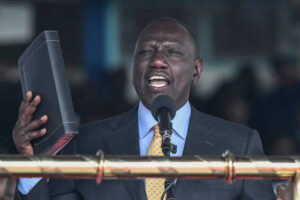
Ruto stated that the government complies with the Supreme Court’s 3-2 decision verdict but that “our culture and religion does not allow same-sex marriages.” “It is not possible for our country Kenya to allow same-sex marriages. … It will happen in other countries but not in Kenya,” he underlined. Associated Press says “Ruto encouraged religious leaders to ramp up education to promote what he referred to as traditional values.”
The Supreme Court majority indicated in its decision that same-sex marriages are prohibited in Kenya. Kenya’s penal code also criminalizes intimate relations between people of the same sex. “Efforts by activists to get the court to scrap the colonial-era law have not succeeded,” states Associated Press.
MP Peter Kaluma has drafted a bill to criminalize homosexuality with severe punishments, involving life imprisonment or the death penalty.
Uganda
Uganda’s president, Yoweri Museveni Kaguta, has already signed a law branded as the world’s harshest anti-LGBTQ+ bill, which permits the death penalty for homosexual acts.
The Guardian reports “It (Uganda’s anti-LGBT law) imposes the death penalty or life imprisonment for certain same-sex acts, up to 20 years in prison for “recruitment, promotion and funding” of same-sex “activities”, and anyone convicted of “attempted aggravated homosexuality” faces a 14-year sentence.”
“The president has assented to the Anti-Homosexuality Act. As the parliament of Uganda, we have answered the cries of our people. We have legislated to protect the sanctity of [the] family. We have stood strong to defend our culture and [the] aspirations of our people,” declared Uganda’s Parliament Speaker- Anita Anet Among, thanking Museveni for his “steadfast action in the interest of Uganda.”
The Speaker, Among, and Martin Ssempa and even the President Museveni echo what the Tanzanian parliamentarian, Waitara, has raised as far as the West’s aid is concerned.
The speaker said Ugandan MPs had withstood pressure from “bullies and doomsday conspiracy theorists” and called upon courts to begin implementing the new laws.
Ssempa, one of the key backers of the bill, described it as a victory against the US and Europe and suggested Uganda needed to push back against groups working to tackle HIV. He said “The president has shown great courage to defy bullying of the Americans and Europeans. That bullying we shall not give you money. They intimidate and threaten you.”

Museveni stated that that his government was trying to resist western efforts to normalize what he called “deviations”. “The western countries should stop wasting the time of humanity by trying to impose their practices on other people,” he said.
It is true that the West avails itself of aid and its similar tactics, to tell other countries to accept homosexuality, as even confirmed by BBC in these words “The fresh measures [ of Uganda] led the World Bank to halt new loans to Uganda and the US to pull Uganda out of a preferential trade agreement and impose visa restrictions on key officials.”
Burundi
Burundi’s President, Evariste Ndayishimie, reiterated it too. A 29 December 2023 BBC article, entitled “Burundi’s President Évariste Ndayishimiye has said that homosexuals in his country “should be stoned” reads “Responding to a reporter’s question, Mr Ndayishimiye, a fervent Catholic, said powerful nations ‘should keep’ their aid if it comes with an obligation to give rights to homosexuals.
Some African leaders have in the past accused donor countries of trying to impose their values on the continent. Homosexual sex is illegal in Burundi, punishable by up to two years in jail.”
“For me, I think that if we find these people in Burundi they should be taken to stadiums and be stoned, and doing so would not be a crime,” said the President Ndayishimiye employing a Bible reference to declare that God was opposed to homosexuality and adding that that homosexuality was like “choosing between Satan and God“. “If you want to choose Satan now go and live in those countries [in the West] and I think those who strive to go there want to acquire those habits, they should remain there and never bring them to us.”
Rwanda
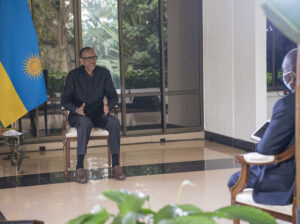
Rwanda is regarded as a leader in the progress of human rights for LGBT persons in East Africa. The President of Rwanda, Paul Kagame once stated “It (homosexuality) hasn’t been our problem. And we don’t intend to make it our problem.”
The Conversation’s May 16, 2022 article says “Rwanda is one of the few African countries that has assented to international conventions and continental frameworks that protect the human rights of all citizens, including the UN Declaration on Sexual Orientation and Gender Identity and the UN Report on Sexual Orientation and Gender Identity LGBT Populations. The country is also a signatory to the 2011 United Nations statement condemning violence against LGBT people and has joined nine other African countries to support LGBT rights.”
“Within Rwanda, however, domestic policy on LGBT rights is a grey area. Article 26 on marriage recognises marriage between biological male and female. This law amplifies ambiguity on Rwanda’s stance on the legality of LGBT people.”
According to this article, The Conversation carried out a study, in partnership with the Health Development Initiative, covering six districts within Kigali City and the Southern Province of Rwanda. “We conducted in-depth interviews and focus group discussions with LGBT individuals and leaders, and a survey with the general public to get a deeper understanding of LGBT people’s lived experiences. We also spoke with members of the public, specifically members of civil society organisations, teachers, healthcare providers, security operatives, and local authorities.”
The findings indicate that homosexuality is not welcomed in the Rwandan society in general, though the government does not criminalize it. “About three in four (74%) members of the public indicated that the sexual acts or gender expressions of LGBT people are ungodly while 49% felt that LGBT individuals were unnatural. Half (50%) believed that homosexuality, bisexuality, and transgenderism resulted from too much freedom and liberty.”
Africa
30 African countries outlaw homosexual sex, according to ILGA World Database, a platform spearheaded by the International Lesbian, Gay, Bisexual, Trans and Intersex Association.
Homosexuality in the world
61 nations prohibit homosexuality where 132 have legalized it. 24 out of 54 countries in Africa allow it. 22 out of 42 countries in Asia have decriminalized it. All 48 European nations have decriminalized it. 30 out of 35 countries including the United States of America the Americas permit it. 8 out of 14 ones allow it in Oceania.
Homosexuality in Russia is not tolerated. A February 15, 2024 article by Huma Right Watch reads “Russian courts have issued the first known extremism convictions arising from the 2023 Supreme Court decision designating the ‘international LGB movement’ as extremist. The Supreme Court decision opened the floodgates to allow prosecution of LGBT people and of anyone who defends their rights or expresses solidarity with them.
The Supreme Court ruling also declared that the rainbow flag is a forbidden symbol of the LGBT movement. “Displaying the flag is the basis for administrative penalties in at least three cases that courts have tried in recent weeks. In late January, a court in Nizhny Novgorod sentenced a woman to five days detention for wearing rainbow-colored earrings after an individual accosted her and her friend in a cafe.
Also in late January, a judge in Volgograd region handed down a fine over a rainbow flag published on a social media page. In early February, a court in Saratov fined a woman for posting a rainbow flag on social media,” states Human Right Watch. The Supreme Court ruling, which was handed down on November 30 but became public only in mid-January 2024, indicates that many more convictions may follow, thousands more at risk after top Court’s decision.”
In the meanwhile, NBC News in its February 1, 2024 story reports that a law passed last July prohibits legal or medical changes of gender for transgender Russians. This medium adds that a law preventing the promotion of “nontraditional” sexual relations has existed for over a decade. Reuters through its July 14, 2023 article specifies “A sweeping Russian draft law to ban legally or medically changing gender was approved by the lower house of parliament on Friday in its final reading.
The bill would bar Russians from changing their gender on official identity documents, which had been legal since 1997. Health workers would be banned from “performing medical interventions designed to change the sex of a person”, including surgery and prescribing hormone therapy.”

Earlier, in 2020, Russia’s President, Vladmir Vladmirovich Putin, declared that he would not permit the traditional notion of mother and father to be undermined by “parent number 1” and “parent number 2.” “As far as ‘parent number 1’ and ‘parent number 2’ goes, I’ve already spoken publicly about this and I’ll repeat it again: as long as I’m president this [same-sex marriage] will not happen. There will be dad and mum,” he stated as quoted by NBC News.
NBC News adds “During his two decades in power, Putin has closely aligned himself with the Orthodox Church and sought to distance Russia from liberal Western values, including attitudes toward homosexuality and gender fluidity.”
“Parent number 1” and “Parent number 2” constitute terms used to describe parents in a gender-neutral way, often in official forms, documents, or discussions to include diverse family structures. These terms are intended to accommodate same-sex couples, non-binary or gender-nonconforming parents- where a parent may not identify strictly as male or female, and avoidance of gender roles- to move away from traditional gender roles associated with “mother” and “father.”
For example, some local authorities in Italy have stopped employing the terms ‘mother’ and ‘father’ in documents, particularly in school forms, in favor of the ‘parent 1’ and ‘parent 2’. This is “not to discriminate against same-sex parents.”
Your point of view caught my eye and was very interesting. Thanks. I have a question for you.
Thanks for sharing. I read many of your blog posts, cool, your blog is very good.
Can you be more specific about the content of your article? After reading it, I still have some doubts. Hope you can help me.
Thanks for sharing. I read many of your blog posts, cool, your blog is very good.
Your point of view caught my eye and was very interesting. Thanks. I have a question for you.
I don’t think the title of your article matches the content lol. Just kidding, mainly because I had some doubts after reading the article.
Can you be more specific about the content of your article? After reading it, I still have some doubts. Hope you can help me.
I don’t think the title of your article matches the content lol. Just kidding, mainly because I had some doubts after reading the article.
Haha, I appreciate the playful feedback! I totally get why the title might’ve raised some doubts. Titles can sometimes be a bit tricky to match perfectly with the content, but it’s always great to hear different perspectives. If you have any thoughts on how it could be clearer or more aligned, I’m all ears!
Thank you for your sharing. I am worried that I lack creative ideas. It is your article that makes me full of hope. Thank you. But, I have a question, can you help me?
Your point of view caught my eye and was very interesting. Thanks. I have a question for you.
Thank you indeed for your encouraging feedback. We’d be happy to answer your question—go ahead and ask!
I don’t think the title of your article matches the content lol. Just kidding, mainly because I had some doubts after reading the article.
Binance koda,
Thank you for the comment and we are prepared to address any of your doubts—so, please tell us where you are experiencing doubts.
Your article helped me a lot, is there any more related content? Thanks!
We’re really glad to hear the article has been helpful—thank you for letting us know! Yes, we do carry some related content on the website and will continue sharing more.
I don’t think the title of your article matches the content lol. Just kidding, mainly because I had some doubts after reading the article.
Thanks for your comment—and we appreciated the playful tone, it made us smile! We’re glad you took the time to read the article. If you carry any doubts or questions, feel free to share them—we’re more than happy to clarify and continue the conversation.
Thank you for your sharing. I am worried that I lack creative ideas. It is your article that makes me full of hope. Thank you. But, I have a question, can you help me?
Thank you so much and ask your question, please.
Thank you for your sharing. I am worried that I lack creative ideas. It is your article that makes me full of hope. Thank you. But, I have a question, can you help me?
I don’t think the title of your article matches the content lol. Just kidding, mainly because I had some doubts after reading the article.
Haha, we appreciate your honesty—and your sense of humor! Thanks for reading the article and sharing your thoughts. We’d be happy to hear more about the doubts you had so we can clarify and make sure the content meets expectations.
Your point of view caught my eye and was very interesting. Thanks. I have a question for you.
Thank you so much indeed and we are ready to respond to your question, please ask it.
Your article helped me a lot, is there any more related content? Thanks!
Thank you so much for this feedback. Yes, the website contains more related content.
Your point of view caught my eye and was very interesting. Thanks. I have a question for you. binance conta aberta
We are pleased with your feedback and ready to respond to your question, as soon as you ask it.
Your article helped me a lot, is there any more related content? Thanks!
We are pleased to hear the article has been helpful for you—thank you for sharing that! Yes, we do have more related content.
Thanks for sharing. I read many of your blog posts, cool, your blog is very good.
Thank you so much indeed!
Thank you for your sharing. I am worried that I lack creative ideas. It is your article that makes me full of hope. Thank you. But, I have a question, can you help me?
We are excited! Ask the question, so we can address it.
Can you be more specific about the content of your article? After reading it, I still have some doubts. Hope you can help me. https://www.binance.info/register?ref=IHJUI7TF
While we really welcome your comment, we would be more pleased to comprehend your doubts so we can engage with them.
Your point of view caught my eye and was very interesting. Thanks. I have a question for you. https://accounts.binance.info/es-AR/register?ref=UT2YTZSU
Thank you so much indeed! Please, share the question.
Thank you for your sharing. I am worried that I lack creative ideas. It is your article that makes me full of hope. Thank you. But, I have a question, can you help me? https://www.binance.com/join?ref=IXBIAFVY
Thank you for your feedback. We are prepared to answer your question, as soon as you ask it.
Your point of view caught my eye and was very interesting. Thanks. I have a question for you.
We thank you a lot— we’re actually happy that the perspective has struck a chord with you. We truly admire your curiosity as well. Please feel free to share your question; we’d be more than happy to engage and explore it with you.
Can you be more specific about the content of your article? After reading it, I still have some doubts. Hope you can help me. https://accounts.binance.com/register/person?ref=JW3W4Y3A
Please, clarify us the doubts, so we may address them.
I don’t think the title of your article matches the content lol. Just kidding, mainly because I had some doubts after reading the article. https://accounts.binance.com/register/person?ref=MBLCVVZG
While we have grasped your kidding, we humbly request you clarify your doubts so we can deal with them.
Thanks for sharing. I read many of your blog posts, cool, your blog is very good.
Thank you so much indeed.
Thank you for your sharing. I am worried that I lack creative ideas. It is your article that makes me full of hope. Thank you. But, I have a question, can you help me? https://www.binance.bh/futures/ref?code=MBLCVVZG
Ask the question. Thank you for the comment.