By Life In Humanity Analysis Desk
While Narendra Modi’s journey, as explained in this piece, illustrates the transformative power of perseverance in developing a person’s character to an incredible extent, another story across Asia echoes a similar theme: Xi Jinping’s formative years in rural China where adversity and hard labor forged the resolve of a leader who would one day guide the world’s second most populous nation after India. China and India are neighboring countries and both global giants.
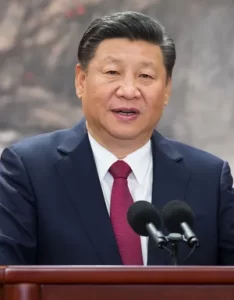
China’s President Jinping has risen from remote hills of Shaanxi Province to the pinnacle of global power—a journey shaped as much by hardship as by ambition. Sent as a teenager to the isolated village of Liangjiahe during the Cultural Revolution, Xi passed years hauling grain, tending fields, and sleeping on flea-infested straw mats in caves. Far from the comforts of Beijing, these formative years forged the discipline, resilience, and understanding of the people that would define his leadership.
Xi’s exile in Liangjiahe was more than survival; it amounted to a crucible. Immersed in rural life, he absorbed lessons in perseverance, service, and humility that cultivated both his character and political vision. From these austere beginnings, Xi has emerged as a leader molded by experience—one capable of steering the world’s second most developed country with a mix of pragmatism, strategy, and enduring determination. As promised, this is the piece completing our last article.
Jinping’s hard life in Liangjiahe
The Telegraph in its 19 October 2015 story headlined “The cave the Chinese president called home” highlights “Villagers in Liangjiahe in northern China can still remember the years when a tall, pale teenager worked with them in the fields and slept on a straw mat in a flea-infested cave. They have reason to reflect on those days all the more now – and profit from others’ interest in their little village – now that the young man sent from Beijing for seven years of hard labour is their president.
The misery of life in the impoverished village of a few dozen houses was too much for the 15-year-old Xi. Longing for his home comforts, he escaped. On his return to Beijing, his mother informed the authorities, and he was sent back – after undergoing six months ‘re-education’, it is believed.”
South China Morning Post (SCMP), with its 13 November 2016 story headlined “Chinese village where Xi Jinping lived as a teen hosts thousands of Communist pilgrims each day” explains the reason why Jinping went to live in this village. “Xi was ordered to Liangjiahe in 1969, when he was 15, as part of Mao Zedong’s ‘Up to the Mountain and Down to the Countryside Movement’, which saw educated city youth deployed to rural areas. The urbane son of a Communist Party grandee, Xi spent seven years hauling grain and sleeping in cave homes on flea-bitten brick beds.”
The New York Times published a story entitled “Tracing the Myth of a Chinese Leader to Its Roots” on 16 February 2011. It reads “The village comprises 100 households. The people’s homes are caves built into the dry hillsides. The elders farm fields of corn, pumpkins and potatoes; younger people have left for cities seeking work. A fine yellow silt covers the landscape, the signature feature of the Loess Plateau. Mr. Xi once wrote that he was ‘a son of the yellow earth.’ The son of a revolutionary hero, Mr. Xi parachuted in from a life of aristocracy in Beijing. Mr. Xi moved among several cave homes.”
While SCMP says that Jinping was sent there in response to Zedong’s movement, NPR —in a 9 November 2012 story entitled “For China’s Rising Leader, A Cave Was Once Home”— points out “Xi Jinping was sent by his family in Beijing to the remote rural village Liangjiahe in the hills of Shaanxi Province, hundreds of miles away, where for seven years he lived in a cave scooped out of the yellow loess hillsides. He arrived there in 1968, after his father, a revolutionary fighter and former vice premier, had fallen from political favor.”
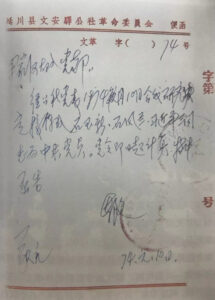
This story cites Tan Huwa from Yanan University as having said “Many kids were leaving Beijing and being seen off by their parents. Their kids were crying about leaving their lives in Beijing. But he was smiling when he left because leaving was his only way out. His father’s situation was such that if he stayed, he wouldn’t even amount to anything.”
The Telegraph also echoes this point in its mentioned story. “Xi Jinping was ‘sent down’ at the height of his father’s persecution, and he later said he was relieved to leave Beijing, where his life was in danger.” This media organization adds that Jinping himself once stated “‘There was nobody who wasn’t crying on the train, [but] only I was laughing’, he said in an interview recalling his departure from Beijing.
‘My relatives asked why I could laugh. I said I would cry if I didn’t go. If I stayed, I have no idea if I would have survived. It was a good thing to leave.’ Xi Zhongxun’s political fall, however, meant the younger Xi’s name was blackened, and he was only accepted into the Communist Party after applying 10 times.”
Gong Zhengfu who worked in the same team as Xi in the dusty hills of Liangjiahe told The Telegraph “Because of his father’s problems, he had trouble joining the Communist Party. Our community couldn’t approve that. [But] the county government said his father’s problems are his father’s, they are not related to his son.”
Shi Yuxin— a local villager who joined the Communist Party with Xi in 1974, five years after Xi arrived in Liangjiahe— told The Telegraph “Back then, life here was very tough. Nobody had enough food and he suffered a lot.”
Quoting Yanan University’s Tan Huwa, NPR says that the young princeling had to “eat bitterness” with the peasants. “He slept badly because he had fleas. One night, they cooked an exceptionally good dinner. They didn’t know why. The next day they found out that when they had drawn water from the well, they’d also pulled up a snake and a frog in their bucket and cooked them in their meal.”
NPR underlines that Jinping’s family encountered harsh suffering. “A Tough Period For The Family. During the dark years of the Cultural Revolution in the 1960s and ’70s, the extended Xi family suffered because of its links with Xi Zhongxun.” Jinping’s aunt, Ding Fengqin, told NPR “My nephews needed recommendations to be allowed to attend senior high school. But because of their association with Xi Zhongxun, they weren’t allowed. These kids were all academically able.”
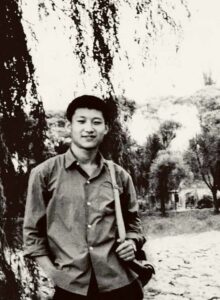
What Global Security.org states also corroborates the great suffering which Jinping underwent. “The village served as a site for the ‘Down to the Countryside Movement,’ a mass mobilization effort directed by the central leadership to re — educate urban youth through manual labor in the rural hinterlands. The physical environment of Liangjiahe was unforgiving, consisting of soft — dirt mountains and deep gullies where vegetation was sparse and the soil was difficult to cultivate. For the young arrivals from the capital, the transition from the relatively modern life of Beijing to the subsistence farming of northern Shaanxi was a profound shock that defined their character and political outlook for decades to come.”
It adds “The early experiences of the sent — down youth in Liangjiahe were marked by extreme hardship and a constant struggle for survival. The caves in which they sheltered were often infested with fleas, and the daily diet consisted primarily of coarse grains such as sorghum and millet, with meat being a rare luxury reserved for the most significant holidays. During the first few months, many of the urban youths found the physical labor and the isolation of the countryside to be unbearable, with some attempting to return to the cities or sinking into despondency [hopelessness].
However, the narrative that emerged from this period emphasized a process of ‘tempering’ or ‘steeling,’ wherein the harsh conditions served to forge a deeper connection between the educated elite and the peasant masses. This period was later cited as the ‘wellspring’ of the modern leadership’s focus on poverty alleviation and rural development, as it provided a firsthand look at the systemic challenges facing the Chinese interior.”
Jinping’s transformation in and contribution to the village
According to NPR in the mentioned story, Xue Yubin shared this testimony about Jinping. “He was a good young man. The villagers were impressed the son of such a high-ranking official would chat to ordinary people. He lived close to me. As a young man, he liked learning. I also liked reading books.”
NPR adds that Yubin entered the Communist army in 1947, and as a messenger, he used to transmit messages to a unit where Xi’s father, Zhongxun, was stationed. This familiarity with his father fascinated the younger Xi. Xue recalled “He often asked me about what battles I fought in and whether I had met his father. I said, ‘Yes, I met him when I was a military messenger.’ He looked like his father. As a young man, his character was quite strong. His lifestyle was like his father, both liked to be close to the masses.”
Cited by The New York Times in the story, Lü Nengzhong—a farmer who housed Xi Jinping for three years— also emphasized upon Jinping’s acute interest in reading. “He liked reading books. They were thick books, but I don’t know what they were about. He read until he fell asleep.” According to Lü, farming was not in Jinping’s blood. Even after one year here, Lü added, he struggled to balance two buckets of water on a bamboo pole across his shoulders.
It is the hardships, which Jinping underwent in the village, that paved the way for him to become who he is today, preparing him to overcome any future robust challenges. The New York Times says “Liangjiahe is the foundation of a by-the-bootstraps creation myth that Mr. Xi has long cultivated. In an essay for a 2003 book Mr. Xi said his seven years here led to a life transformation. Using standard Marxist-Leninist-Maoist language, he wrote about learning to serve the people.” NPR, in the November 2012 story, reports “Now Xi Jinping stands on the verge of becoming one of the most powerful men in the world. Next week he will take over as the general secretary of China’s Communist Party, and he is widely expected to ascend to the presidency in March.” His ascent to this highest office happened as exactly as anticipated, since he won this position in March 2013.
He himself indicated that those adversities actually steeled him extremely. According to The New York Times, Xi once declared “We mustn’t stand high above the masses nor consider the masses as our fish and meat. The hard life of the grass roots can cultivate one’s will. With that kind of experience, whatever difficulties I would encounter in the future, I am fully charged with courage to take on any challenge, to believe in the impossible and to conquer obstacles without panic.”
Several of other young people sent there came from military families, according to this media organization, and Mr. Xi befriended them. “But most joined the army after only half a year”. Xi wrote “I felt very lonely.” “But after I got used to the local life, especially after I lost myself in the local people, I felt happiness in life.
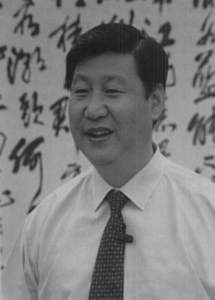
More and more people started to visit my cave house, which gradually became the center of our village. Every night, people of all ages knocked on my door. We talked about nearly everything. Even the local party secretary came to me for advice. He said that young people had seen the bigger world and knew more than he did.”
The Telegraph, in the aforesaid 2015 story, reports “Today, residents of Liangjiahe remember how Xi pushed carts of sand, tended to crops with his hands, and helped build a dam with local people.”
During the seven years, Jinping was so deeply integrated into this village that there were only tears during the time of his departure from there. “He did everything to benefit us. Everything he did was for us villagers,” Yuxin told The Telegraph, while remembering that Jinping cried, when he left. Jinping himself, as reported by The Telegraph, recalled with sorrow the day he left Liangjiahe in 1975. “When I woke up on the day I was leaving, there were lots of villagers outside my cave but they didn’t wake me up, they just waited. I cried at that time. It was the second time I cried in the seven years.”
Global Security.org highlights “Liangjiahe was a small, impoverished village located in the Loess Plateau of Shaanxi Province, characterized by its arid hills and traditional cave dwellings known as yaodong. This remote settlement gained international prominence due to its association with the early life of Xi Jinping.”
According to NPR, “In the village, Xi began working as the party secretary, holding study sessions and directing communal labor. He organized the villagers to dig 60 methane-generating pits. There’s one that still stands outside a cave where Xi used to live, complete with a sign noting it’s the first such pit in the province.”
The Chinese village has turned into a touristic attraction
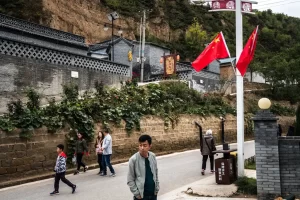
As indicated by Global Security.org, the village has been revolutionized unconceivably. “The transformation of Liangjiahe from a forgotten village into a national ‘sacred site’ occurred over several decades, accelerating rapidly after 2012. The village became the center of a sophisticated ‘Red Tourism’ industry, with thousands of political pilgrims and tourists arriving daily to visit the preserved cave dwellings and the various project sites.
The ‘Liangjiahe Story’ was institutionalized through books, documentaries, and museum exhibits, which framed the seven years spent there as a pivotal moment of personal and national transformation. The narrative was meticulously curated to highlight themes of resilience, loyalty, and the pursuit of a ‘better life for the people.’ By 2026, the village had become a mandatory stop on the study routes for party officials and military officers, serving as a live — action classroom for the study of the ‘new era’ of political thought.”
Before explaining that the village now constitutes a model for other rural regions, Global Security points out “The physical infrastructure of the village was upgraded to accommodate this influx of visitors, with the construction of modern visitor centers, shuttle bus routes, and high — quality hotels that were designed to resemble the original cave architecture. This commercialization was balanced with a strict ‘protection of the brand image,’ ensuring that the rustic and revolutionary aesthetic of the site remained intact. The local economy was completely revitalized by the tourism industry, with villagers transitioning from subsistence farming to roles as tour guides, shopkeepers, and service workers.”
“This economic success was presented as a microcosm of the national poverty alleviation campaign, demonstrating the effectiveness of combining historical legacy with modern development strategies. The village’s per capita income saw a dramatic increase, making it one of the most prosperous settlements in the region and a model for the ‘rural revitalization’ strategy. By early 2026, the ‘Liangjiahe model’ of governance was being applied to other rural areas across China, with an emphasis on developing local industries based on historical or cultural assets. The success of the village in turning its revolutionary heritage into a driver of economic growth was viewed as a template for other regions seeking to escape the poverty trap.”
Hardships as the hidden architect of enduring leadership
From the remote caves of Liangjiahe to the commanding heights of China, the journey of Jinping reveals a timeless truth: adversity oozes the ability to become the architect of unbelievable greatness. Sent away as a teenager during the upheavals of the Cultural Revolution, he encountered not privilege, but extreme poverty, hunger, and exhausting manual labor. He slept in flea-infested cave dwellings, hauled grain across harsh terrain, and struggled to adapt to a life free of urban comfort.
At first overwhelmed, he attempted to escape, yet circumstances compelled him to return and endure the very hardship he once resisted. This powerfully illustrates a timeless truth: one can rarely escape what has been designed to strengthen and refine their character. In other words, his story affirms a profound reality — we can seldom flee the very trials that destiny uses to toughen our resilience and prepare us for greater responsibility.
This decision to remain and persevere marked the beginning of his mammoth internal transformation. Rather than surrender to bitterness, he immersed himself in village life, learning directly from the peasants whose struggles forged his understanding of society.
Repeated rejections when applying to join the Communist Party did not deter him; instead, they deepened his resolve. Through patience, humility, and persistence, he gradually earned acceptance and trust. Now, Jinping is the Paramount Leader of the People’s Republic of China, holding the three most powerful state and party positions — General Secretary of the Chinese Communist Party, President of China, and Chairman of the Central Military Commission.
His cave dwelling became a gathering place for discussion, reflection, and shared aspirations. He organized practical improvements, including communal labor projects that tangibly benefited villagers. The same young man who once felt lonely grew into a unifying presence within the community.
When he finally departed, tears replaced the laughter that had characterized his arrival, testifying to genuine integration and mutual respect.
Years later, those seven formative years would be described as the wellspring of his courage and governing philosophy. The transformation of Liangjiahe into a model of rural revitalization mirrors the personal transformation that started there. Thus, the enduring lesson is unmistakable: when hardship is embraced as a teacher rather than feared as an enemy, it cultivates resilience strong enough to guide not only one’s destiny, but potentially that of a nation or even the world.
So, if you are now wrestling with hurdles appearing insurmountable, don’t worry at all. Those very obstacles constitute the instruments silently forging your endurance, colossally sharpening your wisdom, and grooming you for responsibilities far greater than you currently imagine. What feels like pressure today is often the discipline that tomorrow will demand of you. Stand firm, for the trials that refuse to break you are the same trials that are building the unconceivable strength you will one day rely upon.