By Editorial Staff
The International Rescue Committee [IRC] has identified the most pressing global crises in 2026. They include conflicts at record highs, aid being cut amid growing need, global hunger getting more and more severe, people being forced to flee their homes at record levels and climate change fueling new weather extremes and shocks.
“Each year, the IRC Emergency Watchlist identifies the countries at greatest risk of new or worsening humanitarian emergencies and highlights the world’s most pressing crises. The 2026 Watchlist sounds the alarm on a New World Disorder—a dangerous divergence in which humanitarian needs are surging while global support is collapsing,” points out the IRC.
“The 2026 Watchlist sounds the alarm on a dangerous divergence: as humanitarian crises surge, global support is collapsing. The 20 countries on the Watchlist are home to just 12 percent of the world’s population but account for 89 percent of people in humanitarian need, and nearly 50 percent of those in extreme poverty.”
Conflicts and cut aid
“Conflicts are at record highs. Armed conflict surged to historic highs in 2025. The world is experiencing more active wars than at any point since World War II, with one in seven people globally living with the threat of armed conflict. Wars are more widespread, more persistent and deadlier than in recent decades, driving unprecedented humanitarian fallout.
This brutal trend is likely to continue as conflicts are lasting longer, while diplomatic solutions like ceasefires are becoming more difficult to achieve. This dangerous ‘New World Disorder’ is characterized by shifting alliances and transactional deal-making which have replaced diplomacy and cooperation towards shared goals, highlights the IRC.
Upssala Conflict Data Program indicates how conflicts have been rising since 1950. For example, in 1950, 1955 and 1960 there happened 18, 13 and 15 conflicts respectively. However, in 2015, 2020 and 2024 there occurred 54, 57 and 61 conflicts respectively.
The IRC points out that aid which has been canceled by the US is negatively affecting individuals’ health at the time the aid is instead necessary. “Aid is being cut at a time of growing need. The United States, historically the single largest global donor, has slashed support for humanitarian aid under the new administration [Donald Trump’s administration].
By March 2025, 83% of USAID programs were cancelled, including most funding for maternal and child health, malaria, tuberculosis, and epidemic surveillance. Other major donors such as the UK, Germany and France have also cut back on their aid budgets. And these cuts came after years of aid budgets being stretched increasingly thin; just 25% of aid now goes to the fragile and conflict-affected countries on the IRC Watchlist, despite being home to 50% of people living in extreme poverty.”
This committee emphasizes that these cuts are deadly. “An estimated 1.8 million additional deaths were projected in 2025 alone, including nearly 700,000 children under five. If funding gaps persist, as many as 14 million preventable deaths could occur by 2030.”
Global hunger, forced displacement and climate change

The IRC says “Global hunger is growing more severe. Hunger is becoming deeper, deadlier and more concentrated in crisis-affected countries. Thirty-seven million people are now facing IPC Phase 4, the emergency level of food insecurity where families face extreme food gaps, very high malnutrition and rising deaths. This is the highest figure since 2021, and 86% of these cases are in Watchlist countries, up from 79% in 2024.
People are forced to flee their homes at record levels. The number of people forcibly displaced worldwide reached a new peak in 2024 before dropping slightly in 2025, to 117.3 million people. Four out of five people displaced globally (80%) have been uprooted by conflict, violence or persecution in Emergency Watchlist countries.”
IPC Phase 4 refers to a classification level in the Integrated Food Security Phase Classification (IPC) system which is used globally to measure and describe the severity of food insecurity. IPC Phase 4 is called emergency. At this level, households are experiencing extreme food consumption gaps, very high levels of acute malnutrition, and excess deaths due to starvation and disease risks linked to hunger.
The committee additionally states that Sudan and Gaza illustrate the speed and scale of today’s crises. “Since the war began in April 2023, more than 11.8 million Sudanese have been uprooted, including 9 million displaced inside the country. In Gaza, 1.9 million people, nearly the entire population, are now displaced. Most are women and children, many forced to flee multiple times. The longer that conflicts remain unresolved and civilians are put in harm’s way, the more people are forced to flee their homes each year.”
The United Nations High Commissioner for Refugees [UNHCR] shows that the number of people forced to quit their homes and residential places has been climbing since 2010. From 2010 to 2013, in each year there were approximately 30 million displaced people. But the year of 2025 registered more than 117 million displaced people across the world.
The IRC discloses “Climate change is fueling new weather extremes and shocks. Natural shocks like flooding and droughts are increasing in both frequency and severity. For example, Afghanistan is enduring its worst drought in 30 years, having recorded less than half of its usual rainfall this past winter.
These conditions pose a direct threat to both food security and economic stability in a country whereover 80% of the population depends on agriculture for their livelihoods. Yet, support for people living through the climate crisis is limited, with only a tiny fraction of climate funding going to climate adaptation programs.”
A recommendation set to reverse the situation
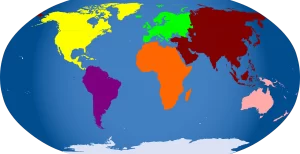
The IRC says “The Emergency Watchlist report is the International Rescue Committee’s (IRC) assessment of the 20 countries most likely to face a worsening humanitarian crisis in the coming year [2026]. The report is based on an analytically rigorous process that deploys 74 quantitative and qualitative variables, as well as qualitative insights from the IRC’s experience of working in more than 40 countries, to identify which countries to include on the list and how to rank them.
10 recommendations in this report offer practical and effective ways forward to protect communities in the 20 Watchlist countries from the staggering burden of this disorder and to build more sustainable, resilient systems for the future.”
“From profit to protection”
“Equipping peacemakers to resolve conflicts. A record number of conflicts drives the humanitarian crises described in this year’s Emergency Watchlist. These conflicts—incentivized by the geopolitical trends of the New World Disorder and profitable war economies—are becoming harder to resolve through the traditional diplomatic playbook,” laments the IRC.
“A reinvigorated diplomatic approach is essential to actively dismantle conflict economies and hold spoilers accountable. This requires a shift from traditional approaches to peacemaking to building broader, more inclusive consortiums for peace that can adapt to a multi-aligned world, dismantle the conflict economies that fuel violence and ensure women are at the table, ultimately building more sustainable peace.”
Recommendation 1 urges to dismantle the conflict economies. “To resolve conflicts fueled by profitable war economies, peace efforts must shift from focusing solely on political tracks to actively dismantling the illicit networks that fund violence, making peace more profitable than war.
Address economic drivers of conflict. Governments and U.N. peacemaking efforts should directly address the economic drivers of conflict. All diplomatic initiatives should include a hard-nosed analysis of who is profiting from the violence, moving away from a state-centric approach, to one that reflects the cross-border, regional and transnational dynamics at play in war economies, to enable the more effective use of targeted sanctions, anti-money laundering tools and other diplomatic channels to disrupt these complex networks.”
Recommendation 2 demands reinvesting in diplomacy and peacemaking, while involving “newly prominent powers”. “Build ‘consortiums for peace.’ In a multialigned world, states committed to peace should harness opportunities to work with, and support the efforts of, newly prominent powers to create a united front for peace. Newly prominent powers like Türkiye, the UAE and China all play a complex role in conflict zones, at times reinforcing conflict dynamics but at others mediating.
States committed to international norms should build what Majed al-Ansari of Qatar describes as ‘consortiums of countries willing to work for peace,’ placing civilian protection at the center of de-escalation efforts and ensuring coordination so that conflict actors cannot choose to engage only with whichever diplomatic processes they believe will best serve their interests.”
Recommendation 3 calls upon the world to restore respect for international humanitarian law (IHL). “To reverse the normalization of “à la carte” compliance with IHL, states must shift from rhetorical commitments to tangible compliance and accountability, using all levers to set clear standards and impose costs on those who violate the laws of war.
Rebuild accountability for war crimes. States should recommit to upholding IHL and hold violators accountable. This includes using domestic policy frameworks to limit, withhold and condition security assistance and arms sales when violations occur or when they are at serious risk of occurring.”
Recommendation 4 advocates for guaranteeing safe access for humanitarian aid. “To ensure aid workers can deliver lifesaving aid to people in need, states need to move from allowing aid to be a bargaining chip to preserving access through direct support to frontline responders and humanitarian diplomacy that is “firewalled” from political and military negotiations.
Investment in the ability of humanitarians to negotiate their own access is the most efficient and cost-effective way of maintaining assistance delivery. The IRC’s experience shows that with the right support to build the knowledge and skills of operational teams, access can be expanded and sustained, even in the most difficult contexts.”
Recommendation includes protecting people who face the greatest risks in conflict. “Not everyone is affected by conflict in the same ways. It is essential that governments recognize and respond to the specific threats facing different groups in conflict-affected countries, particularly those who already face marginalization. Prioritize women and girls.”
Recommendation 6 involves defending the rights of refugees and displaced people. “For 75 years, the 1951 Refugee Convention has enshrined essential protections for refugees and displaced people, saving lives. Yet, the New World Disorder is characterized by attacks on these principles. It is vital that governments recommit to cooperative efforts that protect those forced from their homes.
Recommit to international refugee protections. The basic standards established by the Refugee Convention— that refugees should not be returned to countries where their lives are in danger—should not be controversial and should be defended. By adhering to and defending International Refugee Law, and particularly the right to asylum, states can guarantee protections for those who require it. Simply put, processes for establishing rights to asylum should be fair and efficient.”
Recommendation 7 pushes the world to prioritize aid funding to maximize impact and sustainability. “As shrinking support dismantles cooperation on shared goals, the aid system must adapt. This means shifting from a model of limited resources spread thinly to a more sustainable approach built on a broader donor base and a targeted focus on the greatest needs. Wealthy countries, notably in the Gulf, are playing an increasingly prominent role and should continue to expand their support.”
Recommendation 8 entails investing in proven, high-impact solutions. “Governments and donors should increase the use of cash and voucher assistance (CVA). It is a proven, dignified and cost-effective way to help people in crisis, allowing them to buy what they need while supporting local markets. Cash improves food security and helps recipients invest in livelihoods and avoid debt or selling assets.”
Recommendation 9 insists upon transforming partnerships to unlock an impact. “To effectively serve communities affected by surging crises, the aid system must evolve from a top-down, riskaverse model to one that empowers local and frontline responders including women-led organizations through genuine partnerships.”
This recommendation strongly advises to diversify delivery partners. “Multilateral development banks (MDBs), like the World Bank, should expand funding beyond governments to Civil Society Organizations (CSOs), which are often better equipped to deliver services in conflict zones and regions beyond government control. The Bank faces a delivery challenge in conflict states where overreliance on government partners can interrupt programs, particularly when conflict erupts or when de facto authorities take over.
While the World Bank has reiterated the value of civil society partnerships in contexts afflicted by conflict and instability, now they should be expanded. The Bank can build on its experience of partnerships including with the NGO Consortium building climate resilience in Somalia, and the IRC’s work in the Democratic Republic of the Congo to combat sexual and gender-based violence.”
The final recommendation encourages to build resilience against climate shocks. “To address climate shocks in Watchlist countries, humanitarian and climate action must shift from a siloed, reactive approach to an integrated model that proactively builds resilience. This involves funding locally led adaptation and anticipatory action, particularly in conflict-affected areas where current climate adaptation efforts are severely underfunded despite extreme vulnerability.”
To address climate-related challenges, Global Challenges Foundation insists upon sufficient action. “Climate change is accelerating, pushing Earth systems toward dangerous tipping points. Even small temperature increases intensify extreme weather and strain societies. Despite global commitments, current action is insufficient. Preventing catastrophic impacts demands rapid emissions cuts, stronger governance and coordinated, equitable efforts to protect planetary stability.”
Feasibility of the recommendations?
While the IRC’s recommendations are rhetorically compelling and normatively persuasive, their execution raises important questions that cannot be overlooked. Many of the proposed solutions assume a level of international coordination, political will, and institutional capacity that is increasingly uncertain in a fragmented global order.
For instance, the call to dismantle conflict economies presumes that states and multilateral actors can effectively identify, target, and disrupt transnational networks of war profiteering. Yet in practice, these networks are often embedded within opaque financial systems, protected by powerful domestic and external actors, and sustained by geopolitical rivalries that complicate enforcement.
Similarly, the recommendation to “reinvigorate diplomacy” through broad consortiums of peace-oriented states presupposes a shared understanding of peace and compatible strategic interests among actors whose priorities frequently diverge. In a multipolar environment marked by transactional alliances, it remains unclear what incentives would consistently align states such as major global and regional powers behind a unified peace architecture.
The same tension applies to the strengthened enforcement of international humanitarian law: while the principle is widely endorsed, its application is uneven, particularly when violations are committed by strategically important partners whose cooperation is simultaneously required on other global issues.
Even recommendations that appear more technically grounded—such as expanding cash-based assistance, localizing humanitarian delivery, or diversifying partnerships—face persistent structural constraints. These include donor risk aversion, accountability requirements, and the political sensitivities surrounding the empowerment of non-state and civil society actors in fragile or conflict-affected settings. Likewise, efforts to integrate climate adaptation and humanitarian response confront entrenched institutional silos and fragmented funding streams that limit cross-sector coordination.
In this sense, the recommendations outline a coherent vision of what an improved global response should look like. Yet, they leave unresolved the harder question of how such transformation becomes politically feasible within a world defined as much by competition and constraint as by cooperation. Yet, we are convinced that the recommendations form an excellent set which-if executed- could solve the crises addressed in this article.