By Jean Baptiste Ndabananiye
Jiang Xueqin is a Chinese who has now been famed for his incredible predictions which have come true. Owing to the predictions, he is called a prophet or China’s Nostradamus, according to South China Morning Post’s 29 March 2026 story headlined “Jiang Xueqin, the viral ‘prophet’ predicting the world’s fate from a Beijing classroom”. He however rejects these names, but his predictions are seriously considered. We are now going to channel our attention to one of his recent videos “Professor Jiang Mindset” on his immensely popular Predictive History YouTube Channel.
We live in an age of data which we can access very easily, thanks to modern technologies. Notwithstanding, we still struggle to accept uncomfortable predictions or realities. Though our world is more evidence-based, we tend to resist conclusions which defy our assumptions.
Xueqin isn’t just predicting the future. He’s instead reading the past and the present with unusual clarity. What feels like foresight is often just pattern recognition applied without denial. The future doesn’t shock us because it’s unknowable. It does so, because we refuse to see it coming.
He didn’t simply predict the future—he decoded it
“Today, I want to do something a little different. Most of the time, I try to explain what is happening right now. I try to give you a framework, the tools to understand the world. And we have been doing that a lot recently, with this war [US-Israel war against Iran]. But today I want to make a prediction. Now, before I do that, I want to go back because I think it is very important, very important to understand how we got here.
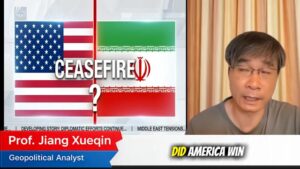
Because if you understand how I made the first three predictions, you will understand why the new prediction I am making today is not just a guess. It is not just an opinion, it is the logical conclusion of everything we have studied together in this class. Let us go back to May 2024. It is May 2024. Joe Biden is still the President of the United States. Donald Trump is facing 91 criminal charges. Most people in the media are saying Trump cannot win. Most people are saying there will no war with Iran. The world looks relatively stable. And in this classroom, I made three predictions.”
The predictions which have already been fulfilled as exactly as he extrapolated in May 2024 are those which we have mentioned at the very beginning of this piece. He is going to reiterate them. “Prediction number one: Donald Trump will win the presidential election in November 2024. Prediction number two: the United States will go to war with Iran. Prediction number three: the United States will lose this war and this loss will forever change the global order. Now two of the predictions have already come true. Trump won. America went to war with Iran and the whole world is watching to see if the third prediction comes true as well.
But here is what I want you to understand today. I did not make those predictions, because I am special. I did not make those predictions because I have some magical ability to see the future. I made those predictions because I used a method, a framework. And that framework is what I call predictive history: using game theory and structural patterns from history, to understand where things are going. And today I want to use that framework, to make my most important prediction yet.”
He continues “I want to tell you exactly how this war ends. Let me first explain the method and then I will walk you through the prediction step by step because I never want you to just accept what I say. I want you to see the reasoning. I want you to test it yourself. That is what this class is about. So, how do I make predictions.”

“I look at three things. First, I look at structure. What are the deep structural forces shaping a situation? Things like geography, population, economic systems. These things do not change quickly. They constrain what is possible. Second, I look at incentives. In game theory, every player in the game is trying to maximize their own interest. So, I ask what does each player actually want? Not what they say they want, what they actually want. Because those two things are often very different. Third I look at history. Not because history repeats itself exactly. It does not.”
He clarifies that he also considers history for these reasons. “Because humans are humans, empires are empires. And certain patterns appear again and again across thousands of years. If you know those patterns, you can see them playing out in real time. Now let me apply to this question of how this war ends. And I want to do this carefully step by step because the answer is not simple but it is logical. Once you see it, you cannot unsee it.”
What each of the war players genuinely wants, according to Xueqin
“First let us understand what each player actually wants, because as I said what people say they want and what they actually want are different things. What does America say it wants? It says it wants to stop Iran from getting a nuclear weapon. It says it wants to bring democracy to Iran. It says it wants peace and stability in the Middle East. What does America actually want? America wants to maintain control over the global oil supply because the global oil supply is the foundation of the petrodollar system, and the petrodollar system is the foundation of American financial power.”
He goes on saying “Remember what we have discussed before: since 1973, all oil in the world has been traded in US dollars. This creates permanent global demand for the dollar. It is what allows to print money and run huge deficits without its economy collapsing. Without the petrodollar, America cannot afford its military. Without its military, it cannot maintain its empire.
So, the real goal of this war is simple: control the Middle East, control the oil, keep the petrodollar alive. Now what does Iran want? Iran wants to survive. That is the most basic thing. Iran has been under American sanctions for decades. America has been trying to regime-change Iran since 1979. Iran has watched what happened to Iraq when America invaded. It watched Libya get destroyed. It watched Syria get destabilized. Iran knows that if it does not fight back, it will be destroyed. So, Iran’s first and most fundamental goal is survival.”
He further addresses Iran’s two other overarching objects and what Israel really wants. “But Iran also wants something more. Iran wants to be recognized as a legitimate regional power. It wants to end the sanctions permanently. It wants to control the Strait of Hormuz, not just now during the war, but permanently as a tool of economic leverage. And it wants all its allies —Yemen, Hezbollah, Iraq — to be protected as part of any settlement.

What does Israel want? Israel wants to replace America as the dominant power in the Middle East. I have explained this before and I will be brief today. Israel is auditioning to be the new empire. It is showing the global elite, the finance class, the asset managers, the people who actually run the global system that it is willing to fight, that it has the unity, the determination, the strategic alliance to be the muscle of the global system when America is no longer able to do the job.”
He doesn’t exclude what the Gulf States genuinely want. “Saudi Arabia, USA, Qatar, Kuwait. They want to survive, too. But they are weak. They cannot fight on their own. And right now they are trapped between two powers that are much stronger than them. Their strategy is to stay as close to whoever wins as possible, and they will flip very quickly to the winning side, when they see which way things are going.”
Structural forces
“Now I have the players and their real interests. Let us now look at the structural realities because interests alone do not determine outcomes. Structure does. So here are the key structural factors of this war and I want to go through these carefully because they are the foundation of my prediction. Structural fact number one: America is winning the air war but cannot win the ground war. Let me explain this. In air war, America is dominant. America has the most advanced fighter jets, the most advanced bombers, the most advanced targeting systems,” Xueqin explains.
“And in the opening phase of this war, America did serious damage to Iran. It struck nuclear facilities. It targeted leadership. It tried to destroy missile and drone factories. But here is the problem: you cannot win war from air alone. This is not just my opinion. This is one of the most well-established facts in all of military history. No country in modern history has ever regime-changed purely from the air. You can bomb the country endlessly and it will not surrender if the population is determined and the leadership is resilient.
The Americans bombed North Vietnam for years, Vietnam did not surrender. The British bombed Germany for years in World War II. Germany did not surrender from the air. It surrendered when Soviet and American ground troops were physically inside its territory. So, if America wants to achieve its goal of regime-change in Iran, it eventually has to send ground troops. There is no other option.”
He explains that ground invasion in Iran is inundated with immense challenges. “But ground invasion of Iran is, as I have said many times, potentially catastrophic. Iran is four times of Iraq. It has a population of 90 million people. It is mountainous. And Iran has been preparing for a ground invasion for 25 years. Not 25 days, not 25 months, 25 years. Underground bases in mountain ranges, decentralized drone factories, weapon systems specifically designed to destroy helicopters, armored vehicles and infantry.

This is not something America can simply bomb its way through. Structural fact number two: the cost exchange is unsustainable for America. We have discussed this before, but let me make it very simple. Iran fires a drone that costs $50 000. America fires a missile to shoot it down that costs three to $ 10 million. For every Iranian drone, America spends sixty to 300 times more money, trying to stop it. Iran fires these drones in swarms, hundreds at a time.”
Xueqin points out that the US is running through its interceptor stockpiles at a terrifying rate. “In fact, we already know that America is racing to accomplish its military objectives before it runs out of its interceptors. Let me say that again the most powerful military in history is in a race against the clock before it runs out of weapons. That is where we are. And America’s military-industrial complex, which is the most corrupt institution in the world as I have argued many times, cannot quickly replace these stockpiles.
The F-35 took twenty-six years to develop. Interceptor missiles took years to produce. Iran’s drone factories, on the other hand, are dispersed across the country, hidden in basements, warehouses, and can be rebuilt quickly even after strikes. This is an asymmetry that only gets worse for America over time.”
The third structural fact, according to Xueqin, is that the economic pressure is real and growing every day. “The Strait of Hormuz carries 20% of the world’s oil supply. Iran is effectively controlling it right now. This is not just a military issue. This is an economic weapon pointed directly at the global economy. And now Yemen has entered the war and is threatening the Red Sea which carries another 12 to 15% of global trade. Think about what happens when both of the choke points are disrupted at the same time.
Oil goes to one hundred fifty, two hundred dollars a barrel. Fertilizer becomes scarce. Food prices rise globally. And a global recession begins. This creates political pressure inside America that no president can resist because ordinary Americans are already asking ‘Why are we fighting this war? Why are gas prices going up? Why is my grocery bill going up?’ And the answer is this war.”
He says that the fourth structural fact is that American political will is fragile and declining. “Only about 4o% of Americans support this war right now. That number will go down, not up as casualties increase and economic pain grows. America is not a nation that accepts casualties. We saw this in Vietnam, Iraq, Afghanistan. Every time America gets into a long, expensive, painful war with no clear victory in sight, the political will collapses. And with it, the ability to fund and sustain the war collapses too. Iran knows this.
Iran has studied American psychology carefully. For 2o years, Iran has been analyzing American political behavior. It knows that the American public has a pain threshold. And Iran’s entire strategy is built around pushing America past that threshold.”
The prediction?
“Now I have the structure, the players and their interests and I have the key constraints. Let me give you the prediction. I believe this war ends in one of two ways. And which way ends depends on one critical question: Does America send ground troops into Iran or not? Let me explain both scenarios. Scenario one: America does not send ground troops. It keeps this an air war. The war goes on months, possibly years. America depletes its interceptor stockpiles. The cost keeps rising. The political pressure at home keeps building. Oil prices stay elevated, the global economy suffers and eventually— and this is the key word— eventually America looks for an exit, a face-saving way out.
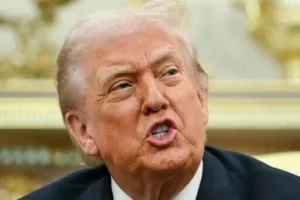
Trump goes on television and says something like we have achieved our objectives. We have significantly degraded Iran’s military capabilities. We are declaring victory and bringing our forces home. But is here what actually happens: America withdraws from the Middle East, the Gulf States seeing that America is leaving immediately start hedging. Some of them— Qatar, Oman —move toward Iran. Others—Saudi Arabia ,UAE—move toward Israel. The petrodollar system weakens significantly and Iran still standing in control of the Strait of Hormuz emerges as a legitimate regional power for the first time in decades. In this scenario, America loses the war,” expounds Xueqin.
He underlines that, in this scenario, the United States of America has not been devastated. “But the loss is not catastrophic. America survives. It does not collapse. It is weakened, yes. Its credibility is damaged, ye, but it does not fall.”
“Let me tell you scenario two: America sends troops into Iran. The pressure from the GCC countries— Saudi Arabia, UAE— becomes unbearable because they are being pounded by Iranian drones and missiles and they are screaming at America to finish this once and for all. The pressure from Israel is enormous and Trump who does not have a clear strategy and who is increasingly desperate decides to roll the dice and send in the Marines. This is where things get dangerous because Iran has been waiting for exactly this moment.”
He explains the danger of the situation in the following words. “For 25 years, Iran has been planning for a ground invasion. It has underground military bases in mountain ranges that America has not located. It has weapon systems specifically designed for close-range combat that it has not yet used. And it has even something more powerful: a population of 90 people who believe this is a war for their survival.
But even more dangerous is what happens around Iran when ground troops go in. If America is physically inside Iran Iranian territory, what stop Iraq from moving its forces into Kuwait and Saudi Arabia simultaneously? What stops Yemen from entering Saudi Arabia from the south? Suddenly America’s bases in the Gulf— the bases it needs to supply and reinforce its ground troops in Iran—are threatened from multiple directions at once. America could find itself not just in a quagmire inside Iran but within its entire position in the Middle East collapsing around it.”
Xueqin elaborates on what the US has to carry out, to conduct a ground invasion in Iran. “In order to find a serious ground war in Iran, America would need hundreds of thousands of troops. The entire active US military is about 1.3 million people. America would have to institute a national draft. Young men as young as 18 would be forced to join the army and sent to fight in Iran. Do you think the American public would accept this? No. This would cause enormous social unrest inside America. It could cause something close to a civil war with American society.
It would be the end of Trump politically, and it would accelerate the financial collapse of the American economy. This is the ground invasion trap. And if America walks into it, the loss is not just a loss. It is a catastrophic, empire-ending loss. So, these are two scenarios: an air war that ends in a managed American retreat or a ground war that ends in American catastrophe.”
“Here are my three specific predictions for how this war ends”
“Based on these two scenarios and the structural analysis I have just walked you through. Prediction one: there will be no ground invasion of Iran. A full-scale invasion of Iran, I do not believe it will happen. The cost is simply too high. And even Trump, for all his impulsiveness, will eventually be told clearly and firmly that going in on the ground is the end of everything.
Prediction two: this war ends, with America withdrawing from the Middle East within twelve to twenty- four months. Here is how it happens. The economic pressure builds, oil pressures stay high, the American stock market suffers, the political opposition to the war inside America grows. And at some point, Russia, China, and Indi— the three great powers that are not directly in this war will make it very clear to Trump that the world cannot sustain this disruption. They will tell him privately, firmly, that it is time to stop. And Trump who cares deeply about the economy and his legacy will find a way to declare victory and leave.”
Prediction three represents the most crucial one. “After America leaves, the Middle East will be reorganized around two regional powers, Iran and Israel. This is the most important long-term prediction. When America withdraws from the Middle East, the vacuum does not stay empty.
Two powers will fill. Iran on one side controlling the Strait of Hormuz and the eastern part of the Middle East, with Russia and China as its economic partners. Israel on the other side, with its technological superiority, its intelligence capabilities, its deep connection to global finance, controlling the western part of the Middle East and the India-Middle East Europe trade corridor.”
Here, he discloses something astounding. “And here is the part that will surprise most people: Iran and Israel, despite being ideological enemies today will eventually find a way to coexist. Not as friends, never as friends, but as two strong regional powers that understand each other’s strength and choose to focus on the weak rather than fight each other endlessly. The GCC countries—Saudi Arabi, UAE, Qatar, Kuwait— will be split between them. Some will align with Iran, some with Israel and the Middle East will settle into a new multipolar order.
This is what I meant in 2024 that this war will ever change the global order. Because when American loses the region, it does not just lose the region. It loses the petrodollar. When it loses the petrodollar, it loses the financial foundation of its entire empire.”
Will nukes be employed?
“Let me address these three big questions that everyone is asking. Question one: will nuclear weapons be used? I am 100% confident that nuclear weapons will not be used in this war. I want to be very clear about this. Nukes are the ultimate taboo in international politics. Israel will not use nuclear weapons. America will not use nuclear weapons. And if I am wrong, well, we will all be dead and it will not matter. But, I am not wrong. Question two: will Trump negotiate a deal with Iran directly? No. And here is why. Iran will not negotiate with America directly right now.
Not because Iran is stubborn, but because Iran has a very logical reason not to. Every time Iran has negotiated with America in the past, America has broken the agreement. Question three: how long will this take? This is the hardest question. Empires move slowly. America has enormous resources. It can drag this on for years if it chooses to. But the economic pressure is real and it is building every day. My best estimate is that within 12 to 24 months, America will be looking seriously for an exit. And within two to three years, the broad outlines of the new Middle Eastern order will be clear.”
Xueqin, concludes stressing “But here is the honest truth: I cannot give you an exact date. Nobody can. What I can tell you is the direction. And the direction is this: America is leaving the Middle East. Iran is rising. The petrodollar is dying. And the world is becoming multipolar faster than anyone in Washington is willing to admit. Let me bring all this together with one final thought. In 2024 I made three predictions when nobody believed them. Everyone thought America is invincible. I did not make those predictions because I was brave. I made them because the structure of the situation made them logical.
Trump winning was the logical outcome of American political dysfunction. The war with Iran was the logical outcome of America’s desperate attempt to maintain its petrodollar empire. And America losing is the logical outcome of fighting a war it cannot sustain against an enemy it consistently underestimates in a region it can no longer afford to control.”
He provides a typical example from history, to justify his extrapolation. “The Athens that launched the Sicilian expedition in 415 BC was the was the most powerful-city sate in Greece. It sent its best ships, best generals, best soldiers to conquer Sicily. And the expedition was a complete disaster. Athens never recovered. Its empire declined and eventually Athens fell. Because it overextended itself, because hubris, arrogance led it into a trap it could not escape. America is in that trap now.”
He emphasizes “The question is not whether America will lose this war. Based on my analysis, that is already happening. The question is how quickly America recognizes this, how quickly it finds an exit and how much damage it does to itself and to the world before it accepts the reality. And the prediction I am making today is this: America will find its exist, it will be painful, humiliating. But America will survive. It will retreat, not collapse. And the world that emerges from this war will be fundamentally different from the world that existed before.
More multipolar, more balanced, more dangerous in some ways but also, and I believe this deeply, more honest. Because a world in which one empire controls everything is not a stable world. It is a world waiting for the moment when that empire makes its fatal mistakes. America made its fatal mistake, and history, as always, does not forgive those who ignore its lessons. Remember this is not prophecy.”