By Jean Baptiste Ndabananiye
It’s easy to forget the profound truth behind the late Robert Urich’s quote “A healthy outside starts from the inside” in a world often preoccupied with external appearances—fitness goals, beauty standards, and visible success. True well-being doesn’t begin with what we put on display for the world to see; it originates from within, in how we nourish our minds, bodies, and spirits. Far beyond surface-level appearances, our internal health acts as the foundation upon which our outward vitality is built.

This article explores the crucial link between our inner health and how it shapes our external well-being. From the food we eat to the thoughts we think, every internal decision we make plays a role in determining how we feel, how we look, and how we navigate the world. By nurturing our internal health—through mindful practices, proper nutrition, physical activity, and emotional care—we lay the groundwork for lasting and holistic health. This journey begins in the inside part of us, and when we commit ourselves to strengthening it, our outward health follows naturally. The article comprises these major sections:
- More on Urich and why he might have stated the words
- Mind-body connection
- Role of nutrition and lifestyle
- Mental health as the core of physical well-being
- Building a foundation for lasting health
- While his quote is true, why has the message or principle in it not helped him to defeat his disease like others guided by the principle?
More on Urich and why he might have stated the words
Robert Michael Urich, as his entire name, was an American actor best known for his roles in television series such as Vega$ and Spenser: For Hire. Born on December 19, 1946 in Ohio, he enjoyed a prolific career spanning three decades, during which he starred in numerous TV shows and films. Urich earned a bachelor’s degree in Radio and Television Communications from Florida State University and a master’s degree in Broadcast Research and Management from Michigan State University. He passed away on April 16, 2002.
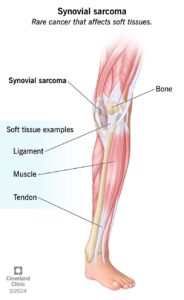
Seen his quote, you can assume that he experienced the toll of illness firsthand. You can thus conclude that, due to the illness, he came to deeply believe the importance of inner strength, emotional wellness, and mental resilience as the true foundation for outward health and vitality. You can also think that he was cured of the disease by means of the principle held in the quote. It is true that he battled a horrible disease. Nevertheless, he succumbed to it. He died of complications from synovial sarcoma, a rare form of cancer and slow-growing soft tissue cancer.
“It doesn’t always cause pain, and symptoms can resemble those of other, more common health conditions like arthritis or bursitis. The outlook is more favorable if a surgeon can remove the entire tumor before it spreads,”—says Cleveland Clinic, a more-than 100 year nonprofit multispecialty academic medical center integrating clinical and hospital care with research and education.
Los Angeles Times— in its 17 April 2002 story headlined “Robert Urich, 55; Popular Star of ‘Vega$’ and ‘Spenser’”— confirming his stardom, says “Robert Urich, the personable actor best known for his tough-guy TV roles as Las Vegas private detective Dan Tana on ‘Vega$’ and as Robert Parker’s sophisticated Boston private investigator in ‘Spenser: For Hire,’ died Tuesday morning of cancer. He was 55.”
But the question remains: is it because of this illness that he crafted the quote? While his quote is true, why has the message or principle in it not helped him to defeat the disease like some others guided by the principle? Whereas the first component of this question is answered in this section, the last one will be addressed in our next article which will also cover these sections: mental health as the core of physical well-being and building a foundation for lasting health.
In a bid to respond to the question “Is it because of this illness that he crafted the quote?”, Life In Humanity has conducted a thorough investigation. Unfortunately, we have not found any direct evidence confirming that the quote was specifically inspired by his illness.
Did Urich really say this?
Also, while the quote is largely attributed to him across many online platforms, we have not been able to identify any major international media organizations or primary sources that explicitly corroborate its origin. That said, the absence of this quote among major media organizations does not necessarily disqualify Urich as its originator. Given his illness and his public advocacy for well-being, it remains plausible that his personal experience deepened his belief that true health begins from within.
UChicago Medicine unites a series of leading, mission-driven organizations— involving the University of Chicago Medical Center, Ingalls Memorial Hospital, the UChicago Medicine Care Network, the University of Chicago Pritzker School of Medicine and the University of Chicago Biological Sciences Division.
In its June 7, 1998 story entitled “Actors Robert Urich and Bonnie Hunt to speak at University of Chicago Hospitals cancer survivors celebration, June 7”, it reported “Cancer survivor and prolific television actor Robert Urich will be the keynote speaker for the University of Chicago Hospitals ninth annual ‘Celebration of Life’, a recognition of National Cancer Survivors Day.”

The following information from UChicago Medicine additionally suggests that he might have declared the words “A healthy outside starts from the inside”, yet still the same information raises questions too. UChicago Medicine recounted “Urich is one of nearly 8 million cancer survivors in the United States. The star of 10 television series–including the long-running ‘Spenser: For Hire’–Urich was diagnosed with synovial sarcoma, a rare soft-tissue cancer, in August 1996; he received aggressive radiation and chemotherapy.”
According to the same source, he himself said “I decided early that I wasn’t going to be a victim.” UChicago Medicine added “He chose to go public with his cancer diagnosis–an unusual decision for a mid-career actor–and took an active role in his care, becoming ‘a partner with my doctors in affecting my cure’.”
UChicago further said that Urich found time to re-assess his life. “There is a reason for all this to be happening,” he concluded. “You will become a better human being and you will see the spiritual brilliance of it all.”
Nevertheless, Urich was eventually killed by the cancer, as even affirmed by EW with its April 16, 2002 story “Robert Urich dies of cancer at 55”. EW—Entertainment Weekly constitutes an American digital entertainment news outlet well known for covering film, music, and books, among others.
He eventually quit our world, because of the cancer whereas UChicago Medicine stated that he had been successfully healed of it, declaring him a cancer survivor among millions of others. According to this internationally renowned healthcare institution, he had undergone aggressive radiation and chemotherapy.
Chemotherapy forms a type of cancer treatment that uses powerful drugs to kill cancer cells or stop their growth. It’s commonly employed to treat various types of cancer by targeting cells that divide and grow rapidly; which is a characteristic of cancer cells.
Radiation therapy (or radiotherapy) is a cancer treatment that uses high-energy radiation to destroy cancer cells or shrink tumors. It works by damaging the DNA inside the cancer cells, making it impossible for them to grow and divide. Over time, the damaged cells die off. Radiation therapy is often used in combination with other treatments like surgery and chemotherapy.

High-energy radiation is often applied in medical imaging, specifically in X-rays and CT scans (computed tomography), to visualize the inside of the body. This helps doctors to see the condition of tissues, organs, and bones, aiding in diagnosis.
With all this, did Urich actually execute his timeless wisdom words “A healthy outside starts from the inside”? That is why we have said that the above information from UChicago Medicine also elicits questions which we will try to respond to in our next article as already promised.
Mind-body connection
Urich’s quote really encapsulates the profound connection between our internal health and our external appearance. In the modern society, we often view health in terms of external factors—how we look, how fit we are, and how much energy we possess. But true health is not just about the outward manifestations; it begins within our body and mind. The mind-body connection is fundamental to understanding how the internal state directly affects our external well-being.
Scientific research supports the idea that mental and emotional health significantly influences physical health. When we experience stress, anxiety, or emotional turmoil; our bodies react in ways that can harm our physical health. Chronic stress, for example, leads to high blood pressure, weakened immune function, and increased risk of heart disease. This highlights the importance of nurturing our mental and emotional well-being, to maintain a healthy body.
Conversely, when we engage in activities that promote mental well-being— such as concentration on one thing at a time, positive thinking, and emotional regulation—, our bodies respond with improved immunity, reduced inflammation, and better overall health. This connection represents a powerful reminder that to achieve a healthy outward appearance, we must first cultivate health on the inside. The relationship between the mind and body is not one-sided; they influence and support each other in ways that cannot be ignored.
Exploring the science behind the mind-body connection and comprehending how stress, emotions, and mental health impact physical well-being are vital to keep our bodies full of health. Understanding this link is crucial for building a foundation of health that not only enhances our external appearance but also supports our long-term vitality.

One of renowned physicians on this planet, Dr. Jeffrey Rediger, and Sue France confirm it. France is an international motivational trainer, and author of “The Definitive Personal Assistant & Secretarial Handbook and The Definitive Executive Assistant & Managerial Handbook”.

“Neuroscience is my passion and I am constantly learning and understanding how best to use our brains to achieve goals and be the best we can be,” France says before pointing out that that complaining constantly or carrying negative thoughts will literally change your brain.
“When you have a thought, a neuron in your brain releases neurotransmitters and hormones to connect to another neuron via a synapse which connects to another neuron via a synapse and so on creating a neural pathway. When you repeatedly have the same thought, the same neurotransmitters will fire through the same neural pathway and eventually the brain will rewire itself so that certain thoughts get triggered more easily (it becomes a habit). You soon find yourself believing those thoughts are reality instead of perception.”
A neurotransmitter is a chemical messenger that helps brain cells (neurons) to communicate with each other or one another. It carries signals across a tiny gap between two neurons, allowing them to send messages to one another. These messages help to control things like mood, movement, thoughts, and several other functions in the body. Think of neurotransmitters as tiny delivery people that carry important messages from one neuron to the next.
A synapse is the tiny gap between two neurons where communication happens. When one neuron wants to send a message to another, it sends a neurotransmitter across this gap. The neurotransmitter then passes the message to the next neuron, allowing your brain and nervous system to function properly.
That is why our mindset fulfills a central role in shaping how we perceive and respond to the world around us. As France suggests, we possess the power to transform our experiences by consciously shifting negative thoughts into positive ones, ultimately influencing both our mental and physical well-being.
“The good news is that the same concept applies when you tell yourself positive things. So the next time you have a negative thought, turn it into a positive thought – look for what is good about the situation; what is valuable; what went well; how can it be useful; what can you learn from it? Use positive words instead of negative words whether you are talking to someone or even when talking to yourself! Practice thinking positively so that positive neurotransmitters fire easily and automatically and become a habit instead of the negative thoughts.

Remember this is not an easy task and that our brains our [are] naturally negative and we create 5 times as many negative thoughts than positive ones because our brains are looking for threat in order to keep us safe and help us to survive. Therefore, you need tenacity and determination. The Mind and body affect each other. Your mind and body interact and mutually influence each other. It is not possible to make a change in one without the other being affected. When we think differently, our bodies change. When we act differently we change our thoughts and feelings.”
Dr. Rediger says “The four pillars of health: healing your immune system, healing your nutrition, healing your stress response, and healing your identity. It’s the perception that creates the thought that creates the feeling. The link between our minds and bodies holds a well of potential when it came to radical healing — even mainstream medicine accepts that our stress levels and thought patterns, for example, can impact our physical health.
Everything we put into our bodies — from foods and toxins to thoughts and feelings — can shift immune function at a base level. Illness begins in the soul, and when a healing occurs there, the physical body then ‘catches up’ to this new reality. Chronic inflammation is a superhighway that runs straight to the most deadly diseases out there. Chronic inflammation comes from how we think, how we feel, how we live.”
Chronic inflammation is a long-lasting, persistent form of inflammation that occurs when the body’s immune system continues to respond to a threat or injury over a long period of time, even if there is no immediate danger. Unlike acute inflammation which is a normal and temporary response to injury or infection (like a sprained ankle or a cut), chronic inflammation can last for months or even years.
Inflammation is the body’s natural response to injury, infection, or harmful stimuli like toxins or pathogens. It’s a protective mechanism that helps the body to heal and combat harmful agents, but when it becomes excessive or prolonged, it can lead to health problems. For example, if you get a cut, the body sends immune cells to the affected area to prevent infection and begin healing.
Chronic inflammation can result from conditions like autoimmune diseases (where the immune system attacks healthy cells), ongoing infections, or lifestyle factors like poor diet or stress.
Dr. Rediger adds “Recent research is showing that we actually have three ‘brains’ — the head brain, heart brain, and gut brain — and our health and development depend on keeping them in balance and alignment. Some signals begin in the gut, or the heart, and flow upstream to the head brain, while others cascade from above. In this way, our thoughts and emotions have both instant and long-lasting effects on all our biological systems: nervous, endocrine, immune.” Life In Humanity will come back to the research on the three brains. The discovery sounds not only extremely interesting but also immensely useful.
Dr. Rediger bases his statement on his 17-year research which has generated a book called “Cured: The Life-Changing Science of Spontaneous Healing.” For more about him, you can read Once a skeptic of spiritual healing, a prominent physician is now its fervent promoter.
Role of nutrition and lifestyle
As even already underlined by Dr. Rediger, nutrition is one of the most direct ways to influence both our internal and external health. “You are what you eat” is more than just a popular saying; it stands as a truth backed by scientific research. What we consume affects how our body functions, how we feel, and how we look. A balanced diet rich in essential nutrients provides the fuel our body needs to perform optimally. However, poor dietary choices can engender negative effects on our health, manifesting as weight gain, skin issues, and low energy levels.
Eating a variety of whole foods—fruits, vegetables, lean proteins, whole grains, and healthy fats—supports internal health by nourishing our organs, boosting immune function, and maintaining hormonal balance. These foods are rich in vitamins, minerals, and antioxidants, which not only enhance our physical appearance but also improve our mental health. On the other hand, processed foods, high in sugar, unhealthy fats, and additives, can contribute to a range of health problems from obesity and diabetes to inflammation and mental fog.
Mental fog refers to a state of mental confusion or lack of clarity. People experiencing mental fog often feel like their thoughts are clouded, sluggish, or disorganized, making it hard for them to concentrate, think clearly, or remember things. It can feel like you’re mentally distracted or in a haze.

On her website, Nutrition By Lovnee, the nutritionist Lovneet Batra with more than 14 years of experience has written “My philosophy is simple: good food and good health are inseparable.” She has also written on her Instagram page“Brain fog, a common yet often overlooked phenomenon that can leave us feeling disoriented and struggling to perform at our best. Brain fog is not a singular condition but rather a cluster of symptoms that can manifest differently in each individual. It can stem from various factors, such as lack of sleep, stress, poor nutrition, hormonal imbalances, certain medications, or underlying health conditions.
Its impact may range from mild confusion and forgetfulness to difficulty concentrating, sluggishness, and a general sense of mental fatigue. The good news is that, just like a diet that will help your digestive health or immunity, there’s brain food out there that can help promote your energy and fight fatigue. Certain vitamins and minerals in foods can even help keep your brain sharp by battling a foggy mind or even memory loss.”
She mentions green leafy vegetables, blueberries, walnuts, pumpkin seeds, and turmeric as some of essential foods that help to clear mental fog.
Similarly, lifestyle choices, including physical activity, sleep, and hydration, are critical for internal health. Regular exercise strengthens the body, improves circulation, and releases endorphins which elevate mood and reduce stress. Adequate sleep allows the body to rest and repair, contributing to better immune function and mental clarity. Hydration plays a key role in maintaining bodily functions, including digestion, skin health, and cognitive performance.
In the meantime, whether or not Urich crafted those exact words, the wisdom they hold remains universal. In a world chasing surface-level cures, the truest healing still starts from within.
Very good https://lc.cx/xjXBQT
Thank you so much! We’re really glad you see that it’s very good — your feedback means a lot!