By Editorial Staff
Rwanda, a country that contributes only a drop to the ocean of global greenhouse gas emissions, is facing consequences of a crisis it has done little to create. Temperatures have already risen to 1.4°C in Rwanda—exceeding the global average—and could surge to 2.0°C by 2030. Rainfall patterns have grown erratic and unforgiving: the Northern and Western provinces are hit by shorter but more intense rainy seasons, while the East swings between brutal droughts and devastating downpours.
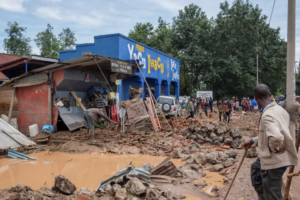
With agriculture and hydropower forming the backbone of both livelihoods and economic growth in Rwanda, climate change in the country does not represent a distant threat—it’s a lived catastrophe. In one year alone, weather-related disasters cost the country over $200 million in damages to homes, crops, roads, and lives. Yet Rwanda is not retreating into despair. It is pressing forward with one of Africa’s most ambitious Green Growth and Climate Resilient Strategies—positioning climate action not as an obstacle to development, but as a cornerstone of it.
Could this small, climate-vulnerable nation become a surprising role model for others—especially those with far greater responsibility and capacity? If Rwanda succeeds, not only will it safeguard its own future—it may also reshape the global narrative around who leads the fight against climate change. But, how can a low-emission, climate-vulnerable country like Rwanda lead by example in tackling climate change while balancing economic growth and resilience?
Rwanda’s current situation on climate change
Before addressing this subject, Life In Humanity is first going to take a little time to explain climate change in simpler ways. Climate change means long-term changes in the Earth’s usual weather patterns. They are long-term changes because climate change happens slowly over decades or even centuries, not just over days, weeks, or a single season like normal weather changes. It’s like the planet is slowly shifting how it behaves — for example, rendering some places hotter, drier, or wetter than they used to be.
There remains a hot debate around its causes. Some people say that climate change is mostly caused by humans burning things— like coal, oil, and gas (called fossil fuels)— which releases gases into the air. They affirm that these gases trap heat — like a blanket around the Earth — and make the planet warmer. This warming leads to problems like more heatwaves, stronger storms and floods, melting ice and rising sea levels, and animals and plants struggling to survive. Some other people vehemently deny that these changes proceed from human activity, as this article will briefly address it in the final section.
These diverging views however agree on a certain reality: climate change is occurring and means the way in which the Earth’s climate system is shifting over time — becoming warmer, more unpredictable, and increasingly disruptive to life as we know it.
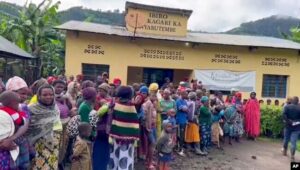
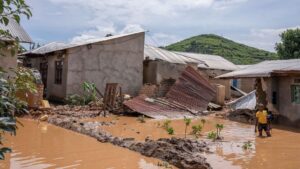
Back to Rwanda, as already emphasized, despite contributing little to the problem, this nation is bearing a heavy burden of climate change. The country is experiencing increasingly severe consequences from weather-related disasters—droughts, floods, and landslides—that threaten lives, infrastructure, and economic growth. From rising temperatures to unpredictable rainfall, the climate reality in Rwanda has already arrived.
As rainy seasons are growing shorter but significantly more intense besides prolonged droughts and excessive rains in Rwanda’s backbone—Northern, Eastern and Western provinces—, rain-fed agriculture is being seriously jeopardized. Crops are washed away in floods or wither in droughts, and the toll extends beyond fields: roads collapse, some homes are swept away, and lives are lost.
For example, the May 2023 flooding of Sebeya killed 135 people, chiefly in Rubavu District, who lived near the River Sebeya, accoding to a 18 June 2024 story— by the paper, Igihe—adding that the disaster wounded over 100 people and completely demolished 5,694 houses. That story headlined “Rubavu: Flood-affected commercial buildings reopen after rehabilitation of River Sebeya” furthermore says that 24 roads and eight water treatment plants were damaged.
Rwanda’s temperature rise, paired with erratic rainfall, directly undermines the country’s reliance on hydropower and agriculture. For a nation where tea and coffee exports are key economic pillars, and where rural livelihoods depend heavily on consistent rains, these shifts are deeply destabilizing.
Among other key sources for this article, Life In Humanity has consulted Rwanda’s portal—the Rwanda Climate Change Portal— established and which is managed by the Rwanda Environment Management Authority. Its goal is to provide information on climate change in Rwanda, create awareness about the country’s Green Growth and Climate Resilient Strategy and inspire action to address climate change and build resilience.
The portal in what it calls “Facts about climate change in Rwanda” reports “Rwanda is experiencing increased rainfall extremes. Rainy seasons are becoming shorter and more intense especially in the Northern and Western provinces. Rwanda has experienced a temperature increase of 1.4°C since 1970, higher than the global average and can expect an increase of up to 2.0°C by the 2030 from 1970. Rwanda’s eastern regions have experienced serious rainfall deficits in a number of years over past decades, alternated with rainfall excesses in other years.”
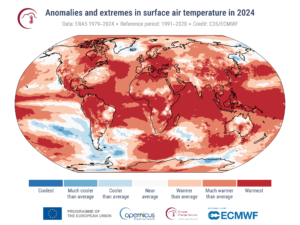
The global average warming compared to pre-industrial levels is estimated to be approximately 1.2°C to 1.3°C. This is based on data from institutions like the World Meteorological Organization and Copernicus Climate Change Service. Pre-industrial levels could refer to any period of time before the start of the industrial revolution. Meanwhile, the last year broke the record of surpassing the global average warming of 1.5°C. The Royal Meteorological Society explains “2024 was the hottest year ever recorded on Earth and the first calendar year to exceed the 1.5°C warming threshold. In fact, the global average temperature during 2024 was 1.6°C above the estimate of the pre-industrial level.
2024 is confirmed as the hottest year on record with a global average temperature of 15.10°C, overtaking 2023, the previous warmest year, by 0.12°C. 2024 is 1.60°C above an estimate of the pre-industrial level, making it the first calendar year to exceed the 1.5°C limit. Since July 2023, except for July 2024, every month exceeded the 1.5°C threshold. The average for 2023-2024 is 1.54°C.The past 10 years (2015–2024) were the 10 warmest on record. 2024 was the warmest year for all continents, except Antarctica and Australasia.”
2024 was reported as 1.6°C warmer, but it is compared to a pre-industrial average that seems to be around 13.5°C. However, many scientific sources estimate the pre-industrial average to be closer to 13.7°C or even 14.0°C. This creates a confusing picture, but it’s largely due to the use of different datasets and calculation methods—all of which still point to the same troubling reality: the Earth is warming fast. Thus, even though 2024 was recounted as 1.6°C warmer than pre-industrial levels, its global average temperature was 15.10°C.
The Paris Agreement recommends to keep the increase in global average temperature well below 2°C above pre-industrial levels, and pursue efforts to limit it to 1.5°C. However, the 1.5°C limit set by the Paris Agreement refers to long-term average warming, not individual years; meaning that with the hottest year on record:2024, the target hasn’t been officially breached yet. Yet still, the record-breaking heat of 2024 represents a clear warning that the world stands on the brink of crossing this line permanently unless urgent massive action is taken.
Earth.org points out the when the Earth reaches the global average temperature of 2.0°C, regions already prone to high temperatures such as the Middle East and North Africa will experience “super heatwaves” with temperatures exceeding 50C (122F). “This will make some areas potentially uninhabitable without significant adaptation measures.Droughts will become more frequent and more severe in many parts of the world. Besides affecting water resources, intense and prolonged droughts will decimate food crops and cause high rates of livestock deaths, leading to food insecurity.
While some areas will get drier, others will get more flooded. With 2C of warming, the IPCC [Intergovernmental Panel on Climate Change] estimates that the global population exposed to river flooding will be up to 170% higher compared to a 1.5C scenario. Heavy precipitation events will become more intense and frequent in many regions, particularly at high latitudes and in the tropics. This increase in extreme rainfall events will mean more flash floods and urban flooding. More powerful storms will bring stronger winds, more rainfall and higher storm surges, endangering coastal communities and infrastructure.”
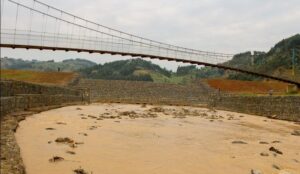
Amid the rising tide of climate challenges, the Rwanda Climate Change Portal starkly underscores the devastating financial toll on the side of the country. It clarifies “$200+ million per year. In 2018, climate-related disasters cost Rwanda more than 200 million dollars in damage to property, crops, livestock, and other losses. Rwanda is highly reliant on rain-fed agriculture both for rural livelihoods and exports of tea and coffee, in addition to depending on hydropower for half of its electricity generation. The country’s ongoing economic growth is therefore highly threatened by climate change.”
In the meantime, as a result of the Sebeya flooding, a bar owner in Rubavu city told The East African “I was preparing to get new stock for my bar on Wednesday morning. I had over Rwf1.5 million ($1,200) saved for it in the house. The rain took everything, the money, the furniture, the bar and the entire house. I was able to recover only Rwf 74,000 ($70) from the mud. I am grateful my family and I survived but our only source of income is completely gone.”
The Government of Rwanda points out that changes in temperature and precipitation and their distributions represent the key drivers of climate and weather-related disasters that hamper Rwandans and the country’s economy. The weather-connected catastrophes involve droughts, floods, and landslides causing damage to infrastructure, loss of lives and property including crops and contribute to soil erosion and water pollution.
Rwanda’s vowed bold action
The Government of Rwanda maintains that it is committed to urgent climate action, to restrict global temperature rise in line with the Paris Agreement. Despite contributing minimally to global greenhouse gas emissions, Rwanda says that it prioritizes both mitigation and adaptation due to its high vulnerability to climate change.
Rwanda’s current Nationally Determined Contribution—NDC—constitutes a document presenting the nation’s update of its first NDCs for mitigation and adaptation for the period to 2030. This piece of writing reads “The Government of Rwanda is committed to taking urgent action to mitigate and adapt to the effects of climate change. As a Party to the United Nations Framework Convention on Climate Change (UNFCCC), the country seeks to contribute to the ambitious goal of limiting temperature rise to 2oC with efforts to reach 1.5oC agreed under the Paris Agreement. Because Rwanda is highly vulnerable to climate change, adaptation is a key concern and a priority for the country.”

Rwanda’s footprint on the global climate stage is as light as a feather compared to industrial giants. The country is however not turning a blind eye to the storm clouds of climate change gathering overhead. The portal explains “As is true of most African nations, Rwanda’s contribution to climate change in the form of greenhouse gas (GHG) emissions is relatively small, however, although emissions from deforestation, agriculture, and land use, combined with strong expected emission growth from expected economic development and energy use are significant enough within Rwanda’s carbon footprint to demand a mitigation response.
Reflecting these aims, in 2011 the country adopted the Green Growth and Climate Resilience Strategy (GGCRS) setting out the country’s actions and priorities on climate change relating to both mitigation and adaptation and to how these will be mainstreamed within economic planning.”
According to UNDP—United Nations Development Program, Rwanda’s GGCRS adopted in 2011 was adapted to fit the required situation for Rwanda to become a developed, climate-resilient and low-carbon economy by 2050. The purpose of Rwanda’s GGCRS is threefold, two of which are to (1) mainstream climate change into all sectors of the economy, and (2) position Rwanda to access international funding and investment to achieve climate resilience and low carbon development. The revised GGCRS’s three strategic objectives are to
- achieve energy security and low-carbon energy supply that supports the development of green industry and services and avoids deforestation,
- achieve sustainable land use and water resource management that results in food security, appropriate urban development and preservation of biodiversity and ecosystem services, and
- ensure social protection, improved health and disaster risk reduction that reduces vulnerability to climate change impacts.
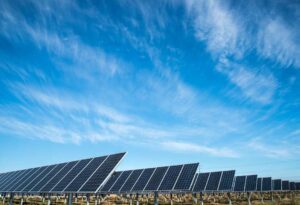
To achieve a climate resilient and green economic future, the strategy rests upon four thematic program areas—Green Industrialization and Trade, Green Urban Transition and Integration, Sustainable Land Use and Natural Resource Management and Vibrant Resilient Green Rural Livelihoods.
Industry and manufacturing are anticipated to increase to 24% of GDP—Gross Domestic Product— by 2035 and 33% of GDP by 2050, whereas the country aspires to be carbon-neutral by mid-century, according to the revised GGCRS. It furthermore highlights “This requires low-carbon and environmentally sound industrialization supported by energy and infrastructure systems that promote green industry and increase connectivity for regional and global trade. This includes resource-efficient infrastructure and physical capital to drive green industrial and trade growth, powered by low-carbon and climate-resilient energy and transport systems.
Rwanda will support the development of niche green industrial intensification that increases the country’s competitiveness and global integration. Focusing on GGCRS priority sectors, Rwanda’s green industry’s value-added contribution to GDP will almost double (from 18% to 33%) over the 2020 – 2050 period. Underpinning this green industrial growth will be a concerted effort to increase and maintain the share of renewables in the energy generation mix at or above 60% from 2025 onwards. These actions will ensure a resilient and productive industrial sector enabling Rwanda to green its growth aspirations under Vision 2050.”
As for Green Urban Transition and Integration, the strategy states “It is expected that half of all Rwandans will reside in urban areas by 2035 and 70% by 2050. This requires effective agglomeration of people into cities, towns, and rural settlements, linking them to green economic opportunities and climate resilient services. The intention is for sustainable and smart development of well-serviced cities, towns, and settlements, to maximize the socio-economic benefits of agglomeration while ensuring urban landscape resilience and quality of life.”
In terms of Sustainable Land Use and Natural Resource Management, the strategy specifies “Rwanda’s National Land Use and Development Master Plan (NLUDMP 2020-2050) is one of the most prioritized plans stemming from Vision 2050. As such, the GGCRS aligns strongly with the NLUDMP to enable the achievement of coherent, optimized, and resilient land and natural resource management to underpin Rwanda’s diversified economy of the future.”
According to the strategy, the aspect of Vibrant Resilient Green Rural Livelihoods involves inclusive growth over the next three decades. It adds that this requires the creation of green opportunities in the rural economy and climate resilience through off-grid services specifically targeted to rural inhabitants. “It is highly recommended to restructure the current rural settlement scattered structure towards a grouped rural settlement system that decongest agriculture and environmental sensitive zones. This includes resilient economic activities and support systems in Rwanda’s rural areas, to ensure sustainable growth opportunities and high quality of life, with judiciously managed natural resources.

The revised GGCRS enables Rwanda to maintain advantageous land use allocation as per NLUDMP for the highest valueadded contribution to GDP from natural resource conservation and optimum integrated value chain development. Through the strong foundation of land allocation, natural resource-based tourism and agriculture can be sustainably intensified, with the value added per worker exceeding US$ 14,000 per year by 2050. Rwanda’s vibrant rural economy is underpinned by a strong focus on resilience and social Revised Rwanda Green Growth and Climate Resilience Strategy.”
As for the financing of the strategy, the Government of Rwanda says that the investment necessitated to execute the revised GGCRS will amount to US $2 billion annually. It specifies that of this sum, approximately US $700 million will emanate from government budgets and spending. It additionally says that funding the revised strategy will be driven by the Ministry of Finance and Economic Planning and the Rwanda Green Fund.
The strategy document reads “The Rwanda Green Fund will drive partnerships to leverage additional finance from climate funds, the private sector, enhanced domestic revenues, and other innovative financing mechanisms. Ireme Invest — Rwanda’s green investment facility and a partnership between the Rwanda Development Bank and the Rwanda Green Fund — will catalyse climate finance to private sector actors and increase their participation in implementing the strategy.”
Succeeding, how will it convince other nations to do the same?
If Rwanda succeeds in its green strategy, it will not only be safeguarding its own future but also proving a critical point to the world: that climate leadership does not belong solely to the rich and powerful. In other words, a role model against the odds, Rwanda’s Green success could then reshape global climate leadership.
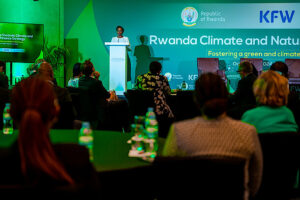
If Rwanda succeeds in its green strategy, it will be taking important steps toward securing its development in the context of a changing climate. As a country with relatively low emissions but high vulnerability to climate risks, Rwanda’s efforts reflect a practical response to its circumstances. Its approach—integrating environmental considerations into national planning, supporting climate-resilient agriculture, promoting low-carbon energy, and enhancing social protection—illustrates how countries can align development goals with environmental sustainability. These choices may offer lessons to both developing and industrialized nations seeking ways to address climate change while pursuing economic growth.
Still, even if Rwanda’s approach yields positive results, the global impact will remain extremely limited unless other nations, particularly those with larger economies and greater emissions, undertake similarly robust action. As we have illustrated it in this article: While Rwanda’s nature and climate finance strategy stands bold, global action remains necessary, Rwanda’s success, no matter how groundbreaking, will remain a drop in the ocean unless larger emitters—those whose actions are said to have shaped the climate crisis as know today—follow suit.
This is precisely why the question has been raised: can Rwanda’s example convince others to act? The answer depends not only on the strength of Rwanda’s policies, but also on the willingness of even powerful nations to embrace humility, learn from unlikely leaders, and recognize that the world cannot win the climate fight with only a few voices in the choir. The planet’s future demands a chorus—and Rwanda may well be among those singing the first verse.
Nevertheless, Life In Humanity hopes that other nations are not simply observing, but are also actively reflecting on and adjusting their own policies and actions. So, if Rwanda’s actions prove fruitful, they are likely to serve as a signal that climate action is not only feasible but also beneficial—economically, socially, and environmentally—even for countries with constrained resources. This would underscore the imperative for both advanced and developing nations to intensify their own efforts, adapting strategies to their contexts while contributing meaningfully to a shared global responsibility.
Meanwhile, climate change remains contentious
While the reality of climate change is unquestioned but instead widely acknowledged across the globe, its underlying causes remain a subject of hot debate. In its June 27, 2024 article “ The world’s largest survey on climate change is out – here’s what the results show”, the UNDP states “Peoples’ Climate Vote 2024 is the world’s largest standalone public opinion survey on climate change.
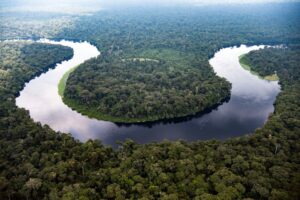
More than half of people globally said they were more worried about climate change now than last year, and four out of five want their countries to strengthen commitments to address climate change. The Peoples’ Climate Vote 2024 is the second edition of this global survey, bigger and more inclusive than before. More than 73,000 people speaking 87 different languages across 77 countries participated in the survey.”
The survey was conducted for UNDP by the University of Oxford operating in the United Kingdom and GeoPoll, a global leader in remote research. “Surey results show high levels of support for a range of climate actions, including nature restoration, rapid transition from fossil fuels and climate education in schools.
The results provide decision-makers with a reliable, inclusive and comprehensive snapshot of how climate change is affecting the world’s population. The results of the survey, which statistically represent 87 percent of the world’s population, show that climate change is on people’s minds everywhere. Globally, 56 percent said they were thinking about it daily or weekly.”
The UNDP’s story adds that 53 percent of people worldwide were more worried about climate change then than they were a year earlier. It explains that this is most likely linked to the increasing number of climate change impacts people hear about or have faced themselves. It also states that more than two out of five people (43 percent) think that extreme weather events were worse last year than the previous one. “Nearly eight in 10 people (78 percent) want more protection for people at risk from extreme weather.
Strikingly, almost two thirds (63 percent) are starting to take climate change impacts into consideration when making decisions like where to live or work and what to buy. A third of people (33 percent) said climate change is affecting their big life decisions a lot.”
Amid escalating climate concerns, a powerful global consensus is emerging: the vast majority of people are calling for stronger climate action from their governments and urging nations to unite beyond geopolitical divides to confront the crisis together. “Four out of five people around the world (80 percent) want more climate action from their country. They also seek global unity in responding to the crisis, with 86 percent agreeing that their countries should set aside geopolitical differences, such as those regarding trade and security, and work together on climate change.
There is a clear expectation that governments need to lead and strengthen their commitments to address climate change, with a resounding 89 percent of people wanting to see more climate action from their governments. At the same time, only 39 percent of people think big businesses are doing well in addressing climate change.”
Despite widespread agreement on the urgency of climate action, people remain deeply divided on the true causes of climate change. While some attribute it to human activity and industrial pollution, some others point to powerful nations believed to possess the ability to influence weather conditions—raising claims that some of the drastic climate shifts may be artificially induced. The others claim that the climate changes across the planet naturally occur on their own.
If such assertions hold truth, it would be profoundly troubling: a scenario where damage is intentionally inflicted upon the planet, only for affected countries to be urged into costly adaptation and mitigation efforts. Such manipulation, if real, would not only form a gross injustice but also a maximally saddening betrayal of global trust. We are currently preparing an exclusive article that delves deeper into this stark divergence, exploring the conflicting perspectives and the potential implications for our future.
Awesome https://lc.cx/xjXBQT
Thanks a lot! We are very happy that you find it awesome — we really admire your feedback!