By Editorial Staff
“Inflation was the most worrying topic worldwide as of July 2024, with one third [33%] of the respondents choosing that option. Poverty and social inequality as well as crime and violence followed behind. Moreover, following Russia’s invasion of Ukraine and the war in Gaza, 10 percent of the respondents were worried about military conflict between nations. Only four percent were worried about the COVID-19 pandemic, which dominated the world after its outbreak in 2020,” states Statista Research Department, in its survey report published on Jul 30, 2024. The survey was conducted from June 21 to July 4, 2024 worlwide with online pannel as a method of interviews. It involved 25,520 respondents in 29 countries, representing the globe, including Australia, Brazil, Canada, France, Germany, Great Britain, Italy, Israel, Japan, Mexico, Spain, the US, Argentina, Chile, Colombia, India, Indonesia, Malaysia, South Africa, and Turkey, among others.
Statista is a German online organ specializing in data gathering and visualization, rated as a leading online statistics, data, and market research platform. It aggregates statistical data from over 22,500 sources, providing users with access to a wide range of information, including market trends, consumer behavior, and industry insights, among others. It deals with various spheres including technology, media, finance, healthcare, and global business. This article builds on
- Global inflation and rising prices
- Inflation and food security
- Poverty and global development
- Africa carries an opportunity to avert inflation and poverty
Global inflation and rising prices
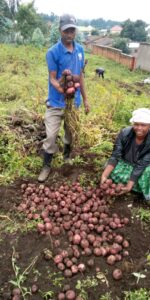
Statista points out that inflation rates have been rising considerably since the beginning of the COVID-19 pandemic in 2020. According to this platform, from 2020 to 2021 the worldwide inflation rate climbed to 4.7 percent from 3.5 percent, and from 2021 to 2022, the rate surged to 8.7 percent from 4.7 percent. “While rates are predicted to fall come 2025, many are continuing to struggle with price increases on basic necessities.
The inflation rate for Africa, the Middle East, and Latin America and the Caribbean reached more than 12 percent in 2023. Among the provided continents or regions, Asia and the Pacific had the lowest inflation rate that year. Consumer prices increased around the world following the COVID-19 pandemic and the Russian invasion of Ukraine.”
Asian Development Bank in its 13 June 2023 article says “Inflation erodes purchasing power for all, the burden of rising prices affects the poor and the vulnerable more severely as they spend a larger share of their incomes on basic needs, such as food and shelter. As such, maintaining a consistently moderate inflation rate is a key policy objective, with important implications for development goals.”
The issue raised by this bank stands clear in stories released by the Australian Broadcasting Corporation [ABC] and NBC News on 10 Mar 2024 and February 15, 2023 respectively. The ABC story features a certain person who has found himself compelled to reduce food costs, to survive. It reads “Dinner habits have changed for Fononga Pulu at his home in Tonga’s capital. Where he used to eat ‘ume — his favourite fish — he now buys chicken. Yam was once a staple, but now rice is the better option for his stretched food budget.”
He said “We used to buy fish from the fish market. We love eating seafood. But now fish is really expensive. I stopped eating fish … that’s how we survive.” Tonga is a Polynesian kingdom located in the South Pacific Ocean. This constitutional monarchy forms the only remaining indigenous monarchy in the Pacific.
NBC News said “With high inflation and rising interest rates on consumer debt, an increasing percentage of workers considered to be high-income earners now say they live paycheck to paycheck.According to a recent survey by the banking firm LendingClub and the payments news website PYMNTS, 64% of a representative sample of nearly 4,000 U.S. consumers now say they are just getting by [managing or surviving with minimal resources or under challenging circumstances] . That’s an increase from 61% the previous year.
Among the new cohort of people who say they are newly living paycheck to paycheck, 86% pull in more than $100,000 annually, the survey found. Given that the median household income in the U.S. is $70,784, the survey shows the soaring cost of living in America is catching up to even more well-off U.S. residents.”
ABC News added that more Americans than ever said they were feeling their wallets pinched, even those who were more financially comfortable. “These high-income earners are moving back into their childhood bedrooms and putting off vacations as inflation drags on. They include Devin Parker, 34, a Marine veteran who deployed to Iraq and now works as a logistics supervisor at AgCo, an agricultural firm in Maryland. With his disability benefits included, Parker earns about $102,000 annually.
But as his expenses accelerated last year, he decided to radically transform his lifestyle. Parker moved back into his childhood bedroom in his grandmother’s home, with his 8-year-old daughter in tow.” “There’s been a lot of humility,” Parker told NBC News.
That assuredly substantiates that the situation has become extremely worse for those who were already staggering financially.
The ABC’s story also sheds more light on factors that worsen inflation in some countries and reasons which have permitted Asia and the Pacific to contain inflation. Quoting a World Bank [WB] official, the corporation reports that Pacific Island nations import food and fuel, exposing them to global inflation. WB senior economist Ekaterine Vashakmadze says “High inflation in major partners is very important because they are importing that high inflation right from elsewhere.”
However, the ABC points out “But there are unique causes for high inflation levels in each country, too. Samoa is dealing with high commodity prices, increased freight costs, and a depreciating currency. Tonga’s volcanic and tsunami disaster in 2022 hit agricultural crop production, a problem worsened by higher global commodity prices. Vanuatu is recovering from three cyclones in 2023 that hit food supplies.”
“How are Pacific nations responding? Overall, inflation is falling across the region. Pacific Island nations have been trying to blunt the impact of inflation through tax exemptions and spending measures. Tuvalu used cash payouts to help people with cost-of-living pressures. And last year, Vanuatu’s government reduced import duties on fuel, rice, and chicken wings. Fiji and Solomon Islands waived import duties and gave tax exemptions for some staple foods. In Fiji, the government also subsidised fuel, reduced its value-added tax on essential goods and controlled food prices.”
ABC states that inflation is generally declining across economies in Asia. “And throughout most of the region, it didn’t reach the heights seen elsewhere.” The corporation adds that a recent IMF [International Monetary Fund] economic update indicated that inflation on average fell from 3.8 per cent in 2022 to 2.6 per cent in 2023. “By comparison, annual inflation in Australia reached 7.8 per cent in late 2022. Inflation has declined especially fast for emerging Asian economies. There are a few outliers — Laos and Myanmar have had huge inflation, stemming from high depreciation of their currencies.”
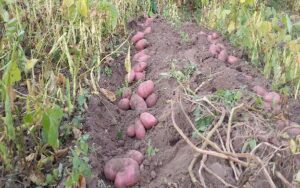
Nevertheless, “an abundance of crops and weaker demand have contributed to low inflation in China. But elsewhere in the region, the IMF predicts central banks are on course to reach their inflation targets in 2024.”
ABC additionally reports that senior economist at the ASEAN +3 Macroeconomic Research Office (AMRO), Catharine Kho, has said that governments in the region have employed price controls to shield their countries from inflation. “This is quite widely practised throughout the region, either on essential goods or on energy prices, or other goods and services that are most important for that particular economy,” she has explained.
For instance, according to ABC, Indonesia capped retail prices for packaged and bulk cooking oil, raised compulsory domestic sales of palm oil and elevated export levies for the product. This means a lot in the field of inflation curtailing.
It first signifies that the government of Indonesia determined a maximum price for both packaged and bulk cooking oil sold to consumers. This was intended to keep cooking oil affordable for the public.
Secondly, this government also established a policy requiring palm oil producers to sell a certain percentage of their production domestically rather than exporting it. By increasing this quota, Indonesia ensures that the sufficient supply of palm oil remains in the country to stabilize prices and meet domestic demand.
Finally, the government raised the taxes or fees that exporters must pay when shipping palm oil abroad. This discourages excessive exports and helps retain more palm oil within Indonesia for domestic use. The increased levies could also be used to generate revenue for the government or to fund subsidies or other interventions in the palm oil market.
“In Malaysia, authorities subsidised bottled cooking oil, capped retail prices for chicken and eggs, and abolished permits for some food imports. The Philippines cut tariffs on some food imports, while Thailand increased import quotas and cut tariffs on corn. Singapore and Indonesia have given cash to people struggling with higher prices. Governments also subsidised energy (Indonesia, Malaysia and Japan) and cut duties and taxes on fuels (Korea, the Philippines, Thailand and Vietnam),” says ABC.
As for support for people grappling with cost-of-living pressure, both Ms Kho and Ms Vashakmadze concur on the feature that the support should be targeted at people who really need it.
Ms Vashakmadze says policies such as transferring cash to vulnerable people stand more effective than blanket subsidies, “which can be costly.” “If you have an identified group of people, communities, households, vulnerable groups, providing them with cash subsidies, or other types of transfers … those are policies, which we highly support,” she says.
Inflation and food security
According to Statista, increases in food costs constitute one of the most prominent impacts of inflation globally. “In the United Kingdom, for example, consumers have indicated that they have worried more about food costs in 2023 than in previous years. Meanwhile, in Canada, only a small fraction of survey respondents have said that inflation has had little impact on household food costs.”
Like not only Pulu, in Tonga’s capital, whom inflation has forced to alter meal habits, consumers in other countries have responded similarly to rising food costs, through various coping mechanisms. “For example, Italian consumers have indicated that they purchase less unnecessary products, cut down on waste, and buy more discounted items in order to save costs,” clarifies Statista before adding “Outside of food consumption, consumers have changed their purchasing behaviors with other types of goods and services.
Surveying has indicated that nearly 60 percent of consumers have adjusted their shopping habits due to inflation. When holiday shopping in 2023, over 50 percent of Americans and over one third of British consumers said inflation had considerable impact on their holiday shopping. By generation, the Millenial generation has suffered the most due to rising inflation, while older generations have experienced less serious impacts.”
Poverty and global development
Statista points out that poverty and social inequality forms the second most distressing issues to respondents. “While poverty and inequality are still prominent, global poverty rates have been on a steady decline over the years. In 1994, nearly 64 percent of people in low-income countries and around 1 percent of people in high-income countries lived on less than 2.15 U.S. dollars per day.
By 2018, this had fallen to almost 44 percent of people in low-income countries and 0.6 of people in high-income countries. Moreover, less people globally are dying of preventable diseases and people are living longer lives. Despite these aspects, issues such as wealth inequality have global prominence.”
Whereas 33% of the respondents have answered that inflation represents the most concerning problem in 2024, crime and violence hold the share of 30%, poverty and social inequality with 29%, unemployment occupying 28%, financial/political corruption with 26% and healthcare issues at 23%.
Other remaining issues worry people at the range standing between 17% and 2%. For instance, climate change and immigration control concern 17% respondents, while only 2% are worried with access to credit. Our next different articles will come back to these issues, with poverty and global development being more detailed.
Africa carries an opportunity to avert inflation and poverty
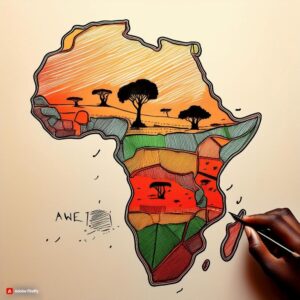
As already said, Africa counts among regions which face fiercer inflation. However different sources imply that this continent boasts an opportunity that it should exploit, to protect itself from inflation and poverty as the most troubling problems in 2024.
The World Bank in its April 2013 publication dubbed “Unlocking Africa’s Agricultural Potential” says “A country’s economic, environmental and social well-being is intricately linked to a healthy, wellperforming agricultural sector. Increasing investments in the farm economy can deliver high-impact development returns such as increasing rural incomes, boosting food security, making cheap and more nutritious food available to Africa’s bustling cities and protecting the environment through innovations such as climate smart agriculture.”
“Reducing poverty in Africa is the world’s supreme development challenge, and growing the agricultural sector is key to achieving a transformational impact. The agricultural economy employs 65–70 percent of Africa’s labor force and typically accounts for 30–40 percent of GDP. More than 70 percent of the continent’s poor live in rural areas, and agriculture is their most important economic activity.”
Feed Africa is an initiative by the African Development Bank (AfDB) aimed at transforming Africa’s agriculture sector to reach self-sufficiency and ensure food security across the continent. Launched in 2016, the initiative aligns with the AfDB’s High 5 priorities, concentrating on eliminating extreme poverty, decreasing hunger, and fostering sustainable agricultural development.
The preface of the Feed Africa Strategy for Agricultural Transformation in Africa 2016-2025 has been written by Dr. Akinwumi A. Adesina, the President of the AfDB. He has stated “It is time for Africa to feed itself. There is no reason for Africa to be a net food importing region, spending $35 billion annually on food imports. This is especially so because the continent has 65% of the uncultivated arable land left in the world to feed 9 billion people by 2050.
What we do with African agriculture today will determine the future of food in the world. Agricultural transformation will help to revitalize the rural areas, turning them from zones of economic misery today, to zones of economic prosperity. This will require significant investments in raising agricultural productivity, development of rural infrastructure, provision of affordable finance, as well as incentives for the private sector to establish food processing and Agro-allied industries in rural areas.”
He has added “With African countries facing challenges from decline in commodity prices, coupled with currency depreciations, the macroeconomic and fiscal pressure of food imports are becoming unbearable. Dependency on food imports is depressing domestic currencies, driving up inflation, while causing huge unemployment in rural areas, especially among the youths.

It is time for Africa to decisively take advantage of its agriculture sector. Agriculture should now be taken as a business, not a way of life. African countries need to pursue policies and programs that will allow the continent to become a net food exporting region, while using agricultural industrialization to add value to processed foods and export commodities.”
While during the formulation of strategy which must have been completed before 2016, Dr. Adesina said that Africa possessed 65% of uncultivated arable land, the WB had raised the same point around 3 years before. The same issue still persists today in 2024. The WB said “With an abundance of labor, land and untapped water, Africa has the resources necessary for a massive expansion of agricultural production. Of the world’s surface area suitable for sustainable production expansion—that is, non-protected, non-forested land, with low population density— Africa has the largest share by far, accounting for roughly 45 percent of the global total. While some large areas of the continent are arid or semi-arid, water resources are, on average, greatly underutilized.
Only 2 to 3 percent of renewable water resources in Africa are being used, compared to 5 percent worldwide. Furthermore, relative to other regions, Africa has low labor costs, which should encourage the production of labor-intensive farming-related products and services. One recent study found that minimum wages in Thailand were two to three times costlier than those in Ghana and 1.6 to 2.2 times those in Senegal. Notwithstanding these advantages, over the last 40 years Africa has been steadily losing its share of the global agricultural market. Today, Thailand exports more food products than all of Sub-Saharan Africa combined.”
The Voice of America [VOA] is the oldest and largest U.S. government-funded international multimedia broadcaster. On 28 July 2024, it ran a story headlined “Farmers in Africa say their soil is dying and chemical fertilizers are in part to blame.”
The story reiterates the issue in these words. “Problems with soil health are growing as the African continent struggles to feed itself. Africa has 65% of the world’s remaining uncultivated arable land but has spent about $60 billion annually to import food, according to the African Development Bank. The spending is estimated to jump to $110 billion by 2025 due to increased demand and changing consumption habits.”
Very interested!!!!!!!!
We thank you a lot for this inspirational comment.
Keep it up, this is very interesting and educative
Thank you so much for this very encouraging feedback;
I don’t think the title of your article matches the content lol. Just kidding, mainly because I had some doubts after reading the article.
Thanks for sharing. I read many of your blog posts, cool, your blog is very good.
Your article helped me a lot, is there any more related content? Thanks!
Your article helped me a lot, is there any more related content? Thanks! https://accounts.binance.info/en-IN/register?ref=UM6SMJM3
Your point of view caught my eye and was very interesting. Thanks. I have a question for you.
I don’t think the title of your article matches the content lol. Just kidding, mainly because I had some doubts after reading the article.
Your point of view caught my eye and was very interesting. Thanks. I have a question for you.
I don’t think the title of your article matches the content lol. Just kidding, mainly because I had some doubts after reading the article.
Haha, you almost had us worried there for a second! 😄 We appreciate the cheeky honesty — always welcome around here. Since you’ve mentioned bearing some doubts, we’d love to hear what specifically didn’t sit right or felt unclear. That way, we can either explain it better or take it into account for future pieces. Thanks again for reading — even with a side of some doubts!
Your article helped me a lot, is there any more related content? Thanks!
Thank you so much for your kind words — we’re really glad to hear the article was helpful to you! Yes, we do have more content related to this topic. Feel free to let us know what specific aspects you’re most interested in. Thanks again for reading and reaching out!
Can you be more specific about the content of your article? After reading it, I still have some doubts. Hope you can help me.
Yes, we will be specific as long as you enlighten us on the doubts.
Your point of view caught my eye and was very interesting. Thanks. I have a question for you.
Thank you so much for your kind words—we’re really glad the point of view stood out to you. Please feel free to ask your question; we’re here and happy to help!
Thank you for your sharing. I am worried that I lack creative ideas. It is your article that makes me full of hope. Thank you. But, I have a question, can you help me?
Thank you so much for sharing that with us—it truly means a lot. We are pleased that our article could spark some inspiration for you. Creativity often starts with small sparks, and you already possess the curiosity that fuels it—just keep exploring and experimenting!
Your article helped me a lot, is there any more related content? Thanks!
Thank you so much for the engagement. Yes, there is more related content.
Thanks for sharing. I read many of your blog posts, cool, your blog is very good.
We are thrilled by your kind and uplifting words.
Thank you for your sharing. I am worried that I lack creative ideas. It is your article that makes me full of hope. Thank you. But, I have a question, can you help me?
Thank you so much indeed! Please, ask the question.
Thank you for your sharing. I am worried that I lack creative ideas. It is your article that makes me full of hope. Thank you. But, I have a question, can you help me?
Thank you so much. Ask the question.
I don’t think the title of your article matches the content lol. Just kidding, mainly because I had some doubts after reading the article.
Thank you for sharing your thoughts! We would appreciate more details on what made you feel the title and content didn’t fully match.
Your article helped me a lot, is there any more related content? Thanks!
Yes, the website contains more related pieces of writing. We are thrilled that it has helped you a lot.
Thank you for your sharing. I am worried that I lack creative ideas. It is your article that makes me full of hope. Thank you. But, I have a question, can you help me?
We are excited to hear that. Please, share the question.
Can you be more specific about the content of your article? After reading it, I still have some doubts. Hope you can help me.
Please, help us to fathom your doubts so we can attempt to clear them. We thank you for reading the article.
Your article helped me a lot, is there any more related content? Thanks!
Yes, the website contains more related content. We are thrilled by your comment.
Thank you for your sharing. I am worried that I lack creative ideas. It is your article that makes me full of hope. Thank you. But, I have a question, can you help me?
Thank you so much for your comment. We are really prepared to respond to your question, if you raise it.
Your point of view caught my eye and was very interesting. Thanks. I have a question for you.
Thank you very much indeed, and share your question.
Thank you for your sharing. I am worried that I lack creative ideas. It is your article that makes me full of hope. Thank you. But, I have a question, can you help me? https://www.binance.com/register?ref=QCGZMHR6
Thank you a lot for your feed, and ask your question.
Your article helped me a lot, is there any more related content? Thanks!
We are happy to hear that. Yes, the website features more related content.