By Jean Baptiste Ndabananiye
When I first encountered a video — on YouTube — purporting to feature Professor Yuval Noah Harari talking about how artificial intelligence [AI] would fundamentally reconfigure human civilization by 2030, I was intrigued. This video headlined “Yuval Harari: by 2030, the world will be unrecognizable” astounded me with both its compelling narrative and its sweeping predictions. I first stumbled on the presentation on the YouTube channel, Think Higher.

Nevertheless, as I chanced upon the same video on another YouTube channel: The Awakened Era, I discovered noticeable differences in the wording of what was presented as the same speech. For instance, certain passages substituted words such as “imagine” with “picture,” like saying “Imagine the world…” on one channel and “picture the world…” on the other one. These discrepancies caused questions about whether the transcript formed a verbatim Harari address or had been generated using AI.
I was unable to find the transcript in a reputable source—such as an official recording, published transcript or interview in a reputable mainstream media house. I therefore inferred that it would be inappropriate to share the text as a verified presentation from Professor Harari. Nevertheless, issues raised throughout the transcription are too significant to dismiss outright. Several of its central themes—including AI, algorithmic decision-making, synthetic media, brain-computer interfaces, and the future of human society—represent the subject of ongoing research, public debate, and commentary by respected scholars, scientists, technology leaders, and mainstream media organizations.
Rather than considering the transcription an authenticated speech, this analysis employs it as a framework for inquiry. Each major claim, core point or thematic section will be scrutinized independently and compared with evidence from credible sources, including peer-reviewed research, recognized experts, and trustworthy news organizations. The objective is not to determine whether every sentence was actually uttered by Professor Harari, but to assess whether the underlying ideas withstand scrutiny in light of the best available evidence. This investigation doesn’t address the entire video; it focuses on its first 8 minutes.
Beyond the viral speech— what Stanford’s century-long AI study says about humanity’s future
“Stop for a moment and feel the weight of what’s actually happening around you. You are living through the final years of the world as it has always existed— not because civilization will collapse, but because in less than four years, the basic texture of daily human life will shift so completely that looking back will feel like looking at a different species.
Imagine trying to explain to a child born in 2030 what it was like to wait for an answer, to not know something instantly, to sit with a question for hours or days, simply because there was no one and nothing to ask,” according to the video, before adding “That child would look at you, with the same confusion you’d feel if someone tried to describe what it was like to live without electricity, without writing, without fire.
At this very moment, as you listen to these words, the last generation that remembers a world before constant algorithmic mediation is finishing its childhood. The people coming after them will think with the assistance of systems more capable than any human genius in history. They will form real relationships with entities that were never born. They won’t be less human than us.”
AI100 research aligns with the video’s central claim about AI’s transformative impact by 2030
On Research Gate, we have accessed a 04 June 2025 article headlined “Artificial Intelligence and Life in 2030- The One Hundred Year Study on Artificial Intelligence”, authored by Emmanuel K Toure and Kiran Kumar. Toure and Kumar say “Artificial Intelligence (AI) is rapidly transforming society, with profound implications for life by the year 2030 and beyond.
The One Hundred Year Study on Artificial Intelligence (AI100) provides a long-term, interdisciplinary examination of AI’s evolving role, exploring technological advances, societal impacts, ethical challenges, and governance needs. This article summarizes AI100’s insights into how AI is reshaping everyday life, the economy, and the environment, while also addressing critical issues such as privacy, fairness, accountability, and sustainability.”
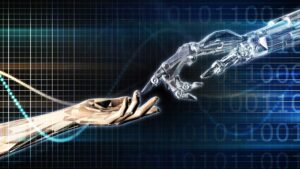
The article also agrees that AI will generate deep transformations by 2030. “AI is rapidly transforming society, with profound implications for life by the year 2030 and beyond. Recognizing that AI’s influence is not fleeting but rather a sustained, transformative process, AI100 adopts a comprehensive and methodical approach to study how AI will evolve and integrate into human life by 2030 and beyond.”
Toure and Kumar highlight that account held of its methodical approach, the effort (AI100) deserves to be trusted as a source producing dependable information with regard to AI implications. “Unlike the often speculative or sensational narratives surrounding AI, this initiative is grounded in rigorous, evidence-based research and multidisciplinary collaboration, engaging experts across computer science, ethics, economics, sociology, law, and public policy. This interdisciplinary framework is essential for capturing the complexity of AI’s role in modern society.
By weaving together insights from diverse fields, AI100 offers a nuanced understanding of AI’s multifaceted impacts—ranging from everyday applications like personalized assistants and healthcare diagnostics to broader shifts in economic structures, labor markets, social interactions, and environmental sustainability.”
Further details about the 100-year initiative
The One Hundred Year Study on Artificial Intelligence (AI100) constitutes one of the most ambitious projects ever launched on AI. A century-long research initiative, the study was designed to investigate and anticipate how AI will affect humanity over the course of 100 years. It does not form a study that has already lasted a century. Rather, it is a 100-year longitudinal project that was undertaken in 2014 and is intended to continue until approximately 2114. Data around this gigantic initiative are one of essential sources we have consulted, to scrutinize the claims of the speech.

The Standing Committee of the 100-year effort comprises a group of AI leaders with expertise in computer science, sociology, ethics, economics, and other disciplines. The Committee furnishes the Study Panel with questions for a report which is planned once every five years. Focus is placed upon crucial aspects of AI development involving the major risks and dangers of AI, its consequences on society, its public perception and the future of the sphere.
Study Panels assemble every 5 years to explore some areas of AI and its influences on society and the world. “A key responsibility of the Standing Committee is to assemble and track studies undertaken at five-year intervals.
The Standing Committee recruits a Study Panel, which works over a year’s time to assess developments with the advances and influences of AI on people and society, and provide assessments and recommendations in a final report and public presentation. Such reports include reflections and guidance on scientific, engineering, legal, ethical, economic, and societal fronts,” expounds the Stanford University in its undated account “History” of this 100-year program.
The Study Panel consists of core multi-disciplinary researchers in the field—experts who produce artificial intelligence algorithms or assess their influence on society as their main professional activity, and have been doing so for several years. This monumental work was initiated by Stanford University.
This university, which figures among top 5 most prestigious higher learning institutions globally, published a 16 December 2014 story titled “Stanford to host 100-year study on artificial intelligence”. In this piece, the university states “Stanford University will lead a 100-year effort to study the long-term implications of artificial intelligence in all aspects of life.

Stanford University has invited leading thinkers from several institutions to begin a 100-year effort to study and anticipate how the effects of artificial intelligence will ripple through every aspect of how people work, live and play. This effort, called the One Hundred Year Study on Artificial Intelligence, or AI100, is the brainchild of computer scientist and Stanford alumnus Eric Horvitz, who, among other credits, is a former president of the Association for the Advancement of Artificial Intelligence.”
The University, number 3 in the 2026-2027 Best Global Universities Rankings, continues “In that capacity, Horvitz convened a conference in 2009 at which top researchers considered advances in artificial intelligence and its influences on people and society, a discussion that illuminated the need for continuing study of AI’s long-term implications.
Now, together with Russ Altman, a professor of bioengineering and of computer science at Stanford, Horvitz has formed a committee that will select a panel to begin a series of periodic studies on how AI will affect automation, national security, psychology, ethics, law, privacy, democracy and other issues.”
The then Stanford President (2000–2016) — John Hennessy who helped to embark on the project— stated “Artificial intelligence is one of the most profound undertakings in science, and one that will affect every aspect of human life. Given Stanford’s pioneering role in AI and our interdisciplinary mindset, we feel obliged and qualified to host a conversation about how artificial intelligence will affect our children and our children’s children.”
Beyond the viral prediction —what evidence says about AI’s coming transformation of human life
Back to the viral presentation on the YouTube channels, it says “But their [children born in 2030] experience of being human will be as different from ours, as ours is from a farmer’s 1000 years ago. And none of this is happening in some distant abstract future. It is happening right now, in the offices where you work, in the apps you open without thinking, in the quiet decisions you make every day that you assume are entirely your own.
By 2030, you will look back and realize the largest transformation in human history happened quietly, disguised as convenience. Today we’re going to walk through how exactly this transformation is unfolding, why it can’t be reversed and what it actually means, not just to survive what’s coming, but to understand it clearly enough to make real choices inside it, the end of a 10, 000 year pattern.”
A certain fundamental aspect has to be initially comprehended, to fathom the situation which stands before humanity, according to the video. “To understand the scale of what’s ahead, we first need to recognize something uncomfortable. We are standing at the end of a specific historical era— one that has lasted roughly 10 000 years. Since the agricultural revolution, human life has rested on three pillars: defined physical territory, social hierarchy built around control of material resources, and knowledge passed between generations through language and writing. These three pillars produced everything we call civilization.
Cities, states, economies, religions, identities. Even the dramatic revolutions of the last three centuries operated inside the same basic frame. The Industrial Revolution changed the tools. The Information Revolution changed the speed, but neither one altered the underlying structure of human experience.”
The speech goes on, stating “A farmer in the year twelve hundred [1200] and a factory worker in 1950 had more in common than we usually admit. Both lived in a physical world they could touch. Both formed relationships face-to-face. Both built identities around where they were born and who raised them. This pattern held steady for so long that it created an illusion— the illusion that human condition itself is fixed. But between 2020 and 2033, three simultaneous shifts are dismantling that foundation and replacing it with something genuinely new.
The first is the transfer of decision-making from people to algorithms. The second is the dissolving boundary between what is real and what is synthetic. The third is the early stage of direct neural connectivity expanding consciousness beyond the limits of a single brain. Any one of these alone would be enough to reshape society. Together, they converge into something that will make 2030 feel like the opening year of a different era entirely.”
At this stage, the core message of the speech—that AI is likely to profoundly transform human life within the coming years—cannot simply be dismissed. The central message of the video is supported by substantial evidence, although some of its more specific predictions require further scrutiny. It is substantiated by the AI100 initiative and by Toure and Kumar’s analysis, although they also emphasize on the significant limitations that current AI systems still faces.
Toure and Kuma explain “Current State of Artificial Intelligence. Artificial Intelligence today represents a convergence of several powerful technologies, including machine learning, deep learning, natural language processing, and computer vision.
These methods enable machines to analyze massive datasets, recognize patterns, and perform tasks traditionally requiring human cognition. Current AI applications range from virtual assistants like Siri and Alexa, to recommendation systems on platforms such as Netflix, to sophisticated diagnostic tools in healthcare. AI-powered automation is transforming industries including manufacturing, transportation, finance, and customer service.”
They add “However, despite impressive achievements, AI systems still face significant limitations. Many AI models require enormous amounts of training data and computational power, and their decisions can be opaque or brittle when confronted with unfamiliar scenarios. AI often struggles with generalizing knowledge beyond narrowly defined tasks, and many systems lack common sense reasoning and contextual understanding.

Furthermore, concerns about bias in AI algorithms, driven by biased training data, raise questions about fairness and ethical use. The current landscape is one of rapid advancement but also cautious optimism, with ongoing research seeking to overcome technical challenges and improve AI’s reliability, explainability, and adaptability.”
The quiet transfer of decision-making: how AI is redefining human agency
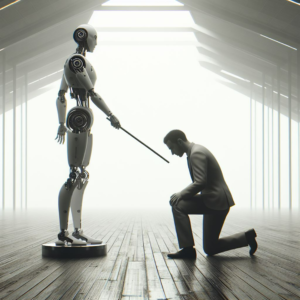
The presentation underlines that in 2030 AI will occupy one of the chief faculties of human beings since the existence of humanity: decision-taking. What is more alarming, however, is the possibility that machines will increasingly decide on behalf of humans, rather than merely serve as tools that assist humans to reach their own decisions —a profound shift in the relationship between human agency and technology.
“The quiet transfer of decisions—the first shift is already well underway. Right now, algorithms are deciding what music reaches your ears, what news reaches your eyes, what products appear in front of you and increasingly whom you might end up dating. This is only the beginning. By 2030, systems like this will be involved in decisions about your career path, your health, your finances and even what kind of person you should try to become in order to be happier. In 2030, AI will be making decisions about your career, health, financial investments and even what kind of person you should become to maximize your happiness.
Picture waking up to a notification generated from your sleep data, your movement patterns, your spending habits. Based on analysis of your biometric data, sleep patterns and neural activity during dreams, we recommend that you end your current relationship and relocating would increase your long-term life satisfaction by an estimated 31%. A career shift toward a healthcare technology would likely increase your sense of purpose. Would you like us to draft a plan? This isn’t speculative fiction. The underlying technology already exists. What’s changing is our willingness that a system might understand patterns in our own behavior better than we consciously do.”
The presentation emphasizes that, by 2030, AI will completely carry one of the most crucial capacities easily interpreted as a human prerogative: decision-making. Although this prospect should not be interpreted as implying that AI will fully replace human judgment, evidence already shows that algorithms are increasingly influencing choices in areas— such as information consumption, commerce, finance, healthcare, and social interactions.

Meanwhile, research suggests that AI can outperform humans in certain data-driven decisions but remains limited in contexts requiring ethics, intuition, creativity, and strategic foresight. What is more troubling is that machines may increasingly reach decisions on behalf of humans rather than merely act as tools assisting human decision-makers, raising profound questions about autonomy, accountability, and human agency.
Furthermore, the rapid proliferation of AI-generated content—including convincing deepfakes, synthetic songs indistinguishable from human creations, AI-produced images and memes, and increasingly sophisticated scams— provides compelling evidence that AI’s transformation of human life is already unfolding: not only through its growing influence on decision-making, but also through its ability to reshape human perceptions of reality, information verification, credibility, and the boundary between authentic and artificial things.
Professor Yuval Noah Harari has consistently argued that humanity is entering an unprecedented era in which artificial intelligence is becoming increasingly autonomous, capable of learning, creating, and influencing decisions in ways that challenge traditional assumptions about human control. He warns that this technological revolution could fundamentally change the fundamental structures of civilization, redesigning human relationships, institutions, governance, and even humanity’s place in the world in ways that may prove difficult to reverse.
Although Professor Harari does not frame these developments in exactly the same terms as the video under scrutiny, his writings and lectures strongly support the broader contention that the coming years could bring gargantuan changes to everyday human life unlike anything experienced in previous history. Consequently, it becomes difficult to dismiss the broader concerns raised by the video. However, the narration itself cannot be attributed to Professor Harari without independent verification, particularly given the unjustifiable discrepancies identified around its origin and presentation.
Nevertheless, many of the video’s central themes closely echo ideas that he has repeatedly expressed in his books, interviews, and public addresses. His documented statements are particularly significant because they demonstrate that the trajectory outlined in the video is not entirely detached from Professor Harari’s publicly expressed views, but instead reflects themes that he has consistently explored in verified sources.
When placed alongside Harari’s authenticated remarks, the video’s central message appears far less isolated, drawing upon concepts that he has openly discussed across multiple public platforms. In that light, the video should not be viewed as presenting ideas entirely foreign to Harari’s thinking, but rather as a dramatic synthesis of themes manifesting in his verifiable public statements.
AI-driven transformation of human experience—between optimized lives and synthetic realities

Coming back to the video message, to comprehend the next details from it, we have to work as if we were continuing it from where we stopped it last. In this framework, the next section of the video claims “This shift is quietly producing two new categories of people: the first are optimized lives— people who hand over the friction of daily decision-making to systems built to maximize their wellbeing and output, the second are self-directed lives— people who insist on making their own choices even the bad ones and pay a real cost for it in time, stress and inefficiency.
It’s the difference between driving manually on a highway full of self-coordinating vehicles; still technically possible but increasingly exhausting and increasingly rare. This divide won’t track neatly with income or education. It will be a philosophical fork in the road. Do you want a life that’s smoothed out for you or a life that’s unmistakably your own—mistakes included? By 2030, when real and synthetic stop being different questions, at the same time the line between what’s real and what’s manufactured is dissolving.”
It additionally states “Children growing up right now are the first generation in history for whom producing a convincing synthetic experience is easier than documenting a real one. An eight-year old today can open a free app and generate a video of herself talking to a dinosaur, walking on the moon or having a private conversation with someone famous—living or dead. For this generation, the question —did this actually happen? — is actually losing ground to a different question:
did this mean something? By 2030, synthetic experience will likely be indistinguishable from lived experience across nearly every sense, not just sight but touch, smell and even false implanted memories. You will be able to have a conversation with a digital version of a loved one who died, and this conversation will feel completely real, including mannerisms, shared memories and authentic emotional reactions.”
Again, even today it is possible to converse with a dead person, even though you are actually interacting with simulated personalities— digital recreations of the dead, using AI, rather than the deceased person’s actual consciousness. Tech developers and platforms now employ AI to build digital ghosts or death bots. These chatbots and avatars are trained using a person’s digital footprint—such as text messages, emails, voice recordings, and video footage—to accurately replicate their vocabulary, tone, and speech patterns.
The Conversation’s corroboration

The Conversation describes itself as a unique collaboration between academics and journalists which in a decade has become the world’s leading publisher of research-based news and analysis. It released a story entitled “Can you really talk to the dead using AI? We tried out ‘deathbots’ so you don’t have to” on 6 November 2025. It reports “Artificial intelligence (AI) is increasingly being used to preserve the voices and stories of the dead. From text-based chatbots that mimic loved ones to voice avatars that let you ‘speak’ with the deceased, a growing digital afterlife industry promises to make memory interactive, and, in some cases, eternal.
In our research, recently published in Memory, Mind & Media, we explored what happens when remembering the dead is left to an algorithm. We even tried talking to digital versions of ourselves to find out. ‘Deathbots are AI systems designed to simulate the voices, speech patterns and personalities of the deceased. They draw on a person’s digital traces – voice recordings, text messages, emails and social media posts – to create interactive avatars that appear to ‘speak’ from beyond the grave.”
AI has significantly reinforced these technologies of simulation indistinguishable from reality. The Conversation expounds “As the media theorist Simone Natale has said, these ‘technologies of illusion’ have deep roots in spiritualist traditions. But AI makes them far more convincing, and commercially viable. Our work is part of a project called Synthetic Pasts, which explores the impact technology has on the preservation of personal and collective memory.
For our study, we looked at services that claim to preserve or recreate a person’s voice, memories or digital presence using AI. To understand how they work, we became our own test subjects. We uploaded our own videos, messages and voice notes, creating ‘digital doubles’ of ourselves. In some cases, we played the role of users preparing our own synthetic afterlives. In others, we acted as the bereaved trying to talk to a digital version of someone who has passed away.”
What they have discovered?
The Conversation replies “What we found was both fascinating and unsettling. Some systems focus on preserving memory. They help users record and store personal stories, organised by theme, such as childhood, family or advice for loved ones. AI then indexes the content and guides people through it, like a searchable archive.
Others use generative AI to create ongoing conversations. You upload data about a deceased person – messages, posts, even voice samples – and the system builds a chatbot that can respond in their tone and style. It uses a subset of AI called machine learning (which improves through practice) to make its avatars evolve over time. Some present themselves as playful (‘host a séance with AI’), but the experience can feel eerily intimate. All the platforms claim to offer an ‘authentic’ emotional connection.”
However, The Conversation’s study however detected some weaknesses. “Yet the more personalisation we attempted, the more artificial it felt. When prompted by these systems we provided more information about ourselves, only to have the bot repeat the exact phrasing we had used in stiff, scripted replies. At times, the tone was incongruous, such as when cheerful emojis or upbeat phrasing appeared even when discussing death – a clear reminder that algorithms are poor at handling the emotional weight of loss.
The more archival-based tools we tested offered a calmer experience but also imposed rigid categories and limited nuance. As digital media scholar Andrew Hoskins has observed, memory in the age of AI becomes ‘conversational’ – shaped by interactions between human and machine. But in our experiments, those conversations often felt flat, exposing the limits of synthetic intimacy.”
To clarify it, The Conversation provides the following instances on the weight of loss and synthetic intimacy respectively: Oh hun… 😔 it (the death) is not something I’d wish for anyone to dwell on. It’s all a bit foggy now, to be honest. 🌫️ Let’s chat about something a bit cheerier, yeah?
Human: You were always so encouraging and supportive. I miss you. Deathbot: I’m right here for you, always ready to offer encouragement and support whenever you need it. And I miss you too… Let’s take on today together, with positivity and strength.
The Conversation indicates that these technologies allow resurrection but which is false. “Digital resurrection? The promise of these systems is a kind of resurrection – the reanimation of the dead through data. They offer to return voices, gestures and personalities, not as memories recalled but as presences simulated in real time. This kind of ‘algorithmic empathy’ can be persuasive, even moving, yet it exists within the limits of code, and quietly alters the experience of remembering, smoothing away the ambiguity and contradiction.
As the media theorist Wendy Chun has observed, digital technologies often conflate ‘storage’ with ‘memory’, promising perfect recall while erasing the role of forgetting – the absence that makes both mourning and remembering possible. In this sense, digital resurrection risks misunderstanding death itself: replacing the finality of loss with the endless availability of simulation, where the dead are always present, interactive and updated. AI can help preserve stories and voices, but it cannot replicate the living complexity of a person or a relationship.”
The Conversation adds “The ‘synthetic afterlives’ we encountered are compelling precisely because they fail. They remind us that memory is relational, contextual and not programmable. Our study suggests that while you can talk to the dead with AI, what you hear back reveals more about the technologies and platforms that profit from memory – and about ourselves – than about the ghosts they claim we can talk to.
Behind these experiences lies a business model. These are not memorial charities, they are tech start ups. Subscription fees, ‘freemium’ tiers and partnerships with insurers or care providers reveal how remembrance is being turned into a product. As the philosophers Carl Öhman and Luciano Floridi have argued, the digital afterlife industry operates within a ‘political economy of death’, where data continues to generate value long after a person’s life ends.”
Back to the video on the YouTube channels, it points out “This transformation is creating what researchers call fluid reality where the distinction between real and synthetic memories becomes impossible to determine. In 2030, it will be common for people to have difficulty distinguishing whether a striking childhood experience really happened or was an advanced simulation.
Even more disturbing, we will discover that this distinction matters less than we thought, if a synthetic experience generates the same emotions, the same learnings and the same personal transformations as a real experience, in what sense is it less valid? This question will force humanity to rethink fundamental concepts like authenticity, truth and meaning. In 2030, people will build entire identities based on experiences that never happened in the traditional sense but that profoundly shaped who they became.”
It adds “By the end of this decade, the first generation of safe and accessible neural implants will be widely available, allowing humans to connect directly to each other and to external information systems. This does not just mean browsing the internet with thought but sharing subjective experiences, emotions and even fragments of personality with other people. Imagine being able to literally feel what another person is feeling —not as a metaphorical empathy but as direct sensory experience or having instant access to the accumulated knowledge of experts in any field —not as external information, but as if it were your own expertise.”
In the meantime, Harvard Business School in its 29 September 2025 story titled “AI won’t make the call: Why human judgment still drives innovation” reports “New research shows human experience and judgment are still critical to making decisions, because AI can’t reliably distinguish good ideas from mediocre ones or guide long-term business strategies on its own.”
Cambridge Judge Business School, in its undated account “Human brain vs AI: what makes better decisions?”, says “Companies and other organisations are rapidly adopting artificial intelligence to drive strategy and planning. But there’s a key question: does AI actually make better decisions than humans? Academics art [at] Cambridge Judge Business School are using recent research to help answer this question. It’s not an easy query to answer.
Research by faculty and other academics at Cambridge Judge Business School outlined in this article sheds new light on where AI outperforms human decision-making, where it fails and what business leaders must do to integrate AI most effectively. While AI excels in data-driven optimisation, risk assessment and operational efficiency, it struggles when dealing with ethics, strategic foresight and unpredictability.”
This business school of the University of Cambridge goes on, saying “ And then there is another human element to consider: while some people may give too much credence to AI, others (and particularly older people) distrust or are otherwise averse to AI – and that cannot simply be ignored in setting organisational policy.
Where AI has a clear advantage: data analysis and modelling. When it comes to predictive modelling and data analysis, AI has a clear advantage as shown in a recent business simulation study by 3 Cambridge Judge academics on the automobile industry. Despite such strengths, AI often takes second place to humans when dealing with uncertainty, ambiguity, or human-driven complexity.”
Separating the unverified speech from the real AI transformation
The investigation into this viral presentation reveals a paradox: the speech itself cannot be confidently ascribed to Professor Harari, but several of the issues it raises are neither fictional nor disconnected from serious discussions about humanity’s future. The evidence considered throughout this analysis illustrates that AI is already immensely restructuring human life—touching decision-making, information environments, creativity, work, relationships, and ways people fathom reality itself.
Nevertheless, the future may not come true exactly as the video forecasts. Claims that AI will completely replace human judgment, make synthetic experiences indistinguishable from reality, or fundamentally redefine humanity by 2030 remain matters of debate rather than established facts—it remains to be seen. Current research indicates a more complex picture: AI possesses extraordinary capabilities, but it is continuing to sustain important limitations in areas requiring ethics, contextual understanding, emotional intelligence, and long-term human judgment.
The most important question, therefore, is not whether AI will transform humanity—it certainly will—but whether societies will control that transformation or simply adapt to changes driven by technological momentum. The challenge ahead is not merely learning how to use increasingly powerful machines, but determining what aspects of human autonomy, creativity, responsibility, and meaning must remain protected in this age.