By Editorial Staff
The recent launch of the Beginnings Fund, a $600 million initiative to drastically reduce maternal and newborn deaths in sub-Saharan Africa, does not merely represent a financial commitment—it forms a monumental act of solidarity, compassion, and vision. It affirms that every mother’s life matters, every newborn deserves a chance, and Africa’s future is worth investing in.
For this, the world owes immense gratitude to the coalition of philanthropists and organizations—including, among others, the Mohamed bin Zayed Foundation for Humanity, The ELMA Foundation, Gates Foundation, the Children’s Investment Fund Foundation, and Delta Philanthropies—that have come together with a singular goal: to help Africa end preventable maternal and neonatal deaths. Rwanda, Ethiopia, Ghana, Kenya, Malawi, Lesotho, and Nigeria are among the first 10 beneficiaries.
But while the generosity is profound, the larger call is to Africa itself: to rise not just as a recipient of aid, but as a leader, a giver, and ultimately a re-payer of hope.
Africa’s potential is not a dream—it’s a dormant giant
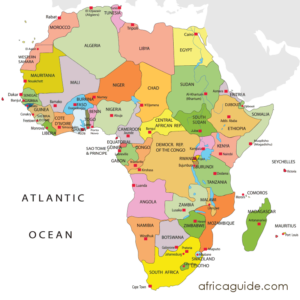
Africa is often spoken of in terms of need. But let’s flip that lens: Africa is the most resource-rich continent on the planet. From fertile lands and abundant water sources to vast mineral wealth and a youthful, innovative population, the continent possesses more than enough to secure the health and wellbeing of every mother and child—and to inspire the world in the process. This link —https://jocu.journals.ekb.eg/article_181404.html, which we have found to potentially belong to a platform forming part of the Egyptian Knowledge Bank (EKB) Journal Management System— figures among sources underlining our point.
In its paper, possibly published in 2021, headlined “Africa: A Land of Wealth and a Land of Poverty: Why the Richest Resource Continent Suffers from Poverty”, it affirms “The African continent is no doubt the most resource-abundant continent. Resources such as gold, diamond, oil, natural gas, copper, uranium, among others are mined in different parts of the continent. Almost every country in Africa has a deposit of natural resources.
The continent is endowed with about 97% of the world’s chromium, 90% of the world’s cobalt, 85% of the word’s platinum, 70% of the world’s cocoa, and 60% of the world’s coffee. Despite the abundance of resources, Africa is also the poorest continent in the world. Large populations in Africa still suffer from acute poverty. Life expectancy is the lowest in Africa compared to other continents. The continent also lags in other indicators of economic growth and development.”
Beneath the surface of generosity lies a sobering paradox: while Africa is often portrayed as a continent nourished by foreign aid, it quietly bleeds far more through unseen economic arteries, according to the paper. It suggests that like a tree whose fruits are picked by others before they ripen, Africa’s wealth is extracted from her hands, even as help is provided. “The continent has also been a recipient of foreign aid from developed country governments and international organizations. Generally, there is controversy about how beneficial foreign aid is to Africa.
According to a report by Conscience (2014), Africa receives about $133.7 billion each year from official aid, grants, loans to the private sector, remittances, etc. however, at the same time, some $191.9 billion is extracted from the continent in the form of debt repayments, multinational company profits, illicit financial flows, brain drain, illegal logging, and fishing, etc. Therefore, Africa suffers a net loss of about $85 billion. Hence most authors often argue that the notion that the West is aiding Africa is wrong. They argue that it is Africa that is aiding the West.”
The African Development Bank Group also corroborates Africa’s colossal wealth and potential, in its 29-Nov-2023 story titled “Resource-rich Africa has no excuse to remain poor, says African Development Bank president”. Dr. Akinwumi Adesina— in this story— says that with $6.5 trillion worth of natural resources, 65 percent of the world’s uncultivated arable land, and a vibrant youth population, Africa bears no excuse to be poor. Dr. Adesina is the bank group’s president. “Our governments must realise their responsibility to lift people out of poverty and into wealth as quickly as possible. It is doable,”Dr. Adesina declared.
What the continent lacks is not potential, but the cohesion, political will, and long-term investment vision to mobilize its assets toward human development. “If we manage our natural resources well, Africa has no reason to be poor. We have $6.2 trillion in natural resources. So how in the world are we still poor? We simply need to pull up our socks, stamp out corruption, and manage our resources in the interest of our countries and our people,” underlined Adesina.
He explained further “Saudi Arabia has oil, as does Nigeria. Kuwait has oil, as does Nigeria. Qatar has abundant gas, as does Nigeria and other countries. Yet, Nigeria is the country with the largest share of its population living below the extreme poverty line in 2023 in Africa. Clearly, there is something fundamentally wrong in our management, or rather mismanagement, of our natural resources.”
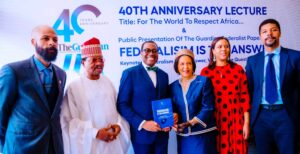
The Beginnings Fund, then, should not be seen merely as external assistance—it should be viewed as a challenge to awaken Africa’s own responsibility, creativity, and leadership. South Korea elevated its GDP[Gross Domestic Product] per capita from $350 in the 1960s to approximately $33,000 by 2023. Providing this nation as a typical example, Dr. Adesina underscored that Africa possesses the ability to transform herself too. “That is the kind of quantum leap that we need.”
He told the audience of ministers and other senior government officials, former state governors, business leaders, academics, and media at The Guardian’s event “We must ask ourselves, when will we make the shift that South Korea made, from being a country that was once on the low end of the development ladder to the rich, industrialised nation that it is today. I am optimistic about Nigeria. I am optimistic about Africa. I believe in Africa. Africa needs the right policies, investments, infrastructure, logistics, and financing…We must make sure that this is driven by a highly skilled, dynamic, and youthful workforce.”
From gratitude to accountability: Africa must lead
This is not to downplay the importance of the Fund. Its goal to reach 34 million women and babies and to save more than 300,000 lives by 2030 is significant. But the sustainability of these gains will depend not on philanthropists, but on African governments, institutions, and communities.
A press released published by All Africa on 29 April 2025 reads “The Beginnings Fund aims to prevent over 300,000 avoidable deaths by expanding access to quality care for mothers and babies in sub-Saharan Africa, in partnership with Ministries of Health.”
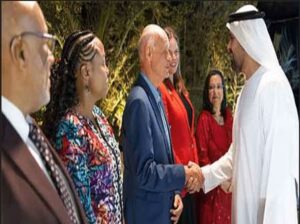
The launch materialized in Kanad Hospital in Abu Dhabi, attended by Ministers of Health from Malawi, Ethiopia, Rwanda, and Zanzibar, according to the press release. The latter one states “Over the next five years, the Fund will partner with up to 10 African countries to make targeted investments in the products, people, and systems required to improve and scale maternal and newborn health.
These investments will advance maternal and newborn survival in high-burden hospitals, health centers, and referral networks, in which most maternal and newborn deaths – the majority of which are preventable – occur.” The 10 countries include Ethiopia, Ghana, Kenya, Malawi, Lesotho, Nigeria, Rwanda, Tanzania, Uganda, and Zimbabwe.
The press release additionally reads “Newborn deaths in the first month of life are the single biggest driver of mortality in Sub-Saharan Africa, where 70% of maternal deaths also occur. Most of these deaths are preventable with trained health workers providing essential care to mothers and babies. Yet maternal and newborn health remains one of the most addressable, yet underfunded, areas in global health. Without transformative action, 182,000 women and 1.2 million newborns in Africa will continue to die each year from preventable causes, in addition to 950,000 stillbirths.”
Africa must do more than thank its allies—it must match their commitment. The generosity of others should not create dependency. It should inspire African nations to build systems that are resilient, inclusive, and proudly self-sustaining. That means:
- Unlocking and equitably managing Africa’s abundant natural resources, to drive inclusive economic transformation.
- Building robust and diversified economies that can sustainably finance public services including health and education.
- Empowering African institutions to lead development agendas, based on regional strengths and long-term visions.
- Harnessing innovation and technology to attain a mammoth impact.
- Upholding accountability, so every dollar or currency—local or international—produces gigantic results.
Africa’s turn to give back
Imagine a future—achievable within a generation—where African countries not only meet their maternal and child health targets, but surpass them. Imagine Rwanda, Nigeria, Kenya, or Senegal becoming centers of global health expertise, exporting solutions, training, and even funding to other parts of the world. That should be the ultimate vision: a future where Africa repays the world—not only in money, but also in inspiration, leadership, and solidarity. The Beginnings Fund has offered the match. Africa must light the fire.
Sir Chris Hohn, Founder and Chair of the Children’s Investment Fund Foundation, said “Mothers and babies dying in childbirth from preventable causes is a travesty – but ending this travesty is within our reach. Working with African governments, the Beginnings Fund will have a profound impact, giving millions of children a healthy start in life. However, this should only be the beginning.
To achieve its ambitious targets for 2030, the Beginnings Fund will need more global funders and philanthropists to step up. Most importantly, it will need to work hand in hand with government to increase funding and improve delivery of life-saving interventions to ensure African mothers and children survive and thrive.”
While Sir Hohn appealed for global action in favor of Africa, Dr. Adesina had previously stated that Africa could play a leading role in solving not only its own challenges but global ones. “While we must deal with bread-and-butter development issues, we must think strategically as we set ourselves on a path to becoming wealthy nations. Our countries must become great contributors to global wealth and development financing for others.”
Alice Kang’ethe, Chief Executive Officer of the Beginnings Fund said “African governments, with support from philanthropic and bilateral organizations, are at the forefront of advancing maternal and newborn health and making groundbreaking innovations.
The continent is making remarkable strides, but achieving lasting change requires collaborative action. I would like to express my gratitude to the African governments, national organizations and experts, and our founding investors who are part of this unique collaborative effort to drive lasting change across Africa.”
As African governments feature among those she thanked, they will be maximally lauded not merely for participating in collaborative efforts, but for boldly steering their nations toward true independence—by unlocking the continent’s vast natural wealth to build resilient economies capable of sustaining their own healthcare systems and beyond. Their deepest recognition will come not only from external partners, but from future generations of Africans who will thrive in a continent where prosperity is homegrown, systems are self-funded, and aid becomes a story of the past, not a pillar of the present.
One of ways to achieve this dream is glaring in Dr. Adesina’s words around what the African Development Bank Group is carrying out, to contribute to Africa’s progress. He said that this bank had invested about $8 billion in agriculture over the past seven years, enhancing food security for 250 million people across the continent. In response to Russia’s invasion of Ukraine, which hindered wheat and maize supplies to Africa, the Bank quickly approved a $1.5 billion emergency food production facility for countries on the continent.
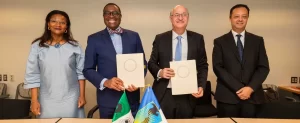
He clarified “Today, this facility is supporting 20 million farmers in 36 countries to produce 38 million tonnes of food valued at $12 billion. This is 8 million tonnes above the 30 million tonnes of food Africa was importing from Russia and Ukraine. But even as we do this, we must do more than simply producing more food and agricultural commodities. The export of raw commodities is the door to poverty. The export of value-added products is the highway to wealth.”
His Highness Sheikh Theyab bin Mohamed bin Zayed Al Nahyan serves as the Deputy Chairman of the Presidential Court for Development and Fallen Heroes’ Affairs in the UAE—United Arab Emirates. What he said substantiates that Africa can revolutionize itself. “Through the Mohamed bin Zayed Foundation for Humanity, we are honored to support the Beginnings Fund in giving more mothers and children the opportunity of a healthy start. In the earliest days of the UAE, our nation faced high maternal and newborn mortality rates. This journey taught us the profound importance of quality healthcare that is available to all, at every stage of life, and this knowledge continues to guide us today. Through this partnership, we further our dedication to working hand in hand with governments and partners to build a healthier, more hopeful future for generations to come.”
Greatness Demands Responsibility
The launch— at Kanad Hospital attended by Ministers of Health from Malawi, Ethiopia, Rwanda, and Zanzibar—constitutes a symbolic gathering which underscored both the urgency and the opportunity at hand. As African governments take center stage in this initiative, they will be most genuinely and lastingly thanked not merely for participating—but for transforming this momentum into a turning point.
When they channel their countries’ abundant natural wealth into health, education, and opportunity; when they elevate women and children not as statistics, but as the soul of the continent’s progress; when they move from gratitude to leadership and from leadership to accountability—the world will not just applaud, it will follow. Because in rising to protect its beginnings, Africa secures its greatness.
The Beginnings Fund constitutes one of the most meaningful philanthropic moves in recent memory. But if Africa is to emerge from the narrative of crisis into one of global contribution, then this must also be the moment where the continent claims its destiny as a place not of perpetual need, but of enduring promise and rising leadership. Being helped is not shameful. But remaining dependent, when blessed with more than enough, forms a betrayal of Africa’s greatness.