By Jean Baptiste Ndabananiye
“Sub-Saharan Africa is at a crossroads, facing escalating climate and nature threats while striving for economic growth. Despite contributing little to global greenhouse gas emissions, the region faces increasing vulnerability to the consequences of climate change. Its rapidly urbanizing population is expected to double by 2050, placing pressure on governments to expand access to basic services while building resilience to climate impacts. Yet with Africa facing an annual infrastructure financing gap of more than $100 billion, urgent investment and action are needed to secure a sustainable future.”
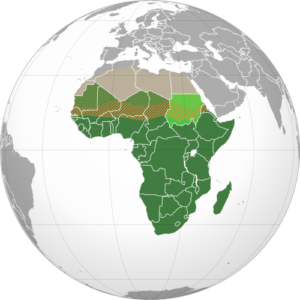
Those are words starting the foreword of a 19 February 2025 report entitled “Growing Resilience: Unlocking the Potential of Nature-Based Solutions for Climate Resilience in Sub-Saharan Africa”. The report is a product of the World Bank (WB) and the World Resource Institute (WRI), with key contributions from the African Development Bank. “This report is one of the most extensive assessments of NBS [Nature-Based Solutions] projects for climate resilience in the region to date.”
Sub-Saharan Africa is requested to replicate NBS in order to meet its infrastructure and resilience needs. Yet, this region is facing big challenges including limited resources and the lack of enabling policies in some countries, among others.
Green pathways to resilience— the expanding role of NBS
NBS are actions that protect, sustainably manage, and restore natural or modified ecosystems to address societal challenges such as climate change, food security, or disaster risk. They work by leveraging nature’s processes—like trees storing carbon or wetlands filtering water—to provide environmental, social, and economic benefits. NBS can complement traditional infrastructure and often deliver cost-effective, long-term resilience while supporting biodiversity and livelihoods.
Traditional infrastructure is often also called gray infrastructure. The U.S. Environment Protection Agency defines gray infrastructure as traditional stormwater infrastructure in the built environment such as gutters, drains, pipes, and retention basins. It refers to human-engineered systems built using concrete, steel, and other industrial materials to deliver essential services.
Other examples of traditional or gray infrastructure include dams, roads, drainage systems, flood barriers, water treatment plants, and buildings. These structures are designed to control or manage natural processes like water flow or temperature, but often lack flexibility and ecological benefits that NBS provide.
That is why, the report’s foreword states “Communities, governments, civil society, and donors across the continent are increasingly embracing nature-based solutions (NBS) to enhance climate resilience. From integrating trees into farmlands, restoring wetlands, protecting coral reefs, and restoring nature in urban areas, these projects address critical infrastructure gaps for water quality, flood mitigation, and erosion control. In some cases, NBS can be integrated with traditional gray infrastructure to draw on the complementary strengths of each approach.”
This report analyzed around 300 NBS projects in sub-Saharan Africa from 2012 to 2023, according to WRI. The report paints a picture of how NBS are being deployed for climate resilience and actions that can be implemented, to fill existing gaps.


This report emphasizes that Sub-Saharan Africa is contending considerably with the impacts of climate change, with severe flooding, extreme heat, and historic droughts affecting the region. However, as even aforesaid, it underlines that this region is taking action. “In response, communities across the region are increasingly using nature-based solutions like restoring and protecting forests, floodplains, wetlands, and coral reefs to build climate resilience.”
The report says that NBS can also be integrated with traditional infrastructure known as green-gray infrastructure and that this often increases NBS resilience and cost-effectiveness. Green-gray infrastructure refers to the integrated use of nature-based solutions (green infrastructure) with traditional, human-created systems (gray infrastructure), to manage environmental challenges—especially water-related ones—more effectively and sustainably.
Key findings in the report
- The number of new NBS projects initiated across sub-Saharan Africa increased by an average of 15% annually from 2012 to 2021.
- More than 83% of observed projects were designed to meet multiple climate objectives, including water quality improvements, water supply enhancements, flood mitigation, erosion and landslide control. Critically, these projects also resulted in co-benefits like job creation and biodiversity protection.
- The 297 projects observed secured over $21 billion to deliver climate resilience, largely from multilateral development banks, international donors and funds, and domestic budgets. Project developers can increase access to funding by tapping into infrastructure finance and increasing domestic budgets through dedicated funding mechanisms.
- NBS can further advance and scale up in sub-Saharan Africa by incorporating it into policies and planning frameworks, improving early project preparation and technical capacity, better quantifying and tracking the benefits of NBS, and ensuring projects are responsive to community needs.
Main funding information
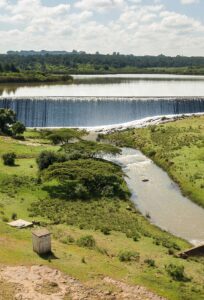
The report highlights that NBS for climate resilience projects in Sub-Saharan Africa from 2012 to 2021 secured approximately $12.5 billion. It nevertheless adds that funding information was obtained for only 200 projects, “so total investment amounts were likely higher. For the projects that listed funding information (200 projects), green-gray projects represented about 71 percent of the share of total funding, green projects represented about 29 percent, and small-scale projects comprised less than 1 percent.
Most small-scale projects received smaller investments (an average of $370,000 per project), while green projects garnered moderate-scale finance (an average of $54 million per project) and green-gray projects attracted the largest funding amounts (an average of $108 million per project).”
The report further states that about 42 percent of the total funding secured by these projects— equivalent to $5.3 billion—was allotted specifically to NBS implementation. The remaining 58 percent represented gray infrastructure, capacity building, and/or other activities included in project funding packages, according to the report.
Unlocking the full potential of NBS in Sub-Saharan Africa
The report underlines that for Sub-Saharan nations, to capitalize upon the NBS utterly, they need to effect systemic changes. Its foreword reads “Jointly, we must provide governments with the tools and support to integrate NBS into policies, budgets and planned infrastructure projects. Multilateral organizations, donors, and civil society must increase investment in early project preparation, technical capacity, and monitoring. To scale financing, the public and private sector must expand innovative tools like green bonds, dedicated national funds and risk sharing mechanisms.”
Green bonds are a type of loan or investment used specifically to fund environmentally friendly projects—like renewable energy, forest conservation, or climate-resilient infrastructure. They work just like regular bonds, but the money raised must go toward projects that benefit the environment. For example, a city might issue green bonds to raise money for building a solar energy plant or improving flood defenses using NBS.
A risk-sharing mechanism is a way for different groups—like governments, donors, and private companies—to share the costs of something risky such as a natural disaster or economic crisis, so that no one carries the full burden alone. For example, if a flood hits a country and damages homes, a risk-sharing mechanism—like an insurance program funded by both the government and donors—can help to pay for repairs. This means the country doesn’t have to cover all the costs by itself.
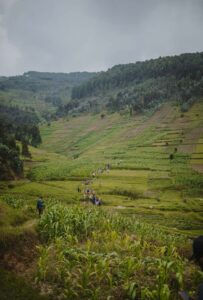
The report furthermore says “Since private markets do not yet fully recognize the economic value of NBS, governments have an opportunity to make near-term, foundational investments and create new markets for NBS private finance that deliver long-term benefits for their citizens and the planet. Our findings also emphasize the importance of community involvement and ownership.
Projects tailoring to local needs, incorporating gender equity, and leveraging Indigenous Knowledge can address persistent social challenges. Strengthening impact tracking and evaluation will build confidence and demonstrate NBS’s value to communities. The stakes are immense, but the opportunities are even greater. Sub-Saharan Africa’s unique challenges position it as a critical proving ground for scaling resilient climate solutions.”
The aspect of involvement of various staholders including the private sector corresponds to Rwanda’s Green Growth and Climate Resilience Strategy which reads reads “The Rwanda Green Fund will drive partnerships to leverage additional finance from climate funds, the private sector, enhanced domestic revenues, and other innovative financing mechanisms.
Ireme Invest — Rwanda’s green investment facility and a partnership between the Rwanda Development Bank and the Rwanda Green Fund — will catalyse climate finance to private sector actors and increase their participation in implementing the strategy.” For further information about this strategy, you can open If Rwanda succeeds in its green strategy, will it convince other nations to do the same— how?.
Benefits from NBS
The report contends that the adoption of the NBS in Sub-Sahara can generate ripple effects across economic, environmental, and social systems.
“When done right, these projects can provide multiple benefits beyond protecting people from climate shocks, like enhanced biodiversity or improved socio-economic outcomes. They simultaneously create jobs, safeguard public health, and protect and enhance biodiversity. They can provide livelihoods, advance gender and social equity, and support economic growth.”
“By embracing NBS, the region can not only adapt to climate change and reduce biodiversity loss but also create jobs and increase the quality of life for hundreds of millions of people. Let this report inspire bold action, collaborative efforts, and a shared commitment to a resilient and equitable future for Africa and beyond.”
While the report maintains that NBS hold significant potential for Sub-Saharan Africa, it highlights that they have not attained the investment and scale necessary to fully realize their benefits. Key barriers to NBS implementation involve, among others, the absence of enabling policies, limited resources and data, insecure land tenure, and financing challenges. One of our upcoming articles will focus on the challenges and recommended strategies to overcome them.
NBS in the developed world are being increasingly adopted as effective, sustainable responses to challenges like climate change, biodiversity loss, and urban resilience.
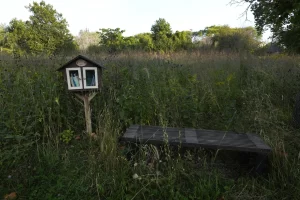
A meta-analysis published in Science of The Total Environment evaluated the effectiveness of NBS in European urban areas. The study found that NBS significantly mitigate extreme heat and flooding, enhancing urban resilience. It emphasizes the need for replicable protocols to support decision-makers in implementing NBS for climate adaptation and improved livability. Cities like Detroit in the United States of America are actively planting trees and creating green spaces to combat rising temperatures and intense heatwaves. This initiative aligns with the United Nations’ call for sustainable cooling solutions and aims to reduce the urban heat island effect, improve air and water quality, and sequester carbon dioxide.
“Detroit and other cities are adding trees and green spaces as one way to blunt the impact of warmer average temperatures and heat waves that are longer and hotter due to climate change. The United Nations is urging governments, institutions and investors to prioritize sustainable cooling solutions that don’t further warm the planet, including planting trees for shade and using reflective building materials,” reports The Associated Press in its 28 September 2024 story headlined “Urban communities that lack shade sizzle when it’s hot. Trees are a climate change solution”.
Great work, JB! Your article is insightful, well-structured, and engaging. Keep up the excellent writing.