By Jean Baptiste Ndabananiye
In a morning radio broadcast on B&B FM radio station in Rwanda’s Kigali Capital City, I heard two of the broadcast’s hosts debating. One of them seemed to attach little importance to Rwanda’s national language, Kinyarwanda. The major reason which he advanced was that this language can’t work on the market especially the international one. Nevertheless, according to him, languages like English are them which the nation —Rwanda —should give more weight. Surprisingly, he was employing the same language, to communicate his point.
The other journalist challenged him. He pointed out that even Kinyarwanda carries a huge market too. We would like to strengthen and emphasize upon his point: while every language should be preserved not only for the reason of a huge number of people speaking it, Kinyarwanda actually constitutes a potential.
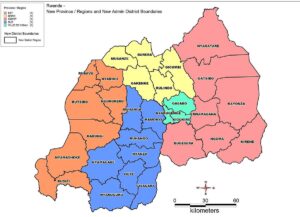
We, at Life In Humanity—an English-language paper—encourage nations to ascribe particular importance to their national and local languages. This underlines the need for the Kinyarwanda language to continue being deliberately promoted, developed and integrated into all spheres of national life, especially since it constitutes a unique asset for the Rwandese. Kinyarwanda does not simply constitute a cultural heritage that Rwanda carries an obligation to preserve; it is also an economic resource and a potential market that the country possesses an opportunity to develop.
Its value should not be assessed exclusively through its international commercial reach, though it already boasts this international reach, owing to the significant numbers of people understanding it in the region. The size of its linguistic community, the needs of its speakers, its capacity to support creative industries and its potential for technological innovation all constitute dimensions of its economic significance.
It is no coincidence that the British international broadcaster, the BBC, has established Kinyarwanda and Kirundi-language programming to serve audiences across the Great Lakes region. The Voice of America, too, maintained similar programming, including through its Central Africa Service, although this programming on VOA was halted by Trump administration’s March 2025 funding and staffing cuts. In fact, its longstanding investment in Kinyarwanda and Kirundi broadcasting illustrates the importance of these languages in regional communication. Furthermore, if there exists a Chinese university which has opted to teach this language also constitutes another testament of its cruciality.
Kinyarwanda’s rising international recognition and use
The Embassy of Rwanda in Chana’s undated article headlined “Chinese University Embraces Kinyarwanda Language” states “Beijing Foreign Studies University (BFSU) in Beijing has introduced the Kinyarwanda language course program to Chinese students. Under cooperation with the University of Rwanda, the Chinese University embraced for the first time the Kinyarwanda language course to Chinese students as the second African language after Kiswahili.
Speaking at the opening ceremony on the evening of 8th October 2019, the Beijing Foreign Studies University Vice President Professor Jia Wenjian applauded the launch of the Kinyarwanda language to Chinese students. We are honored to be the first Chinese University to introduce Kinyarwanda language course to Chinese students. This is a true symbolic relationship value that our two countries attaches to each other. Our students will learn and master the Kinyarwanda language, said Prof Jia, the University Vice President.”

Dr. Patrice Ntawigira is an enthusiastic and devoted language teacher with excellent communication skills demonstrated by more than 20 years of teaching experience at the University of Rwanda [UR], according to the latter one. This source adds that this PhD holder in Linguistics, Kiswahili Option, from Dar Es Salaam University in Tanzania possesses a high degree of fluency in Kiswahili, French, Kinyarwanda and English. He is now reportedly involved in different partnership projects and academic exchanges in the East African region. Nowadays, he is conducting a fellowship with the Beijing Foreign Studies University (BFSU) on ‘How Kinyarwanda and Chinese languages can be effective in China –Rwanda relations’.
The embassy quoted him as acclaiming the Beijing Foreign Studies University move to feature Kinyarwanda course program among other foreign languages courses. “You have made a good choice; Kinyarwanda language is now used and spoken by about forty (40) million people in the Great Lakes Region of Africa. Kinyarwanda is one of the very large families of African Languages, after Kiswahili. It stretches in a great region of Central Africa. With Kinyarwanda and Kiswahili, BFSU will connect all Chinese People to almost all Africans from Sub-Saharan Region, Rwandans included,” Dr. Ntawigira said.
He additionally stated that teaching and learning Kinyarwanda at BFSU could not be better timed than in 2019, when the two countries were celebrating 48 years of diplomatic relations.
This Senior Lecturer at the UR said “The introduction of Kinyarwanda course at Chinese University and Chinese course at University of Rwanda under Confucius Institute Centre reflects the good sign of strengthening the long existing good friendship relations between Rwandans and Chinese. The program makes Rwandans and Chinese ‘Brothers and Sisters’ not ‘Friends’.”
Lesson and potential

Kinyarwanda’s substantial linguistic reach beyond Rwanda’s borders emphasizes upon economic potential. As stated by Dr. Ntawigira, the language is used and spoken by approximately 40 million people in the Great Lakes region of Africa. Such a linguistic community represents considerable potential for broadcasting, education, publishing, translation, cultural industries and digital services, among others. Its introduction at BFSU in China further establishes the possibilities of extending Kinyarwanda’s international reach, unlocking opportunities not only for academic and diplomatic cooperation but also for economic engagement.
A region of 40 million people forms a highly significant market. To put that scale into perspective, a population of 40 million is almost equal to that of the entire country of Canada, but larger than Poland or Saudi Arabia. The community of 40 million individuals roughly equals the state of California which constitutes one of the largest and most influential economies in the world.
Though we cannot actually compare these developed economies to the Kinyarwanda-speaking community, its population size alone justifies why its economic potential should not be neglected. On the contrary, a linguistic community of about 40 million people is a considerable market whose economic opportunities merit greater attention.
The lesson is that a language’s economic value should not be judged solely by the wealth of its speakers or its current international commercial reach. Its linguistic community also represents a market whose needs, size and potential opportunities deserve investment and deliberate development.
For Rwanda, this signifies that promoting Kinyarwanda should go beyond preserving cultural heritage. It should also entail devising ways of making this vast linguistic community a market for Rwandan products, services and creative industries —thereby turning Kinyarwanda’s linguistic reach into tangible economic opportunities for the country.
Another reason why to protect Kinyarwanda: work to preserve thousands of languages in the threat of extinction

Elton B. Stephens Company [EBSCO] is a “leading” global provider of research databases, e-journals, e-books, and library technology services. In its piece headlined “Endangered language” published in 2026, EBSCO states “Endangered languages are languages or dialects that are at risk of being lost from human culture due to a shrinking population of speakers or a shift toward dominant languages for education, commerce, and communication.
Vulnerable languages are those in which most children still speak the language but are in the process of shifting toward other languages for schooling, commerce, or social interaction. The next category, ‘definitely endangered,’ includes those languages that are no longer learned as a mother tongue. From there, languages can be listed as ‘severely endangered,’ which are generally only spoken by older generations, and ‘critically endangered,’ where the only speakers are of advanced age and speak the language infrequently.”
It adds “Estimates suggest that out of the approximately six to seven thousand languages spoken worldwide, at least three thousand are endangered, with many facing extinction by the end of the twenty-first century. Experts estimate that between 3,000 and 5,000 known languages are endangered and could become extinct (no known fluent speakers) before the end of the twenty-first century. The loss of a language is often seen as a loss of unique cultural knowledge, as languages encapsulate distinct ways of understanding and interacting with the world.”
“Linguistics specialists estimate that four hundred languages have gone extinct since the early twentieth century and that at least 50 percent of the remaining 6,500 to 7,000 languages are in danger of being lost by the end of the twenty-first century. In the first quarter of the twenty-first century, about half of the world’s population spoke one of the ten most dominant languages: Mandarin Chinese, Portuguese, Lahnda, Bengali, Japanese, English, Spanish, Arabic, Russian, and Hindi.”
As for the causes of the disappearance of languages, EBSCO points out “Factors contributing to language endangerment include colonialism, which often imposed dominant languages on indigenous populations, and voluntary assimilation, where communities shift towards dominant languages for better educational and employment opportunities. Colonialism and the forced assimilation of enslaved, captive, or Indigenous populations have been important factors in the extinction of languages.

As dominant cultures colonized new territories, Indigenous populations learned the languages of the colonizers to aid in trade and communication. In some cases, Indigenous residents were forced to learn new languages or prohibited from using their native language. Forced linguistic assimilation was often used as a tool to reduce cohesion and prevent uprisings and organized resistance.”
As a matter of clarifications, the company explains “In Colonial America, for instance, European colonists persecuted speakers of Indigenous American languages, and thousands of Indigenous American children were sent to English-speaking residential schools and orphanages where they were prevented from speaking their native languages. Linguistic researchers estimate that hundreds of dialects around the world were lost during the colonial era due in part to oppressive colonial policies.
Similar patterns of language loss due to colonialism have been identified in the histories of Canada, Australia, and China. In Australia, for example, there were an estimated three hundred native languages in use when European colonists arrived, nearly one hundred of which are now thought to be extinct. Linguists estimate that as many as 95 percent of the remaining Aboriginal Australian languages are in danger of extinction.”
EBSCO adds “In addition to forced assimilation, voluntary assimilation also plays a role in language loss. In many Indigenous societies, parents encourage their children to become fluent in dominant languages to help the children obtain advances in education and employment. As a result, with each generation, fluency and familiarity with native languages decline, and second-generation speakers that also learn to speak a dominant language are less likely to continue passing on their language to new generations.”
EBSCO highlights that action is being taken to safeguard endangered languages. “The United Nations Educational, Scientific, and Cultural Organization (UNESCO) supports efforts to document and protect endangered languages. Efforts to protect endangered languages involve documentation initiatives and programs aimed at teaching these languages to younger generations. Linguistic organizations, like UNESCO, classify endangered languages based on their level of threat, ranging from vulnerable to critically endangered.
The preservation of languages is a complex issue; while some advocate for the necessity of language evolution, others highlight that the extinction of a language may result in the loss of unique cultural perspectives and historical insights. Ultimately, recording and documenting these languages is crucial for understanding human communication and for the potential revival of language use among new speakers.”
“Protecting languages, preserving cultures,” — the United Nations
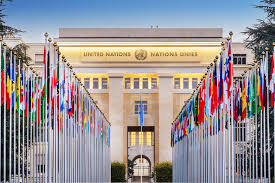
That’s the headline of a dateless short piece of writing published by the UN. This international body, through the piece, reported “The world’s indigenous languages are under threat of disappearing, with one language dying every two weeks and many more at risk. To address the question on how to maintain the roughly 6000 indigenous languages, UN DESA’s Division for Social Policy and Development (DSPD), Secretariat of the Permanent Forum on Indigenous Issues, organised an expert group meeting on indigenous languages on 19-21 January in New York.”
With our investigation, we have found that this meeting took place from 19 to 21 January 2016. According to the UN, “A wide range of linguistic experts, indigenous peoples, representatives from Member States, the United Nations and other stakeholders gathered at the meeting. They shared numerous examples of good practices to keep languages alive, highlighting the crucial function of intergenerational transmission, the particular role of indigenous women, and the importance of mother tongue education.”
“The meeting especially focused on indigenous peoples’ initiatives to revitalize indigenous languages through information and communication technologies, such as using WhatsApp, online karaoke songs, social media, web tools in indigenous languages.”
The UN went on, saying “Ms. Daniela Bas, Director of DSPD, referred to the newly adopted Sustainable Development Agenda which aims at leaving no one behind, emphasising that it is also critical to not leave any language behind. The revitalisation of indigenous languages is essential for ensuring the continuation and transmission of culture, customs and history, but it is also important to address biodiversity loss and climate change.”
“Saving indigenous languages is crucial to ensure the protection of the cultural identity and dignity of indigenous peoples and safeguard their traditional heritage,” said Professor Megan Davis, the then Chair of the Permanent Forum on Indigenous Issues [PFIS].
Francisco Cali Tzay, the then Chair of the Committee on the Elimination of Racial Discrimination (CERD), declared “The language represents the way of thinking of a people.”
The UN stressed that the importance of languages cannot be undervalued. “It is the preservation of invaluable wisdom, traditional knowledge and expressions of art and beauty, and we have to make sure that we do not lose this”, Lenni Montiel, UN DESA’s then Assistant Secretary-General for Economic Development concluded in the closing remarks, while highlighting the urgency to act.
The final report and recommendations from the meeting were presented to, considered by, and followed up by the United Nations PFIS at its fifteenth session. The latter one happened in New York from 9 to 20 May 2016.
The following are some of the recommendations. The PFIS Fifteenth session report reads “It is estimated that more than half of the world’s languages will become extinct by 2100. The Permanent Forum welcomes the report of the meeting and encourages Member States, as well as relevant United Nations entities, in particular the United Nations Educational, Scientific and Cultural Organization (UNESCO), to carefully consider its findings and recommendations.
The Permanent Forum recommends that States recognize the language rights of indigenous peoples and develop language policies to promote and protect indigenous languages, with a focus on quality education in indigenous languages, including through supporting full immersion methods such as languages nests and innovative methods such as nomadic schools.”
It adds “It is essential that States develop evidence-based legislation and policies to promote and protect indigenous languages and, in that regard, they should collect and disseminate baseline information on the status of indigenous languages. These activities should be conducted in close cooperation with the indigenous peoples concerned. The Permanent Forum recommends that States and the United Nations system, including United Nations country teams, provide support, including funding, for the efforts of indigenous peoples’ institutions to preserve and revitalize their languages, with the particular goal of fluency.
Such efforts may include the sharing of positive experiences and the establishment of informal networks or caucuses involved in the promotion and revitalization of indigenous languages, as well as the use of information and communication technologies in indigenous languages. It is important that States provide adequate funding for language revitalization as well as the preservation of cultural heritage. In addition, States should facilitate funding for indigenous language projects from external donors, including the private sector, in accordance with law.”
In response to the recommendations, the UN in general and UNESCO in particular are undertaking several concrete initiatives to execute the objectives of indigenous-language preservation and revitalization. The most significant development is the establishment of the International Decade of Indigenous Languages (2022–2032) — a global initiative proclaimed by the United Nations General Assembly, to draw attention to the critical status of indigenous languages and mobilize action for their preservation, revitalization, and promotion.
This demonstrates that the recommendations formulated at the 2016 meeting have evolved into a broader international program including governments, indigenous communities, universities, civil society and technology organizations.
However, these initiatives are not all direct results of the May 2016 recommendations. Yet still, they form part of a wider international effort building on the same objectives.
Giving Kinyarwanda its deserved importance while embracing multilingualism
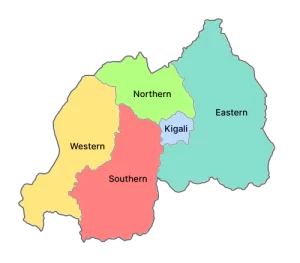
All the developments, arguments and international commitments presented above reinforce one central point: Kinyarwanda is a language which deserves the utmost importance, deliberate investment and sustained promotion. If the international community, through the United Nations and UNESCO, attaches such importance to preserving and reviving thousands of smaller and endangered languages, why should Rwanda not accord maximal attention to a language with such substantial regional reach, cultural significance and economic potential?
Kinyarwanda deserves not merely to be maintained as a cultural legacy but also to be developed as a tool of education, communication, technological advancement and economic opportunity. Life In Humanity already commends initiatives and programs in place to promote this language, including those expanding its teaching and international use, while encouraging even greater efforts to extend its relevance wherever possible. The question, therefore, is not whether Kinyarwanda merits such importance, but how far Rwanda can reach in opening its immense potential for present and future generations.
Life In Humanity firmly supports the B&B FM journalist who argued that Kinyarwanda and international languages should be developed concomitantly, rather than treating their importance as mutually exclusive. Rwandans should be exhorted to master their national language while also acquiring international languages like English, French, Chinese and Kiswahili which unlock doors to wider educational, diplomatic and economic opportunities. There lies no contradiction between strengthening one’s command of one’s mother tongue and learning other languages. Instead, multilingualism enriches individuals, widens their horizons and upgrades their capacity to engage with the world. Nobody loses by mastering more languages. Rather, individuals, communities and nations stand to gain considerably from linguistic diversity.