By Editorial Staff
The history of the Southern Levant discloses not a simple succession of peoples. It instead reveals a complex landscape of cultural interaction in which Canaanites, Israelites, Phoenicians, and other communities traded, migrated, fought, intermarried, and influenced one another.
The Canaanites gradually ceased to exist as a distinct cultural identity, such as the Israelites. Nevertheless, archaeological, linguistic, and genetic evidence suggests substantial continuity between ancient Canaanite populations and later peoples of the region, including Israelites and modern Levantine societies.
Thus, rather than seeing Canaanites as a people who only vanished, it is more historically accurate to comprehend the Canaanite civilization as a foundational layer of the Southern Levant— whose cultural and biological legacy has persisted through subsequent societies, according to some current studies. The Canaanites’ existence has contributed profoundly to various fields of today especially trade and the alphabet.
For the quintessential lesson you will draw from this piece: honor those who came before you by acknowledging what you inherited from them, and honor those who will come after you by leaving them something worthy to inherit. Humanity of today owes a profound debt of respect and gratitude to preceding generations, because the world we inhabit partly forms an inheritance built through their labor, creativity, discoveries, struggles, and sacrifices.
The Canaanites and Phoenicians evoke us that civilizations may disappear as distinct peoples while their contributions—particularly in domains like commerce, maritime exchange, and writing, among others— are continuing to sustain later generations. At the same time, their example places a noble responsibility upon the present generation: just as we have inherited from those who lived before us, we should strive to leave a great inheritance for those who will come after us.
Our ultimate legacy nonetheless needs not to be fame or permanence of name. It can simply include a beneficial or revolutionary idea, discovery, institution, work, relationship, or improvement surviving us and enriching the lives of others. We are therefore both heirs of the past and predecessors of the future.
Canaan and the Southern Levant: a crossroads of ancient civilizations
“The southern Levant refers to an area encompassed by modern Israel, Jordan, and Palestine. Canaan is the ancient name of this region, and a Canaanite culture was prominent until the Iron Age, when the kingdoms of Israel and Judah dominated.
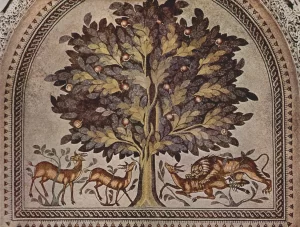
Owing to its proximity to the Mediterranean coast to the west, Egypt to the south, and Syria to the north, its material culture reflects the mix of peoples, traditions, and customs that passed through the region by way of trade and migration,” says the University of Chicago’s Institute for the Study of Ancient Cultures, West Asia and North Africa [ISAC].
The ISAC is founded on extensive research conducted by a certain organization which has developed expertise at this region. “The Oriental Institute [OI]’s projects in the Levant have helped to reconstruct the millennia of cultural contact stretching back to the prehistoric period. From the petroglyphs of the Black Desert to biblical Armageddon and the mosaics of Mafjar, the OI continues to reveal the material traces of life in the Levant during antiquity.”
The Levant, according to Britannica, constitutes a region along the eastern Mediterranean shores, roughly matching modern-day Israel, the West Bank, the Gaza Strip, Jordan, Lebanon, Syria, and often Cyprus and Hatay il (province) of Turkey. This signifies that the Levant forms a broad part while the Southern Levant stands as its component.
“Common use of the term [Levant]—which comes from [the] French [word] lever, ‘to rise,’ as in sunrise, meaning the east—is associated with Venetian and other European trading ventures and the establishment of commerce with cities such as Tyre and Sidon as a result of the Crusades. It was applied to the coastlands of Syria and Anatolia, sometimes extending from Greece to Egypt and as a synonym for the Ottoman Empire or the Middle East or Near East.”

The Iron Age constitutes the historical period which came after the Bronze Age, defined by the prevalent use of iron and steel to produce implements and weapons. The Bronze Age generally spanned from approximately 3300 BCE (before common/current/Christian era) to 1200 BCE, though its exact timeline varied significantly by region.
History—in its piece last updated on 27 February 2025 and entitled “Iron Age” —says “The Iron Age was a period in human history that started between 1200 B.C. and 600 B.C., depending on the region, and followed the Stone Age and Bronze Age. During the Iron Age, people across much of Europe, Asia and parts of Africa began making tools and weapons from iron and steel.
Humans may have smelted iron sporadically throughout the Bronze Age, though they likely saw iron as an inferior metal. Iron tools and weapons weren’t as hard or durable as their bronze counterparts. The use of iron became more widespread after people learned how to make steel, a much harder metal, by heating iron with carbon. The Hittites—who lived during the Bronze Age in what is now Turkey—may have been the first to make steel.”
This official website for The HISTORY Channel, an American pay television network owned by A+E Global Media History, adds “Many scholars place the end of the Iron Age in at around 550 B.C., when Herodotus, ‘The Father of History,’ began writing ‘The Histories,’ though the end date varies by region. In Scandinavia, it ended closer to A.D. 800 with the rise of the Vikings. In Western and Central Europe, the end of the Iron Age is typically identified as coinciding with the Roman conquest during the first century BC.”
There exist some other sources that extend this region of Southern Levant to some other places. For example, EBSCO—with its article headlined “Canaan (historical region), Middle East” published in 2021— says “Canaan was an ancient region in the Middle East that corresponds to parts of modern-day Israel, Jordan, Lebanon, Syria, and the West Bank.”
Headquartered in Ipswich, Massachusetts; EBSCO is a leading provider of research databases, magazine subscriptions, e-books, e-journals, and various data sources primarily designed for libraries, schools, and individual researchers.
A bit more about the petroglyphs, prehistory and antiquity

The petroglyphs of the Black Desert are ancient rock carvings or rock art produced by nomadic herding groups around 2,000 years ago in Jordan and parts of northern Arabia, revealing that the now-barren landscape once supported abundant wildlife, greenery, and vibrant human communities. These designs or images cut into the rock show images of lions, gazelles, camels, horses and large birds likely to be ostriches.
Arabia constitutes a huge geographic area in southwestern Asia, also called the Arabian Peninsula, consisting of these countries: Saudi Arabia, Yemen, Oman, the United Arab Emirates, Qatar, and Kuwait.
The prehistoric period, prehistory, is an era which preceded that of writing. It forms the long period of human life before people invented writing and left written records. This epoch ended roughly 5200 years ago.
Antiquity, also known as the ancient period, generally refers to the long era of early civilizations extending from approximately 3000 BCE to around 500 CE. Its beginning is conventionally associated with the emergence of the first complex civilizations, cities, states, and writing systems, particularly in regions such as Mesopotamia and Egypt. Its end is often placed around the 5th century CE, especially around 476 CE, when the last Western Roman emperor was dethroned, although the transition from Antiquity to the Middle Ages was gradual rather than marked by a single definitive event.
These dates are primarily based on the historical development of the Mediterranean and Near Eastern worlds and therefore should be understood as approximate rather than universally applicable boundaries. Canaanite and Israelite history belongs largely to what historians call the ancient Near East, while the Iron Age itself stands as a period within Antiquity.
Further details about the OI and its work in the region
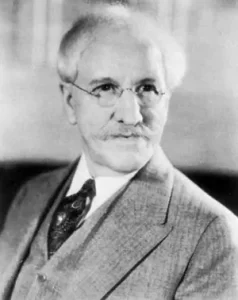
The OI is a major research center devoted to the study of the ancient civilizations of the Near East and Middle East. It constitutes part of the University of Chicago in the United States. Founded by James Henry Breasted, the institute became famous for archaeological excavations, historical research, and the preservation of ancient texts and artifacts from regions such as Egypt, Mesopotamia, Persia, Anatolia, the Levant, and surrounding civilizations.
This institution functions both as a scholarly research body and a museum containing artifacts from ancient civilizations. It has contributed greatly to the study of ancient languages, biblical history, archaeology, Assyriology [study of ancient Mesopotamia and neighboring regions that used cuneiform writing], Egyptology [study of ancient Egypt], and the broader history of the ancient Near and Middle East.
“Through financial aid from John D. Rockefeller, Jr., James Henry Breasted founded the Oriental Institute at the University of Chicago in 1919 and pioneered American Egyptology with his survey of Egypt and Nubia (1895–96). He started the Epigraphic Survey in 1924 to make accurate copies of the inscriptions on monuments, which are subject to deterioration from exposure to the elements, and to then publish these records.
This institution—which was, in 2023, renamed the Institute for the Study of Ancient Cultures, West Asia & North Africa—became an internationally renowned centre for the study of ancient cultures in southwest Asia and the Middle East. Under his directorship, the institute undertook a number of important excavations, including one at Megiddo that uncovered a large riding stable thought to have been King Solomon’s and one at Persepolis that yielded some Achaemenid sculptures,” says Britannica.
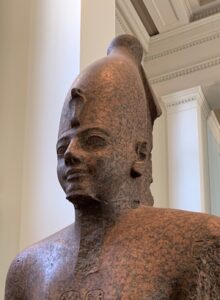
The latter source adds “OI archaeologists revealed a core stratigraphic sequence for Bronze and Iron Age Megiddo, reconstructing its history by studying the deposition of strata over time. Ultimately, the Oriental Institute excavations laid the foundations for archaeology in the Levant. The excavations have shown that the first town there was built in the early 4th millennium bce.
Megiddo was captured by the Egyptian king Thutmose III about 1468. The Israelites eventually took Megiddo, along with other cities of the area, and King Solomon rebuilt the city as a military centre; a number of the stables that have been excavated at Megiddo probably date to this time. The last traceable remains at Megiddo are from about 450 bce. Nearly 400 Phoenician ivories have been found at the site, showing influences from various culture areas of the Middle East.”
Britannica highlights that the OI excavations at Megiddo were the largest ever conducted in the history of archaeological research in Israel. This source additionally states that the excavations of the Megiddo site were carried out by archaeologists of the Deutsche Orientgesellschaft in 1903–05) and of the OI in 1925–39.
“Megiddo: a nexus for trade, politics and warfare”
Explaining Megiddo, Abarim Publications says “Megiddo — in later Scriptures also known as Megiddon (מגדון, Zechariah 12:11) — was an ancient Canaanite city southeast of Mount Carmel at the western approach of the Jezreel Valley.”
The ISAC states “The city of Megiddo was strategically located on the most important land route in the ancient Middle East, linking Egypt and the Mediterranean world with western Asia. Consequently, Megiddo dominated international movement for thousands of years.
As a nexus for trade and warfare over the millennia, Megiddo experienced a tremendous confluence of both international culture and political power. Bronze Age Megiddo was the center of a Canaanite city-state. Later, Iron Age Megiddo served as an administrative center of the northern kingdom of Israel.”
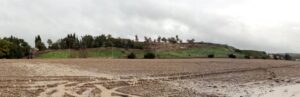
Britannica echoes “It [Megiddo] controlled a commonly used pass on the trading route between Egypt and Mesopotamia, and it also stood along the northwest-southeast route that connected the Phoenician cities with Jerusalem and the Jordan River valley.”
It is this Megiddo which is believed to have generated the modern name “Armageddon”, because of frequent fighting which occurred there. “Megiddo witnessed so many military conflicts throughout history that it served as the setting for the biblical Armageddon (Hebrew Har Megiddo, ‘Mount of Megiddo’), the penultimate battle between good and evil in the Book of Revelation,” explains Britannica, before adding “It is thought that the word Armageddon is derived from Megiddo, since the prefix har means ‘hill’ in Hebrew; hence, Armageddon means ‘Hill of Megiddo.’
Megiddo, important town of ancient Palestine, overlooking the Plain of Esdraelon (Valley of Jezreel). A mutilated inscribed stele records the occupation of Megiddo by Sheshonk I, who became king of Egypt about 935 bce. King Ahaziah of Judah died at Megiddo about 842 bce, and King Josiah of Judah also died there (609 bce) while opposing the advance of the Egyptian king Necho II toward Assyria.”
Historically, Megiddo is traditionally interpreted as meaning the place of troops or the place of marauding bands. A story — headlined “Megiddo in the Bible: Location, Significance, & Bible Verse”, written by Marko Marina, Ph.D., and published on Bart Ehrman — reads “The precise etymology isn’t entirely certain, though scholars often connect it with roots meaning ‘assembly,’ ‘place of troops,’ (see below) or possibly ‘cut/cleft.’ Regardless of the exact derivation, the name itself reveals what the site eventually came to represent: a place where people (especially armies) gathered at moments of decisive conflict.”
Today, ancient Megiddo is known as Tel Megiddo, an archaeological mound situated in northern Israel.
Are there Canaanites today, as there are Israelites? Origin of Canaanites?
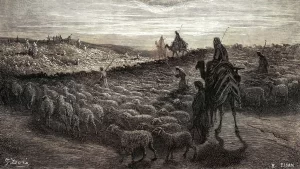
EBSCO explains “It [Canaan] holds significant historical and cultural importance, particularly in biblical texts where it is described as the ‘promised land’ abundant with resources. Canaan plays a prominent role in the biblical Old Testament, where it was viewed as the promised land of ‘milk and honey,’ but its inhabitants condemned as sinful and deserving of God’s wrath.
Despite biblical narratives of Canaan’s destruction by the Israelites, archaeological evidence suggests that the Canaanites and Israelites were closely related, with genetic studies indicating that modern Lebanese and other regional populations carry significant Canaanite ancestry. Although the Bible says Canaan and the Canaanite people were wiped out by the Israelites, archaeologists see many similarities between the two cultures and have found Canaanite DNA in the modern Israeli and Lebanese people.”
This institution possessing the headquarters in Ipswich, Massachusetts continues, pointing out “Over centuries, the identity of the Canaanites evolved due to conquerors and migrations, but their cultural and genetic legacy remains impactful in the region today.”
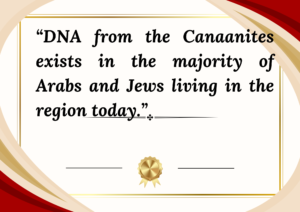
In the form of a clarification and emphasis, EBSCO underscores “However, whoever the Canaanite people were, they did leave behind a significant genetic legacy in the people of the region. A study from 2017 found that the modern-day Lebanese people received more than 90 percent of their DNA from the Canaanites. A 2020 study found that DNA from the Canaanites exists in the majority of Arabs and Jews living in the region today.
The study examined DNA from more than ninety individuals found in ancient burial sites in modern-day Jordan and Israel. These remains were tested against human DNA originating from the sites located inside Israel. Positive genetic links were established between the two groups. According to the researchers, people across the region received about half their DNA from the inhabitants of ancient Canaan.”
Though EBSCO says that the Bible states that the Israelites exterminated the Canaanites, the Bible doesn’t actually indicate that the Canaanites were completely destroyed.
Judges 2:21-23 in the Old Testament reads “I also will no longer drive out before them any of the nations which Joshua left when he died, 22 so that through them I may test Israel, whether they will keep the ways of the Lord, to walk in them as their fathers kept them, or not. 23 Therefore the Lord left those nations, without driving them out immediately; nor did He deliver them into the hand of Joshua.”
Joshua 16: 10 states “They [Israelites] did not dislodge the Canaanites living in Gezer; to this day the Canaanites live among the people of Ephraim but are required to do forced labor.” Joshua 17:12–13 reiterates it in these words “12 Yet the Manassites [descendants of Manasseh] were not able to occupy these towns, for the Canaanites were determined to live in that region. 13 However, when the Israelites grew stronger, they subjected the Canaanites to forced labor but did not drive them out completely.”

These are verses collectively emphasizing that some Canaanite groups remained there, living among the Israelites. While narratives of extremely fierce conquest between the Israelites and Canaanites exist, the biblical account itself clearly shows that the Canaanites were not completely annihilated or expelled, but intentionally left in place by God.
These verses challenge the claim by EBSCO that the Holy Bible states that the Canaanites were utterly destroyed.
Even Abarim Publications underlines “It [Megiddo] was conquered by Joshua (Joshua 12:21) and assigned to Manasseh (17:11). The latter never drove the Canaanites out but enslaved them (Judges 1:27-28).
Centuries later the Canaanites were still enslaved and Solomon deployed this force to build the temple, his house and to fortify Jerusalem, Megiddo and other towns (1 Kings 9:15). It remains a grim fact that the temple (the image of the body of Christ) was built by slavery and excessive capitalism.”
EBSCO’s detail that the studies have found the Israelites and the Canaanites to be tightly related bears some grounds. The Bible describes Israelites and Canaanites as distant relatives within the broader genealogical framework. It also depicts them as closely linked peoples who dwelt in the same land, often interacting through conflict, coexistence, and intermarriage. Judges 3:5–6 states “5 The Israelites lived among the Canaanites, Hittites, Amorites, Perizzites, Hivites and Jebusites. 6 They took their daughters in marriage and gave their own daughters to their sons, and served their gods.”
Origin of the Canaanites, Israelites and Phoenicians
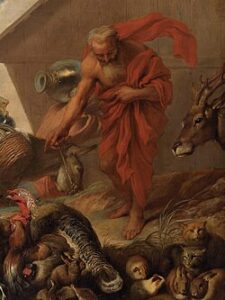
Both Israelites and Canaanites are descended from Noah. Israelites are traced back to Shem. Canaanites go back to Canaan, son of Ham. Genesis 11:10–26, with the title “From Shem to Abram” reads as follows: “10 This is the account of Shem’s family line. Two years after the flood, when Shem was 100 years old, he became the father[a] of Arphaxad. 11 And after he became the father of Arphaxad, Shem lived 500 years and had other sons and daughters.
12 When Arphaxad had lived 35 years, he became the father of Shelah. 13 And after he became the father of Shelah, Arphaxad lived 403 years and had other sons and daughters.[b] 14 When Shelah had lived 30 years, he became the father of Eber. 15 And after he became the father of Eber, Shelah lived 403 years and had other sons and daughters. 16 When Eber had lived 34 years, he became the father of Peleg. 17 And after he became the father of Peleg, Eber lived 430 years and had other sons and daughters.”
It goes on, saying “18 When Peleg had lived 30 years, he became the father of Reu. 19 And after he became the father of Reu, Peleg lived 209 years and had other sons and daughters. 20 When Reu had lived 32 years, he became the father of Serug. 21 And after he became the father of Serug, Reu lived 207 years and had other sons and daughters.
22 When Serug had lived 30 years, he became the father of Nahor. 23 And after he became the father of Nahor, Serug lived 200 years and had other sons and daughters. 24 When Nahor had lived 29 years, he became the father of Terah. 25 And after he became the father of Terah, Nahor lived 119 years and had other sons and daughters. 26 After Terah had lived 70 years, he became the father of Abram, Nahor and Haran.”
Genesis 10:6 indicates that the sons of Ham include Cush, Mizraim, Phut, and Canaan from whom the Canaanites are descended. Genesis 10:15–19 lists Canaan’s descendants and the territories of the Canaanite peoples, specifying “15Canaan was the father of Sidon his firstborn, and of the Hittites, 16 Jebusites, Amorites, Girgashites, 17 Hivites, Arkites, Sinites, 18 Arvadites, Zemarites and Hamathites.
Later the Canaanite clans scattered 19 and the borders of Canaan reached from Sidon toward Gerar as far as Gaza, and then toward Sodom, Gomorrah, Admah and Zeboyim, as far as Lasha.”

However, the Holy Bible does not identify Israelites and Canaanites as the same ethnic group, but rather as distinct peoples with shared regional and historical ties.
EBSCO explains that the origin of Canaan stays mysterious, though quoting the Bible, it also recognizes that Canaanites are people descended from Canaan. “The first inhabitants of what would later be called Canaan settled in and around Jericho. By about four to five thousand years ago, many of the region’s settlements developed into true cities. The area was assimilated into the Akkadian Empire—the first known empire in the world—about 2300 BCE and was later overrun by invading Semitic tribes about 2000 BCE.
The peoples who lived in Canaan were a mix of different ethnic groups who eventually developed a common culture. The first known mention of their land as Canaan comes from Mesopotamian records dating to about 1800 BCE. A letter written by the king of the city-state of Mari describes a land where ‘thieves and Canaanites’ dwell. Mentions of Canaan first appear in Egypt about 1500 BCE when a king named Idrimi wrote that he had been forced to flee to a city in Canaan.”
EBSCO adds “The origin of the name is unknown. Some experts speculate it could come from the word kinahhu, which means ‘purple’ in the local Hurrian dialect. This [is] a possible reference to the dyed cloth traded by the region’s merchants. The fact that the name Phoenicians—the successors to the Canaanites—comes from the Greek word for ‘purple’ lends some credence to the theory. However, the Old Testament book of Genesis says the land was named after Canaan, the grandson of Noah.”
With its 2 June 2026 article titled “Who were the Phoenicians?”, the Biblical Archaeological Society revisits Ephraim Stern’s article “Phoenicia and Its Special Relationship with Israel,” which appeared in the November/December 2017 issue of Biblical Archaeology Review. “The Phoenicians were the late Canaanites of the first millennium B.C.E. (Iron Age through Roman period), descendants of the Canaanites of the second millennium B.C.E. (Middle Bronze Age through Late Bronze Age).
‘Phoenicians’ was the name given to this people by the Greeks, but the Phoenicians continued to refer to themselves as Canaanites or by the names of their principal cities.”
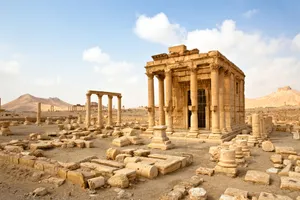
Britannica, in its 11 August 2026 piece entitled “Phoenicia” says “Phoenicia, ancient region along the eastern coast of the Mediterranean that corresponds to modern Lebanon, with adjoining parts of modern Syria and Israel. Its location along major trade routes led its inhabitants, called Phoenicians, to become notable merchants, traders, and colonizers in the 1st millennium bce. The chief cities of Phoenicia (excluding colonies) included Byblos, Sidon, Tyre, and Berot (modern Beirut).”
Canaanites’ contribution, development legacy and their end
Development of cities, maritime trade, and alphabet
EBSCO says “The region was first settled around 10,000 years ago, developing some of the earliest urban centers, including Jericho. Diverse groups speaking Semitic languages inhabited Canaan, eventually giving rise to the Phoenicians, known for their maritime trade and cultural contributions.
Historically, Canaan experienced a series of conquests and influences, notably from the Akkadian Empire and later Egypt, making it a significant trading partner. The Canaanites developed one of the earliest alphabets, foundational to subsequent writing systems, including the Latin alphabet.”
EBSCO explains that the Canaanites created the first writing system ‘letters’ in the world, after interacting with Egypt. “In the first half of the second millennium BCE, Canaan was a major trading partner with Egypt, eventually becoming a tributary state. During this period, the Canaanites, influenced by Egyptian hieroglyphs, invented a method of writing that used symbols to represent language sounds.

Other writing systems of the time used symbols to represent words or concepts, but the Canaanite system became the world’s first alphabet. This alphabet was later modified by the Greeks and the Romans, evolving into the common Latin alphabet used for many European languages today.”
The Biblical Archaeological Society underscores “During the second millennium B.C.E., the Canaanites controlled Palestine, Transjordan and Syria—from Ugarit down to the Egyptian border—and they developed a rich culture. Arwad, Byblos, Berytus, Sidon and Tyre became the heartland of Phoenicia, but the Phoenicians didn’t stop there.
Toward the end of the 11th century B.C.E., they began establishing colonies in the west—in Cyprus, Sicily, Sardinia, Malta, southern Spain and northern Africa. They soon had created an empire for themselves. But unlike other empires forged by war, this was an empire built on trade. Their commercial empire would last for nearly a millennium.”
Religion of Canaan
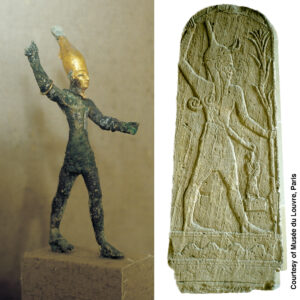
According to EBSCO, the Canaanites worshiped various gods including Baal and Asherah. “The chief god of the Canaanite pantheon was El, considered the father of most of the other deities. His wife was Asherah, a mother figure and fertility deity. Another significant deity, Baal, was a male fertility figure who is mentioned several times in the Bible as a false god worshipped by the Canaanites.
In one story, the prophet Elijah challenges the priests of Baal to a contest to prove which deity is the true god. Both would prepare a bull to be sacrificed, but neither could set fire to the altar. The deity who lit the altar with fire from the heavens would be the true god. The priests of Baal called upon their god to answer, but nothing happened. Elijah soaked his altar in water, and then called upon his God who responded by igniting the sacrifice. As punishment, the priests of Baal were executed [by Elijah].”
The source highlights “The Bible often describes the Canaanites as sinful, sexually deviant people who worshiped false gods. The cities of Sodom and Gomorrah, which were said to have been destroyed by a fiery rain sent by God, were both located in Canaan. The Bible also describes the Canaanites as practicing human sacrifice, specifically burning children alive as offerings to the god Moloch. Although historians are unsure about the name Moloch, they have found evidence that children were sacrificed in Canaan.”
“A Canaanite/Phoenician port city the Greeks called Byblos was one of the most famous cities of ancient Canaan. Byblos was a major exporter
of papyrus in the ancient world, so much so that the Greek word for book was named after the city. In this way, the Greek, byblos, evolved into the modern word Bible.”
End of Canaan
Egypt attempted to safeguard Canaan for trading interests, but the protection eventually ceased. EBSCO says “Sometime about 1725 to 1675 BCE, a group of Semitic peoples known as the Hyksos conquered Canaan and held the land until Egypt drove them out about 1570 BCE. Fearing the presence of potential invaders on its borders and wanting to protect its trading investment, Egypt again made Canaan a tributary state. Canaan prospered under Egypt’s protection, achieving somewhat of a ‘golden age’ from about 1550 to 1250 BCE. References to Canaan being under Egypt’s control are found in numerous sources from the period.
One, written about 1350 BCE, was from a Babylonian king to the Egyptian pharaoh Akhenaten describing how his merchants were robbed and murdered while passing through Canaan. The king asks Akhenaten to compensate him for the loss because, ‘The land of Canaan is your land and its kings are your servants.’ However, Egypt’s protection wasn’t enough to maintain complete peace; Canaan experienced a number of internal rebellions and outside invasions during that time. In the thirteenth century BCE, Canaan and the entire Mediterranean region became caught up in a cataclysmic event known as the late Bronze Age Collapse.”
According to EBSCO, multifarious woes conspired for Canaan to collapse. “Thriving civilizations across the region were devastated by a combination of events ranging from foreign invasions to famine, drought, and earthquakes. Historians have determined that the major Canaanite cities were destroyed sometime after 1250 BCE, and much of the population was driven out. Egyptian texts from the period claim the region had been ‘plundered into every sort of woe.’
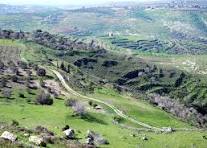
The fall of Canaan coincided with the emergence of the Israelite kingdoms in the southern part of the region. According to the Old Testament, an Israelite army commanded by Joshua attacked and besieged the city of Jericho. Daily for six days, the Israelites marched around the city carrying the Ark of the Covenant, the golden chest said to hold the tablets of the Ten Commandments. On the seventh day, they marched around the city seven times, after which the people let out a great shout, causing the walls of Jericho to crumble.”
This provider of multifarious data sources chiefly meant for libraries, schools, and individual researchers further states “The Bible goes on to record that God commanded the Israelites to kill every man, woman, and child, saying ‘You shall not leave alive anything that breathes.’ Although the destruction of Canaan was real, historians doubt that the Israelites were responsible.”
It is important to however note that the Holy Bible, as already indicated, holds verses which show that there were Canaanites spared especially for the reasons specified too.
EBSCO points out “According to the Bible, the land of Canaan was preordained by God as the promised land of the Jewish people. God told Abraham, the biblical founder of the Jewish people, that his descendants would build a great nation in Canaan, a land said to be overflowing with ‘milk and honey.’ Abraham and his family moved to Canaan, but his descendants did not find the prosperity God had promised.
After experiencing a famine, the Jews were forced to seek refuge in Egypt, where they were eventually enslaved. After Moses led the Israelites out of Egypt and escaped from slavery, God once again promised the land of Canaan to the Jewish people. He laid out its boundaries as the Desert of Zin and the southern border of the Dead Sea in the south, the Mediterranean Sea to the west, the Nur Mountains in the north, and the Jordan River to the east.”

This source adds “According to the Bible, it was this promise that prompted Joshua to destroy Jericho and conquer Canaan. The Hebrew language spoken by the Israelites is a Semitic language from the same family as other Canaanite languages. By the eleventh and twelfth centuries BCE, most Canaanites in the region had been absorbed into Israelite societies.”
EBSCO provides details on the fate of other Canaanites— those who had not been assimilated into the Israelite societies. “To the north of the Israelite kingdoms, the Canaanites formed a civilization that would later be classified by the Greeks as the Phoenicians. The Phoenicians were a seagoing people who developed an influential trading society across the Mediterranean. A Phoenician colony in northern Africa called Carthage later rose to power and formed its own empire. For a brief time, Carthage rivaled the might of Rome before eventually falling in the second century BCE.
Starting in the eighth century BCE, the region of ancient Canaan fell to a series of conquerors, including the Assyrians, Babylonians, Persians, Greeks, and Romans. In the seventh century CE, the region was conquered by Islamic forces. With continued migrations and invasions, the ethnic identity of the Canaanite peoples became lost over time.”
The Phoenicians successfully created a vast trading network, but even this could not last forever, according to the Biblical Archaeology Society. “Around 1200 B.C.E., they were forced out of these countries [Palestine, Transjordan and Syria—from Ugarit down to the Egyptian border] by the Arameans and the Neo-Hittites in the north, the Israelites and the Sea Peoples (Philistines, Sikils and Sherden, etc.) in the south, and by the Ammonites, Moabites and Edomites in the east.
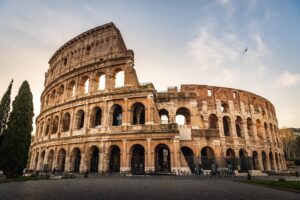
Sharing the fate of many others, the Phoenician empire ultimately fell to Rome. Between about 1200 and 1050 B.C.E., they retained control of a greatly reduced area—the narrow coastal strip of Lebanon between Arwad, Tyre and Akko. Most of the population lived in five main cities: Arwad, Byblos, Berytus, Sidon and Tyre. The Phoenicians’ commercial empire was brought to an end by the Romans who came into conflict with the Phoenicians—whom they described as ‘Punics’—in a series of wars that became known as the Punic Wars.”
Etymologically, ‘punic’ emanates from the Latin adjective ‘punicus’ from the Latin noun ‘Poenus’ which means ‘Carthaginian or inhabitant of Carthage; akin to Greek ‘Phoinix’ signifying Phoenician.
The society adds “The Carthaginians had no standing army (they employed mercenaries) and relied on their fleet for defense. The Punic Wars culminated in the Roman destruction of the Punic capital, Carthage, in 146 B.C.E., thereby ending a millennium of Phoenician influence, success and power.”
Carthage was an ancient city in present-day Tunisia, founded by the Phoenicians from the City of Tyre in 814 BCE. “Carthage, great city of antiquity on the north coast of Africa, now a residential suburb of the city of Tunis, Tunisia. Built on a promontory on the Tunisian coast, it was placed to influence and control ships passing between Sicily and the North African coast as they traversed the Mediterranean Sea.
Rapidly becoming a thriving port and trading centre, it eventually developed into a major Mediterranean power and a rival to Rome. The archaeological site of Carthage was added to UNESCO’s World Heritage List in 1979,” says Britannica in its 17 August 2026 piece of writing headlined “Carthage”.
Core observation and overarching lesson
The core observation drawn from the history of the Canaanites is that human civilizations seldom disappear as completely as their names, political structures, or distinct identities imply. More often, they are transformed, assimilated, intermingled, and passed into societies that follow them. The history of Canaan and the Southern Levant demonstrates this particularly well.

Canaanites, Israelites, Phoenicians, and later societies were not simply isolated populations appearing one after another and substituting those which preceded. They networked, combatted, traded, migrated, intermarried, embraced one another’s practices, and inherited existing cities, technologies, languages, institutions, and cultural traditions. Subsequently, the disappearance of a people as a separate political or cultural identity does not necessarily mean the disappearance of its human population or historical legacy. What changes is often the arrangement in which that legacy goes on.
Lessons
The history of the Canaanites renders the first lesson particularly powerful. Modern humanity dwells in a world engineered partly upon accomplishments inherited from people whose names, kingdoms, and identities have largely disappeared. The Canaanites and their later Phoenician successors serve as a striking example. Their societies conduced enormously to long-distance commerce, maritime exchange, urban development, and, most importantly, the development and transmission of alphabetic writing.
The alphabetic tradition which materialized in the ancient Southern Levant was subsequently adapted and transmitted to other cultures, eventually contributing to writing systems employed on an enormous scale today. Thus, a person living thousands of years later can benefit from an intellectual or technological achievement without even knowing the names of the people who helped to create or convey it. This ought to inspire humility and gratitude toward preceding generations.
The lesson is not that we should glamorize every ancient civilization or suppose that everything it generated was admirable. Ancient societies, including Canaanite and Phoenician societies, exercised violence, inequalities, conflicts, and practices which modern people may rightly reject.

This naturally leads to the second lesson: every human being should strive to leave a meaningful and lasting legacy. The Canaanites could not have imagined that spheres of their civilization would continue to benefit subsequent societies for millennia. The Phoenicians could not have known that their commercial networks, cities, inscriptions, and alphabetic tradition would ever turn into subjects of study and important parts of humanity’s historical inheritance.
Likewise, people today cannot tell exactly which of their ideas, inventions, writings, institutions, acts of service, successes or contributions will outlast them. Yet that uncertainty should not demoralize us; it should instead exhort us to contribute something intensely worthwhile while we are still here.
The concept of legacy, however, should be fathomed more broadly than as fame. A lasting legacy does not automatically signify getting renowned or having one’s name remembered forever. A teacher may create a legacy in the minds of students; a parent in the character of children; a scientist in a discovery or innovation; a writer in ideas instilled in later generations; an entrepreneur in a business, an engineer in infrastructure; a farmer in a healthier and more productive landscape; an activist in a social reform; and an ordinary person in the lives they’ve assisted to improve.
Indeed, the Canaanite instance proves that a contribution can persevere even when the contributor’s individual identity has sunk into oblivion. What matters ultimately is not whether our names survive, but whether a beneficial thing which we have produced or helped to create, maintain, upgrade, or transmit is continuing after us.
There therefore occurs a profound truth between the two lessons. We owe something to the past, and the future will owe something to us only if we provide something worthy of inheritance.
We are concurrently beneficiaries and ancestors. We stand as beneficiaries since we’ve inherited a world influenced by countless generations before us. We are ancestors as our actions are molding the world that succeeding generations will inherit. This equips human life with a form of intergenerational responsibility: we should receive the inheritance of humanity with gratitude, enhance what we can, and pass something of value to those who follow us.
Broader lesson
The core lesson is that every generation obtains something from those who preceded it. We rest upon accumulated layers of human experimentation, sacrifice, creativity, failure, discovery, and adaptation.
Even when an ancient people disappears as a distinguishable identity, successes from its work may continue to affect the lives of people thousands of years later. The Canaanites therefore remind us that the people of the past were not merely inhabitants of a vanished world; they were contributors to the world in which we now live.
This history of Canaan compellingly establishes that that political disappearance does not necessarily equal historical insignificance. The Canaanites lost their distinct identity over time, and the political formations connected with them were transformed or absorbed. Yet their historical significance persists precisely because elements of realizations they and their successors achieved continued into later civilizations. The same pattern can be noticed in numerous other civilizations: a civilization may lose its sovereignty, language, political institutions, or distinct identity while its inventions, knowledge, artistic traditions, technologies, or ideas continue shaping humanity.
This leads us to a broader lesson: history is less a succession of peoples replacing one another than a constant process of inheritance, transformation, assimilation, and transmission. A conquering society does not seize an empty landscape. It procures land already cultivated, cities already constructed, roads and trade paths already established, technologies already developed, languages already spoken, and populations already settling there. It can discard some elements of the preceding society, keep others, and change still others. In this sense, even conquest can produce continuity, since the conqueror is itself influenced by the society it defeats.
The history of the Southern Levant therefore cautions us against treating words such as rise, fall, replacement, and disappearance too literally.
When the Canaanite civilization stopped existing as a clearly distinguishable cultural and political entity; the people, settlements, knowledge, skills, practices, and traditions linked with it did not simply end. They became part of new historical configurations. Similarly, the rise of Israelite, Phoenician, Greek, Roman, and later societies should not be construed merely as the emergence of entirely new populations on the ruins of totally extinct ones. There has happened substantial continuity beneath changing identities.
The sincere and most profound lesson, thus, is that civilizations may disappear as civilizations while surviving as legacies. A kingdom can collapse, a political identity can vanish, and a people can become absorbed into broader populations, yet their contributions may continue through descendants, assimilatory conquerors, language, technology, architecture, religious and cultural practices, economic traditions, writing systems, and institutions.
Sometimes the name of a civilization is forgotten while something it created becomes enormously influential. The historical importance of a civilization is consequently not measured only by how long its political identity survived, but also by what it gave to those who arrived on the Earth after it.
Therefore, the overarching principle emerging from the history of Canaan and the Southern Levant is this: history does not fundamentally constitute a story of one people vanishing and another starting; it forms a story of human societies continuously inheriting, transforming, absorbing, and conveying what came before them. What seems to be an “end” in the political or cultural record is often not an absolute ending, but a transition in which the past survives in altered forms within the future.
Even as an individual, you can supply a contribution—for the world— which will constitute a legacy so immense that it can shape not only your close community but also the entire world. Today, the world boasts individuals whose actions have revolutionized the world. Some of these personalities include the following ones: Mahatma Gandhi, whose philosophy of nonviolent resistance inspired movements for freedom and justice across the world.
Nelson Mandela, whose struggle against apartheid helped to transform South Africa and became a global symbol of reconciliation. Martin Luther King Jr., whose advocacy for racial equality profoundly advanced the civil rights movement in the United States. Marie Curie, whose pioneering scientific discoveries transformed our understanding of radioactivity and opened new paths in medicine.
Albert Einstein, whose revolutionary contributions to physics fundamentally changed humanity’s understanding of space, time, and the universe. Alexander Fleming, whose discovery of penicillin transformed modern medicine and saved countless lives. Wangari Maathai whose environmental and social activism demonstrated how one person’s commitment to conservation, democracy, and community empowerment can influence an entire nation and inspire the world.
So, as the most important lesson from this piece: always exert effort to work hard and positively—bearing in the mind that you have been born for a great mission and that if we all commit ourselves to fulfilling that mission, we can ultimately transform our world. All this can be encapsulated as a legacy we leave to the world into which we have been born.