The word ‘peace’ carries different definitions, meanings, and interpretations likely to confuse people. Nevertheless, every person ought to fully comprehend what ‘peace’ means, for them to also contribute to it fully. On one hand, every person needs peace to live well, and every development and social sphere necessitates peace for them to flourish. On the other hand, to be safeguarded, peace also needs every person and every development and social field. Peace is a small word but with a deeper meaning and unparalleled significance.
The United Nations Development Program (UNDP) also says that peace and every other development sector need to complete each other. “We [UNDP] are determined to foster peaceful, just and inclusive societies which are free from fear and violence. There can be no sustainable development without peace and no peace without sustainable development.” The 1989 Yamoussoukro Declaration, in the framework of the UNESCO International Congress on “Peace in the Minds of Men” in Yamoussoukro, Ivory Coast, also underlined the point, stating, “Peace is reverence for life. Peace is the most precious possession of humanity.” This article attempts to thoroughly explain this amazing field of ‘peace’.
To emphasize the unimaginable importance of peace, the United Nations declares, “The Sustainable Development Goals (SDGs) have an intrinsic relationship to peace and stability. Without peace, all other goals—from focusing on youth and women’s needs to addressing climate change and water, energy, and food security—will be impossible to achieve.”
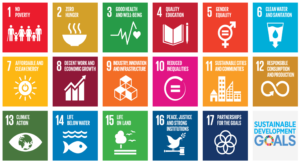
Despite this importance of peace and its interdependence with all other development spheres, and the fact that ‘peace’ constitutes an ancient concept, it remains unknown to most people.
Oshadhi Herath from the Department of Philosophy at the University of Kelaniya in Sri Lanka, in the paper “A Critical Analysis of Positive and Negative Peace,” underscores this point. Herath says “Peace is something which is vastly misinterpreted today. Everyone has their own perceptions about it, out of which only a small section actually comes near in addressing ‘peace.’”
“It is critical to understand peace because a person may create peace depending on their own understanding. If a person defines something vaguely, it will be difficult to put [it] into practice and begin to build long-lasting peace.”
The researcher R.J. Rummel concurs with Herath, saying, “We agree little on what is peace. Perhaps the most popular (Western) view is as an absence of dissension, violence, or war.”
He adds that the meaning derives possibly from the original meaning of the Greek word for peace, Irene. He further says that pacifists have adopted this interpretation, for to them all violence is bad. This meaning is widely accepted among irenologists and students of international relations, and it is the primary dictionary definition, according to Rummel who adds “Peace, however, is also seen as concord, or harmony and tranquility.
It is viewed as peace of mind or serenity, especially in the East. It is defined as a state of law or civil government, a state of justice or goodness, a balance or equilibrium of powers. Peace may be opposed to or an opposite of antagonistic conflict, violence, or war. It may refer to an internal state (of mind or of nations) or to external relations.”
The former UNESCO Director-General, Irina Bokova, once said, “Peace is more than the absence of war; it is living together with our differences – of sex, race, language, religion, or culture – while furthering universal respect for justice and human rights on which such coexistence depends.”
The prominent activist for American Black people’s rights, whose activism has contributed enormously for the American Black People to enjoy rights, late Martin Luther King Jr., once said, “Peace is not merely the absence of some negative force – war, tension, confusion, but it is the presence of some positive force – justice, goodwill, the power of the kingdom of God.”
UNESCO highlights that peace forms a deep-rooted commitment to the principles of liberty, justice, equality, and solidarity among all human beings. “Peace is also a harmonious partnership of humankind with the environment.”
As said, all development and social sectors [marriages, relationships, economy, health, agriculture, technology, environment protection, education, well-being/social development affairs, infrastructures, business, music, sport, and leisure, just to name a few] will always rely on the existence of ‘peace’. Of course, ‘peace’ is and shall also always be reliant on all those sectors for it to be maintained.

Take time to think about the extent to which the Coronavirus pandemic has hampered the world’s peace. Also, ruminate on how the consequences of climate change mar our peace. Those are examples that can be convincing enough for you to note the interdependence between ‘peace’ and other remaining aspects.
In fact, to reach a certain consensus on the true meaning of ‘peace’, it first necessitates considering and understanding two types of peace: negative and positive peace. Different authoritative scholars have intervened to differentiate negative peace from positive peace. The father of peace studies and peace research, the late Johan Galtung, is one of them. In 1964, he defined negative peace as the absence of direct violence and positive peace as the absence of indirect violence.
“Peace appeals to the hearts – studies to the brain. Both are needed, indeed indispensable. But equally indispensable is a valid link between brain and heart,” once stated this renowned Norwegian sociologist Galtung who has developed an academic understanding of peacebuilding, written and co-authored more than 1,600 articles and over 160 books pertaining to peace issues. Galtung, who died on 17 February 2024, mediated over 150 conflicts among nations, religions, local communities and civil society organizations.
More details on positive peace
Positive peace is a true, enduring, and sustainable peace built on justice for all peoples, according to Herath. He further states that positive peace is filled with positive content, such as the restoration of relationships, the creation of social systems that serve the needs of the whole population, and the constructive resolution of conflict.
He says “Positive peace indicates the simultaneous presence of a number of desirable states of mind and society, such as harmony, justice, equity, among others; efforts to achieve positive peace emphasize establishing peace by supporting international law, compliance with multilateral treaties, use of international courts, and nonviolent resolution of disputes, participation in international organizations, trade, and communication, establishment of social equality and justice, economic equity, and ecological balance.”
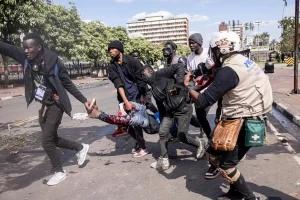
“The efforts also underline the protection of citizens from attack, meeting basic human needs, establishing a civil peace that provides the constitutional and legal means necessary to settle differences nonviolently, and eliminating indirect violence that shortens the life span of people, sustains unequal life chances, or reduces quality of life for any citizen.”
Herath affirms that these efforts also involve practicing conflict resolution as a foundation for building peaceful interpersonal relationships. The concept of positive peace involves the elimination of the root causes of war, violence, and injustice and the conscious attempt to build a society that reflects these commitments. Herath stresses that positive peace assumes interconnectedness of all life.
Positive peace can also be defined as perfect peace or complete or full peace. According to a website named Positive Peace, positive peace is (1) a more lasting peace that is built on sustainable investments in economic development and institutions as well as societal attitudes that foster peace, and (2) can be used to gauge the resilience of a society, or its ability to absorb shocks without falling or relapsing into conflict. “Positive Peace opposes what is known as the ‘structures and cultures of violence.’ These structures and cultures can cause people to behave violently or impose violence on others; the term ‘peace’ has evolved significantly over the last 2,500 years.”
Positive Peace is a website hosted by the Institute for Economics and Peace [IEP]. With the headquarters in Sidney, IEP is a non-profit think-tank dedicated to shifting the world’s focus to peace as a positive, achievable, and tangible measure of human well-being and progress. To boost positive peace, IEP avails itself of research featuring in some major international media houses like The New York Times, The Guardian, The Economist, Deutsche Welle, Washington Post, CNN and the BBC.
Additional details on negative peace
According to Herath, negative peace is peace without justice, a false sense of “peace” that often comes at the cost of justice. Herath says that a negative peace situation may not see conflict out in the open air, but that the tension is boiling just beneath the surface because the conflict has never been reconciled.
Herath adds that efforts to achieve negative peace emphasize managing interpersonal and organizational conflict in order to control, contain, and reduce actual and potential violence.
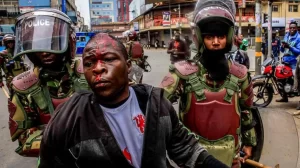
He agrees that this reduces the incidence of war by eliminating the extreme dangers of the war system and limiting war through international crisis management, preventing war through strategic deterrence and arms control. He, however, adds that the concept of negative peace only addresses the immediate symptoms of conflict, such as the conditions of war, and the use and effects of force and weapons.
Positive Peace defines negative peace as the absence of war and violence and a situation that does not capture a society’s tendencies towards stability and harmony.
Peace must be fathomed in the sense of positive peace. An article by the website, Irenees, buttresses the point. It highlights that ‘peace’ does not just mean the total absence of any conflict, that it means the absence of violence in all forms and the unfolding of conflict in a constructive way. The article adds that peace, therefore, exists where people interact non-violently and resolve their conflict positively – with respectful attention to the legitimate needs and interests of all concerned parties. The point is also supported by an international peace-building organization, International Alert, which defines peace as ‘when people are able to resolve their conflicts without violence and can work together to improve the quality of their lives’.
Some great quotes from Columbian College
Columbia College of Arts and Sciences, says, “Peace. Shalom. As-Salaam-Alaikum. In any language, peace is a state we all want to attain—for ourselves, for our loved ones, for the world, but peace means different things to different people and cultures. With the festive season upon us, Columbian College faculty members from a cross-section of disciplines were asked to define what peace means to them.” The following are responses, by faculty members, published on December 09, 2015.
“Peace means tranquility. Peace means being free from persecution due to one’s nationality, immigration status, race, ethnicity, political affiliation, religious beliefs (or lack thereof). Peace also comes from the comfort in knowing that you have a roof over your head, food to eat, and loving family members and friends. Many people are not free from persecution, nor can they count on the comfort of shelter, food, and a supportive social circle. I hope we can keep them in our thoughts this season,” Daniel E. Martínez, Assistant Professor of Sociology.
“Peace comes from within, from simple things that affect our spirit, our soul. Peace comes when I wrap my son in my arms. Peace is in shared laughter with a friend, colleague, or loved one. Peace is in the grateful smile of a student when we figure out a solution to their problem. Peace is in a connection made through creating art with a client,” Heidi Bardot, Assistant Professor of Art Therapy and Director, Art Therapy Program.
“In Old Aramaic (the language of ancient Syria), the word for ‘peace’ is ‘shalam.’ In Old Hebrew (the language of ancient Israel), the word is ‘shalom.’ And in Old South Arabic (the language of ancient Arabia), the word is ‘salam.’ These words from the world’s ancient Semitic languages are often rendered into English as ‘peace,’ but the actual meaning is much deeper and broader.
After all, these words signified then—and now—not merely the absence of war, but also the presence of good health, serenity, happiness, harmony, and safety. During this season, and indeed throughout this year and every year, may we all do our part to bring about ‘peace,’ in every sense of these grand Semitic words,” Christopher A. Rollston, Associate Professor of Northwest Semitic Languages & Literatures.
“Peace means living our lives selflessly, treating others with respect, sharing the extra that comes to us with others who have been shortchanged. It means being in the wilderness without fear but with respect for the world around us. It means living as small as possible in material things and as large as possible in goodwill,” J. Houston Miller, Professor of Chemistry.
“Many think of ‘peace’ and ‘conflict’ as antagonisms; peace, then, evokes images of calm and tranquility. But struggle—including the political struggles we have seen unfold on college campuses—can be animated by a desire for peace. In this case, peace isn’t necessarily quiet and tranquil.
Instead, it is a radical call for freedom from oppressions, and a bold challenge to rethink how we live together in ways that not only honor each other’s dignity but that recognize and redress the violence that has marked—and continues to mark—the everyday. Peace, then, is an ongoing call to imagine living otherwise,” Jennifer C. Nash, Assistant Professor, American Studies & Women’s, Gender, and Sexuality Studies and Director, Women’s, Gender, and Sexuality Studies Program.
“In December, we think about peace on earth. But we do not have peace—and will not—until more pressing needs are met. There are human disparities and insufficiencies, not simply in wealth, but in basic survival necessities, in safety, in opportunity. Let us pledge that, in the challenge for attaining peace in our own lives, we will also work to achieve human dignity, justice, freedom, and welfare, for all people who share the earth,” Paul Poppen, Professor of Applied Social Psychology.
Everyone need peace, but there are some people who says they also need peace peace by destroying others. So, …Peace should be better for everyone and everywhere.
Can you be more specific about the content of your article? After reading it, I still have some doubts. Hope you can help me.
Thank you for your sharing. I am worried that I lack creative ideas. It is your article that makes me full of hope. Thank you. But, I have a question, can you help me?
I don’t think the title of your article matches the content lol. Just kidding, mainly because I had some doubts after reading the article.
Your point of view caught my eye and was very interesting. Thanks. I have a question for you.
Thank you very much for your optimally galvanizing feedback and raise your question; we are ready to respond to it.
Your point of view caught my eye and was very interesting. Thanks. I have a question for you.
Thanks for sharing. I read many of your blog posts, cool, your blog is very good.
Thanks for sharing. I read many of your blog posts, cool, your blog is very good.
Thank you so much for your kind words! I’m really thrilled to hear that you’ve enjoyed reading my posts. Your support is invaluable, and I’ll keep working on sharing more great content. Feel free to check back anytime!
Your point of view caught my eye and was very interesting. Thanks. I have a question for you.
Thank you so much for your great comment.
Can you be more specific about the content of your article? After reading it, I still have some doubts. Hope you can help me.
Thank you for taking the time to read the article and for your comment. I’d be happy to clarify! Could you please let me know which part you have formed doubts about?
Thank you for your sharing. I am worried that I lack creative ideas. It is your article that makes me full of hope. Thank you. But, I have a question, can you help me?
Dear Pinakamahusay na Binance referral code,
Thank you so much for the feedback.
Thank you for your sharing. I am worried that I lack creative ideas. It is your article that makes me full of hope. Thank you. But, I have a question, can you help me?
Thank you so much for your heartfelt comment—it means a lot to us. We’re truly glad the article could inspire hope and spark your creativity. Please don’t hesitate to ask your question—we’re here and happy to help in any way we can.
I don’t think the title of your article matches the content lol. Just kidding, mainly because I had some doubts after reading the article.
As we have caught your joking, we will be pleased to learn more about your doubts and then work on them.
Good shout.
Thank you indeed.
Your point of view caught my eye and was very interesting. Thanks. I have a question for you.
Thank you so much! We’re really glad that our point of view has resonated with you. We’d be happy to hear your question—go ahead!
I don’t think the title of your article matches the content lol. Just kidding, mainly because I had some doubts after reading the article. https://www.binance.info/ar-BH/register?ref=V2H9AFPY
We actually recognize the importance of your engagement with the article and are ready to respond to your doubts if you clearly express them.
Thanks for sharing. I read many of your blog posts, cool, your blog is very good. https://www.binance.info/id/register?ref=UM6SMJM3
Thank you a lot indeed for your very great feedback.
Thanks for sharing. I read many of your blog posts, cool, your blog is very good. https://www.binance.com/ro/register?ref=HX1JLA6Z
Thanks for sharing. I read many of your blog posts, cool, your blog is very good. https://accounts.binance.info/es-MX/register-person?ref=GJY4VW8W
Can you be more specific about the content of your article? After reading it, I still have some doubts. Hope you can help me.
Please, tell us specific parts of the article where you have experienced doubts.
Your article helped me a lot, is there any more related content? Thanks!
Delighted to hear that. Yes, the website features more related content.
Thanks for sharing. I read many of your blog posts, cool, your blog is very good.
We are so much grateful to you for your kind words and taking the time to read multiple posts—it truly means a lot. We’re really gladdened that you’re enjoying the content. Your encouragement keeps us motivated to keep producing and publishing thoughtful and meaningful work. Grateful to have you with us.
Thanks for sharing. I read many of your blog posts, cool, your blog is very good. https://accounts.binance.bh/register/person?ref=QCGZMHR6
Thank you very much.
I don’t think the title of your article matches the content lol. Just kidding, mainly because I had some doubts after reading the article.
We are ready to handle your doubts as soon you clarify them.
I don’t think the title of your article matches the content lol. Just kidding, mainly because I had some doubts after reading the article. https://www.binance.bh/futures/ref?code=IXBIAFVY
Please, tell us more about your doubts so we may address them.
Thanks for sharing. I read many of your blog posts, cool, your blog is very good.
Very pleased indeed!
Thanks for sharing. I read many of your blog posts, cool, your blog is very good. https://accounts.binance.com/es-AR/register-person?ref=UT2YTZSU
Pleased to hear this.