By Jean Baptiste Ndabananiye
What began as a modest clay stove workshop, in the heart of Gasabo District, has now ignited a national movement for clean cooking. Green Hanga Ltd, founded by the visionary entrepreneur Jean Bosco Nsengiyumva, has grown from a one-man operation into a leading force transforming how Rwandans cook, save, and breathe. With over 46,000 improved cooking stoves now in homes across Rwanda and counting, the company’s certified, high-efficiency stoves are slashing fuel costs, significantly reducing emissions, and protecting families from hazardous smoke.
Backed by the ReCIC project, Green Hanga’s journey is more than a business success—it constitutes a story of local innovation meeting national ambition, a proof that with the right support, small enterprises can deliver big change. ReCIC stands for Reducing Climate Impact of Cooking in Rwanda through Improved Cooking Energy Systems Action.
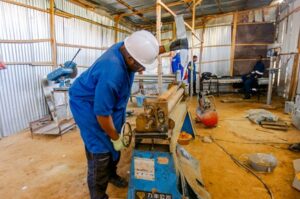
Nsengiyumva, in a small workshop in Rwanda’s Gasabo District, carried a simple but powerful vision: to help families cook cleaner, save money, and breathe easier. What started as a one-man operation crafting clay stoves has matured into Green Hanga Ltd, one of Rwanda’s leading clean cooking enterprises. Today, thousands of households across Rwanda cook their meals using Green Hanga’s improved or higher-tier biomass cookstoves.
When Nsengiyumva officially registered Green Hanga Ltd with the Rwanda Development Board (RDB) in February 2014, he faced the classic challenges of any small manufacturer: limited machinery, lack of technical expertise, and difficulty reaching customers. His handmade clay stoves showed promise, but expansion seemed impossible without help. “We had the passion and the vision,” recalls Nsengiyumva, Green Hanga’s Managing Director, “But we lacked the marketing knowledge to compete for government tenders. Without certified products, we could not even bid on the opportunities that could have transformed our business.”
The help they needed came through the ReCIC project. ReCIC is an initiative—officially launched in November 2020 and executed by SNV and GIZ as the lead, with financing from European Union aunder the Global Climate Change Alliance Plus (GCCA+) initiative— concluded in June 2025. ReCIC project has supported cooking energy businesses in Rwanda, to upgrade their stoves and fuels and to improve their overall business, particularly through a business challenge fund called Cooking Energy Business Grant Fund (CEBGF).
As part of the project, originally 14 companies were selected through a long competitive process, including business incubation support from different expert stakeholders. Two companies exited and currently the remaining 12 have been assisted technically for capacity development and with grants under the CEBGF, paid based on performance milestones. All these companies are EPD (Energy Private Developers)’s members.
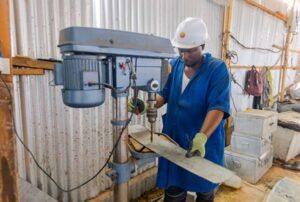
So, after the selection process, Green Hanga was chosen for comprehensive support that changes everything. The support package was exactly what the growing company needed— including skills training in business planning and marketing, production equipment and raw materials to boost manufacturing capacity, and a three-wheeler vehicle to distribute their stoves.
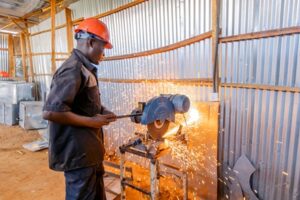
“With project support, Green Hanga was able to develop and certify their flagship Vuba 02 stove as a Tier 3 product by the Rwanda Standards Board—a mark of high efficiency and low emissions that opened doors to new markets,” EPD affirms.
Improved cashflow from increased revenue helped Green Hanga to become independent and capable, so that it began importing raw materials, boosting its production capacity. “But the real measure of success is not in the workshop—it is in Rwanda’s kitchens. Green Hanga’s stoves reduce firewood consumption by up to two-thirds, translating to real savings for families, who previously spent significant portions of their income on fuel. The health benefits are equally compelling. The smoke-free stoves eliminate or reduce indoor air pollution compared to the tradition three-stone fire, particularly benefiting women, who do most of the cooking in Rwandan households,” EPD highlights.
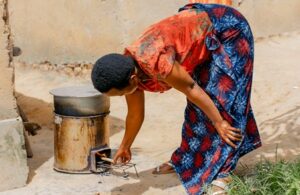
Josiane Nyirahabimana Butoyi, a Gasabo District resident who cooks with the Vuba 02 stove, reaps these benefits firsthand. “I use much less firewood now, and my meals are ready so much faster,” she explains. “What I love most is that the smoke has been reduced. My kitchen is not filled with smoke anymore.”
Today, Green Hanga operates with confidence. The company enjoys access to credit from local banks, and deploys a trained workforce, and the machinery needed to meet growing demand. The business skills learned through ReCIC training, such as business planning and partnership management, have armed them with the ability to navigate challenges independently. “We sincerely thank the ReCIC Project for their continuous support,” says Nsengiyumva. “To other development partners—you are welcome to join us. And to our customers—our stoves will save your fuel and your time.”
Green Hanga’s journey from an informal clay stove maker to a certified higher-tier biomass cookstoves manufacturer demonstrates how targeted and integrated support can unlock local entrepreneurship. The company’s dedication to delivering higher-tier biomass cookstoves across Rwanda continues to grow, helping thousands more households’ transition to efficient, low-emission cooking technologies—one stove at a time.
From a small team to national reach
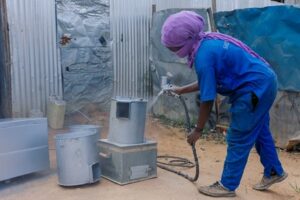
Green Hanga has distributed over 16,000 units of its certified Vuba 02 stove across Gasabo, Nyagatare, and Nyabihu districts since joining the ReCIC project. Its popular Cana Rumwe stove (a tier 2 stove) has reached even more families, with over 30,000 units sold to households and institutions like DUHAMIC and REDO. These are organizations involved in rural development and clean cooking initiatives, in various areas including Karongi and Ngororero. The company has tripled its permanent workforce from 2 to 6 employees and mobilized around 500 temporary workers between 2022 and 2025 for manufacturing, marketing, and distribution.
2.3 billion people across the world rely on traditional cooking methods which are reported to pollute the environment and harm human health. By the end of April 2025, owing to the ReCIC, 449 315 sales had been accomplished— signifying that 449 315 improved cooking stoves had been sold to customers: 449 315 households. Around 80% of households in Rwanda still employ firewood in daily cooking.
The ReCIC project supported the Government of Rwanda to provide sustainable production and dissemination of improved cookstoves (ICS) by working with producers to improve capacities. The project specifically focused on supporting local companies to develop, widen the reach of, and distribute clean, efficient cookstoves and biomass pellets; reducing emissions, improving health outcomes, and empowering women and youth across Rwanda.
Eleanor Hartzell serves at the Country Director of SNV Rwanda. She says “Together, we have helped transform the clean cooking market, over 440,000 improved cookstoves have been sold by companies and cooperatives supported by this project—a number that speaks not only to the scale of our intervention but to the real and tangible demand for cleaner, safer, and more sustainable cooking solutions.” She adds “We are deeply grateful to the Government of Rwanda through the district authorities whose commitment and collaboration enabled us to reach deep into communities and ensure alignment with local needs.”
Call to Action
The story of Green Hanga is more than a Rwandan success—it is a universal blueprint for what’s possible when determination meets opportunity. As billions around the world still rely on traditional, polluting cooking methods, the need for clean, efficient alternatives has never been more urgent.
Green Hanga’s journey embodies more than just a business triumph—it constitutes a beacon of hope and a call to action for communities worldwide. In an era where nearly 2.3 billion people still depend on traditional cooking methods that endanger their health, deplete natural resources, and accelerate climate change, the stakes could not be higher. Each improved stove distributed by Green Hanga is more than a product; it represents a transformative tool that empowers families to reclaim their health, conserve precious forests, and reduce their carbon footprint. This ripple effect extends beyond individual households to entire communities and ecosystems, proving that sustainable solutions can emerge from local ingenuity when met with the right support.
The success of Green Hanga is a vivid reminder that addressing global challenges requires investment in grassroots innovation, tailored to the unique realities of each community. It highlights the critical importance of collaboration—between governments crafting enabling policies, development partners providing strategic funding and expertise, private sector allies scaling impact, and citizens raising awareness and demand. Together, these forces can accelerate the transition to clean cooking and energy independence, forging healthier, more resilient societies.
This story is an invitation to all stakeholders to seize the moment, to invest in proven local champions, and to champion the cause of clean cooking not just as an environmental imperative, but as a fundamental human right that uplifts livelihoods and safeguards futures.
Therefore, governments are issued a call to prioritize policies and financing that empower local innovators, to lead clean energy transitions from the ground up.
Development partners and donors are encouraged to invest in scalable, community-rooted enterprises that deliver health, climate, and economic gains in one.
Private sector actors should partner with mission-driven businesses like Green Hanga to accelerate access, lower costs, and expand reach.
To global citizens, you are called upon to support clean cooking movements in your region and amplify the voices of those transforming lives—one stove at a time.
What started in a small workshop in Rwanda has become a catalyst for sustainable change. Imagine what could happen if every region nurtured its own Green Hanga. The time to act is now—because clean cooking should not be a privilege, but a right.